Köprülü Canyon National Park lies in Antalya Province in southern Türkiye, in the foothills of the Taurus Mountains. Established on 12 December 1973, it covers about 474.73 square kilometres, or 47,473 hectares. Its main natural feature is Köprülü Canyon, carved by the Köprüçay River. Steep cliffs, turquoise water, dense forests and ancient monuments create one of the region’s most remarkable natural and historical landscapes.
Köprülü Canyon and the Köprüçay River
The Köprüçay rises in the Taurus Mountains and flows south towards the Mediterranean Sea. Between Bolasan and Beşkonak, it has cut a deep valley with steep rocky walls. The main canyon stretches for about 14 kilometres, and some cliffs rise more than 100 metres. In the narrowest sections, the river passes between massive limestone formations.
Mountain springs feed the river, helping maintain a substantial flow throughout the year. Its cool water is especially appealing during the hot summer months. The contrast between pale cliffs, green forests and turquoise stretches of water makes the canyon a popular destination for landscape photography.
Rafting and outdoor activities
Köprüçay is one of Türkiye’s best-known rafting destinations. Organised trips follow routes of varying difficulty, including sections suitable for beginners accompanied by guides. The river has rapids as well as calmer stretches where visitors can admire the gorge and surrounding woodland.
Other activities include hiking, nature watching, camping and guided canyoning. Ziplining and additional adventure activities are offered in designated areas. Before taking part in water sports, visitors should consider water levels, weather conditions, operator instructions and their own experience.
The Roman Oluk Bridge
One of the park’s main historical landmarks is Oluk Bridge, a Roman-period stone arch bridge crossing the Köprüçay River. It formed part of an ancient road network linking inland Pisidia with the coastal region of Pamphylia. The bridge fits naturally into the rocky landscape and is still used to cross the river.
Another historic crossing, Büğrüm Bridge, spans the Kocadere stream. Together, these structures demonstrate the sophistication of Roman-era roads, which connected mountain settlements with coastal towns and trade routes.
The ancient city of Selge
The mountainous part of the park contains the ruins of Selge, an ancient city of Pisidia situated at an elevation of about 950 metres. Its history reaches back to antiquity, and the city was known for its independence, agriculture and trade. Its elevated position helped protect the settlement and control routes through the surrounding mountains.
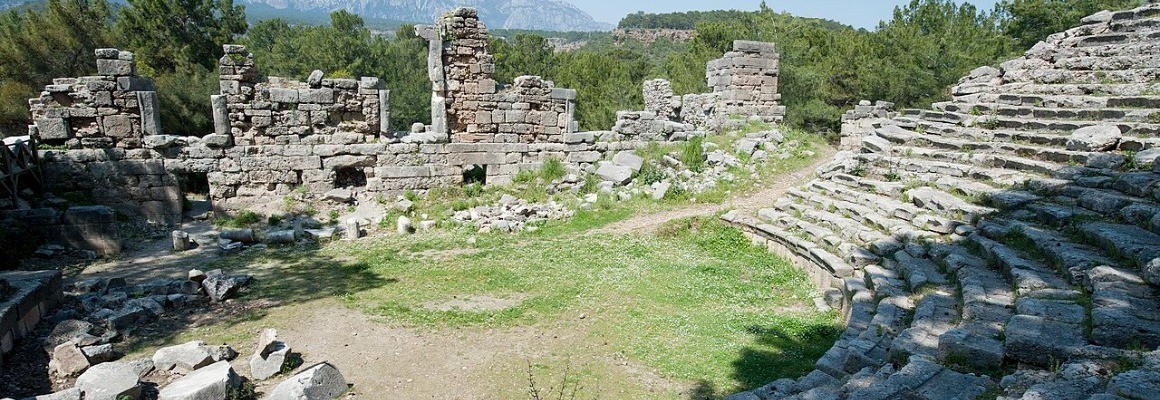
The ancient theatre is among the most striking surviving structures. Visitors can also see remains of city walls, public buildings, temples, the agora, cisterns and other structures. The ruins are spread across hills, so sturdy footwear is useful when exploring the site.
Adam Kayalar and Tazı Canyon
Adam Kayalar, meaning “Human Rocks”, is a group of unusual rock formations shaped by weathering and erosion. Their outlines resemble human figures and other silhouettes. Tazı Canyon, also known as Eagle Canyon, is famous for its tall sheer walls and sweeping views over a deep valley.
Lookouts provide views of wooded slopes and the river far below. The edges of the cliffs can be dangerous, so photographs should be taken only from safe viewing areas and visitors should stay behind barriers.
Forests and wildlife
The park contains forests of pine, cedar, fir, oak and cypress. A particularly valuable feature is a natural Mediterranean cypress forest covering about 400 hectares. Different elevations support a wide variety of plants, including rare and endemic species.
According to conservation authorities, 224 vertebrate species, including fish, have been recorded in the park. Wildlife includes fallow deer, wild goats, wild boar, foxes, wolves, bears and many bird species. Fish adapted to mountain streams live in the river. Visitors should not feed wildlife, leave litter or stray from marked routes.
Best time to visit
Spring and autumn are generally suitable for hiking and exploring archaeological sites because temperatures are more moderate. Summer is especially popular for rafting and riverside recreation, although daytime heat can be intense. In spring, rainfall and melting mountain snow may change the river’s level and current speed.
Beşkonak and the surroundings of Manavgat are common starting points. From Antalya, the usual road passes through Serik and Taşağıl. Check road conditions, access to viewpoints and rafting schedules before setting out. Bring water, a hat, sun protection and footwear with good grip.
Köprülü Canyon National Park combines dramatic scenery, river adventures, Roman bridges and the ruins of Selge. It offers an opportunity to discover both the natural landscapes of Mediterranean Türkiye and the history of its ancient roads and mountain settlements.
Gallery