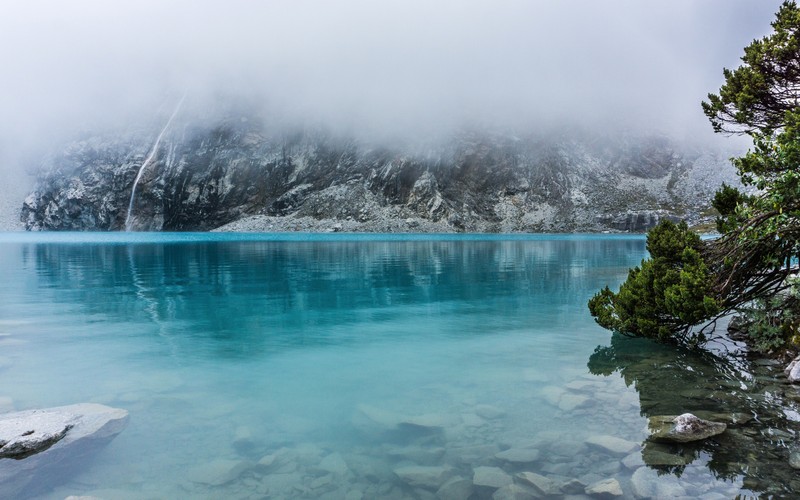
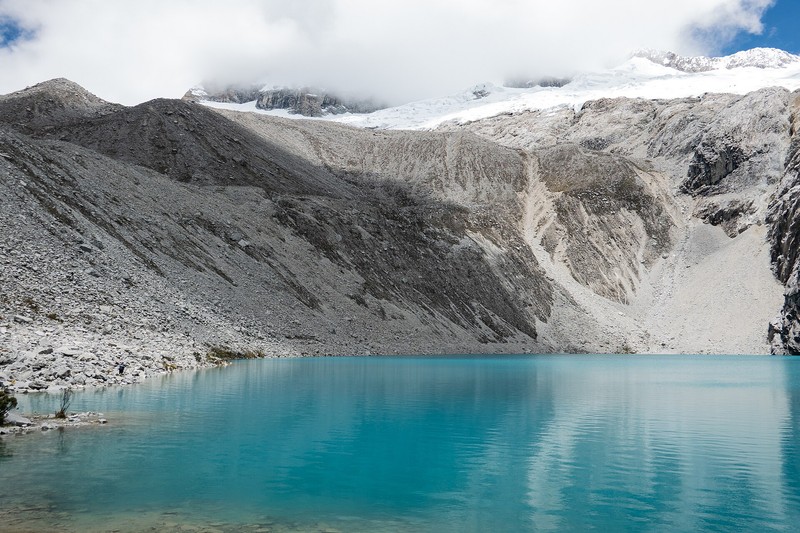
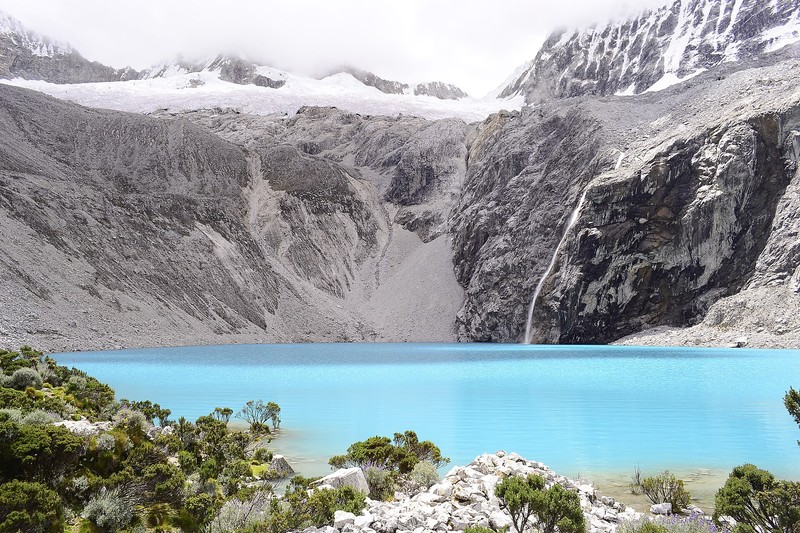
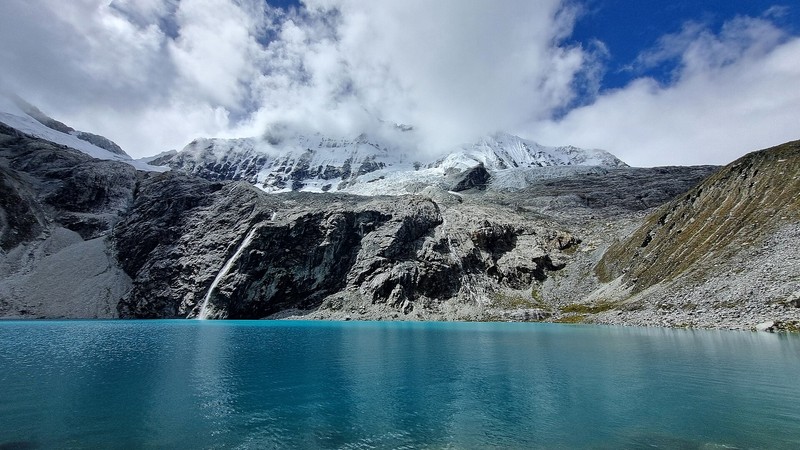
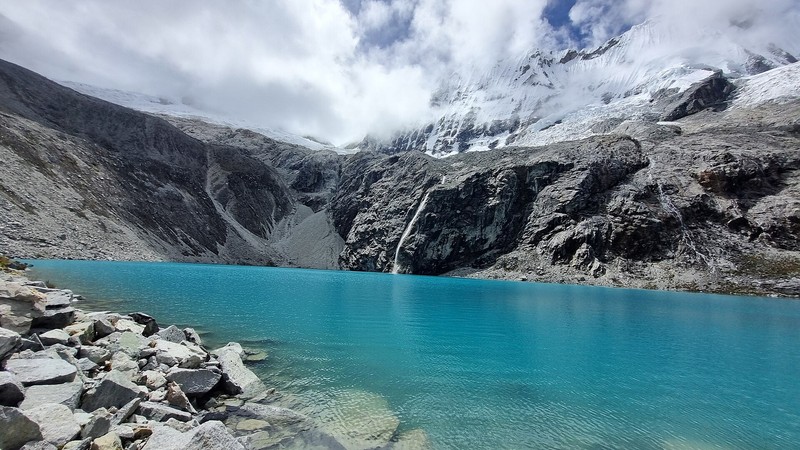
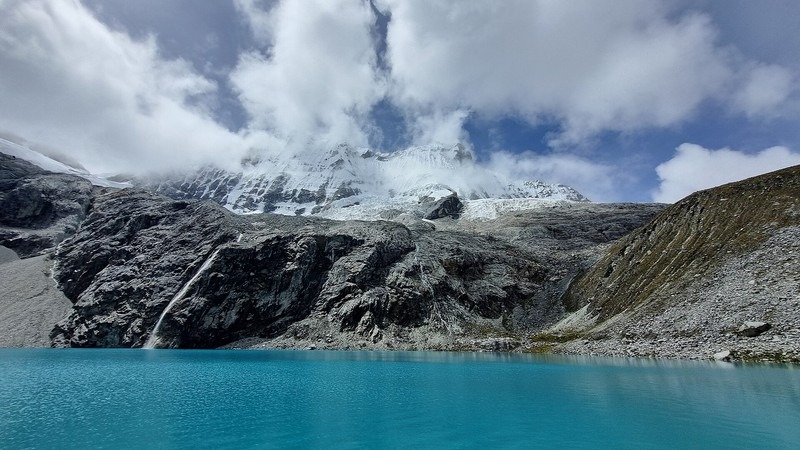
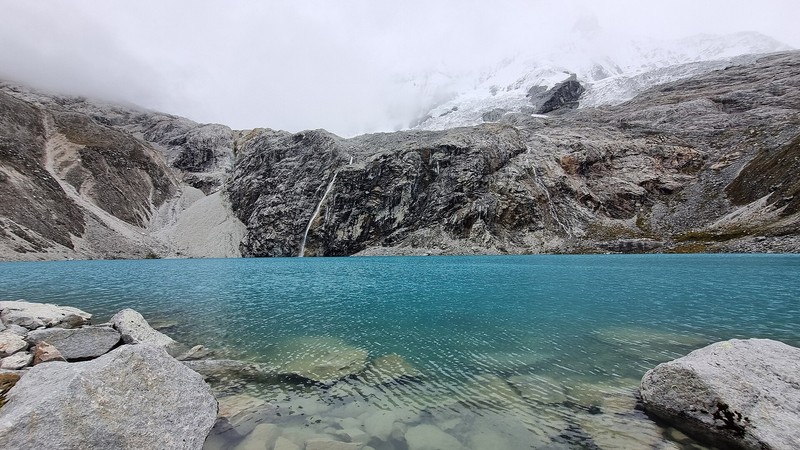
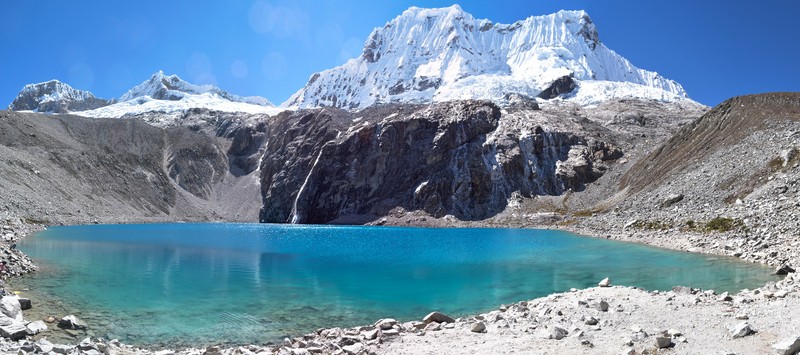
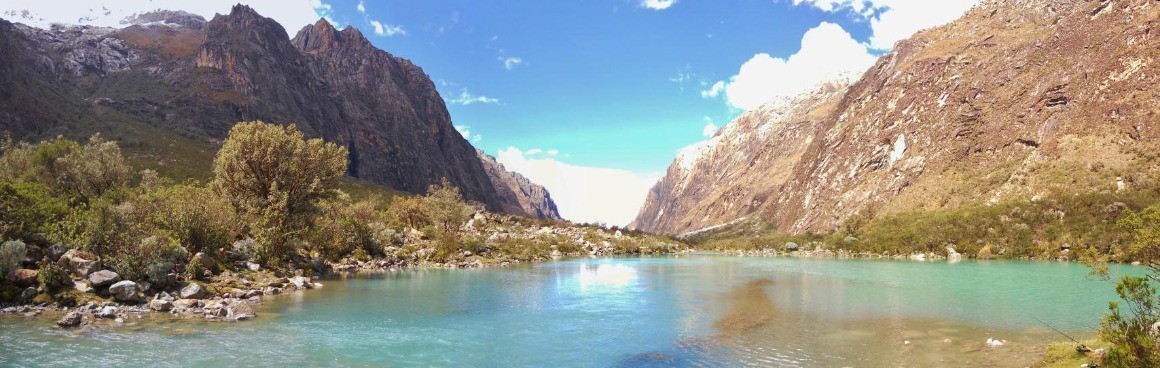
Laguna 69 is one of Peru’s most picturesque high-altitude lakes, famous for its vivid turquoise-blue water and the dramatic snow-covered peaks surrounding it. It lies in the Cordillera Blanca mountain range, within Huascarán National Park in the Ancash region. The lake has become one of the best-known natural landmarks of the Peruvian Andes and a popular destination for hikers and lovers of mountain scenery.
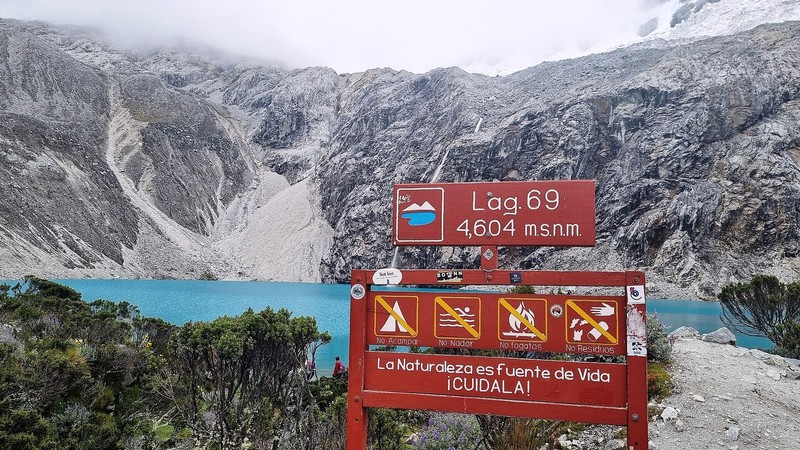
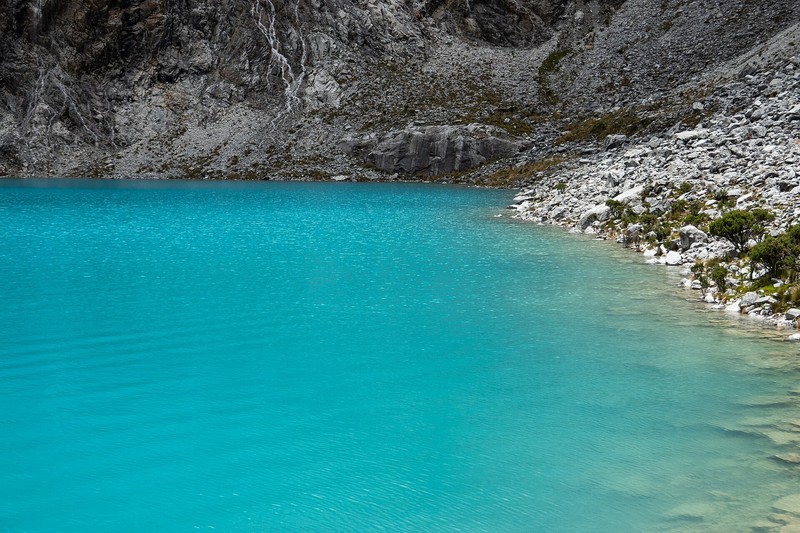
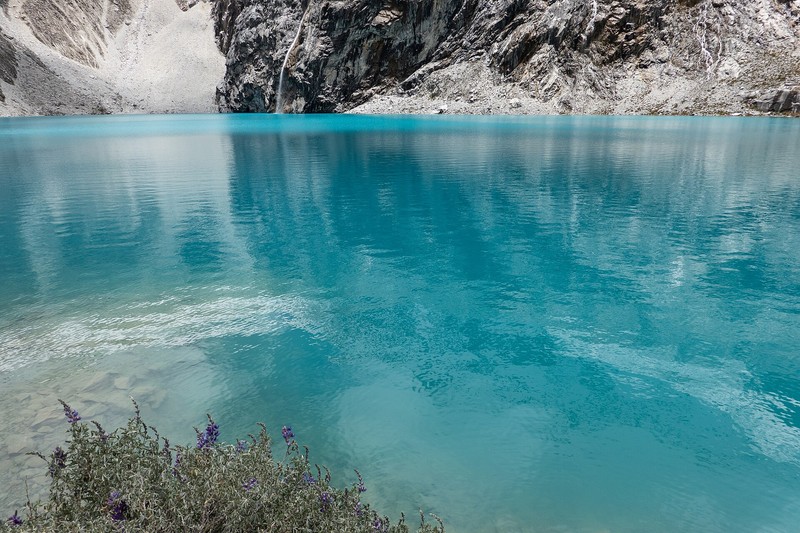
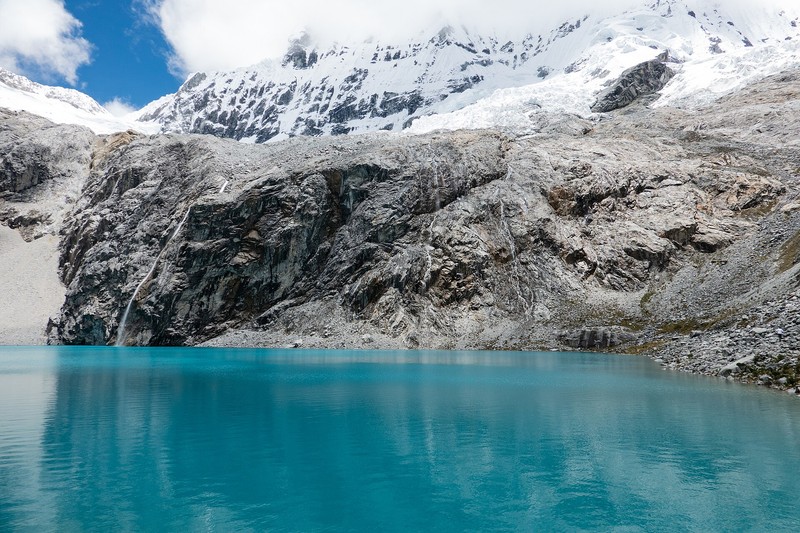
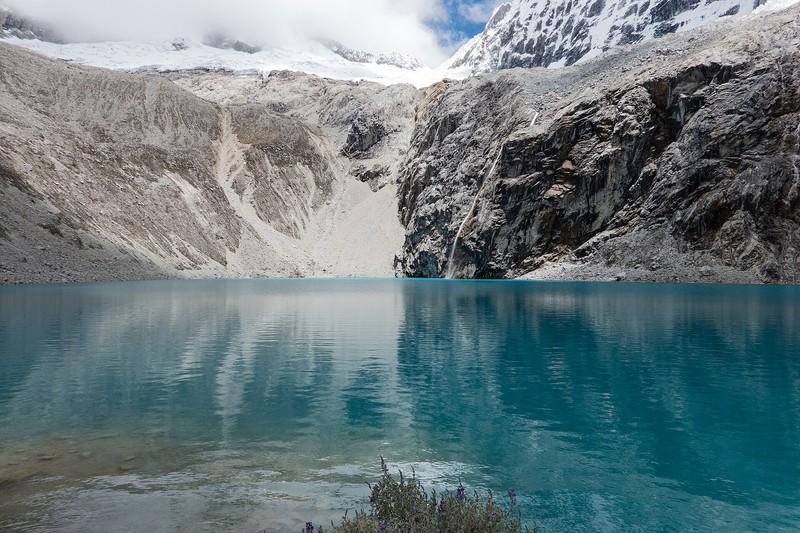
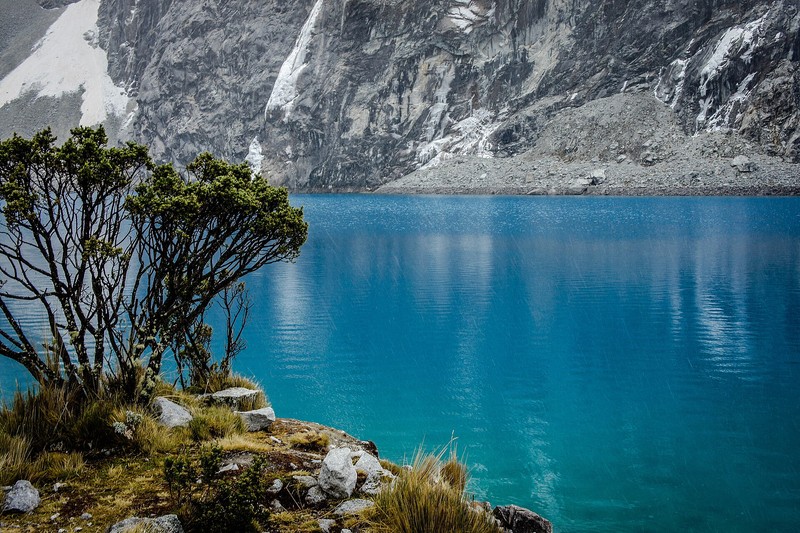
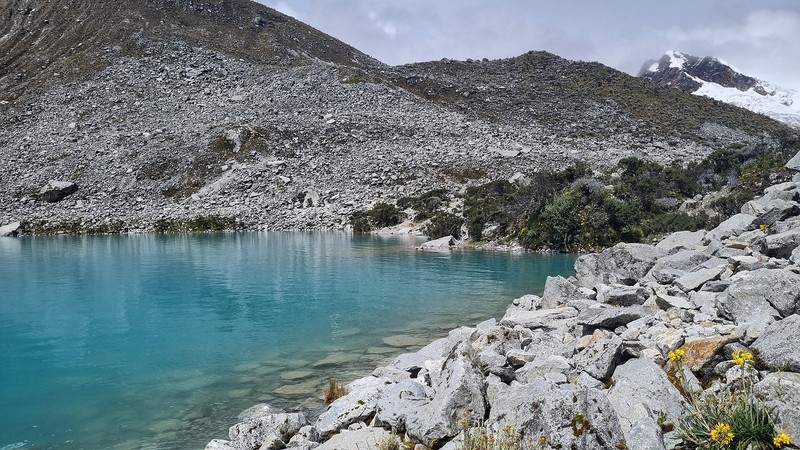
The lake sits at approximately 4,604 metres above sea level. Its glacial water contrasts strikingly with dark rocks, high-mountain vegetation and snowy summits. On clear days, the surface shifts from pale blue to brilliant turquoise, while the surrounding mountains are reflected in the water. Laguna 69 is especially appealing to photographers and travellers hoping to experience the characteristic landscapes of the high Andes.
Why is it called Laguna 69?
The lake’s name comes from a historical inventory of the water bodies in Huascarán National Park, where it was listed as number 69. Over time, this simple numerical name became widely known among travellers and developed into a symbol of mountain tourism in the Ancash region.
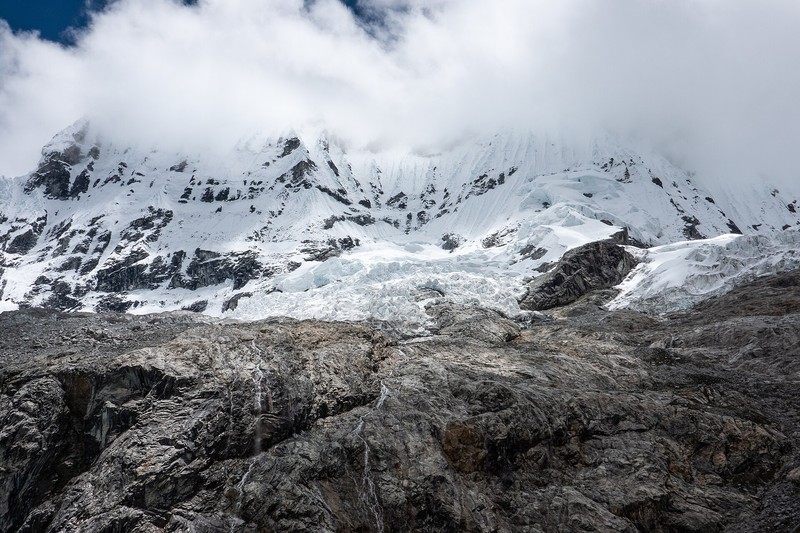
The lake is fed by meltwater from glaciers and snowfields in the surrounding mountains. Its landscape is closely connected to the glacial system of the Cordillera Blanca, one of Peru’s most important high-altitude regions. Changes in the glaciers affect local water resources and landscapes, making the lake not only a tourist attraction but also part of a fragile mountain ecosystem.
Mountains and scenery around the lake
Laguna 69 lies beneath impressive mountain peaks, particularly Chacraraju and Pisco. Rocky slopes, glaciers, snowy ridgelines and valleys create the distinctive scenery of the Cordillera Blanca. As the trail climbs, broader views open across the mountains, streams and high-altitude meadows.
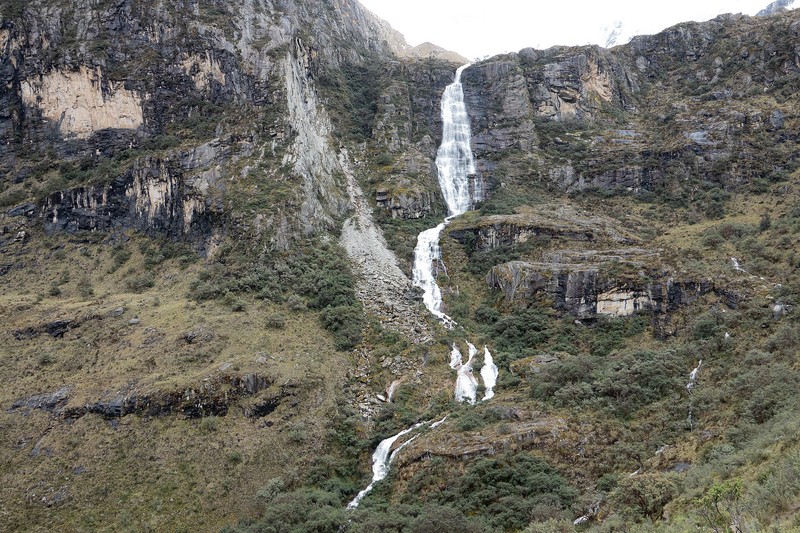
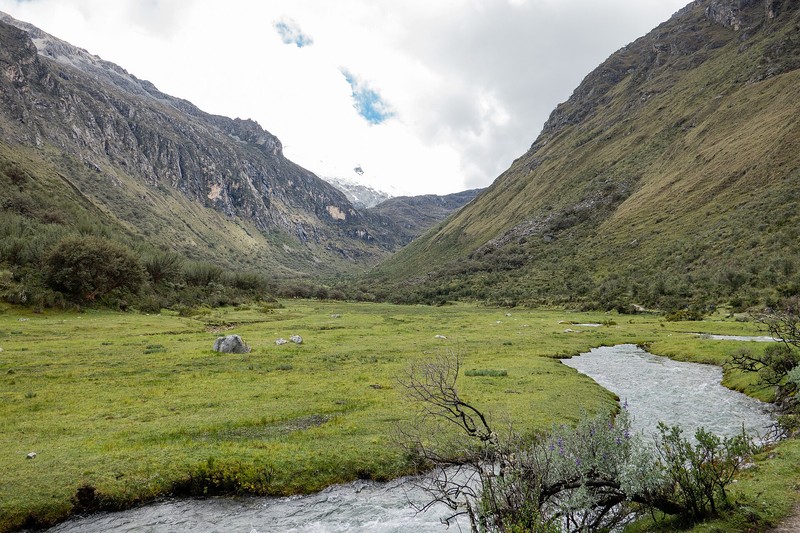
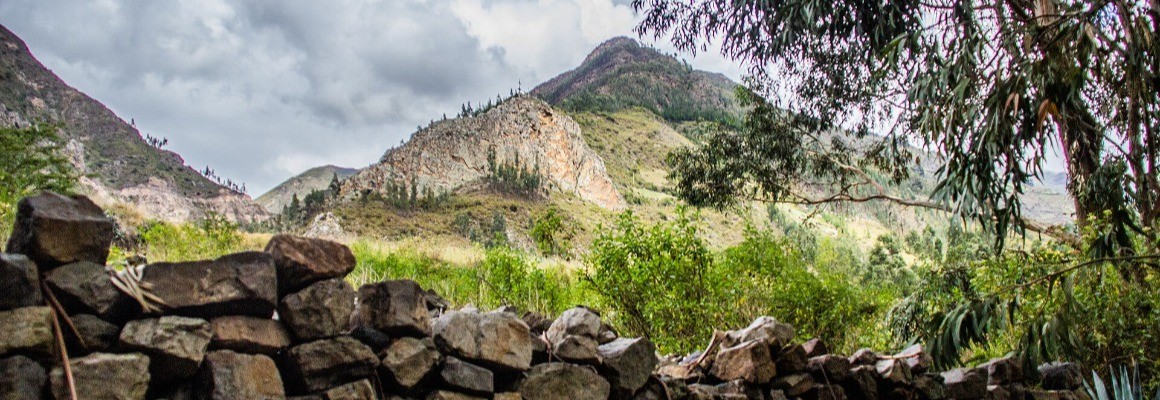
The route passes through natural zones that differ noticeably from one another. Lower down, hikers may see mountain vegetation and patches of queñual woodland, made up of trees adapted to the harsh conditions of the Andes. Higher up, the landscape becomes more open and rocky, while vegetation grows shorter and more scattered. The sound of mountain streams and small waterfalls accompanies hikers along parts of the trail.
Hiking to Laguna 69
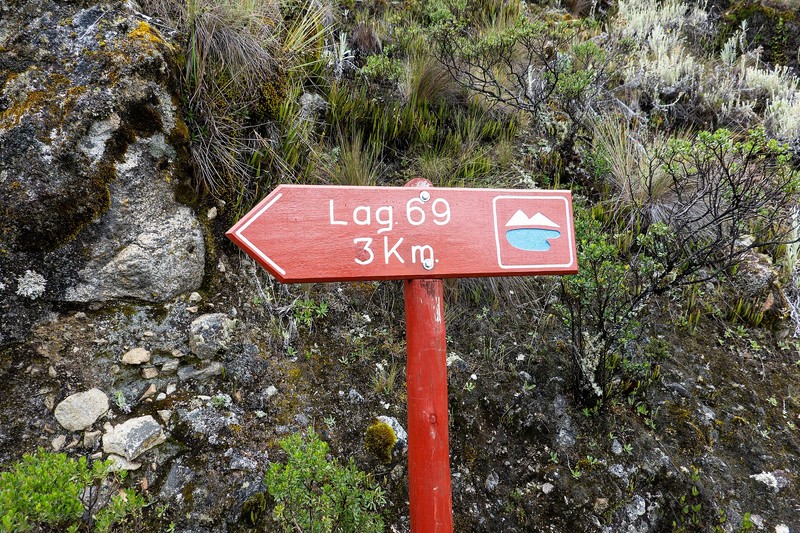
The main activity for visitors is the hike to the lake. Trips usually begin in Huaraz, from where travellers drive through the Llanganuco Valley to the Cebollapampa area. The mountain trail to Laguna 69 starts there. The walking section is approximately 7 kilometres each way, and the ascent usually takes around three hours, depending on fitness, weather and group pace.
Along the way, hikers encounter streams, small cascades, mountain meadows and panoramic views of the surrounding peaks. The final section becomes steeper and requires stamina. The reward is a view of the brilliant turquoise lake set among rugged rocks and snowy mountains. Most visitors make the trip as a day excursion, but should allow ample time for transport, the climb, rest stops and the descent.
Trail difficulty and altitude
The hike to Laguna 69 is generally considered moderate to strenuous, primarily because of the high altitude. Even physically fit travellers may experience breathlessness, headaches, weakness or dizziness due to the reduced oxygen available at this elevation. Spending time in Huaraz or another high-altitude settlement to acclimatise before the hike is therefore important.
Do not attempt to climb too quickly. Maintain a steady pace, take breaks and drink water regularly in small amounts. If you develop a severe headache, nausea, poor coordination or worsening symptoms, stop ascending and descend to a lower altitude. Seek medical help if symptoms are serious. Travellers without high-altitude hiking experience may prefer an organised excursion with a reputable local operator.
Flora and fauna
The area around Laguna 69 is part of Huascarán National Park, a protected landscape with diverse high-altitude ecosystems. The trail features mountain grasses, low shrubs and patches of queñual woodland. These plants are adapted to sharp temperature changes, intense ultraviolet radiation and a short growing season.
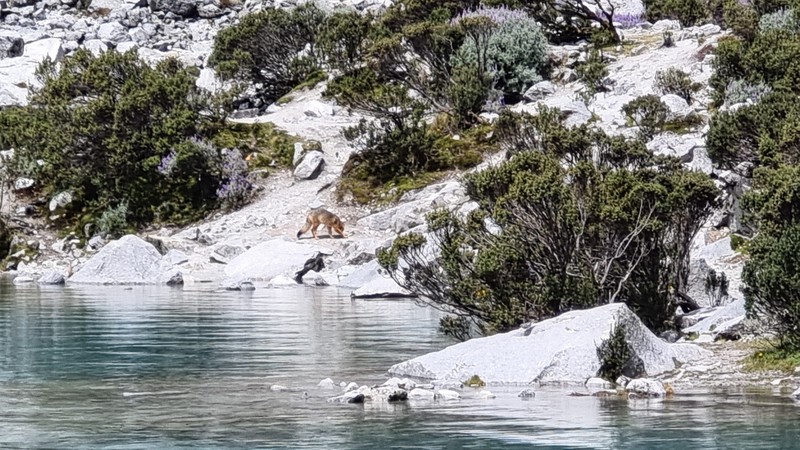
Wildlife in the region includes vizcachas, rodents that resemble long-tailed rabbits, as well as Andean foxes and other mountain species. Shyer animals may be difficult to spot, so sightings depend on the season and luck. Mountain birds adapted to high elevations can sometimes be seen overhead. To protect the environment, visitors should stay on marked trails, avoid feeding wildlife and carry out all rubbish.
Best time to visit Laguna 69
The dry season, which generally runs from May to October, is usually the most favourable period for hiking in the Cordillera Blanca. Extended rainfall is less likely, and visibility in the mountains is often better. Months with more stable weather are especially popular, although conditions can change quickly even during the dry season, bringing cold winds, clouds, rain or snow at higher elevations.
Rain is more frequent from October to April, and trails may become slippery. Before travelling, check trail conditions, the weather forecast and current access rules for the national park. Be prepared for cold temperatures in the mountains even when the weather in Huaraz feels relatively warm.
How to get to Laguna 69
The main starting point is Huaraz, a city in the Ancash region. From there, travellers usually drive through the Yungay area and Llanganuco Valley to Cebollapampa. The road distance from Huaraz to the trailhead area is approximately 96 kilometres, and journey time depends on road conditions, transport and stops. Many visitors choose an organised day tour that includes transport and assistance with the hike.
Before setting out, check current entry requirements, purchase the appropriate ticket and confirm whether a tour operator authorised by the park is required. Huascarán National Park is a protected area, so visitors must follow park staff instructions and all current restrictions.
What to bring
Bring sturdy shoes with good grip, warm layered clothing, a waterproof jacket, a hat, sunglasses and sunscreen. Solar radiation is particularly intense at high altitude, and temperatures can fall quickly when the wind picks up or the weather changes. Carry enough water, nutritious snacks, a small backpack, a personal first-aid kit and a fully charged phone. Trekking poles can make both the ascent and descent easier.
Assess your fitness in advance, take the altitude seriously and leave enough time for the return descent. Check the weather forecast, follow your guide’s advice and do not approach dangerous areas near the water or on exposed rocks just to take a photograph.
Why visit Laguna 69?
Laguna 69 brings together many of the features that make the Peruvian Andes special: a glacier-fed lake of extraordinary colour, imposing snow-covered peaks, crisp mountain air and a trail that reveals several natural landscapes in a single day. The hike requires effort, but the panorama at the lake makes it one of the most memorable experiences in the Ancash region.
This is more than a beautiful place for photographs. It is part of a protected mountain environment in which glaciers, lakes, plants and animals form a connected ecosystem. Responsible travel helps preserve Laguna 69 for future generations. For hikers and lovers of high-altitude scenery, it is one of Peru’s most striking natural attractions.
Gallery