Chavín de Huántar is one of the most important archaeological sites in ancient Peru, located in a high Andean valley in the Ancash region. This monumental complex was a major religious and ceremonial center in the pre-Columbian era, attracting people from different parts of the Andean world. Its history is closely connected with the Chavín culture, which influenced religious ideas, artistic traditions, and cultural connections among ancient Peruvian societies.
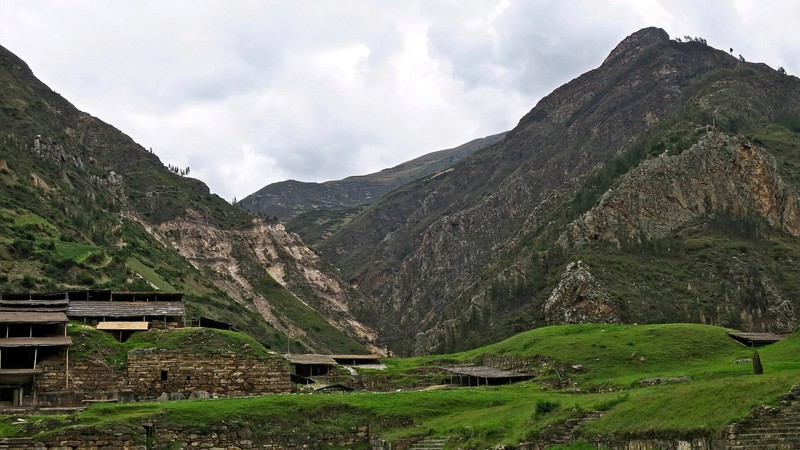
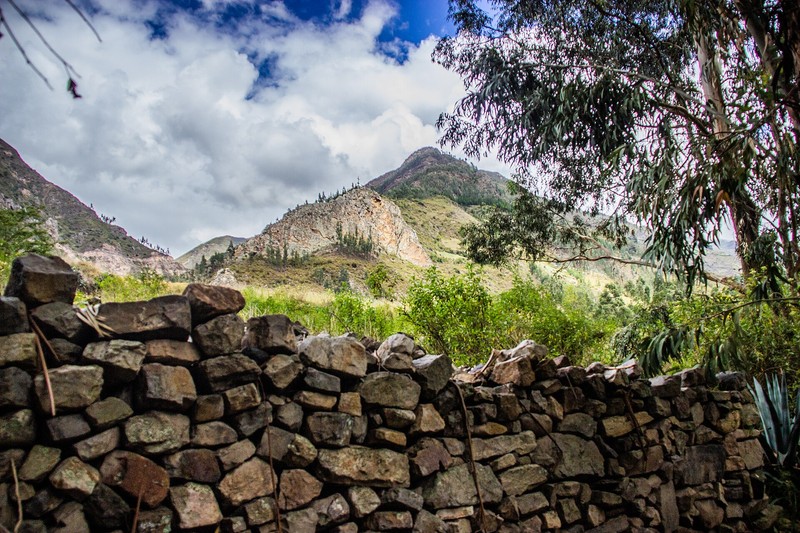
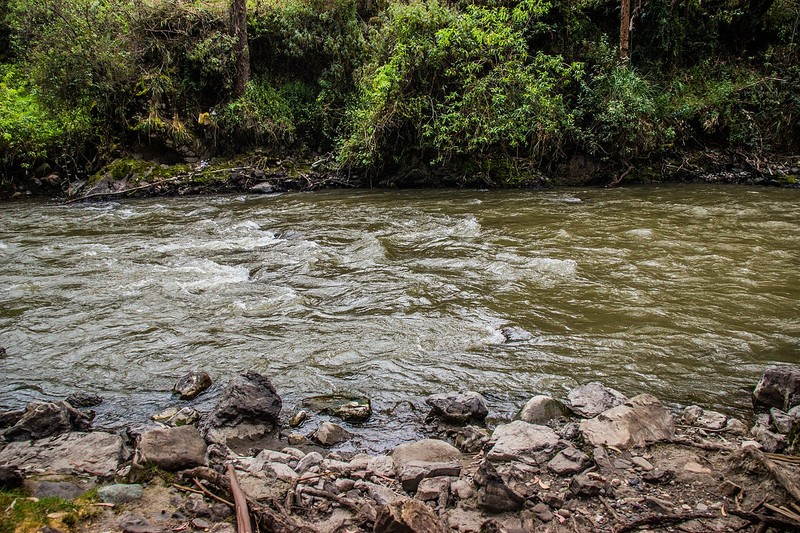
The archaeological complex lies at approximately 3,150–3,200 meters above sea level, where the Mosna and Huachecsa rivers meet. Its position between the Pacific coast and the eastern Andes encouraged the exchange of goods, ideas, and religious traditions. Today, Chavín de Huántar is regarded as one of the most significant sites for understanding the early history of Andean civilizations.
History of an Ancient Ceremonial Center
The Chavín culture developed approximately between 1500 and 300 BCE. During this period, Chavín de Huántar became an important place of worship and pilgrimage. Visitors arrived from distant mountain communities and coastal regions. Archaeological finds reveal the wide distribution of artistic imagery and religious symbols associated with Chavín culture.
The complex was important for more than religious ceremonies. It was also a place of cultural interaction where people with different languages and traditions met. These contacts helped spread artistic motifs, ideas about supernatural forces, and stoneworking techniques. Researchers regard Chavín de Huántar as a major center of cultural exchange in the ancient Andes, although the origins of particular traditions and the nature of its political organization remain subjects of study.
Temple and Plaza Architecture
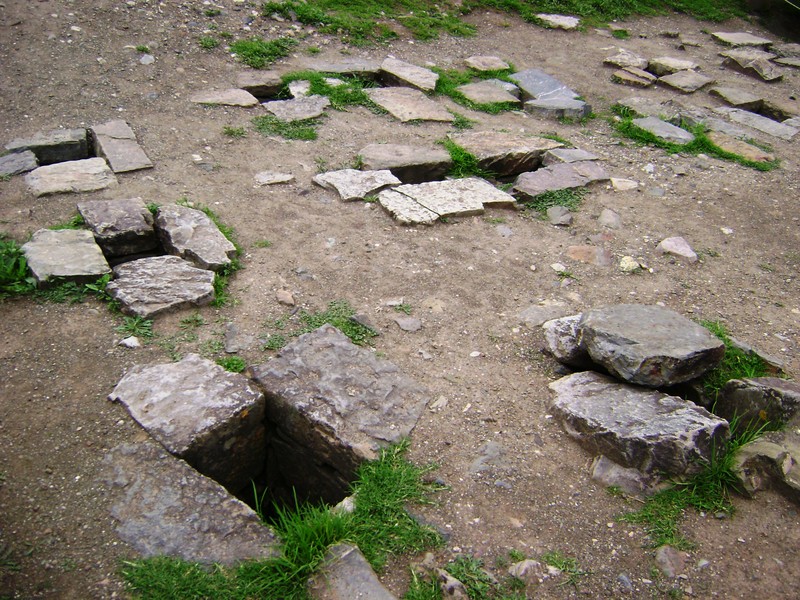
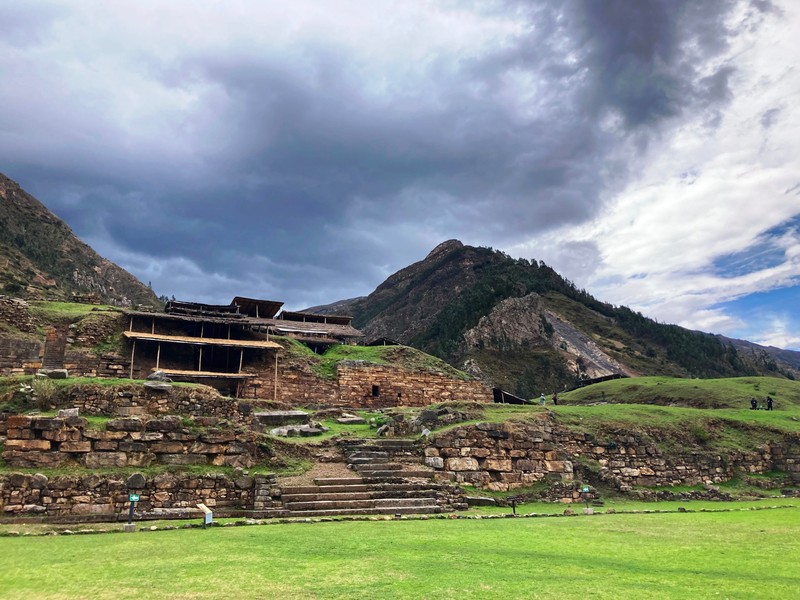
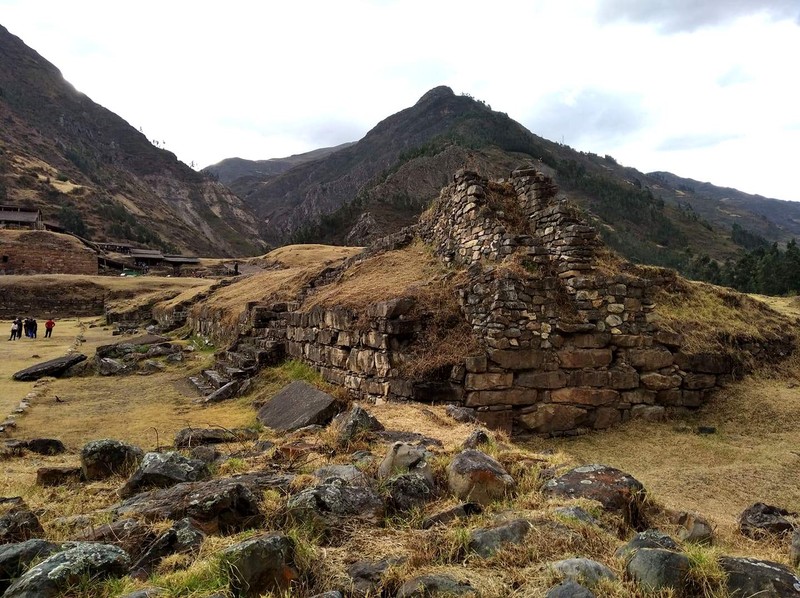
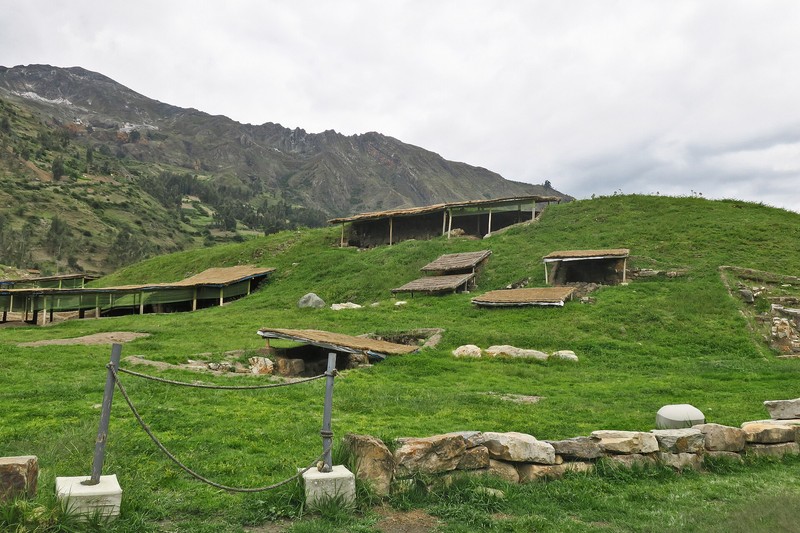
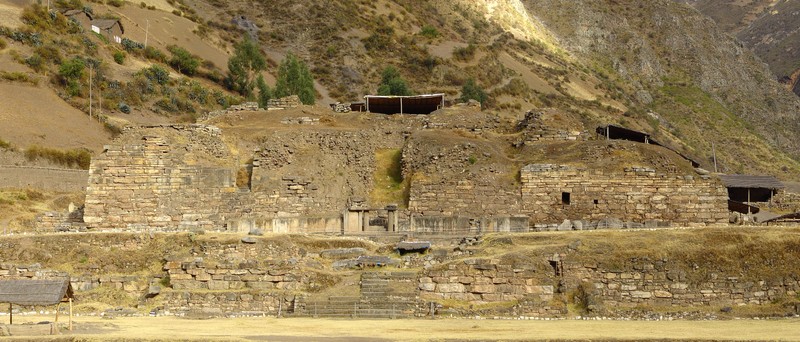
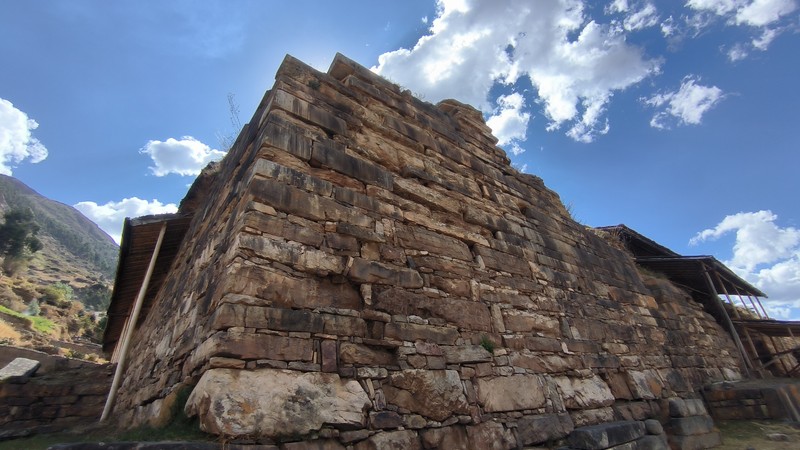
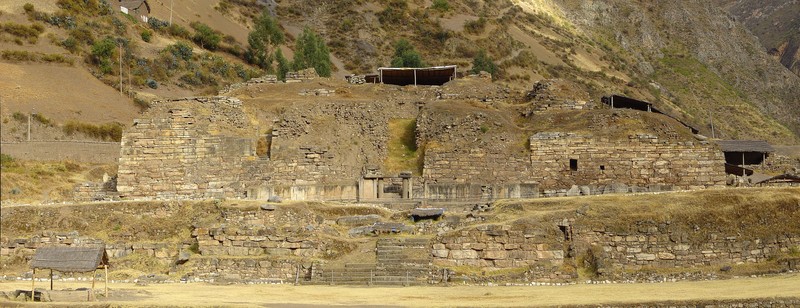
The complex consists of monumental stone buildings, platforms, terraces, and plazas. Structures were built using dressed stone, demonstrating the considerable engineering knowledge of their builders. Buildings were repeatedly remodeled and expanded, so the archaeological site preserves evidence of several stages of development.
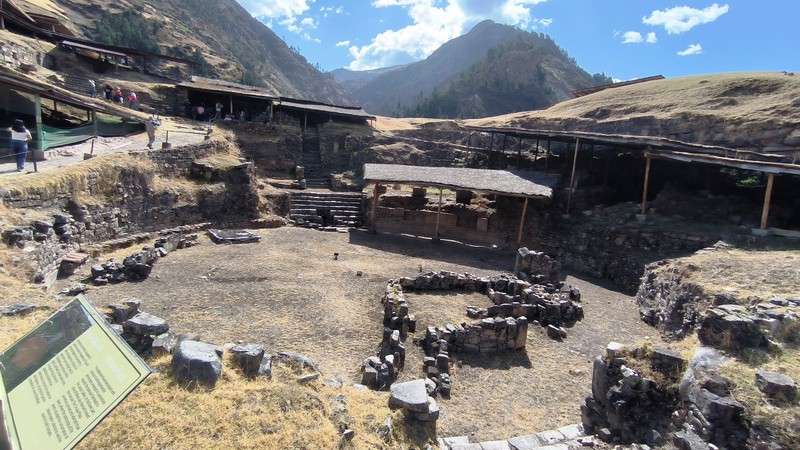
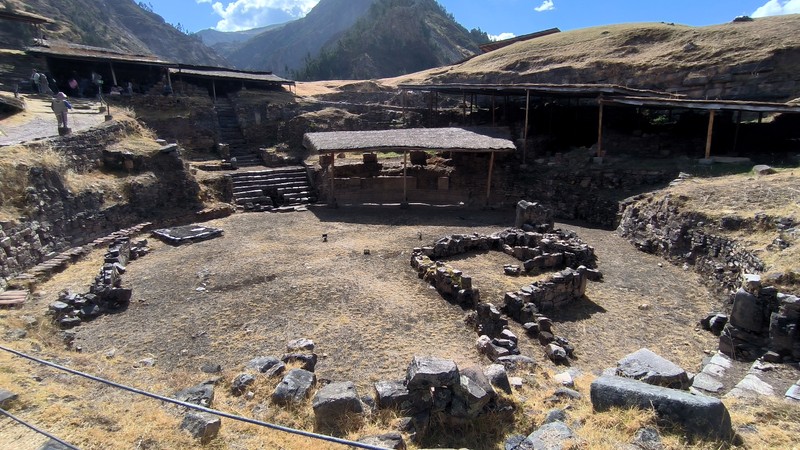
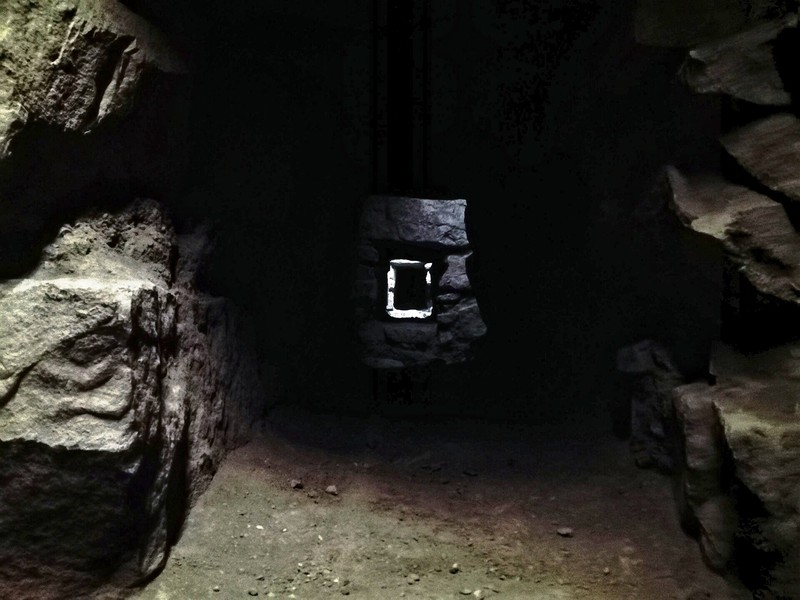
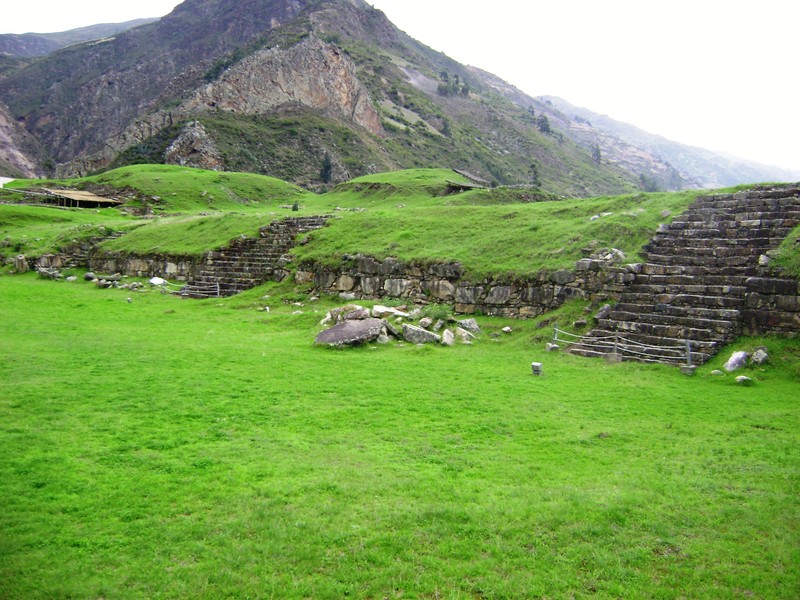
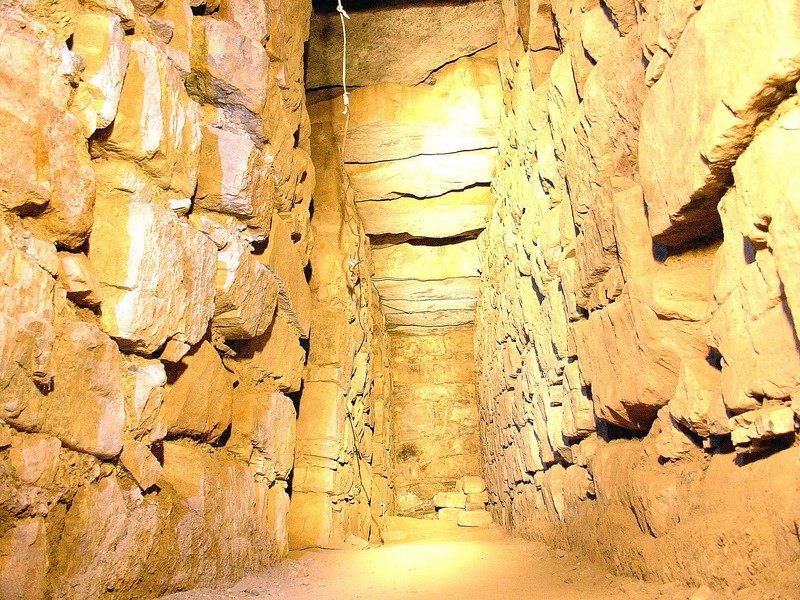
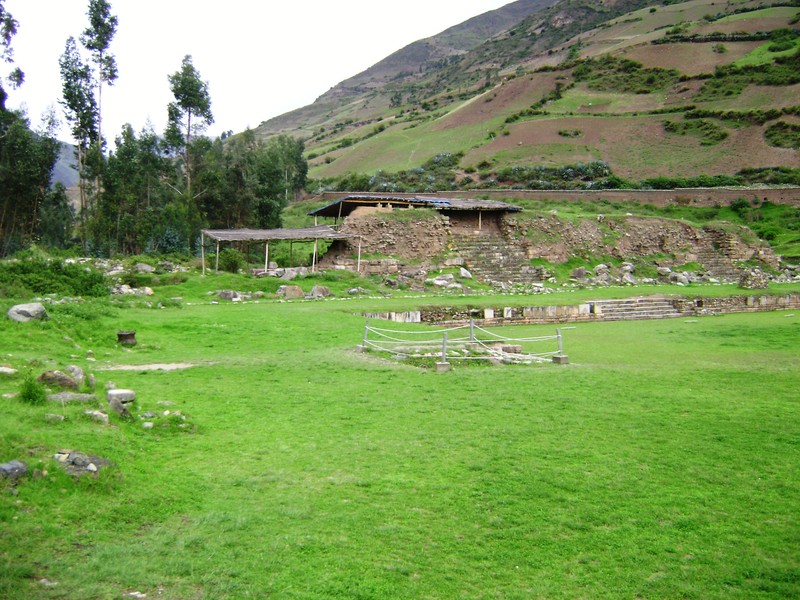
Open plazas surrounded by massive temple structures are among the most distinctive features. They may have been used for gatherings and ceremonies connected with the religious life of the center. Underground galleries and internal passages form a complex network within the monumental buildings. Ventilation channels and drainage systems show how carefully builders considered the movement of air and water.
The combination of massive stone walls, narrow corridors, enclosed chambers, and open plazas created an unusual architectural environment. It differed from ordinary settlements and emphasized the complex's special purpose. The layout of Chavín de Huántar is one of the most striking examples of monumental construction in the early history of the Andes.
The Lanzón and Underground Galleries
One of Chavín de Huántar's best-known features is the Lanzón, a monumental stone sculpture associated with the inner chambers of the temple. Its surface depicts a mythological figure combining human and animal characteristics. Elements resembling fangs, claws, and snakes appear in the composition, reflecting motifs common in Chavín art.
The Lanzón stands in a narrow interior space, emphasizing its ritual significance. The site's underground galleries form a complex network of corridors and chambers, some associated with ceremonial activities. The precise function of every room cannot always be established, so researchers are cautious about attempting to reconstruct ancient rituals in full.
The underground architecture is particularly notable for its combination of stone masonry, ventilation, and drainage. These engineering solutions made it possible to use interior spaces in a high-altitude climate and challenging terrain. The galleries remain among the archaeological site's most unusual features.
Stone Sculpture and Religious Symbolism
Chavín de Huántar is renowned for its monumental stone art. Reliefs featuring anthropomorphic and zoomorphic figures survive on stone slabs, columns, and other architectural elements. Human features intertwine with images of predators, snakes, and birds. This symbolism was a defining characteristic of the Chavín artistic tradition.
Famous works include the Raimondi Stele and the Tello Obelisk. They demonstrate the complexity of ancient ideas about the world and the skill of stone carvers. Their images contain numerous interwoven details, making interpretation challenging. Scholars connect these motifs with religious beliefs and ideas about natural forces, although the precise meaning of individual symbols remains under investigation.
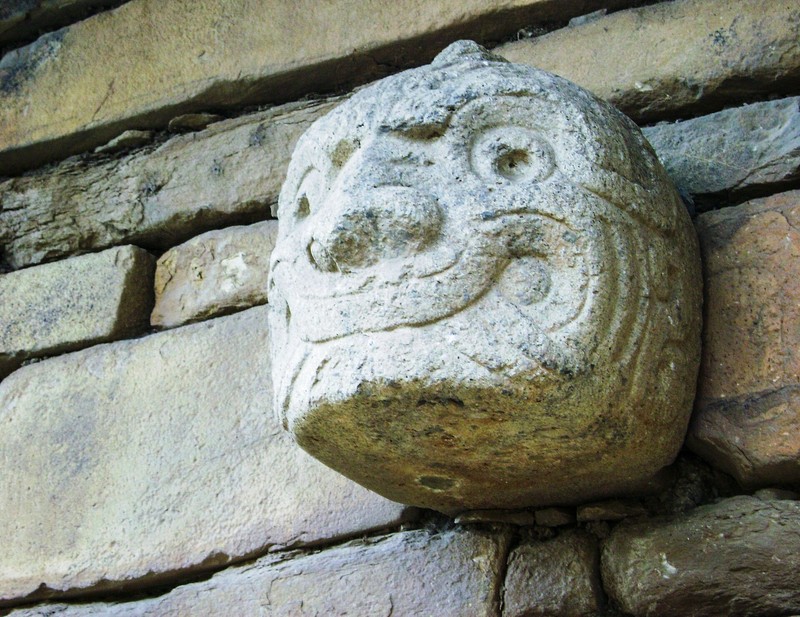
Carved stone heads projecting from the complex's walls are another characteristic feature. They differ in facial details, and some combine human and animal traits. Together with the reliefs and sculptures, they create the distinctive artistic appearance of Chavín de Huántar.
Religious and Cultural Significance
Chavín de Huántar was an important center of pilgrimage and religious interaction. Its influence extended far beyond the surrounding valley: artistic styles and symbolic motifs associated with Chavín culture spread across different regions of ancient Peru. The complex brought together people who may have come to participate in ceremonies, worship, or exchange offerings.
The architecture and imagery indicate a complex system of religious ideas. However, no written accounts by the site's builders have survived, so many aspects of their beliefs must be reconstructed from archaeological evidence. Chavín de Huántar is valuable because it allows researchers to study an ancient society through its architecture, sculpture, layout, and material remains.
Research and Preservation
During the nineteenth and early twentieth centuries, the ruins attracted travelers and researchers. The Peruvian archaeologist Julio C. Tello played a major role in studying the complex, beginning systematic investigations in 1919. Later archaeological work improved understanding of the temples' layout, construction phases, and the spread of Chavín culture.
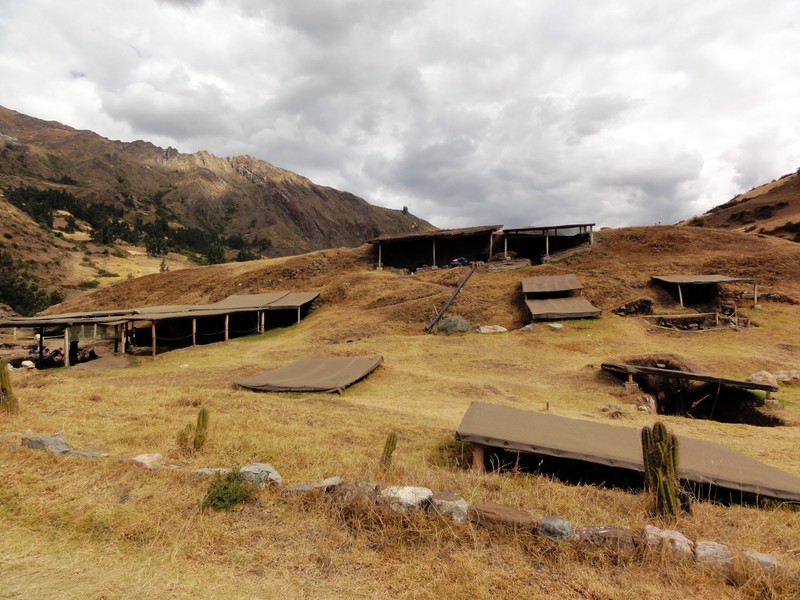
The site's history also includes natural disasters. In 1945, a powerful debris flow partially buried the archaeological complex and an adjacent part of the modern settlement. Excavation, clearance, and restoration work followed. The site remains vulnerable to heavy rainfall, flooding, earthquakes, and the gradual deterioration of its stone structures.
In 1985, the Chavín archaeological site was inscribed on the UNESCO World Heritage List. This recognition reflects its outstanding value as evidence of the architectural, engineering, and artistic achievements of early Andean societies. Preserving the site is important for understanding the ancient history of South America.
Visiting Chavín de Huántar
The archaeological complex is located in the Ancash region of north-central Peru, east of the Cordillera Blanca mountain range. Travelers commonly reach it from Huaraz, one of the region's main tourism centers. The route crosses mountain valleys and high-altitude landscapes, so visitors should plan around travel time and road conditions.
At the site, visitors can see stone platforms, plazas, temple structures, reliefs, and examples of ancient sculpture. To learn more about its history, consider visiting the National Museum of Chavín, located near the archaeological complex. Its collections include finds that help explain the artistic traditions and material culture of the ancient society.
Because of the altitude, visitors should prepare for high-mountain conditions, walk at a comfortable pace, carry water, and bring clothing suitable for changeable weather. Chavín de Huántar is especially rewarding for anyone interested in archaeology, pre-Columbian civilizations, ancient architecture, and Peru's cultural heritage.
Gallery