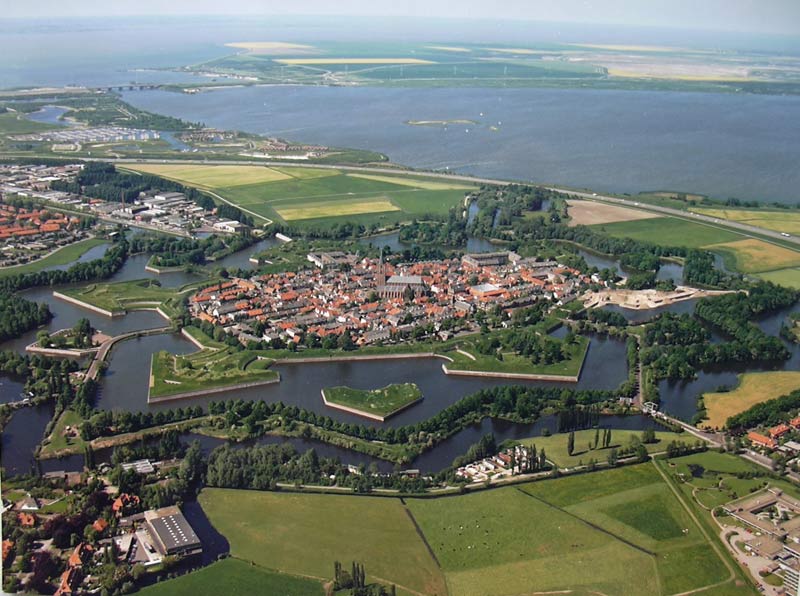
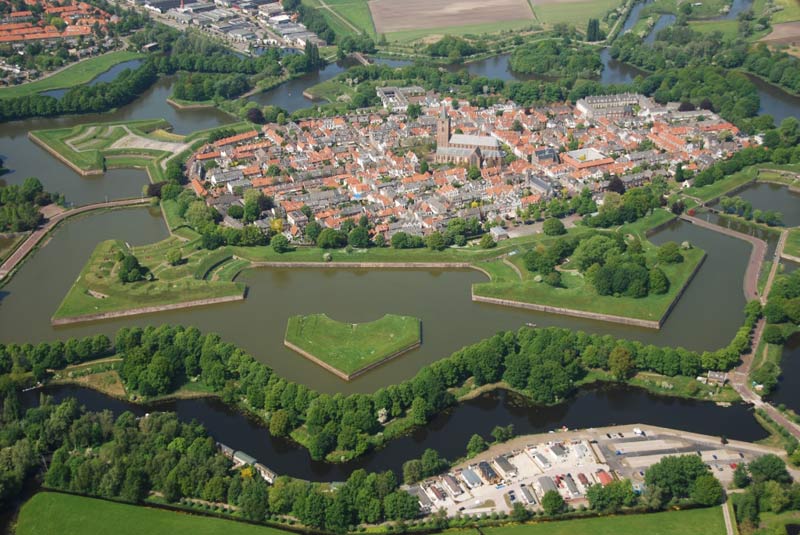
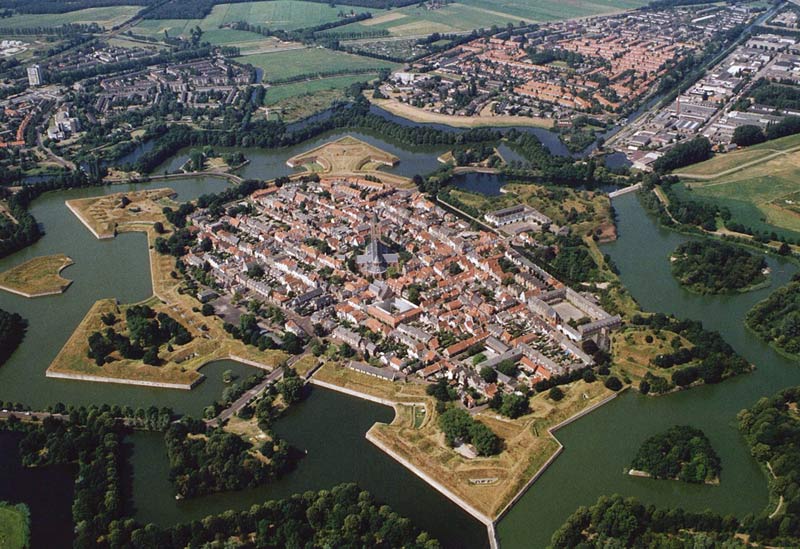
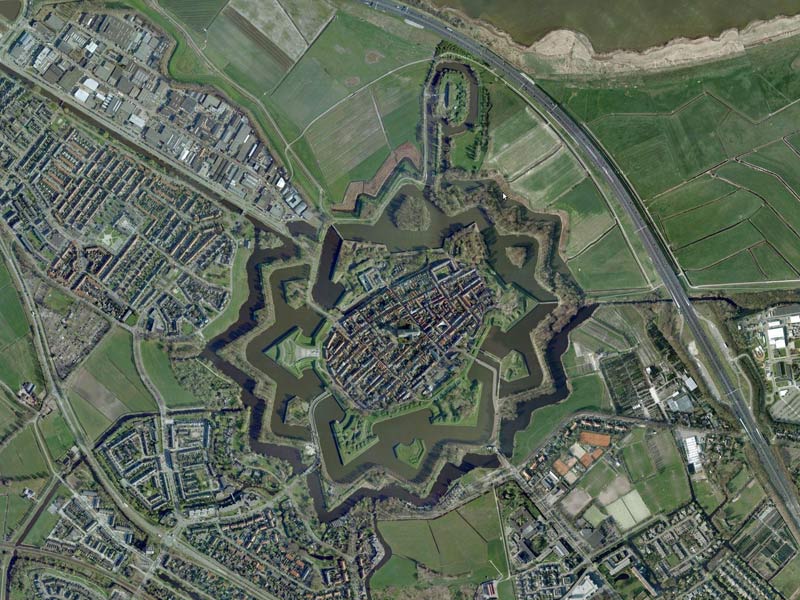
Naarden is a historic town in the province of North Holland, east of Amsterdam. It is best known for Naarden Fortress, one of the best-preserved fortified towns in the Netherlands. Its bastions, double defensive walls and surrounding moats create a striking star-shaped pattern that is especially impressive from above.
History of Naarden
The settlement dates back to the Middle Ages. Naarden received town rights in the 14th century and developed into a place of commercial and strategic importance. Its position east of Amsterdam made it an important point for defending the historic heart of Holland.
By 1579, Naarden was an established fortified town. After French forces captured it in 1672, its defences were substantially improved. Bastions, earthworks, moats and other structures were developed to withstand artillery attacks. During the 19th century, Naarden became part of the New Dutch Waterline, a defensive system designed to slow enemy advances by deliberately flooding large areas of low-lying land.
Naarden Fortress
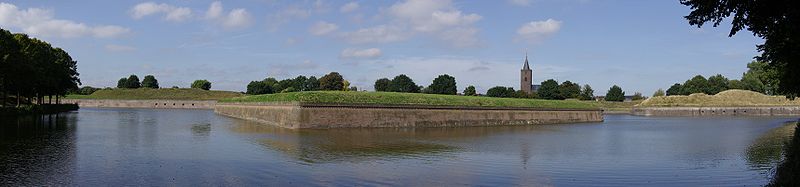
The town's main attraction is its distinctive star-shaped fortress. Bastions and defensive walls form an intricate perimeter surrounded by water-filled moats. This design helped defenders monitor approaches and direct fire towards potential attackers.
Today, visitors can walk along the ramparts and enjoy views of canals, green spaces and historic buildings. The surviving fortifications make Naarden an outstanding example of early modern European military architecture.
The Great Church
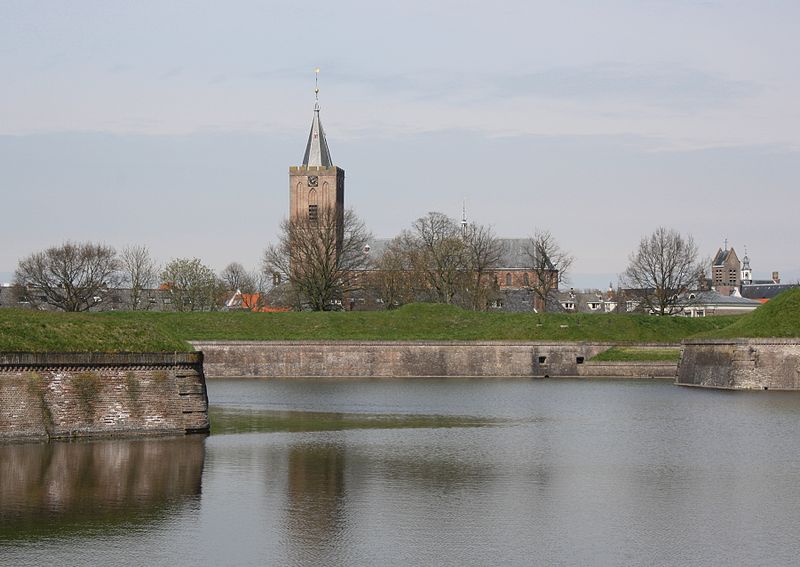
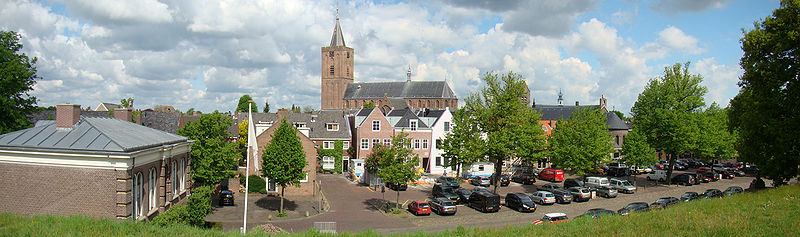
At the heart of the old town stands the Grote Kerk, also known as St Vitus Church. It was consecrated in 1479 and is an important example of Late Gothic architecture. One of its most remarkable features is the painted wooden barrel vault dating from the early 16th century, decorated with an extensive series of biblical scenes.
Museums and historic streets
The Dutch Fortress Museum (Nederlands Vestingmuseum) explores the history of fortifications, artillery and Dutch military defences. Its displays explain how the fortress evolved and why Naarden was important to the defence of Amsterdam.
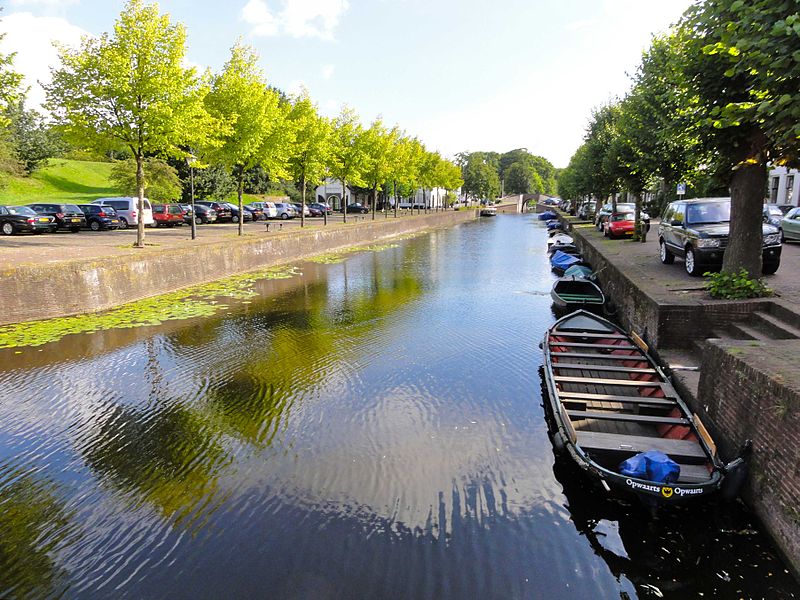
The old town is ideal for a relaxed walk along narrow cobbled streets lined with historic houses, small shops and cafés. Visitors can explore the fortress gates, bastions and canals while discovering the town's distinctive layout.
The Dutch Water Defence Lines
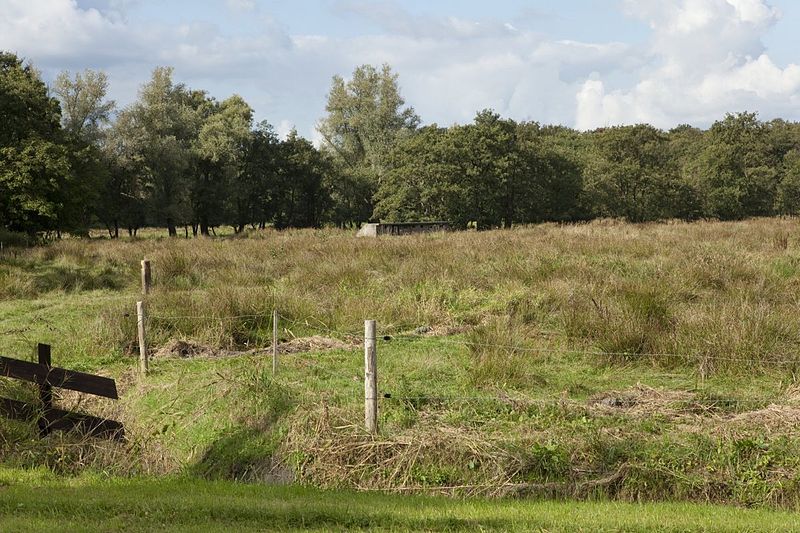
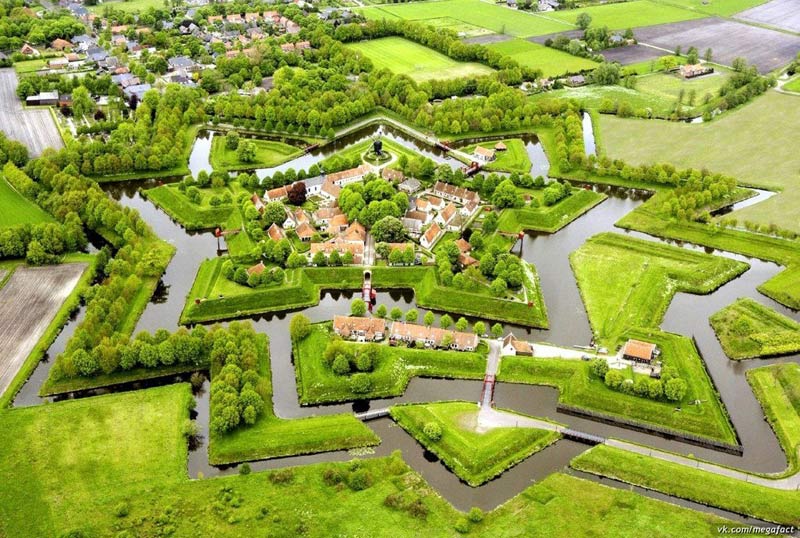
Naarden forms part of the Dutch Water Defence Lines, a UNESCO World Heritage Site. This extensive defensive network includes fortified towns, forts, dikes, sluices and canals. In times of danger, low-lying fields could be flooded with a shallow layer of water: too deep for soldiers to cross easily on foot, yet too shallow for larger boats. Naarden was an important fortified point within this system.
Things to see in Naarden
Allow several hours or a full day to explore the town. Walk along the ramparts, visit the Grote Kerk and the Dutch Fortress Museum, then wander through the historic centre and stop at a café. Naarden is particularly rewarding for visitors interested in history, architecture and unusual urban design.
Gallery