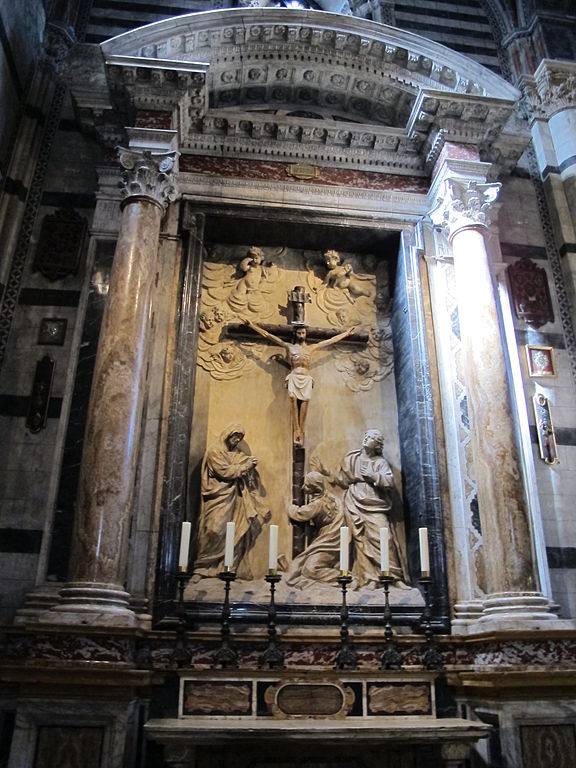
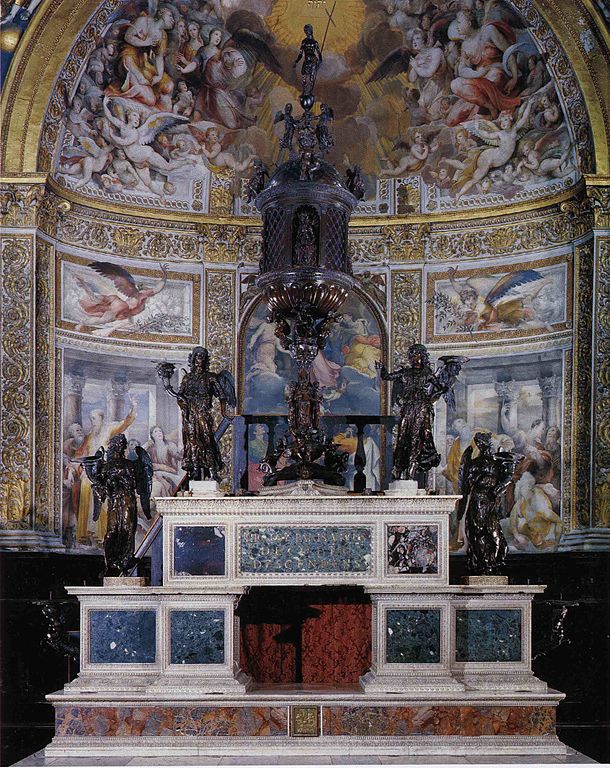
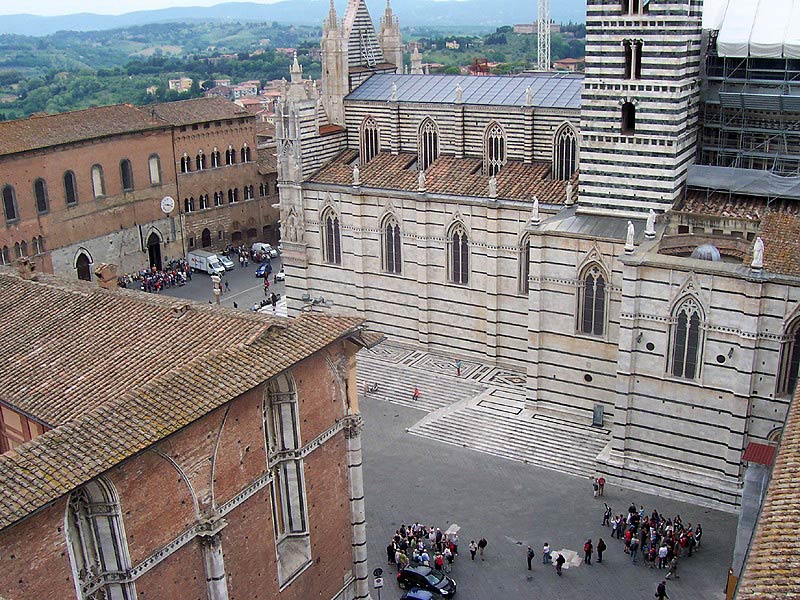
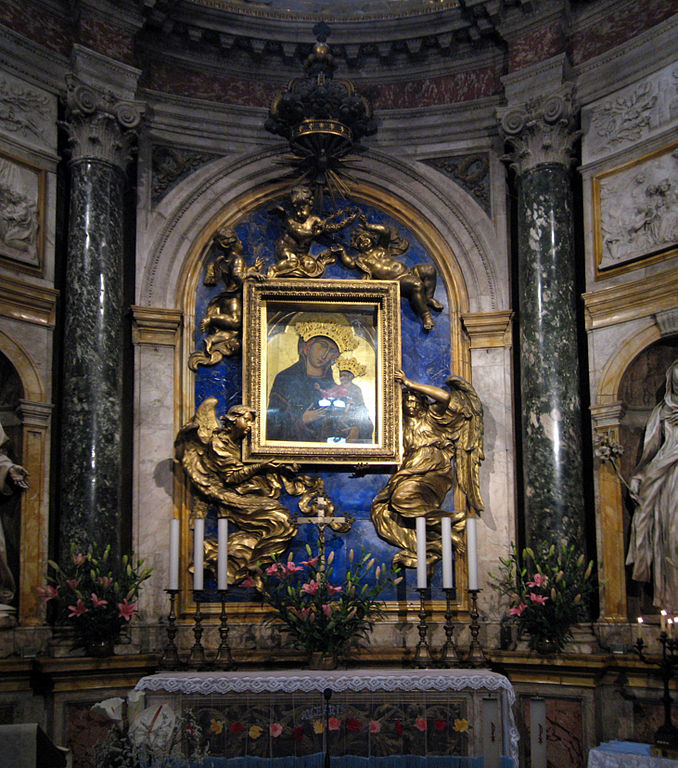
Siena Cathedral, also known as the Duomo of Siena, is a magnificent church dedicated to the Assumption of the Virgin Mary. Located in the historic centre of Siena in Tuscany, it is one of the outstanding monuments of medieval Italy. Its black-and-white marble bands, richly decorated facade, sculptures and remarkable marble floor make it one of the city's most recognisable landmarks.
History of Siena Cathedral
The present cathedral was begun in the Middle Ages, with major phases of construction taking place between the 12th and 14th centuries. It was built during the prosperous period of the Republic of Siena, when the city competed with Florence for political and economic influence. The cathedral was consecrated in 1179, although building and decorative work continued afterwards.
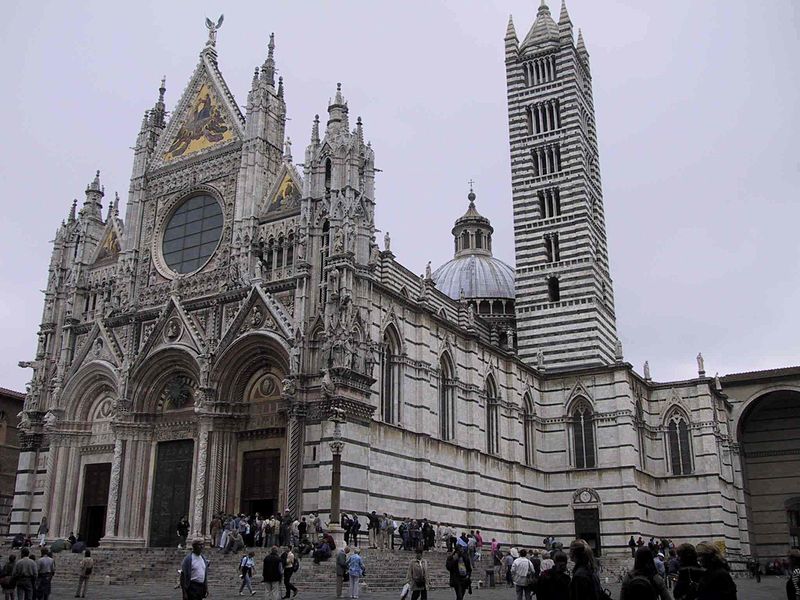
In the late 13th century, architect and sculptor Giovanni Pisano played a major role in shaping the building. He worked on the lower part of the facade and enriched it with sculptures. In 1339, Siena's government proposed a vast expansion that would have transformed the existing church into part of a much larger cathedral. The plague of 1348, financial difficulties and engineering problems prevented the plan from being completed. The surviving remains are known as the facade of the New Cathedral.
Facade and architecture
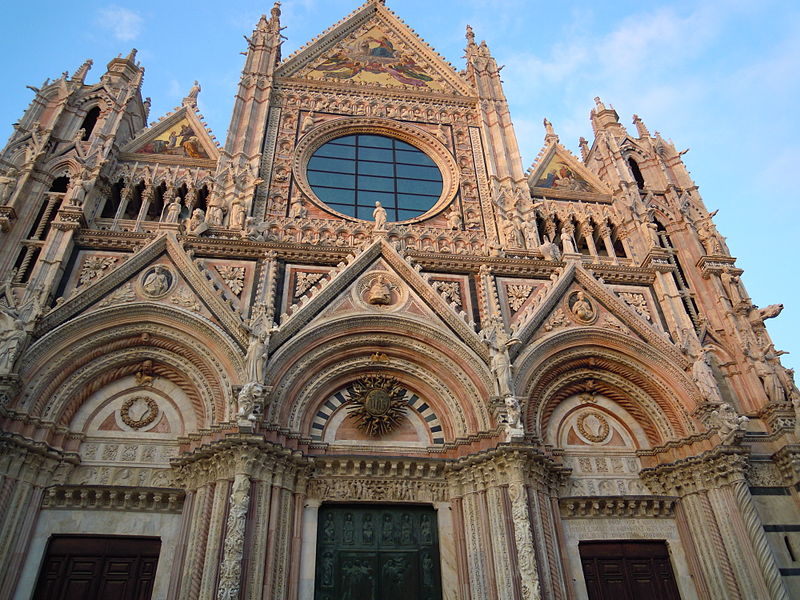
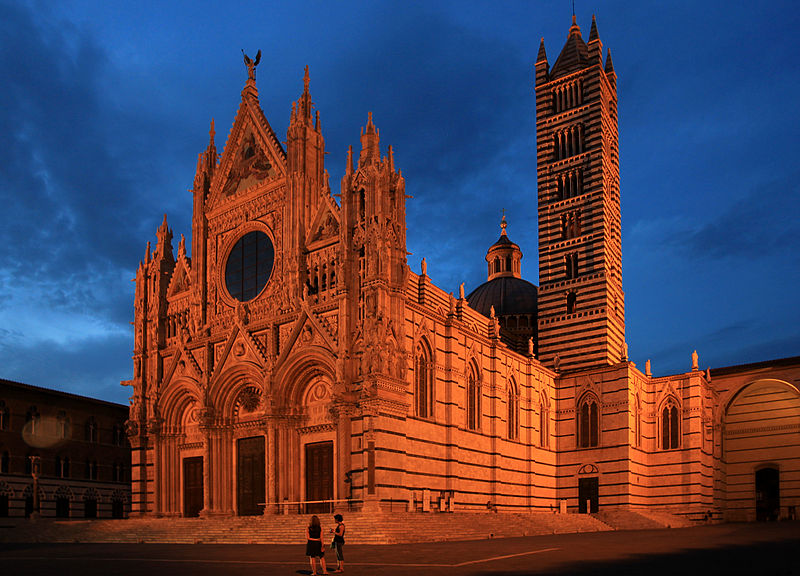
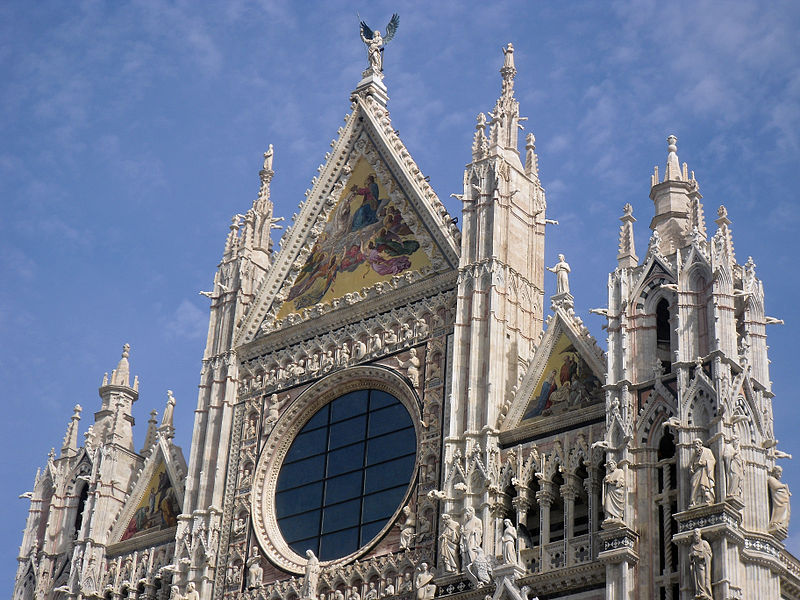
Siena Cathedral is a remarkable example of Romanesque-Gothic architecture. Its facade is clad in white marble with reddish and greenish veins. Giovanni Pisano designed the lower section, while the upper section was developed by Camaino di Crescentino in the early 14th century. Sculptures, arches, pinnacles and three pointed gables create a richly detailed composition that draws the eye upward.
The three portals are particularly striking, with carved columns and elaborate decoration. Above them is a large circular rose window surrounded by Gothic niches. Three golden mosaics complete the upper facade. Some original sculptures have been replaced by copies, while the originals are preserved in museum collections.
The dome and bell tower
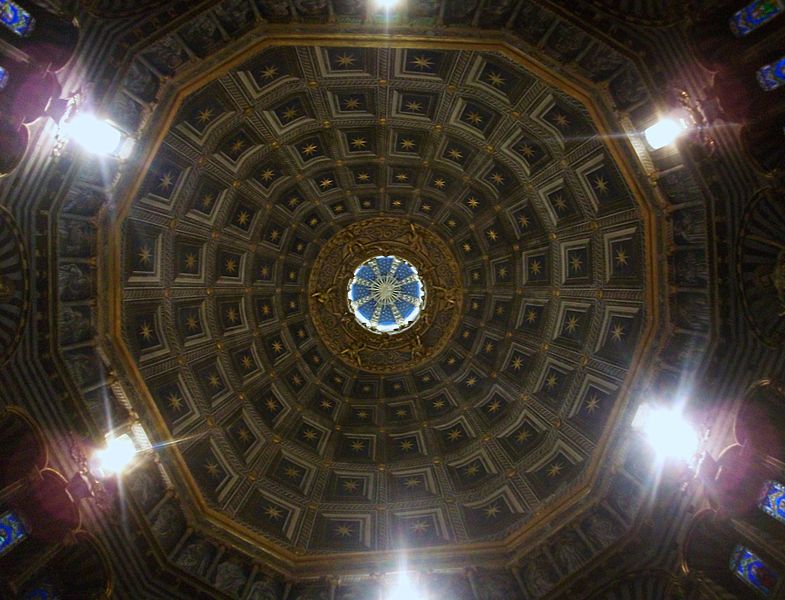
A distinctive dome rises above the central part of the cathedral. Nearby stands the bell tower, decorated with alternating bands of black and white marble. This contrast became a defining feature of Siena's architecture and appears throughout the cathedral's exterior and interior.
The interior and marble floor
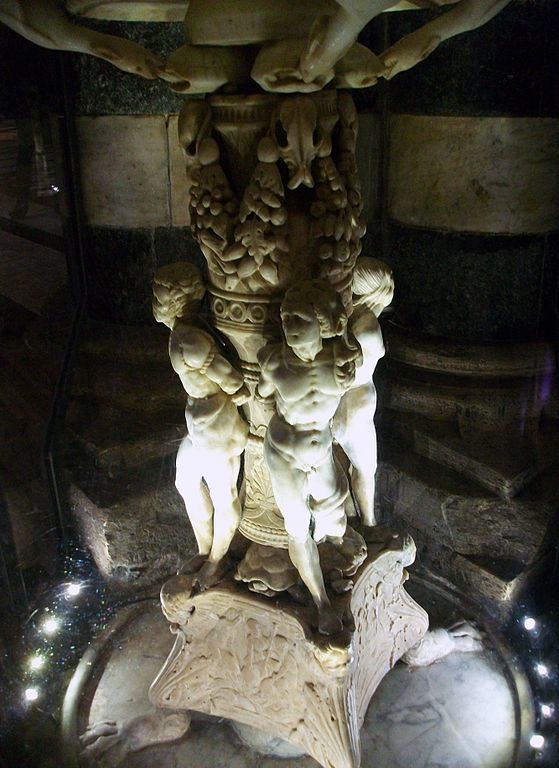
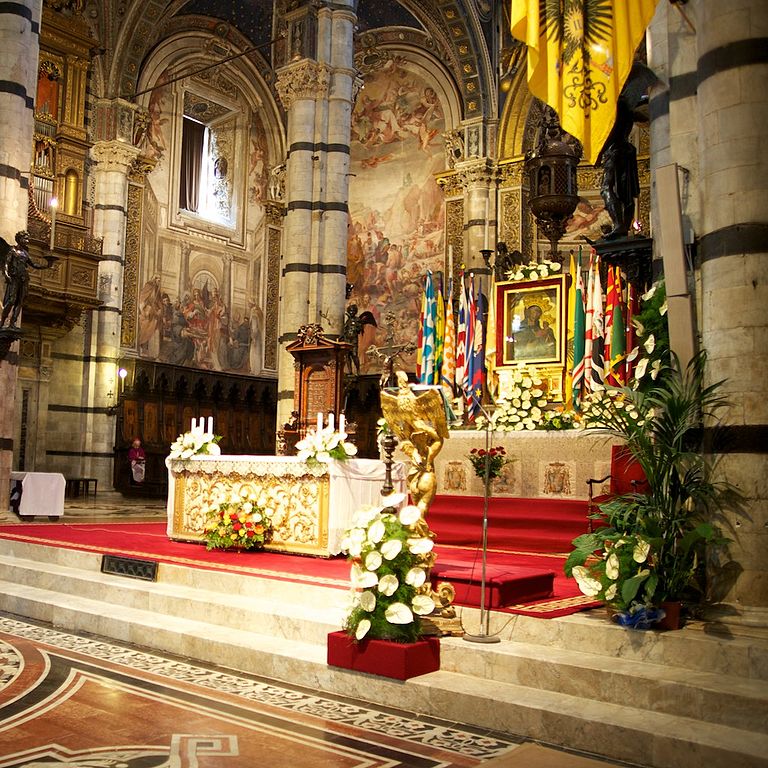
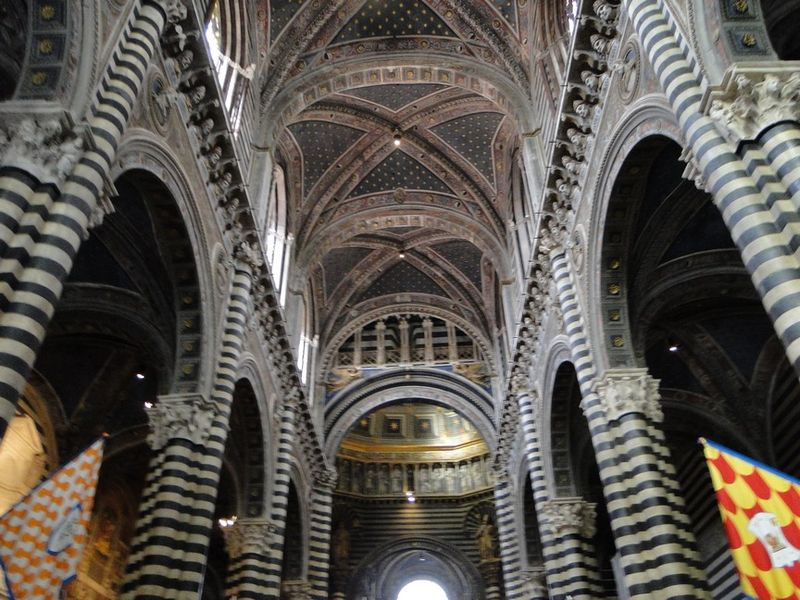
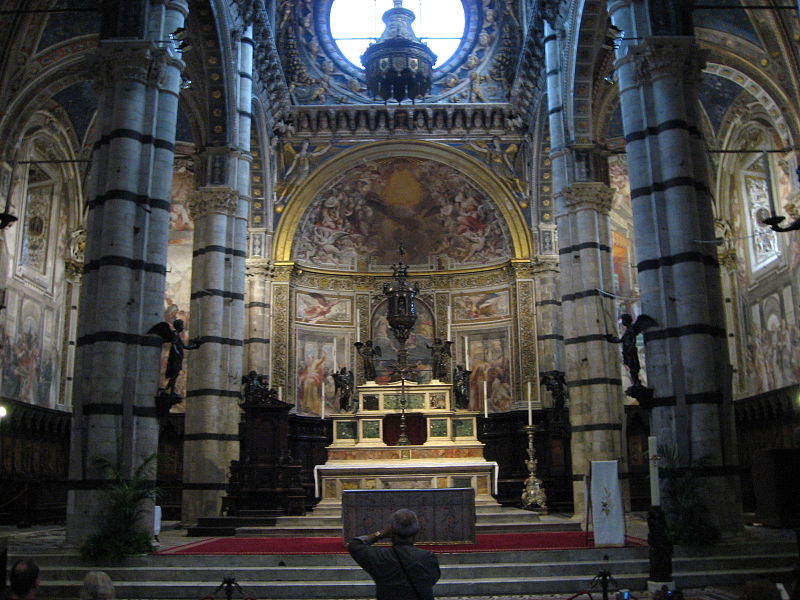
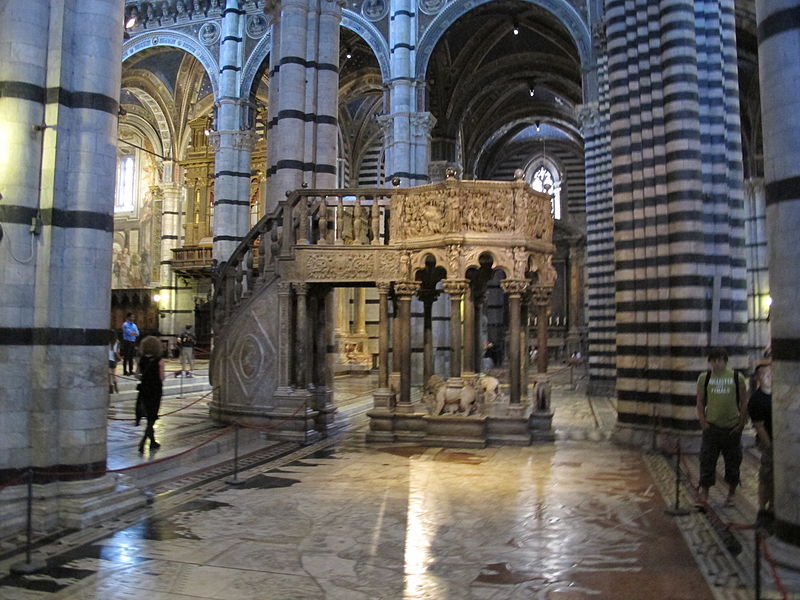
Inside, tall columns of black and white marble, repeating arches and a spacious central nave create a striking effect. One of the cathedral's greatest treasures is its floor, made up of 56 figurative panels produced between the 14th and 19th centuries using marble inlay and graffito techniques. The panels depict biblical stories, allegories and symbolic scenes. One celebrated work is the Mount of Wisdom, designed by Pinturicchio in 1505. To protect the delicate artwork, much of the floor is normally covered and is revealed to visitors only during certain periods of the year.
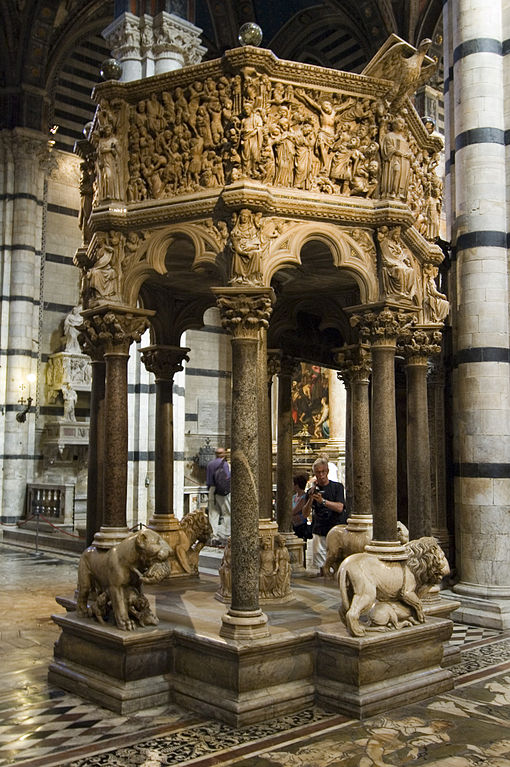
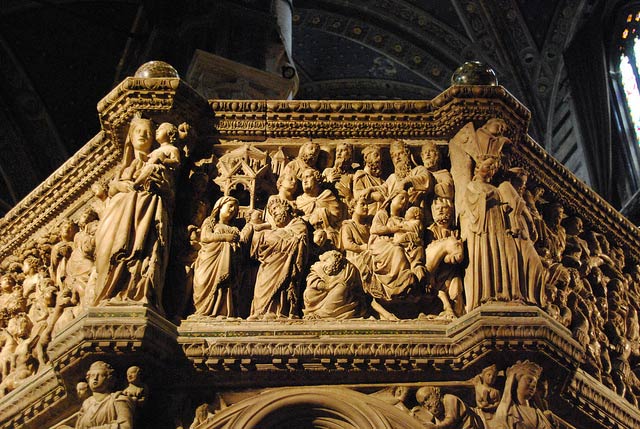
The pulpit by Nicola Pisano
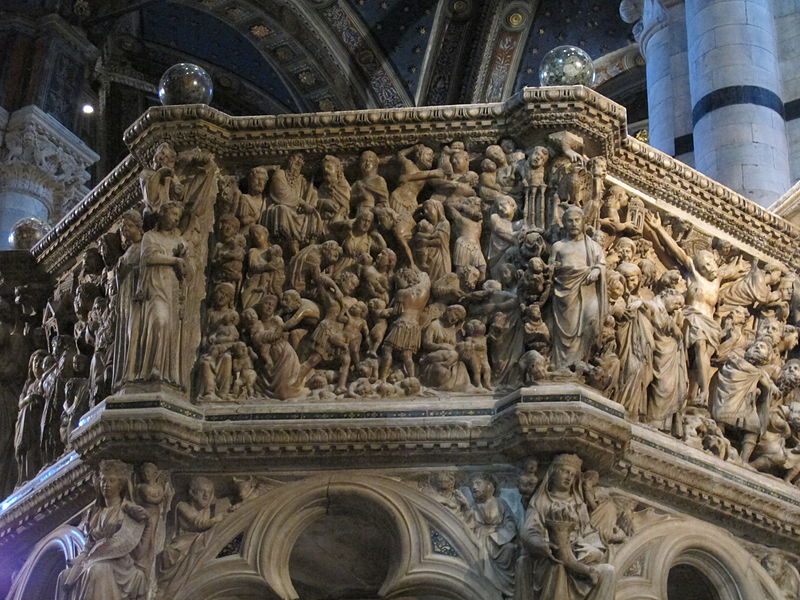
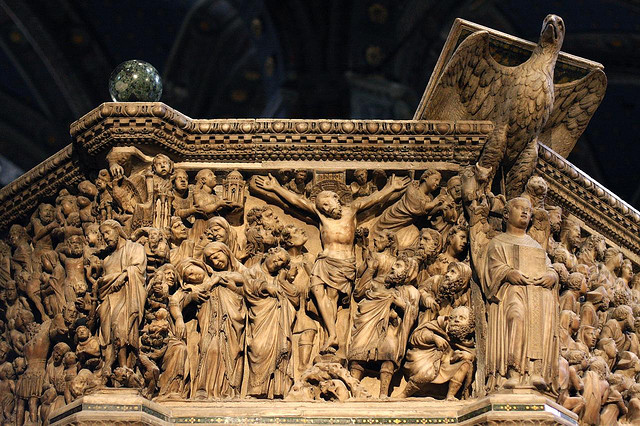
A major work of medieval sculpture is the marble pulpit created by Nicola Pisano and his workshop in the 13th century. Its reliefs depict scenes from the life of Christ and figures from the Bible. The expressive figures and complex forms reflect the influence of classical sculpture.
The Piccolomini Library and other treasures
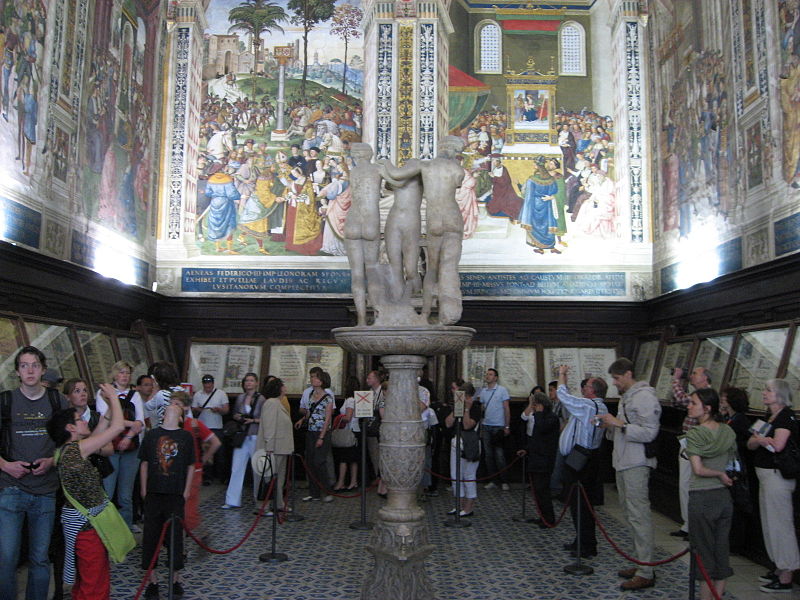
The cathedral complex includes the Piccolomini Library, whose walls are covered with vivid frescoes by Pinturicchio and his workshop depicting the life of Pope Pius II. Other parts of the complex include the Cathedral Museum, baptistery and crypt, which preserve archaeological finds and works of art from different periods.
The unfinished New Cathedral
Beside the cathedral stand the remains of an ambitious 14th-century expansion project. Construction stopped because of the plague, financial shortages and technical difficulties. The surviving structure is known as the Facciatone. Its upper viewing area offers panoramic views over Siena's rooftops and the Tuscan hills.
Siena Cathedral today
Siena Cathedral is one of Tuscany's principal attractions and forms part of Siena's historic centre, which was inscribed on the UNESCO World Heritage List in 1995. Visitors come to admire its architecture, sculptures, marble floor and artworks created over several centuries. Before visiting, it is worth checking opening arrangements, as access to some areas and the floor can vary by season and religious events.
Gallery