Hallgrímskirkja is one of Reykjavík’s best-known landmarks and one of Iceland’s most distinctive architectural symbols. This imposing Lutheran church rises above the city centre, and its unusual silhouette recalls basalt columns, volcanic cliffs and glaciers found throughout the Icelandic landscape. It is both an active place of worship and a national monument connected with the country’s history, culture and literary heritage.
The church stands on a hill in central Reykjavík. Its tall tower offers panoramic views of colourful rooftops, the harbour, the ocean and the mountain ranges surrounding the capital. Thanks to its striking design, Hallgrímskirkja has become one of the most recognisable buildings in northern Europe and a major attraction for visitors from around the world.
History of construction
The idea for the church emerged during the first half of the twentieth century, when Iceland sought to express its national identity and cultural independence. An architectural competition was held in 1929, calling for a large church with a tall tower that could also serve broadcasting purposes. The design was entrusted to state architect Guðjón Samúelsson, one of the most influential Icelandic architects of his generation.
Samúelsson began designing the building in 1937. He wanted its architecture to reflect Iceland’s natural environment, drawing inspiration from basalt formations, mountain slopes and glaciers. Construction began in 1945 and continued for several decades. The lower church hall was consecrated for use in 1948, and a new hall in the southern wing of the tower opened in 1974. The completed church was consecrated on 26 October 1986, one day before the 312th anniversary of the birth of the poet Hallgrímur Pétursson.
Architecture inspired by nature
The church’s most distinctive feature is its dramatic façade, with strong vertical lines and stepped forms. The structures on either side of the central tower resemble rows of stone columns, recalling the basalt formations found in Iceland. The building rises gradually from a broad base to a tall central tower, creating a powerful sense of upward movement.
The tower stands approximately 73 metres high and is one of Reykjavík’s most prominent landmarks. The pale concrete façade looks different under changing Icelandic skies: it contrasts sharply with blue skies in sunny weather and takes on a more dramatic appearance beneath clouds.
Hallgrímur Pétursson and the church’s name
The church is named after Hallgrímur Pétursson, an Icelandic clergyman and poet who lived from 1614 to 1674. He is best known for the Passion Hymns, a collection of fifty devotional poems about the suffering of Christ. These works have held an important place in Icelandic literature and religious culture for centuries. The name Hallgrímskirkja can be translated as the Church of Hallgrímur.
The interior and the great organ
While the exterior is monumental, the interior is relatively restrained, light-filled and uncluttered. High walls and vertical lines draw the eye towards the altar, creating a sense of space and solemn calm. This simplicity reflects the traditions of Lutheran church architecture.
One of the interior’s most remarkable features is its large pipe organ, considered the biggest in Iceland. The instrument is an important part of the church’s identity, and its sound makes the building a significant concert venue. Organ recitals, choir performances and other musical events take place here. Hallgrímskirkja remains an active parish church of the Evangelical Lutheran Church of Iceland, hosting regular services and religious ceremonies.
The tower observation deck
Going up the tower is one of the most popular experiences at Hallgrímskirkja. From the observation level, visitors can see Reykjavík’s colourful roofs, harbour facilities, coastline and surrounding mountains. On clear days, much of the city is visible, while rapidly changing weather can create striking views of clouds and distant peaks.
The observation level is reached by elevator, followed by a short walk to the viewing windows. Tower access requires a separate ticket, while entry to the church itself is generally free. Opening times can change because of services, concerts, maintenance or other circumstances.
The statue of Leif Erikson
A statue of Leif Erikson stands in front of the church. The Norse explorer is associated with early European voyages to North America. The monument was presented to Iceland by the United States in 1930 to mark the thousandth anniversary of Iceland’s parliament, the Althing. The statue is a popular photography spot and highlights Iceland’s historical connections with the wider Nordic world.
Importance to Reykjavík and Iceland
Hallgrímskirkja has become one of the defining symbols of Iceland’s capital. Its distinctive silhouette appears in travel photographs, postcards and images of Reykjavík. Its elevated position also makes the church a useful landmark for navigating the city centre.
Beyond tourism, the building represents Iceland’s effort to develop an architectural language connected to its own landscape and cultural traditions. It brings together religious life, music, historical memory and the contemporary urban environment.
Places to visit nearby
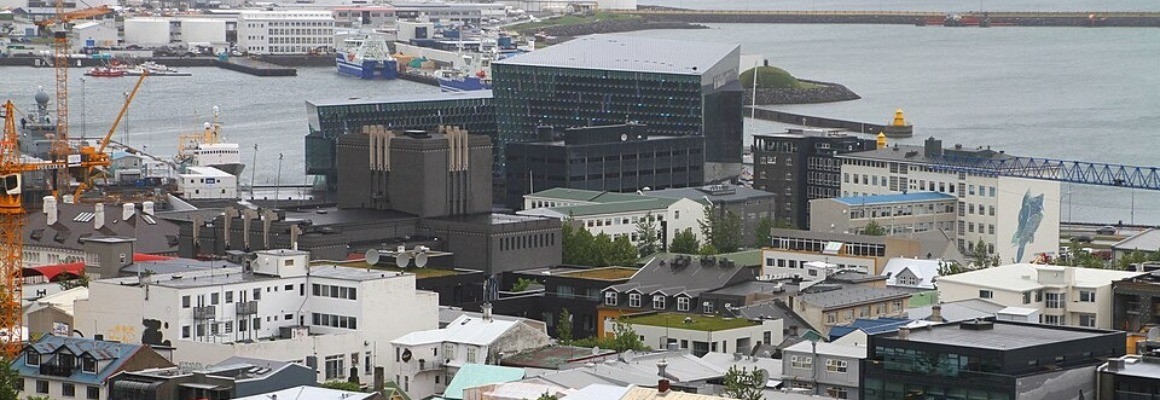
A visit to the church can easily be combined with a walk along Skólavörðustígur, a lively street lined with shops, cafés and restaurants. Art galleries, museums and small squares are also within walking distance. Visitors planning a longer route can continue towards the waterfront, the Old Harbour and Harpa Concert Hall.
Practical information
Hallgrímskirkja is located at Hallgrímstorg 1 in central Reykjavík. It is easy to reach on foot from many parts of the city, and the tall tower is visible from surrounding streets. Entry to the church is generally free, while visiting the tower requires a separate payment. Opening hours depend on the season and the schedule of services and concerts, so checking the official information before visiting is recommended.
Visitors should remain quiet inside and respect those attending worship. Access to certain areas may be restricted during services and ceremonies. Hallgrímskirkja combines bold architecture, religious tradition and the visual language of Icelandic nature, offering a memorable view of Reykjavík and an introduction to the country’s cultural heritage.
Gallery