The Great Wall of China is one of the world's best-known historic monuments and one of the largest defensive systems ever created. It crosses mountains, valleys, dry regions, and plains in northern China. Walls, earthen ramparts, trenches, watchtowers, forts, and mountain passes form a complex network built and rebuilt by different Chinese states and dynasties over many centuries.
The earliest fortifications predate the unification of China. During the Spring and Autumn period and the Warring States period, individual states built walls to protect their territories. After Qin Shi Huang unified China in the late third century BCE, some earlier defences were linked and extended. Construction continued under later dynasties. Many of the best-known brick and stone sections visible today date from the Ming dynasty, which ruled from 1368 to 1644.
Length and purpose
A survey announced by Chinese authorities in 2012 reported a total of about 21,196 kilometres for identified walls, trenches, and natural defensive barriers associated with the Great Wall system. This does not mean there is one uninterrupted stone wall: the figure includes structures from different periods, parallel defensive lines, forts, and natural obstacles.
The system helped defend northern borders, monitor movement, control strategic routes, and transmit warnings between garrisons. Watchtowers served as observation and communication points, while forts and passes controlled roads and valleys. The Wall was never an impenetrable barrier; its effectiveness depended on troops, supplies, strategy, and political circumstances.
Famous sections
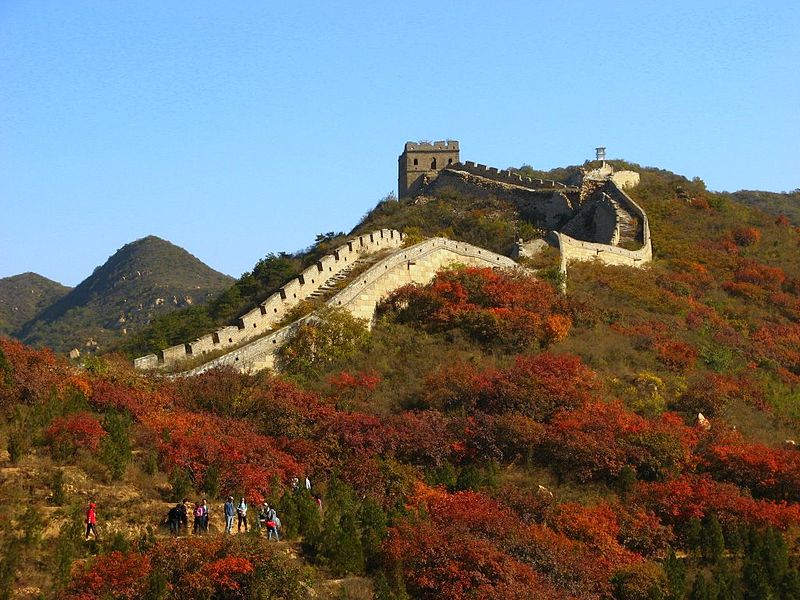
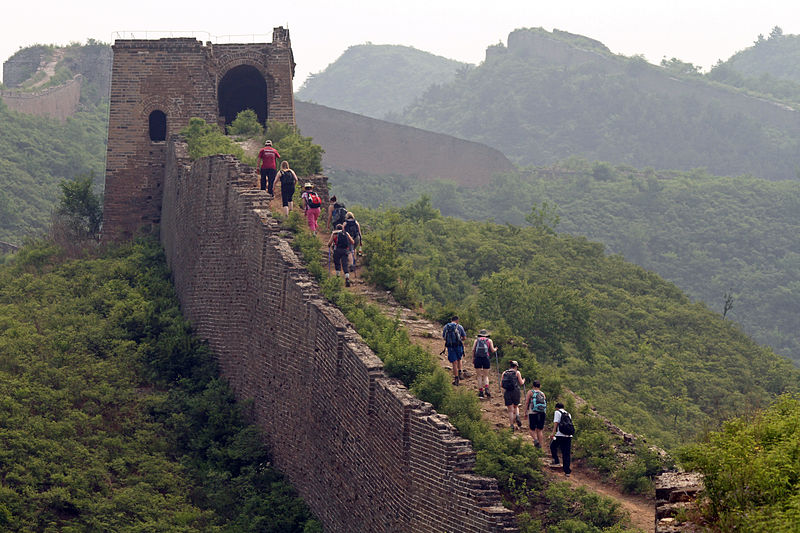
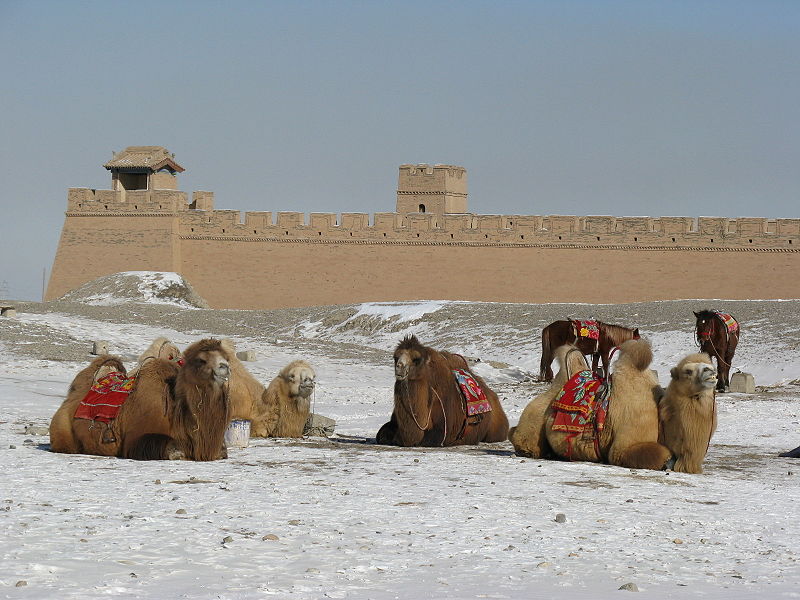
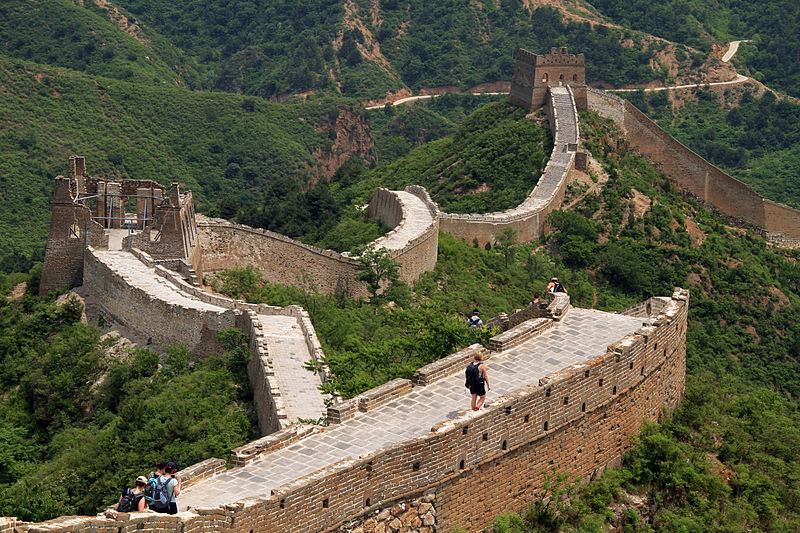
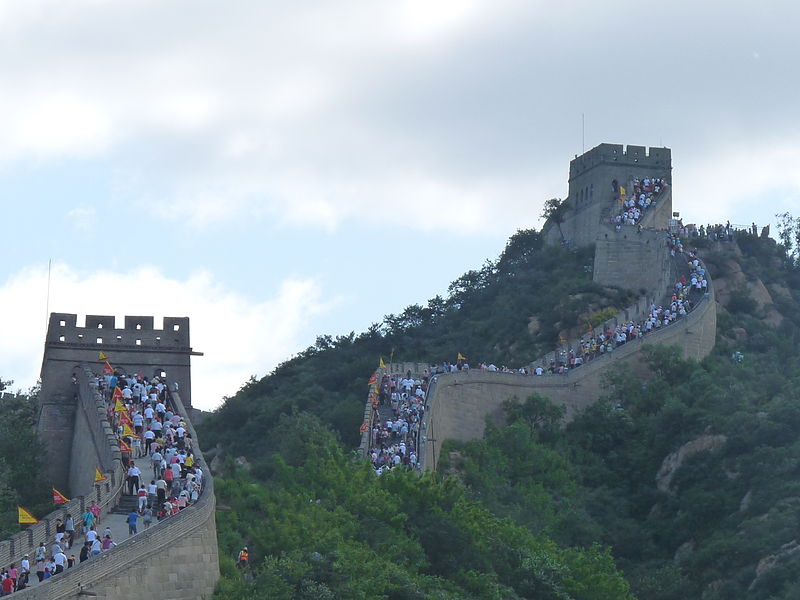
Badaling, northwest of Beijing, is among the most visited sections and features restored walls, towers, and extensive visitor facilities. Mutianyu is known for its winding ramparts among forested mountains and its many watchtowers. Jinshanling combines restored and less-restored stretches, making it attractive for longer walks and photography. Simatai is noted for steep climbs and dramatic terrain. Shanhaiguan is a historic pass near the coast, while Jiayuguan is a major fortress at the western end of the best-known Ming-era route.
Architecture and landscape
No single material was used throughout the entire system. Builders used stone and brick in many mountainous areas, while compacted earth and locally available materials were common in dry western regions. The complex includes walls of varying height and thickness, beacon towers, gates, barracks, and fortified passes. Near Beijing, the Wall follows mountain ridges; farther west, it crosses arid landscapes.
The Great Wall was inscribed on the UNESCO World Heritage List in 1987. Its preservation is challenged by erosion, wind, rain, temperature changes, vegetation, and visitor pressure. Visitors should stay on authorised routes and avoid damaging historic masonry.
Facts and myths
Contrary to a popular myth, the Great Wall cannot easily be seen from the Moon with the naked eye. It was not built in a single period, and it does not look the same along its entire length. The famous brick sections near Beijing are only the most recognisable part of a much larger system that also includes earthen ramparts, trenches, and separate fortifications.
When and how to visit
Spring and autumn are often comfortable seasons for walking on the mountain sections. Summer can be hot, while winter snow and ice may make steps slippery or lead to temporary closures. From Beijing, visitors can reach Badaling and Mutianyu by organised tour, public transport, or car, depending on the current route and timetable. Check opening arrangements, ticket requirements, and cable-car services before travelling. Wear sturdy shoes, bring water and sun protection, and take care on steep steps.
The Great Wall is worth visiting not only as a symbol of China, but also as evidence of centuries of military engineering. Its towers, passes, varied construction methods, and changing landscapes reveal how defensive architecture adapted to geography and the needs of different eras.
Gallery