The Butchart Gardens are among Canada's best-known botanical gardens. They are located in Brentwood Bay on Vancouver Island, in British Columbia, and attract visitors with carefully designed flower beds, ornamental ponds, shaded paths and a wide variety of plants. The gardens change throughout the year: spring brings bulbs and flowering trees, summer fills the beds with colour, autumn introduces warm tones, and winter features festive lights.
The story began in the early twentieth century, when Jennie Butchart decided to transform an abandoned limestone quarry near her family home into a flourishing garden. The former industrial site gradually became an extensive garden complex and is now one of Vancouver Island's major attractions.
History of the gardens
In 1904, Jennie Butchart began landscaping the limestone quarry left by the operation of her husband Robert Pim Butchart's cement business. Rather than leave the deep excavation abandoned, she chose to use its unusual terrain to create a garden. Flower beds, paths and ornamental displays appeared at the bottom of the quarry, while the tall stone walls became a natural frame for the landscape.
Over time, the family expanded the grounds and developed new themed areas, including the Japanese Garden, Rose Garden and Italian Garden. The gardens gradually gained international recognition and began welcoming visitors. In 2004, marking the project's centenary, The Butchart Gardens were designated a National Historic Site of Canada.
The Sunken Garden
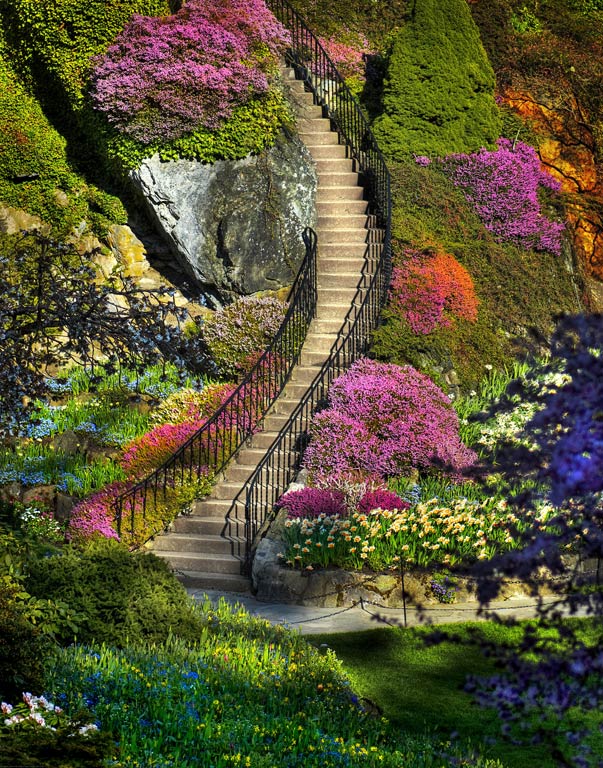
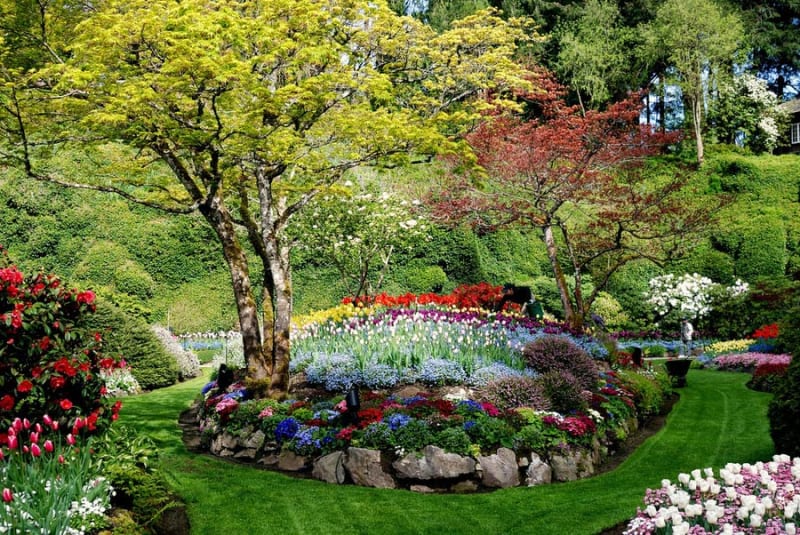
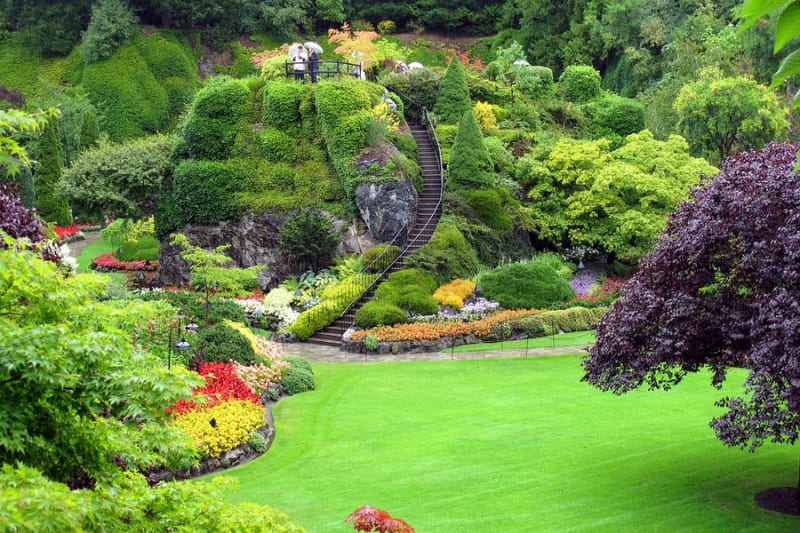
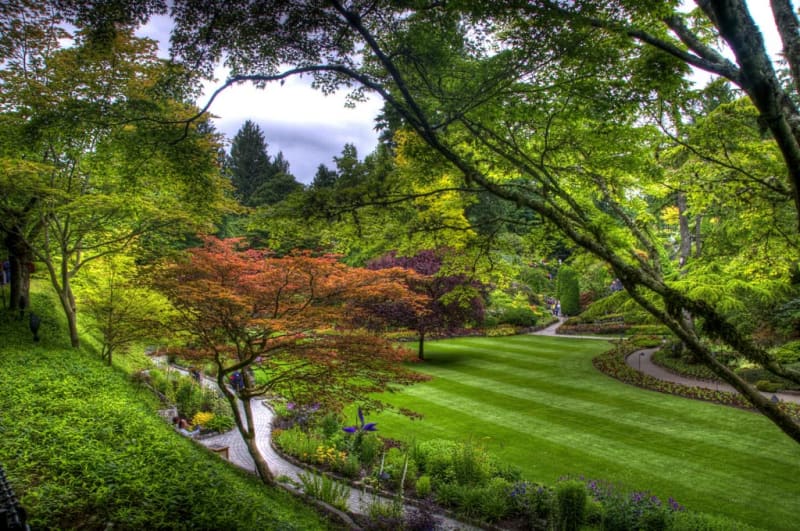
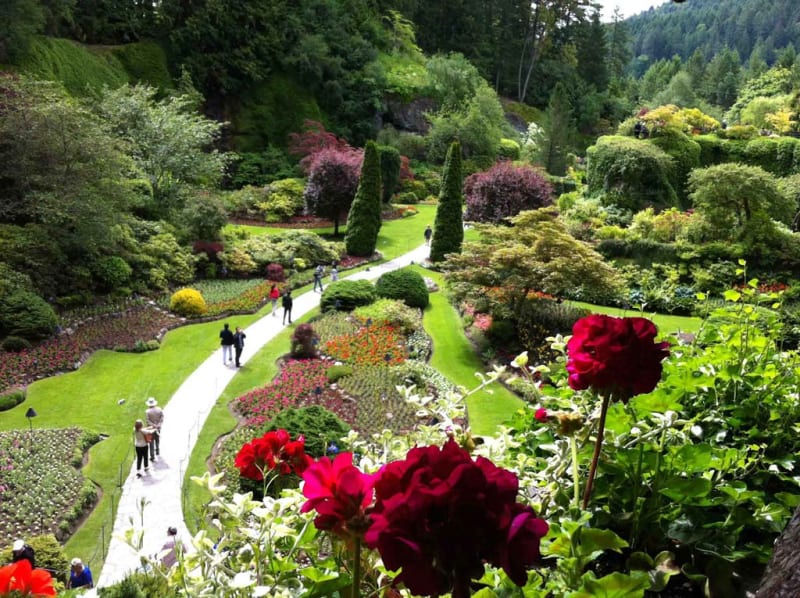
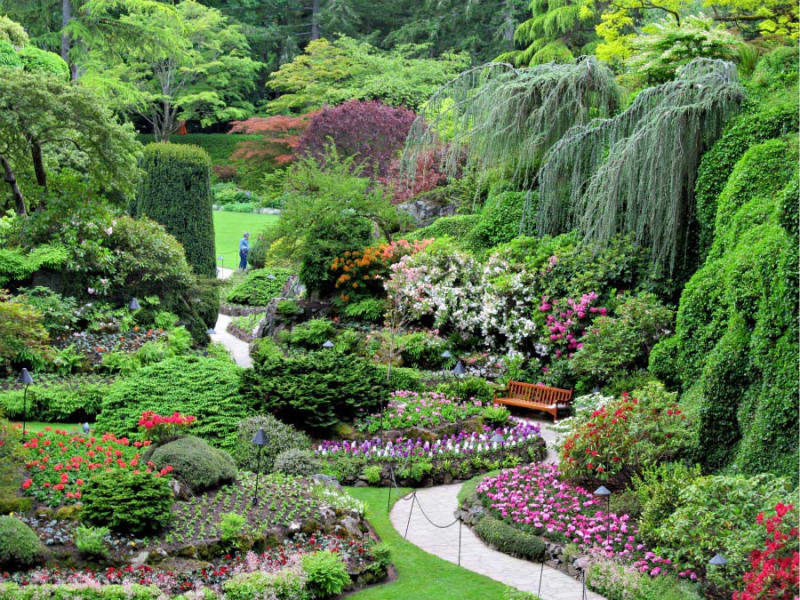
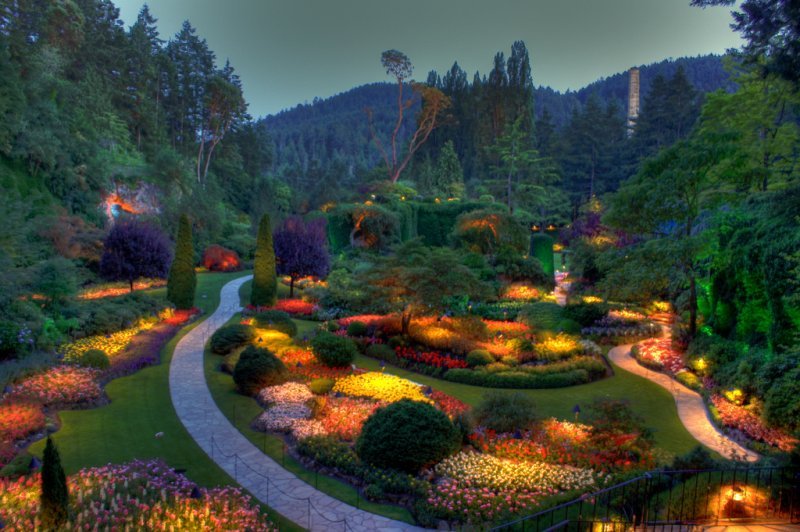
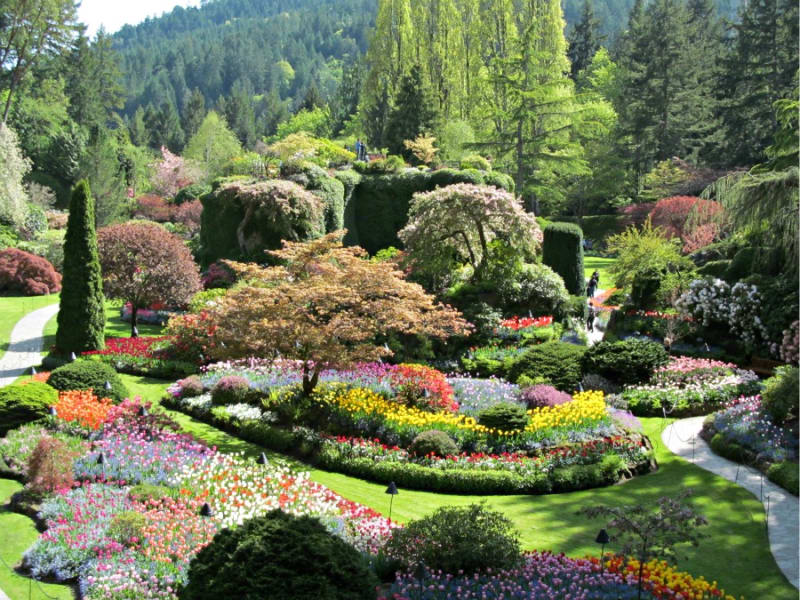
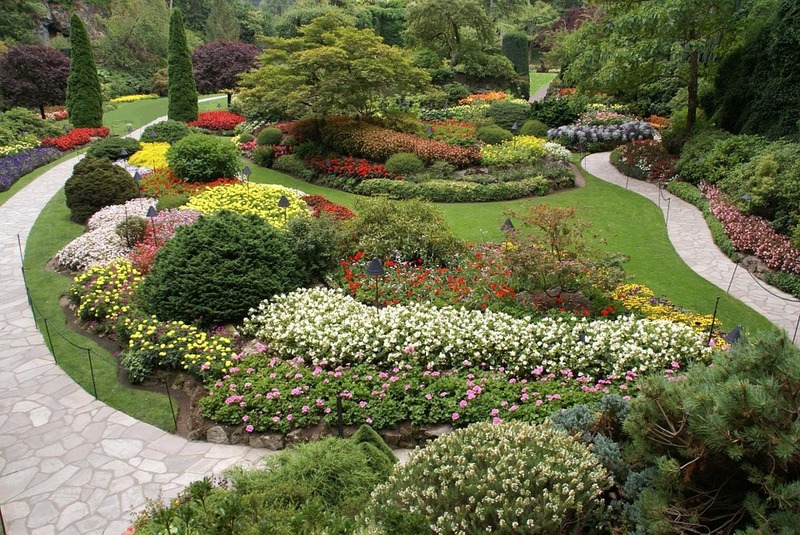
The Sunken Garden is the best-known part of the complex and its historic heart. It occupies the site of the former quarry, so its landscape is unusual: visitors descend along paths to flower beds surrounded by high limestone walls. Upper viewpoints provide panoramic views of the beds, trees and winding paths.
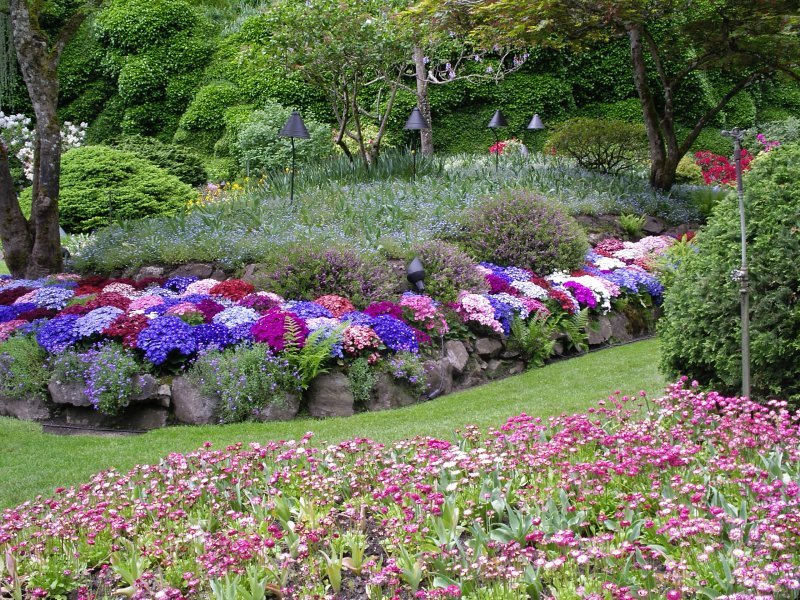
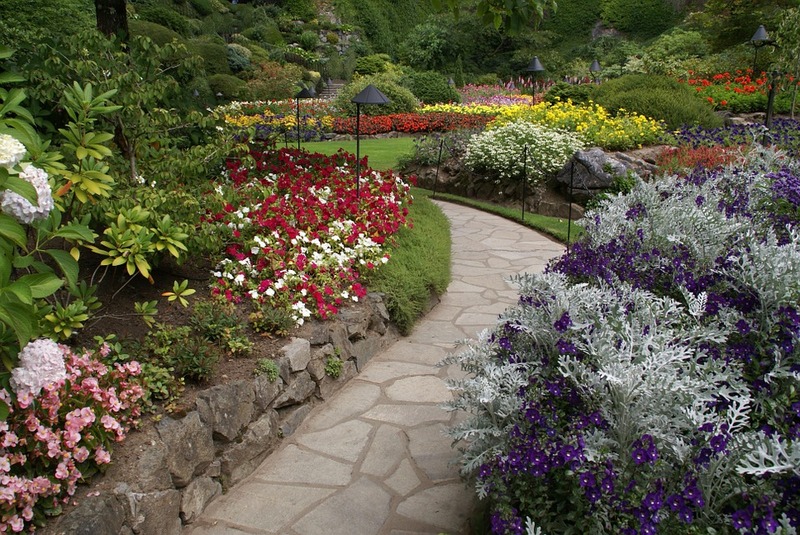
Seasonal flowers, ornamental shrubs and trees are planted throughout the garden. The displays change regularly, so a return visit can offer new impressions. Particularly striking are the colour combinations and the way plants soften the stark outlines of the former industrial quarry.
The Rose Garden
The Rose Garden is known for its many rose varieties, floral arches and carefully arranged beds. Flowers range from delicate pink and cream to rich red and burgundy. The structured planting contrasts with the more naturalistic compositions found in other parts of the gardens.
Summer is usually the most impressive period for rose lovers, when many varieties are in bloom. Exact timing depends on the weather and the season. Even outside peak flowering, the layout, hedges and decorative details make this area worth exploring.
The Japanese Garden
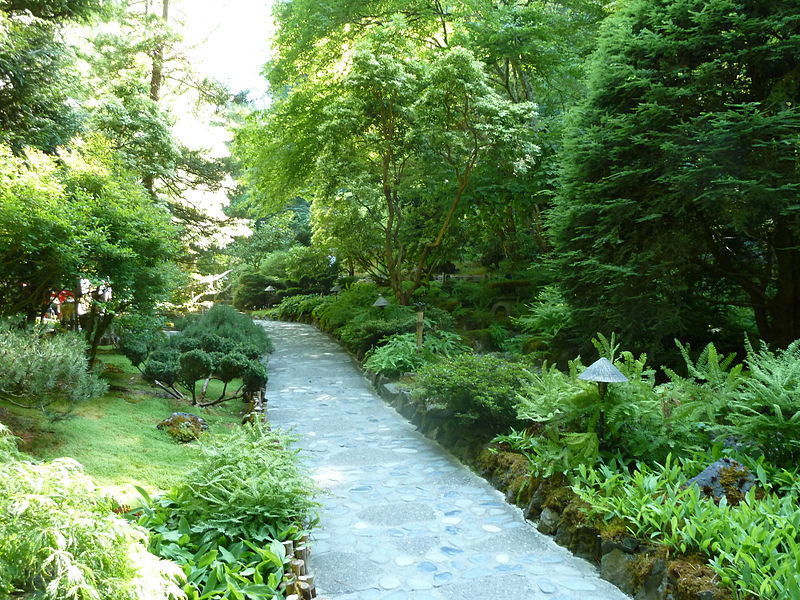
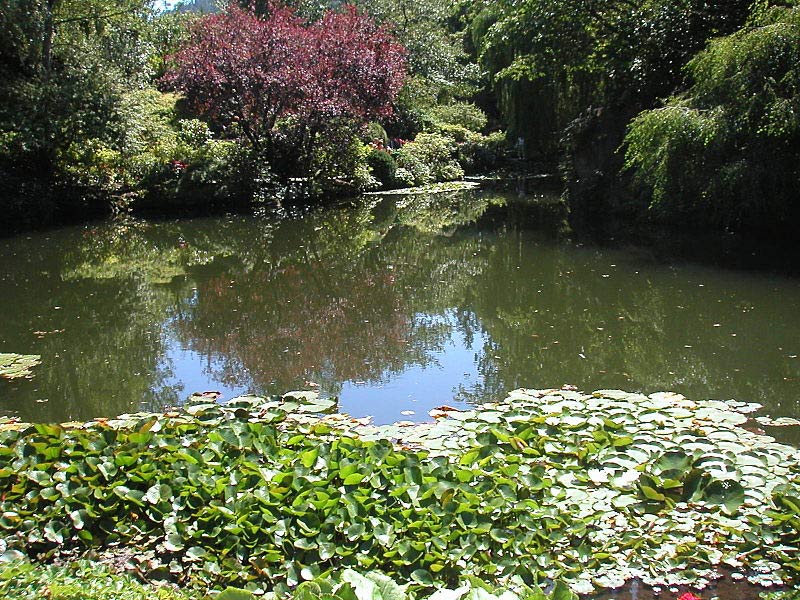
The Japanese Garden was created in the early twentieth century with the involvement of Japanese landscape designer Isaburo Kishida. Harmony, natural forms and a peaceful atmosphere are central to this area. Narrow paths wind between trees, mosses, shrubs and ponds, while small bridges and stone features complete the design.
Unlike the colourful flower beds of the Sunken and Rose gardens, the Japanese Garden encourages a slower walk and quiet observation. Flowering trees are a highlight in spring, while autumn brings changing foliage. Its secluded corners and carefully arranged plants make it one of the most atmospheric parts of the grounds.
The Italian Garden and Star Pond
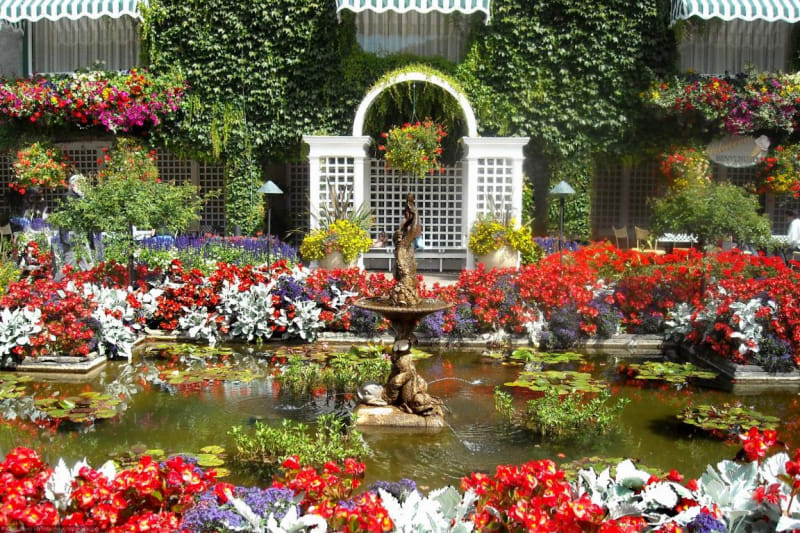
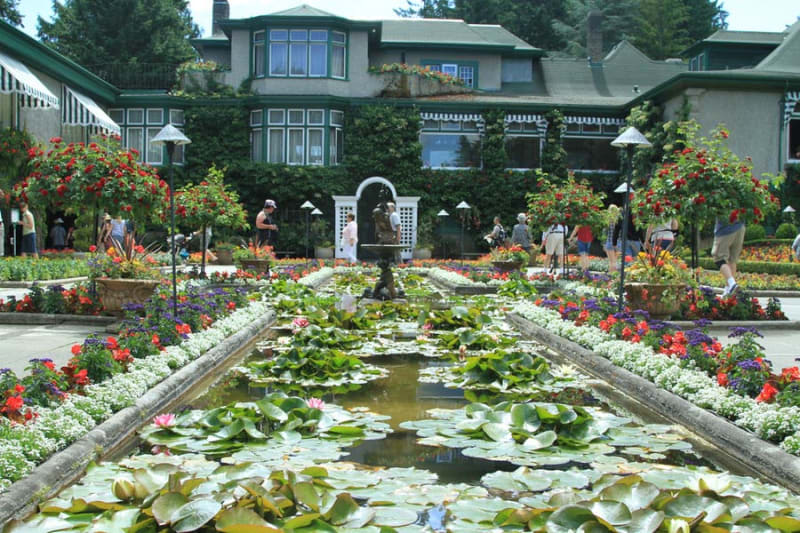
The Italian Garden features stronger geometry and symmetrical layouts. Its main elements include a formal water feature and ornamental planting arranged around a rectangular space. The design recalls traditional formal gardens of European estates.
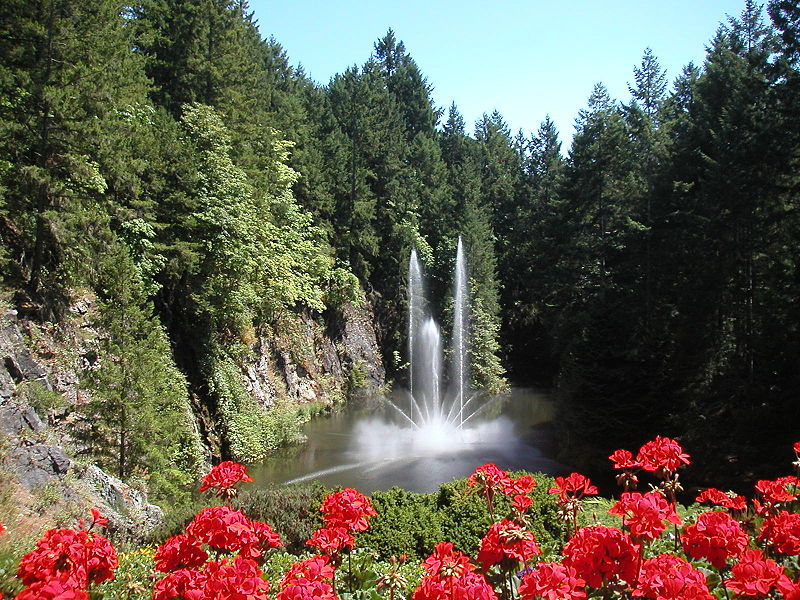
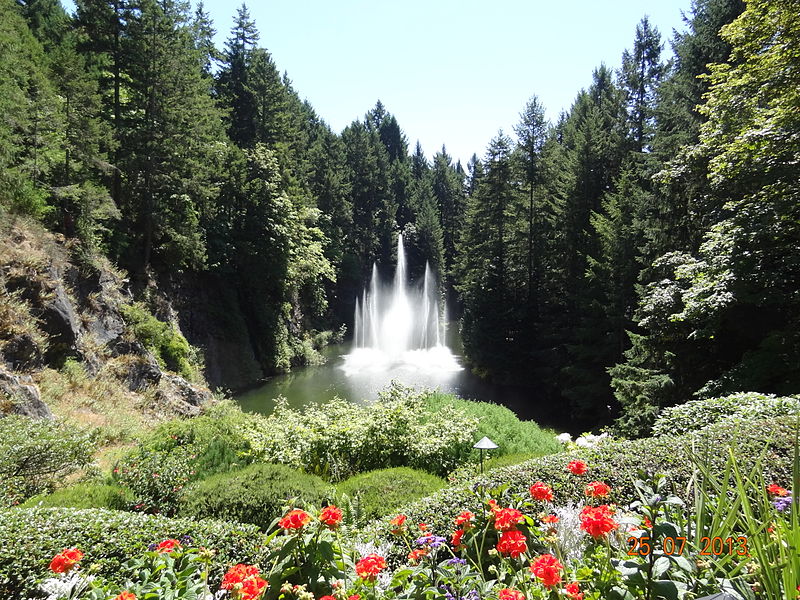
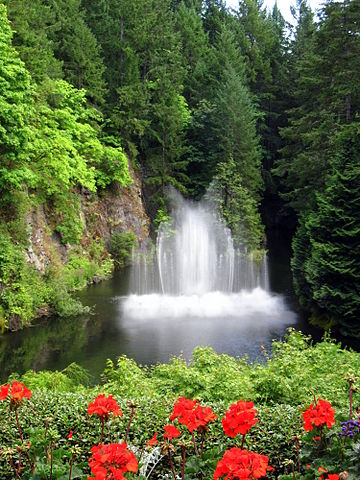
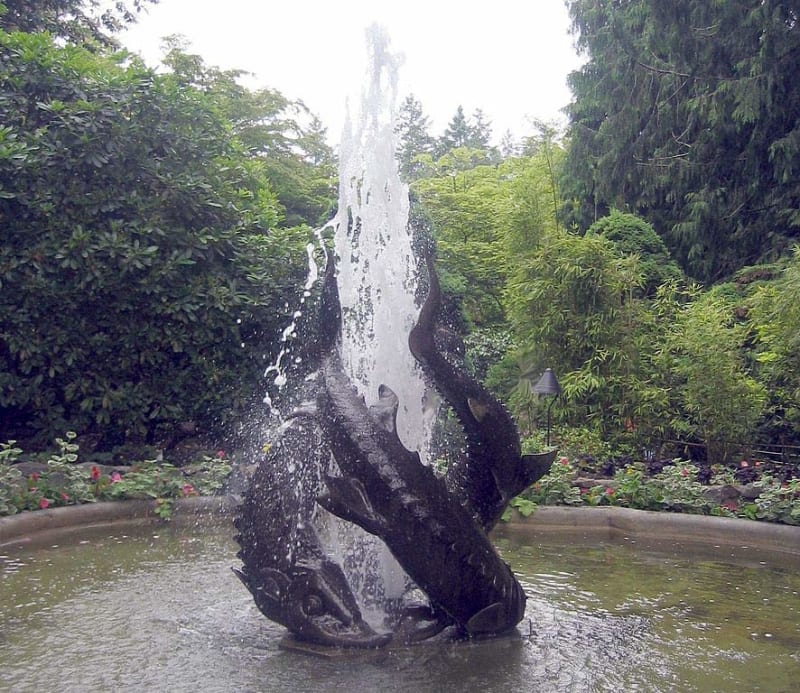
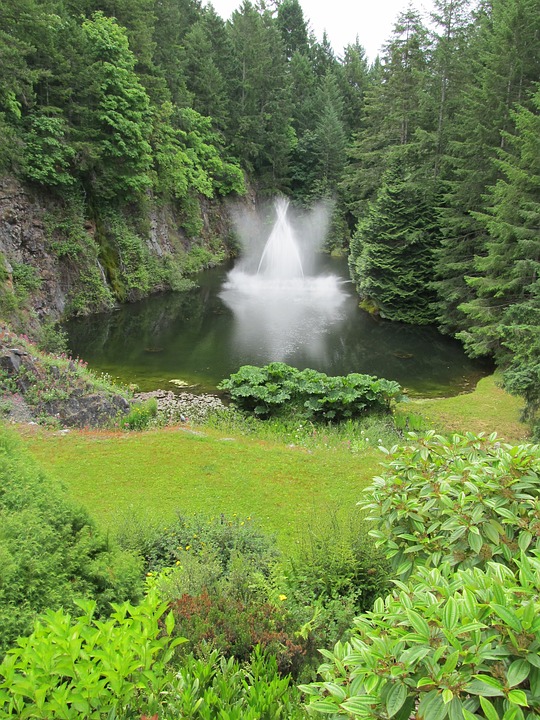
The Star Pond takes its name from its unusual multi-pointed shape. A fountain stands at its centre, surrounded by flower beds. This area illustrates the variety of styles brought together within a single garden complex.
Seasonal flowers
The Butchart Gardens are open year-round, and each season offers a different experience. In spring, visitors can see daffodils, hyacinths, tulips, flowering cherry trees and other ornamental plants. Blooming times depend on temperatures and weather, so dates can vary from year to year.
Summer is one of the most popular seasons thanks to abundant flowers, roses and lush greenery. In autumn, the palette becomes more subdued and changing leaves add depth to the scenery. In winter, festive lighting creates a completely different atmosphere. Check the official website for seasonal programmes before travelling.
Festive lights and events
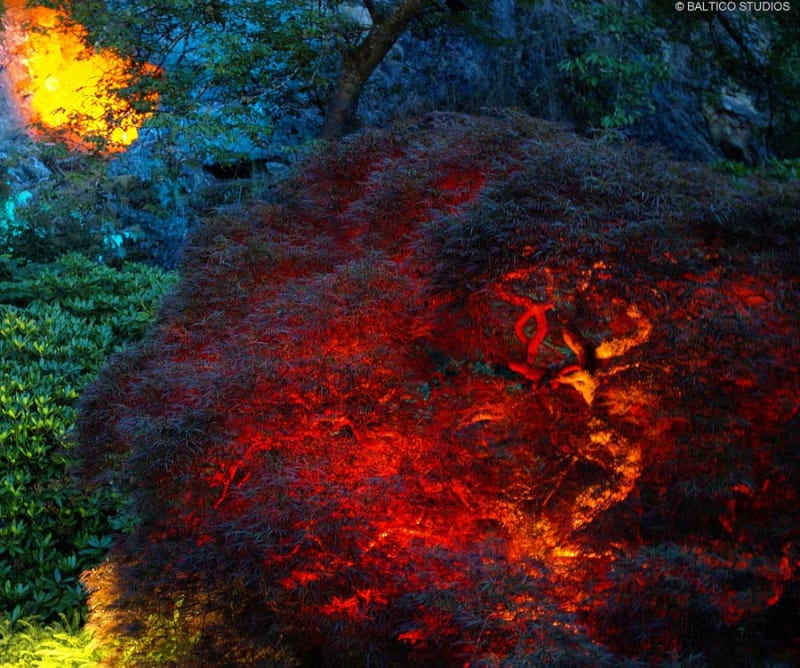
Special events take place in the gardens during certain times of the year. Summer may bring evening concerts and musical performances, as well as fireworks on selected dates. During the Christmas season, lights highlight the outlines of trees, paths and flower displays.
Event schedules and visitor arrangements depend on the season. Some events may have special entry requirements or ticketing rules, so check the programme in advance if you are visiting for a concert, fireworks or holiday lights.
Walks and visitor facilities
The main route follows a network of paths connecting the themed gardens and viewpoints. A leisurely walk along the main paths typically takes about one and a half to two hours, but extra time may be needed for photography, cafés and the gift shop.
Dining options and a seed and gift store are available on site, along with parking and a visitor information centre. Some paths have noticeable slopes because the gardens occupy a former quarry and extend towards the shoreline. Alternative routes are indicated on the garden map for visitors with limited mobility.
How to get to The Butchart Gardens
The gardens are located in Brentwood Bay, about 21 kilometres north of Victoria on Vancouver Island in British Columbia. From Victoria, visitors can travel by car or use public transport and tourist services where available on the chosen day.
Travellers arriving on the island through Victoria often combine a visit to the gardens with sightseeing in the city and other natural attractions in the region. Before setting out, check transport routes, road conditions and opening hours.
When to visit
Spring and summer are popular for seasonal flower displays. Spring brings tulips and flowering trees, while summer offers roses and lush planting. Autumn is often quieter and features warm foliage colours. Winter is a good choice for visitors interested in festive lighting.
The gardens can be busy at popular times. For a quieter walk, consider arriving near opening time or later in the afternoon. Opening hours and admission prices vary by season, so consult the official information before visiting.
Interesting facts
The Butchart Gardens cover approximately 22 hectares and remain privately owned by the Butchart family. The historic gardens developed during the first half of the twentieth century are recognised as a National Historic Site of Canada. One of the complex's defining features is that it was created on the site of an industrial limestone quarry.
Today, the gardens combine several landscape traditions, from Japanese compositions with ponds and winding paths to formal European gardens and extensive seasonal flower displays. Their variety of styles and changing plantings make them worth visiting throughout the year.
Why visit The Butchart Gardens
The Butchart Gardens are more than a plant collection: they demonstrate how a former industrial site can be transformed into an outstanding landscape project. Visitors can explore different gardening traditions, relax among flowers and trees, take photographs and spend several hours away from the bustle of the city.
For travellers exploring Vancouver Island, the gardens make an excellent addition to a visit to Victoria and the natural attractions of British Columbia. The themed areas and seasonal displays can surprise even those who have visited before.
Gallery