Hatley Park is a historic estate on the southern part of Vancouver Island in British Columbia, Canada. At the heart of its extensive grounds stands Hatley Castle, an imposing Tudor Revival mansion surrounded by formal gardens, woodland and walking paths. The site brings together early twentieth-century architecture, the natural beauty of Canada's Pacific coast and the history of the people who lived and studied here.
The estate is located in Colwood, near Victoria, the capital of British Columbia. Its grounds cover more than 220 hectares and extend toward Esquimalt Lagoon. From the waterfront, visitors can enjoy views across the Strait of Juan de Fuca toward the Olympic Mountains in the United States. Historic buildings, mature forests and coastal scenery make Hatley Park one of Vancouver Island's distinctive cultural landscapes.
The history of the estate
In 1907, the property was purchased by James Dunsmuir, a coal industrialist and former premier of British Columbia. Together with his wife Laura, he planned an impressive country residence befitting the family's status. The design of the main building was entrusted to prominent architect Samuel Maclure. Construction of Hatley Castle began in 1908 and continued into the early 1910s.
The mansion became the centre of a large estate with formal gardens, working grounds, recreational areas and woodland. Landscape architects, including the American firm of Brett and Hall, contributed to its design. Over time, changing economic and historical circumstances transformed the purpose of the property.
Hatley Castle
The park's principal architectural landmark is Hatley Castle. Despite its name, it is not a medieval fortress but an elaborate country mansion built in the early twentieth century. Its Tudor Revival design features distinctive windows, decorative masonry, intricate rooflines and details that evoke an English country castle. Elements of the historic interior reflect the lifestyle of a wealthy family of that era.
The castle occupies a central position within the estate and looks especially striking against the surrounding trees and formal gardens. Today, the building is used by Royal Roads University. Interior visits are available through guided tours when scheduled, making the castle a defining landmark of Vancouver Island.
The Italian, Japanese and Rose Gardens
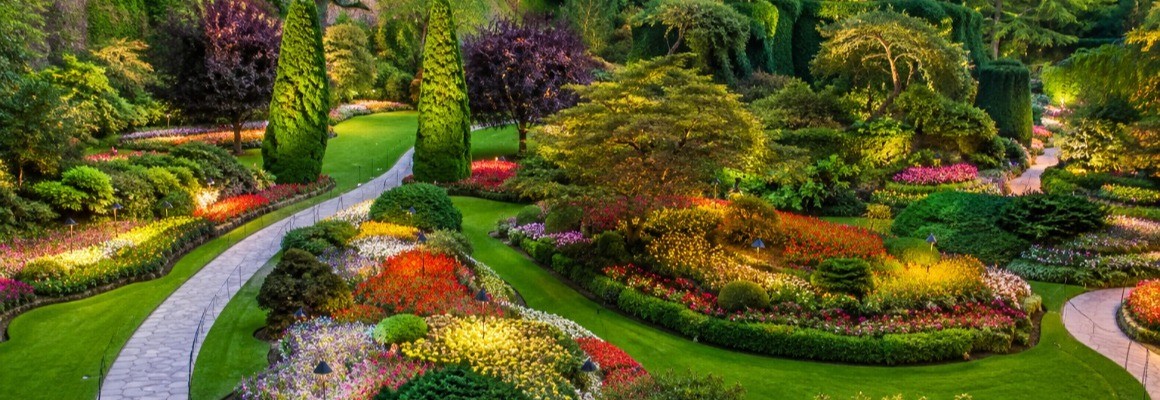
The gardens were designed as an essential part of the country estate. The Italian Garden is known for its symmetrical layout, geometric lines and carefully maintained planting. Completed in 1914, it is one of the site's most formal spaces. Terraces, paths and ornamental details reinforce its classical design.
The Japanese Garden offers a contrasting atmosphere of calm and balance. Trees, water features and carefully composed plantings create a harmonious landscape. Its origins date to the 1910s, and cherry blossoms and azaleas are particularly attractive in bloom. The Rose Garden is celebrated for its variety of roses and rich fragrance, especially in June. Together, the gardens showcase different traditions of landscape design.
Woodlands and natural scenery
Beyond the cultivated gardens, Hatley Park preserves wooded areas with large trees, including Douglas firs. Walking routes provide opportunities to experience the natural environment of the Pacific coast and enjoy the shade of mature woodland. These areas contrast with the carefully arranged formal gardens and add to the estate's diversity.
The nearby Esquimalt Lagoon gives the park a distinctive coastal character. Visitors may observe birds and shoreline habitats, while clear weather brings views of the Olympic Mountains across the Strait of Juan de Fuca. The natural and historic features are managed as parts of a connected cultural landscape.
Military college and university
In 1940, the Canadian armed forces acquired the estate. During the Second World War, the site became a training location for naval officers and later developed into the campus of Royal Roads Military College. Historic buildings were adapted for teaching and administration, and new facilities were added. Much of the original estate layout and its gardens nevertheless survived.
The military college closed in 1995. Royal Roads University was established on the site that same year, continuing its educational role. Students and staff now use a campus surrounded by historic gardens and woodland. Hatley Park was designated a National Historic Site of Canada in 1995 in recognition of its architecture, landscape and historical importance.
Cultural significance and visiting
The history of Hatley Park extends far beyond the Dunsmuir estate. These lands are traditionally associated with the Lekwungen-speaking Peoples, including the Songhees and Esquimalt Nations. Understanding and preserving the site today includes acknowledging these longstanding relationships with the land.
Visitors can explore accessible garden areas and paths, admire the castle from outside, join a guided tour or visit the museum when it is open. The formal gardens are generally open daily from 10 a.m. until dusk, although current access arrangements and tour schedules should be checked before travelling. The castle and grounds have also served as locations for film and television productions.
Hatley Park appeals to visitors interested in history, architecture, horticulture and peaceful walks. Its distinctive character comes from the combination of a Tudor Revival mansion, gardens inspired by different traditions, mature woodland and sweeping views of the Pacific coast. It is not simply a beautiful park, but a historic landscape that reflects more than a century of change in Canadian society.
Gallery