Virachey National Park is one of Cambodia’s largest protected areas, located in the country’s northeast across Ratanakiri and Stung Treng provinces. Its landscapes include mountains, tropical forests, rivers and upland grasslands. The park is known for its wilderness, remote trails and Indigenous cultural traditions.
Location and size
The park covers Taveng and Veun Sai districts in Ratanakiri and Siem Pang district in Stung Treng. Banlung is the most convenient starting point. Established in 1993, the park was recognised as an ASEAN Heritage Park in 2003. Following an expansion in 2023, its area is approximately 405,766 hectares.
Mountains and tropical forests
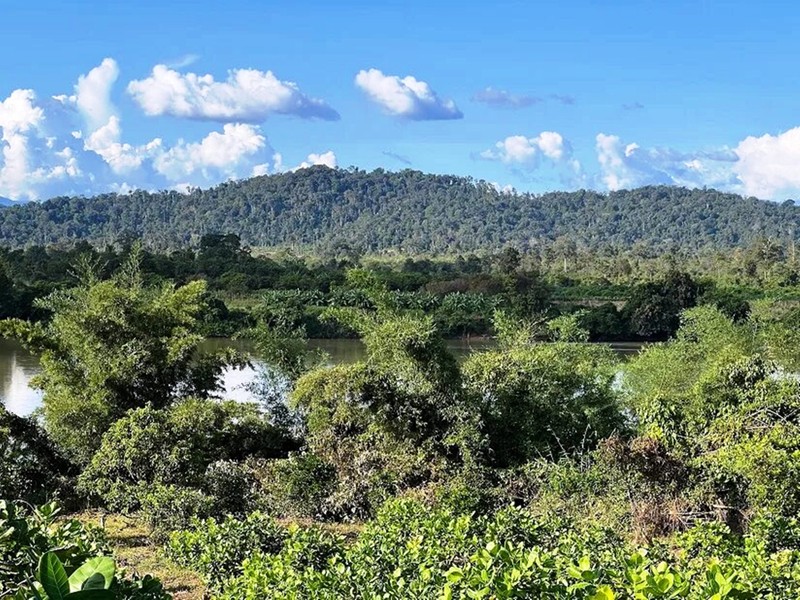
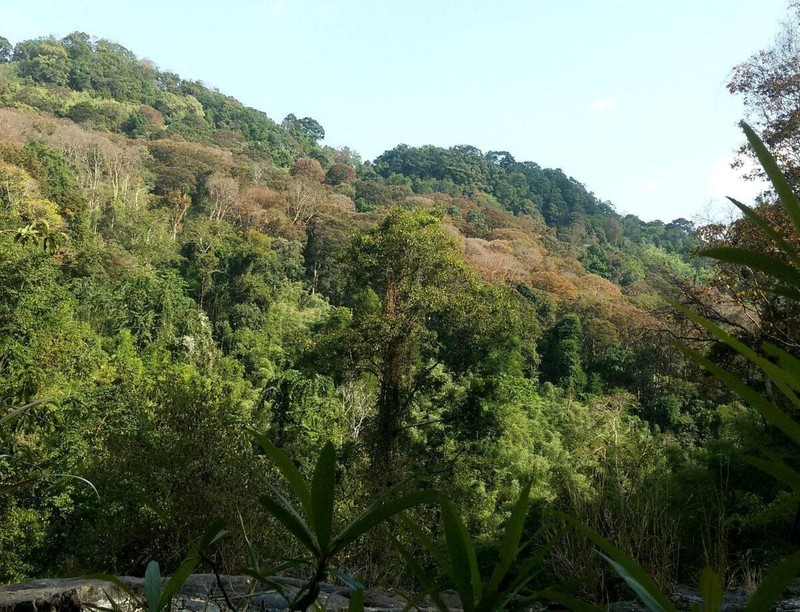
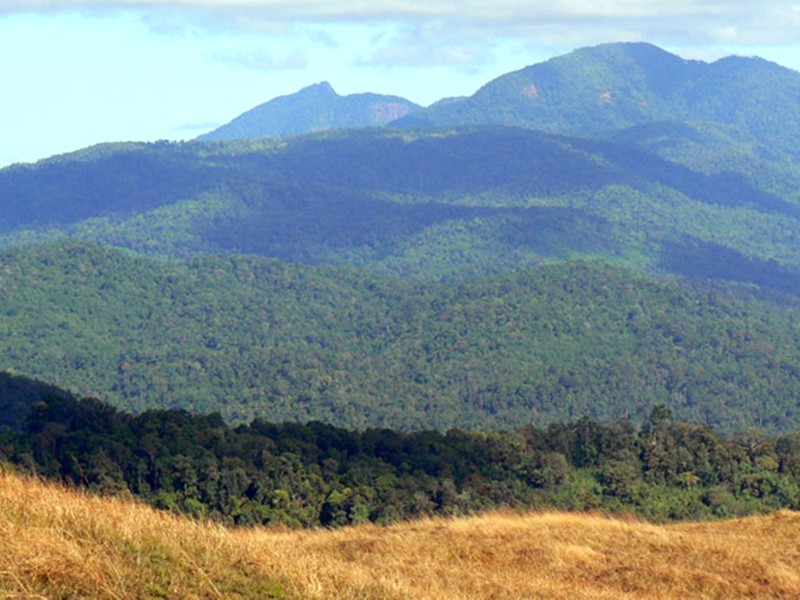
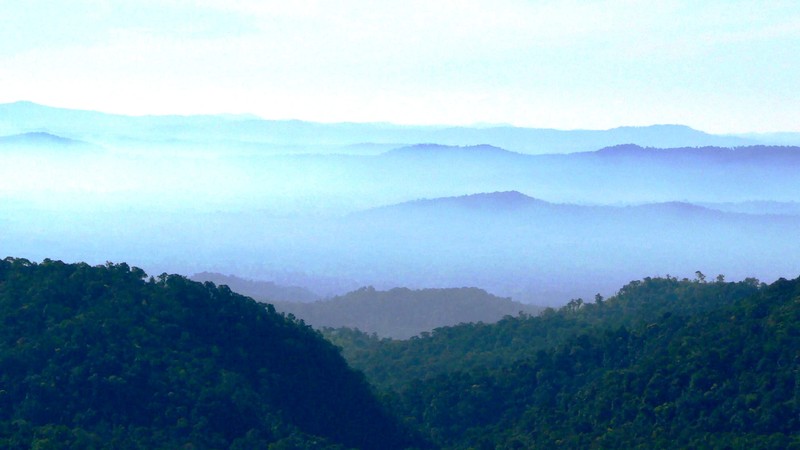
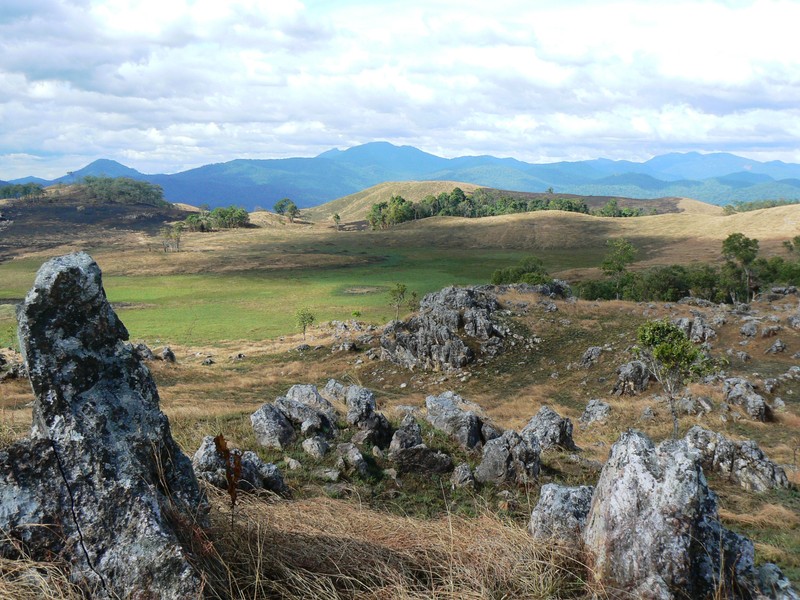
Virachey contains evergreen and semi-evergreen forests, bamboo thickets and patches of mixed woodland. At higher elevations, forest gives way to open grasslands and savannah-like landscapes. Much of the park lies between roughly 400 and 1,500 metres above sea level.
Rivers and waterways
Mountain streams from Virachey feed rivers connected to the Mekong basin. They flow through forested valleys and remote areas. River journeys may offer access to less-visited landscapes, but must be organised with local specialists who understand seasonal water levels and weather.
Wildlife
The park provides habitat for Asian elephants, clouded leopards, northern yellow-cheeked crested gibbons, muntjacs, dholes, sun bears and Sunda pangolins. Many bird, reptile and amphibian species also live here. Germain’s peacock pheasant is among its notable birds. Sightings of rare wildlife are never guaranteed.
Plant life
The park’s vegetation includes tropical trees, bamboo, shrubs and other forest plants. Lowland forest, mountain woodland, grassland and wetland habitats support different species and make the area important for conservation and research.
Indigenous communities and cultural heritage
Indigenous peoples, including the Brao, Kavet, Kreung and Lun, live in and around the park. Their traditions are closely connected with forests, rivers and mountains. Some natural areas have spiritual significance and are linked to local stories and ceremonies. Visitors should respect community rules and ask permission before photographing people.
Community-based ecotourism
Virachey offers ecotourism activities involving local communities. Options can include guided multi-day treks, camping and opportunities to learn about local traditions. Routes and visitor arrangements can change, so trips should be organised in advance with local operators or community initiatives.
Trekking and birdwatching
Visitors can hike through forest and mountain landscapes, watch birds and learn about local vegetation. Some journeys follow rivers or cross remote grasslands. Proper equipment, enough drinking water and an experienced guide are essential.
Veal Thom grasslands
The upland grasslands of Veal Thom create open landscapes amid the surrounding forest. They support habitats that differ from those of dense woodland and offer a distinctive view of the park. Visiting these remote areas requires advance planning.
Best time to visit
Some roads and trails are easier to use during the dry season. In the rainy season, the forest becomes especially green, but trails may be slippery and rivers can rise quickly. Check weather forecasts and route conditions before travelling.
Getting there
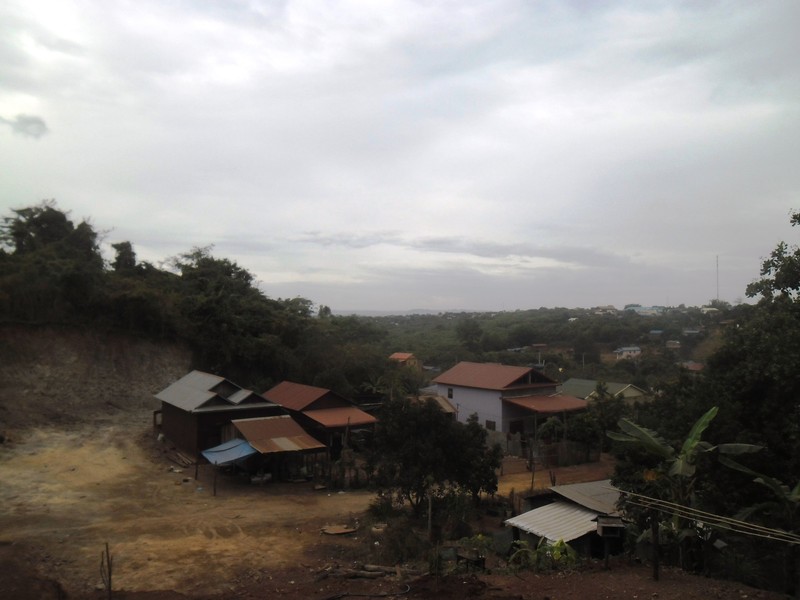
Most journeys begin in Banlung, which is connected by road to other Cambodian towns. Local roads lead from there to trekking starting points. Distance and travel time depend on the chosen entrance, season and road conditions.
Conservation challenges
Illegal logging and changes in land use place pressure on the park’s ecosystems. Conservation relies on cooperation between public agencies, researchers and local communities. Visitors should not leave rubbish, disturb wildlife or damage plants.
Why visit
Virachey is suited to travellers seeking wilderness, mountain forests, rare wildlife and encounters with Indigenous cultures. It is an important ecotourism destination in northeastern Cambodia.
Gallery