Eduardo Avaroa National Park is one of Bolivia's most unusual natural areas, located in the country's southwest, in the Potosí Department near the borders with Chile and Argentina. Its official designation is the Eduardo Avaroa Andean Fauna National Reserve. Set high in the Andes, it brings together stark deserts, salt lakes, volcanoes, hot springs and geothermal fields.
The reserve covers a vast area several thousand metres above sea level. Its landscapes can seem almost otherworldly: red lagoons, pale mineral deposits, oddly shaped rocks and steaming fumaroles. It is one of the best-known destinations in southwestern Bolivia and is often included in multi-day trips departing from Uyuni.
Laguna Colorada
The reserve's best-known attraction is Laguna Colorada, or the Red Lagoon. Its water can take on red and brick shades because of a combination of mineral sediments, microscopic organisms and lighting conditions. Pale islands and streaks of salts and borax stand out against the reddish water and blue sky.
The lagoon is an important habitat and breeding area for Andean birds, especially flamingos. Visitors may see Andean flamingos, James's flamingos and Chilean flamingos. Bird numbers vary with the season and water conditions. Observe them from designated viewpoints and avoid disturbing nesting colonies.
Laguna Verde and Licancabur Volcano
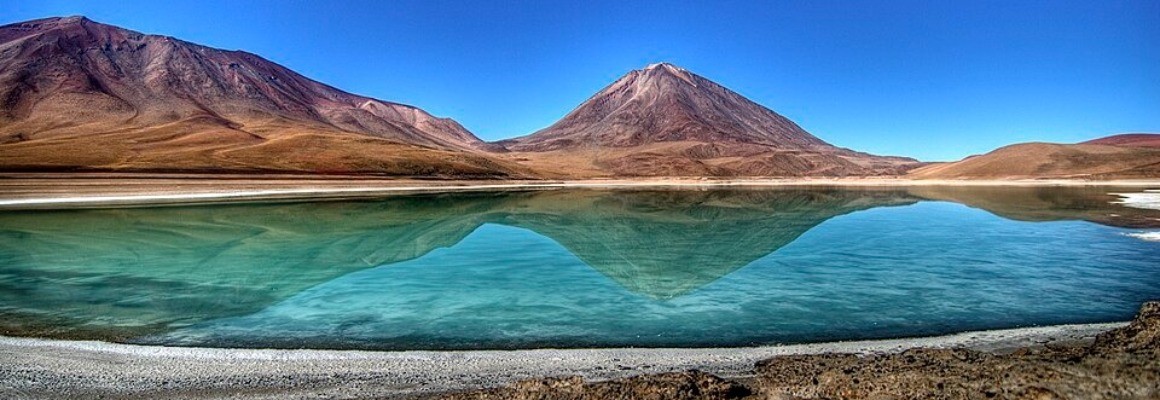
In the south of the reserve lies Laguna Verde, a lake famous for its green and turquoise hues. It sits beneath Licancabur Volcano, whose near-symmetrical cone rises above the desert. The lake's colour changes with wind, light and the movement of mineral particles in the water; it may appear muted turquoise at one moment and vivid emerald at another.
Nearby Laguna Blanca has a pale, almost whitish appearance. Together, the lakes and volcano create one of the most recognisable landscapes of the Bolivian Andes. Laguna Verde contains high concentrations of dissolved minerals, so its water is not suitable for drinking or bathing. Visitors should remain on the shore and follow their guide's instructions.
Sol de Mañana Geysers
Sol de Mañana is a geothermal field of fumaroles, bubbling mud pots and openings in the ground that release steam. It lies at roughly 4,800–5,000 metres above sea level. Sulphur smells, bubbling mud and clouds of steam make the area feel like a place of intense underground volcanic activity.
The site is particularly striking on cold mornings, when the steam is easy to see against the mountain air. The ground is unstable and some areas are extremely hot. Keep a safe distance from openings and mud pots, stay on the designated route and follow your guide's instructions. Approaching the edges of geothermal pools for photographs is dangerous.
Árbol de Piedra and the Siloli Desert
The Siloli Desert is known for unusual rock formations, especially Árbol de Piedra, or the Stone Tree. This isolated rock resembles a tree with a broad crown and narrow base. Wind and sand gradually eroded the softer parts of the volcanic rock, creating its distinctive shape.
The Stone Tree is one of the region's most photographed natural features. Around it stretches a dry high-altitude desert of sandy patches, rocky plains and distant mountains. Low sunlight brings out the texture of the rock. Do not climb fragile formations or leave rubbish behind.
Dali Valley and Volcanic Landscapes
Dali Valley takes its name from landscapes reminiscent of the surrealist paintings of Salvador Dalí. Isolated rocks are scattered across sandy plains, appearing striking against the open terrain. The colours of the ground range from ochre and gold to grey and reddish brown.
Volcanoes and mountain ranges around the reserve shape the distinctive terrain of southwestern Bolivia. High-altitude lakes, lava rocks and geothermal springs reflect the area's complex geological history. Weather can change quickly, and sunshine may give way to strong winds, snow or a sudden drop in temperature.
Polques Hot Springs
The Polques hot springs lie near the salt lagoon of Chalviri. Geothermal heat warms natural pools where travellers can briefly relax after crossing the cold highlands. Against the mountains and lagoon, the warm water creates a striking contrast with the cool desert air.
Access and bathing conditions can change, so check the rules with your tour operator in advance. Avoid prolonged bathing or entering hot water when feeling unwell. At high altitude, the body is under additional strain, and the cold air can make temperature changes feel more severe.
Wildlife and Vegetation
Despite the cold, dry climate and thin air, the reserve supports animals adapted to the extreme conditions of the Andes. In addition to several flamingo species, visitors may spot vicuñas, Andean foxes, viscachas and various waterbirds. Other high-altitude wildlife lives in more remote areas, although sightings are never guaranteed.
Vegetation consists mainly of low shrubs, tough grasses and plants able to withstand strong winds, frost and poor soils. Wetlands around some lakes support local ecosystems important to birds and other animals. The reserve was established in part to protect Andean wildlife and flamingo breeding grounds.
Watch wildlife from a distance. Do not feed birds, chase animals for photographs, drive onto shores outside authorised routes or collect plants. Keeping the area quiet and clean is particularly important near nesting sites.
How to Get to the Reserve
The most common way to visit Eduardo Avaroa is on a multi-day four-wheel-drive tour from Uyuni. Typical itineraries include the Uyuni Salt Flat, high-altitude lagoons, the Siloli Desert, the Stone Tree, Sol de Mañana and Laguna Verde. Depending on the tour, the trip may return to Uyuni or continue towards the Chilean border.
Other routes are organised from Tupiza or from the San Pedro de Atacama area in Chile. The exact itinerary depends on road conditions, weather and border-crossing requirements. Distances within the reserve are long, settlements are sparse and services are limited, so independent travel without a suitable vehicle, navigation and preparation can be difficult.
Before departure, check access conditions, road status and the reserve's current rules. After heavy snowfall or other severe weather, some routes may close temporarily. An experienced local operator is generally the most practical choice for high-altitude roads.
Best Time to Visit
The reserve can be visited in different seasons, but weather and road conditions vary considerably. During the dry season, usually from May to October, there is less precipitation and roads are often more predictable. Nights can be freezing, while daytime conditions may bring strong winds and intense sunlight.
During the rainy season, approximately December to March, the appearance of the landscapes and reflections on the lakes can change. However, rain may make travel more difficult and some roads impassable. The best time depends on the weather in a particular year, road conditions and the goals of the trip.
Altitude and Travel Preparation
Most popular stops are above 4,000 metres. Thin air can cause headaches, nausea, weakness, dizziness and shortness of breath. It is advisable to acclimatise at a lower elevation beforehand, move slowly, drink water and avoid strenuous activity.
Pack warm layers, a windproof jacket, gloves, a hat, sunglasses, sunscreen and sturdy shoes. Nights can be freezing even when the sun is bright during the day. Water, snacks, cash and personal medication are also useful. If serious symptoms of altitude sickness develop, stop ascending and seek medical assistance.
Visitor Rules and Conservation
Eduardo Avaroa is a protected natural area, so visitors should follow reserve regulations and their guide's instructions. Do not leave rubbish, remove rocks or minerals, stray from permitted routes or approach wild animals. In geothermal areas, keep well away from hot springs, ground fissures and mud pots.
An organised trip through southwestern Bolivia is a convenient way to see red and green lakes, flamingos, desert rock formations and geothermal features in one journey. The combination of high-altitude wilderness, unusual colours and a harsh climate makes Eduardo Avaroa one of the country's most memorable destinations.
Gallery