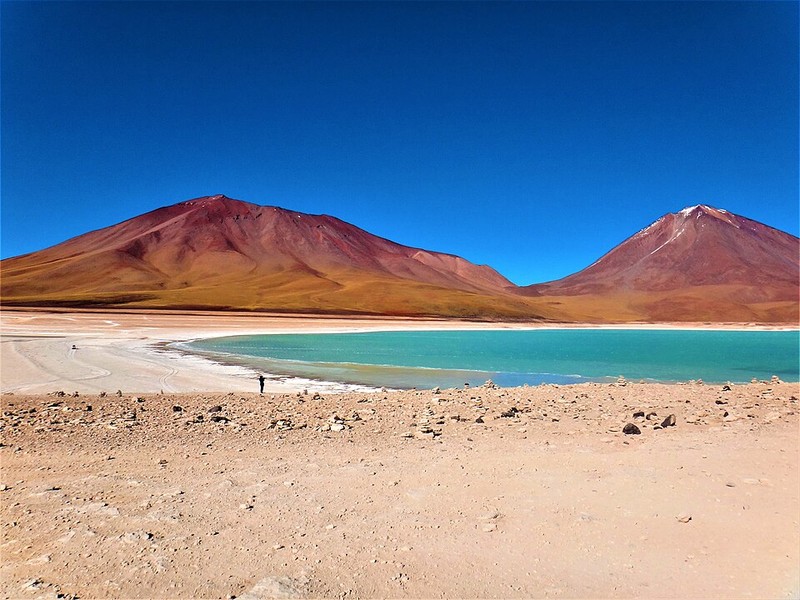
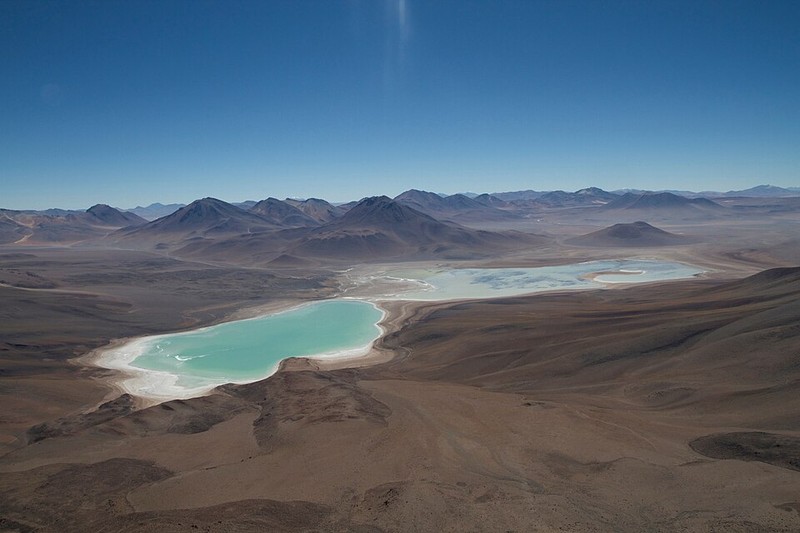
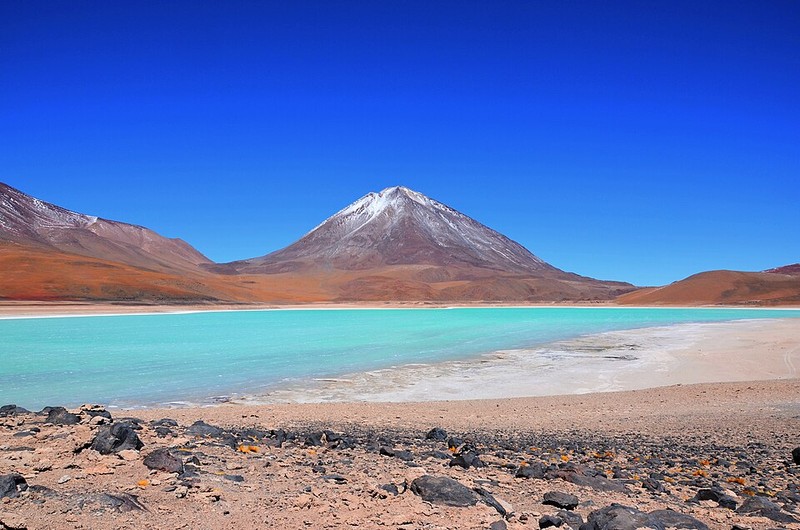
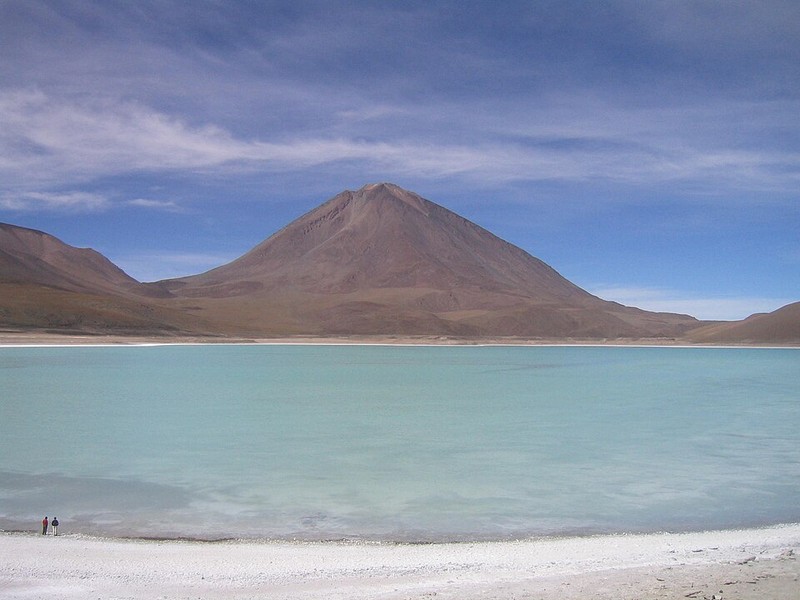
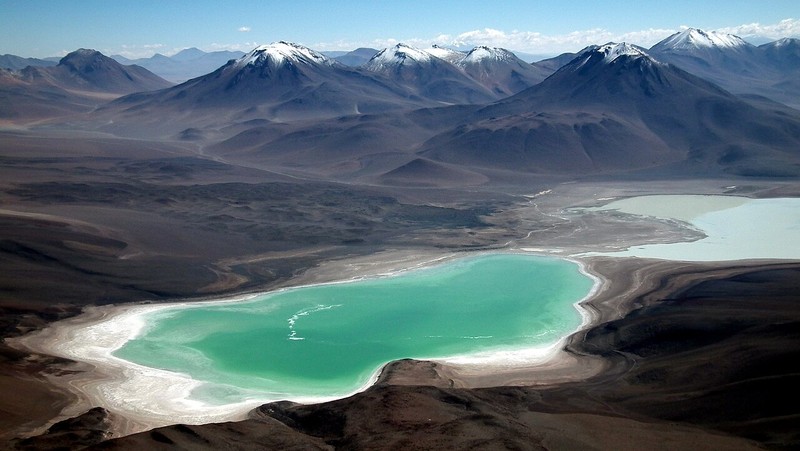
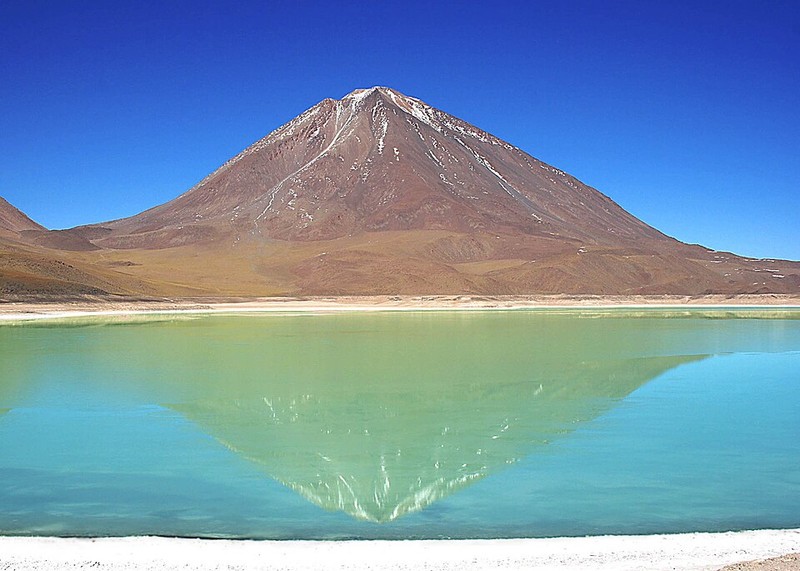
Laguna Verde is a high-altitude salt lake in southwestern Bolivia, in the Potosí Department near the Chilean border. Located in the Andes within the Eduardo Avaroa Andean Fauna National Reserve, it is known for water that changes from turquoise to deep emerald green. The nearly conical Licancabur volcano rises behind the lake.
The lake lies at approximately 4,300–4,400 metres above sea level. This is a harsh high-altitude environment with thin air, sharp temperature changes, strong winds and largely barren volcanic terrain. Laguna Verde is one of southern Bolivia's best-known natural attractions and a frequent stop on multi-day trips across the Altiplano.
Why the water is green
Laguna Verde means “green lagoon” in Spanish. Its unusual colour is associated with high concentrations of dissolved and suspended minerals and the composition of the lake sediments. Under certain conditions, the water appears bright turquoise; when the wind stirs the sediments, it can take on a deeper green or emerald shade.
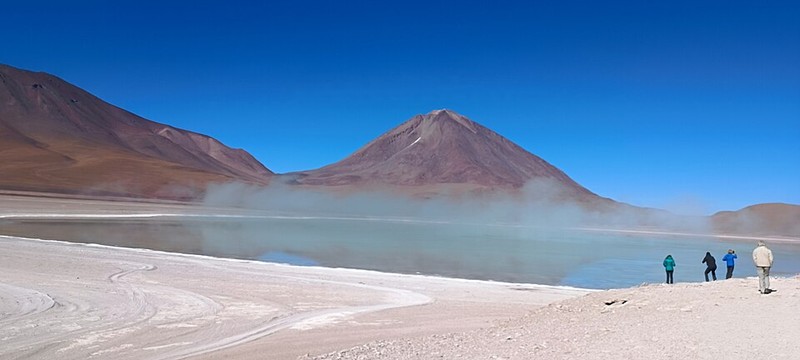
The colour changes with sunlight, cloud cover, surface conditions and the movement of mineral particles. The lake may look different in the morning and afternoon. On windy days, waves and pale streaks of foam create a striking contrast with the dark volcanic slopes.
The mineral composition means that the water should not be used for drinking or swimming. Avoid collecting sediments or making unnecessary contact with the lake water.
Licancabur volcano
The main feature of the landscape is Licancabur volcano, located beside the lake along the Bolivia–Chile border. Its almost symmetrical cone rises above the high plateau and contrasts with the green water and pale mineral deposits along the shore. The volcano is about 5,900 metres high, although published elevations vary slightly.
Licancabur is a stratovolcano with a summit crater. Past volcanic activity shaped the surrounding terrain, leaving lava rocks, volcanic slopes and broad stretches of stony desert. On clear days, the summit stands out sharply against the sky.
The mountain also has cultural significance for Andean peoples. High mountains were regarded as sacred places in pre-Hispanic times, and archaeological traces of ritual activity have been found on some Andean summits. Climbing Licancabur requires serious preparation because of the altitude, cold and thin air.
Laguna Blanca and the surrounding landscape
Laguna Blanca, or “white lagoon,” lies not far from Laguna Verde. Its colour is associated with minerals and the characteristics of the water. Together, the two lakes form one of the best-known landscapes in the Eduardo Avaroa reserve.
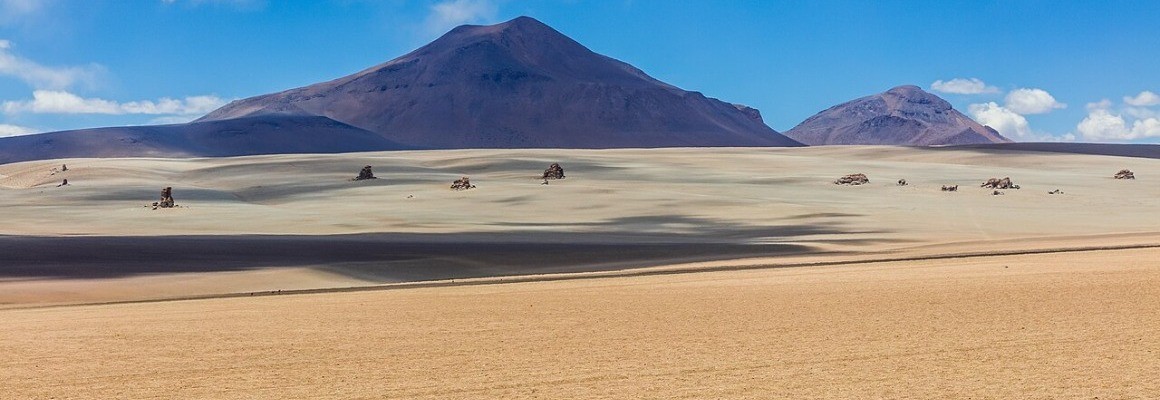
The surrounding terrain has an otherworldly appearance, with bare volcanic slopes, rocky plains, mineral deposits and high-altitude desert. Vegetation is sparse and adapted to cold, intense sunlight, wind and limited moisture. Against this muted landscape, the green lake appears particularly vivid.
Nature and climate
Laguna Verde lies in a high-altitude ecosystem with a harsh climate. Sunlight can be intense during the day, but temperatures drop quickly after sunset. Strong winds make it feel colder, and frost can occur at night.
The wider Altiplano region is home to vicuñas, guanacos, Andean foxes and various bird species. However, the immediate surroundings of Laguna Verde provide limited habitat because of the highly mineralized water and severe conditions.
How to get there
The lake is in a remote part of Potosí Department, with no regular public transport reaching the shore. The most common option is an organized four-wheel-drive tour across southwestern Bolivia. Tours usually start in Uyuni or Tupiza and visit several natural attractions on the Altiplano.
A trip from Uyuni often takes three or four days and may include the Salar de Uyuni, colourful lagoons, unusual rock formations and geothermal areas. Access from the Chilean Atacama region may also be possible through organized trips, but routes and border requirements should be checked in advance.
When to visit
Trips across southwestern Bolivia are often planned during the dry season, roughly from May to October. Rainfall is usually lower, although nights are very cold and winds can be strong. During the rainy season, some roads may become difficult to cross.
The lake's colour depends on lighting, cloud cover and wind as well as the season. A particular shade cannot be guaranteed at a specific time.
Preparing for the trip
Bring warm layers, a windproof and waterproof jacket, gloves, a hat, sunglasses and high-SPF sunscreen. Ultraviolet radiation is particularly intense at this altitude. Carry enough safe drinking water and a personal first-aid kit.
Rapid ascent can cause altitude sickness. Headaches, nausea, severe weakness and dizziness should be taken seriously. Shops, fuel stations and medical facilities are scarce in remote areas, so check the vehicle, fuel supply, communications and essential provisions before departure.
Visitor guidelines
Laguna Verde lies within the Eduardo Avaroa Andean Fauna National Reserve. Follow protected-area rules, take all rubbish away, avoid damaging mineral formations and do not disturb wildlife. Do not enter the lake or drink its water because of its high mineral content and the possible presence of hazardous substances.
Laguna Verde is a place for scenery and photography rather than beach activities. Its unusual combination of a mineral lake, volcanic landscape and rugged Andean environment makes it one of the most memorable stops on a journey across the Bolivian Altiplano.
Gallery