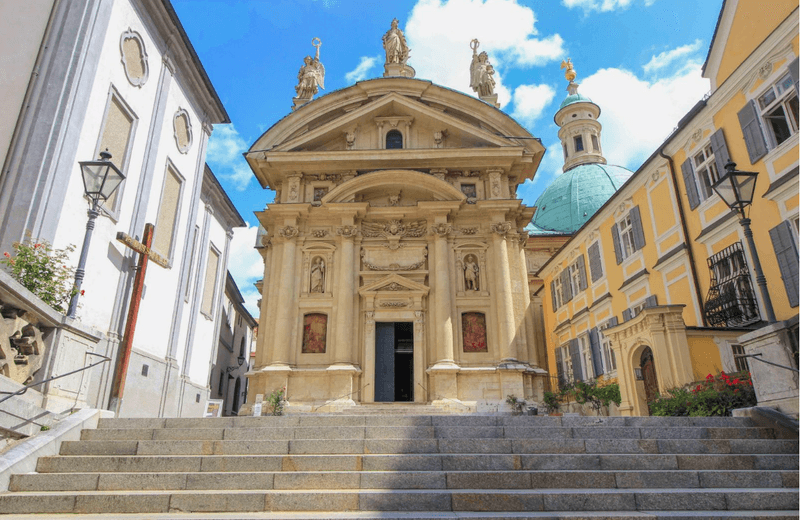
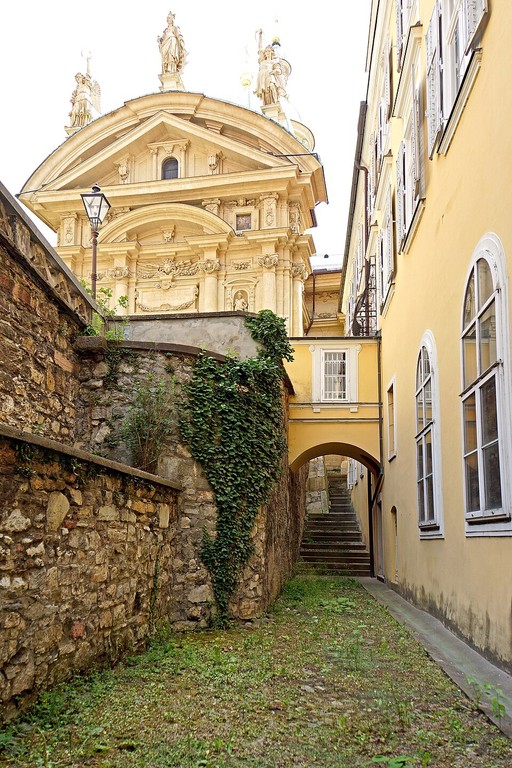
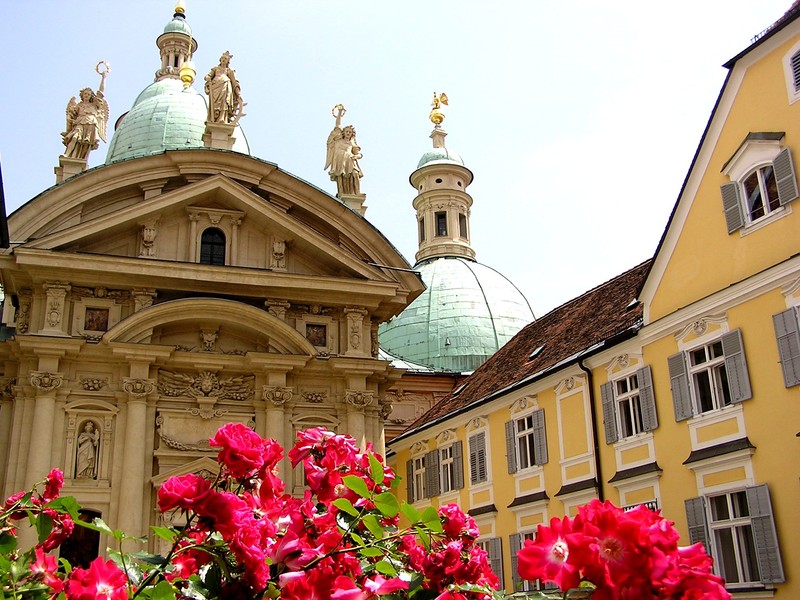
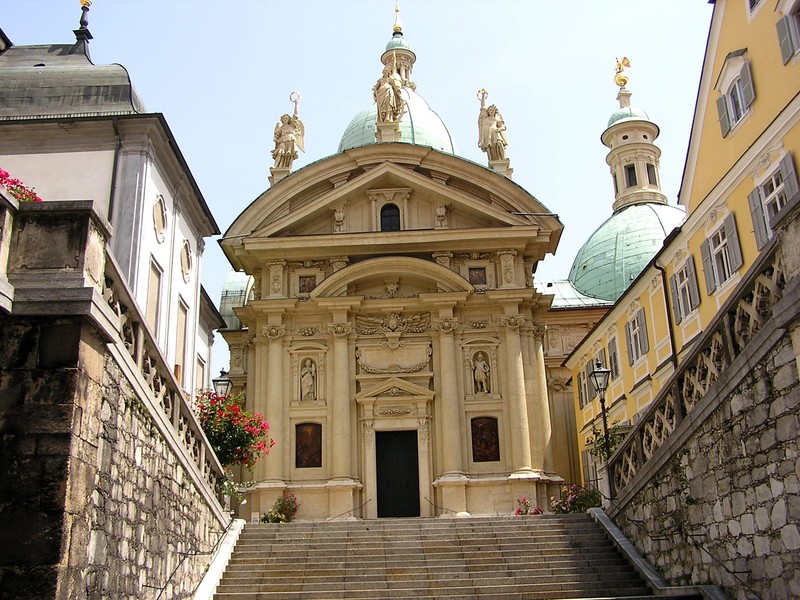
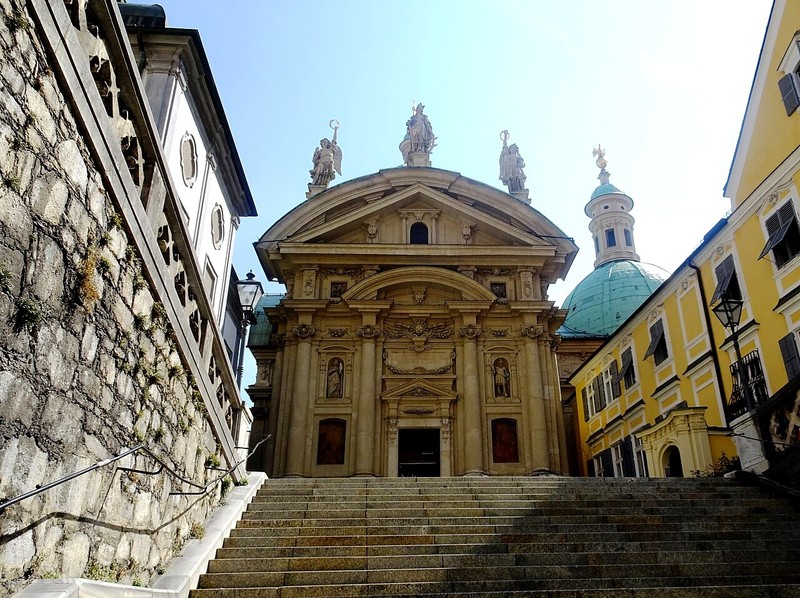
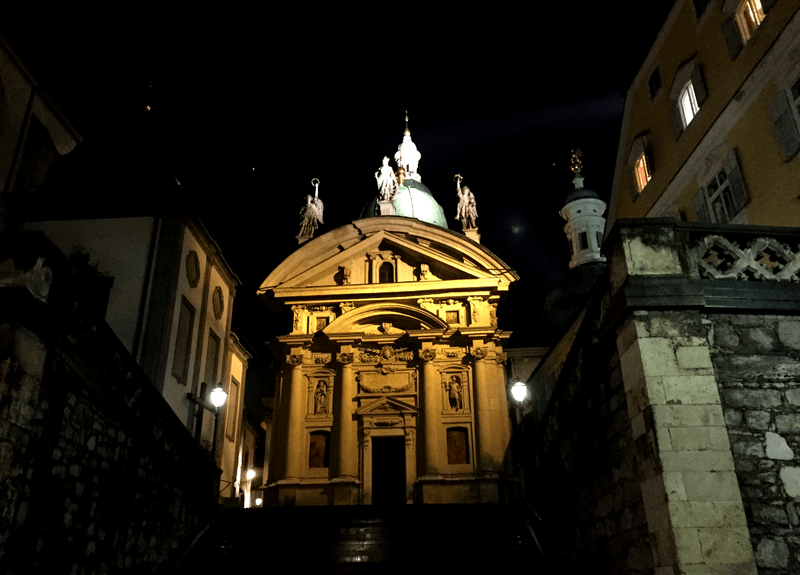
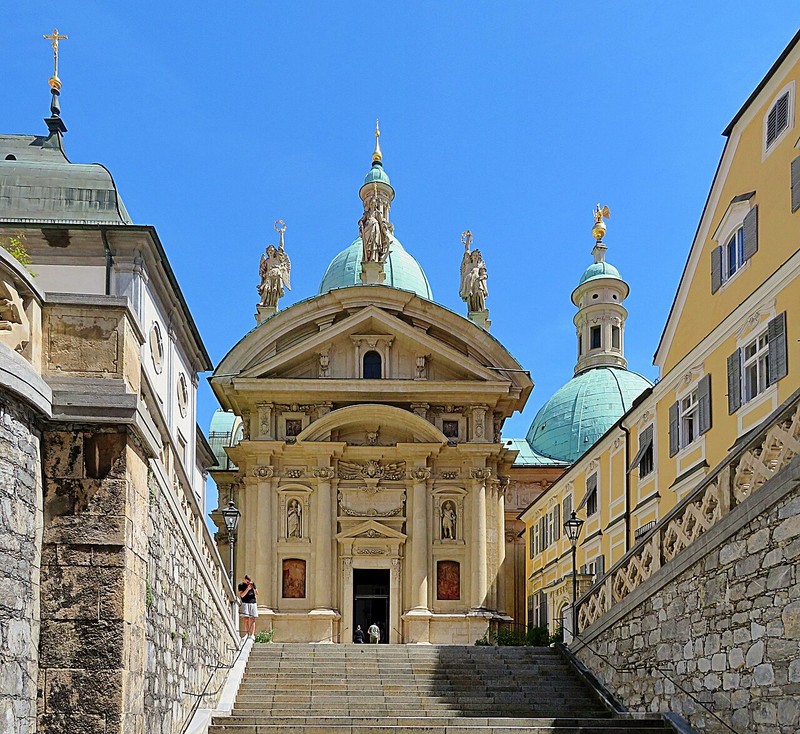
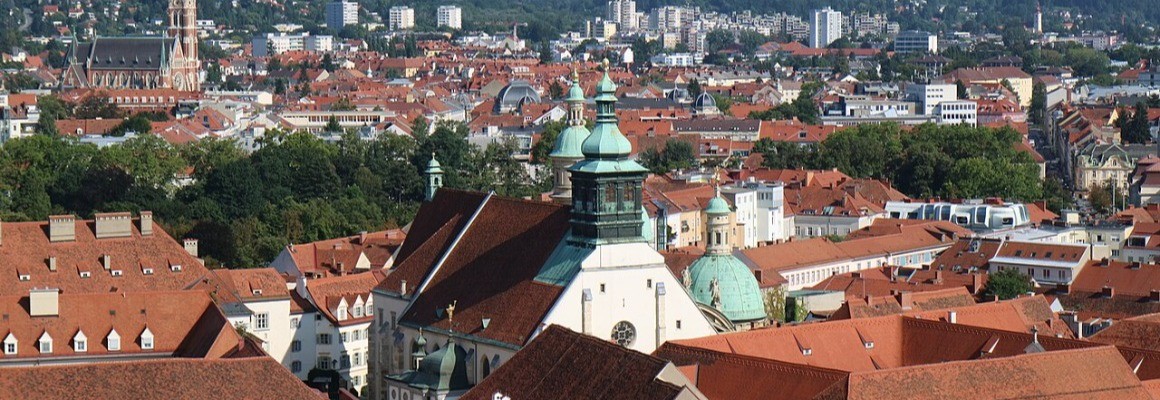
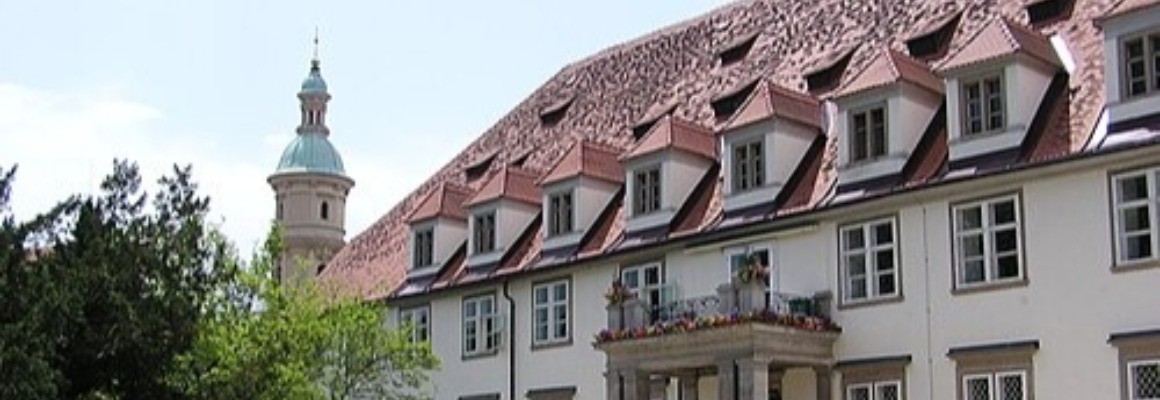
The Mausoleum of Emperor Ferdinand II is one of the most distinctive historic monuments in Graz, Austria’s second-largest city. Located beside the cathedral, the complex includes the Church of St Catherine of Alexandria and the imperial burial chapel. Its turquoise domes, sculptural decoration and combination of Late Renaissance and early Baroque features make it a striking part of Graz’s historic skyline.
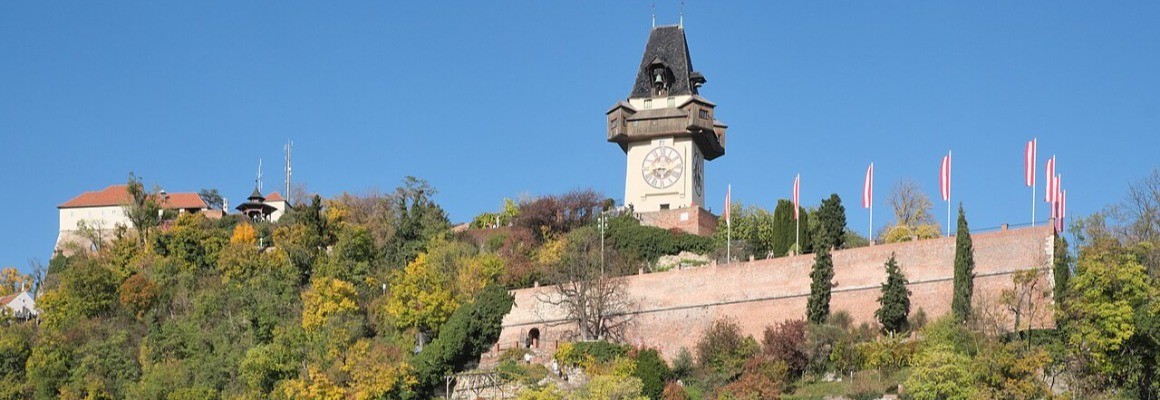
The mausoleum forms part of the architectural ensemble known as the “City Crown of Graz”, together with the cathedral, the castle and other historic buildings. Graz’s historic centre is a UNESCO World Heritage Site. The complex is significant not only as a burial place for members of the Habsburg dynasty but also as a monument to the religious and political changes that shaped Central Europe.
History of construction
The mausoleum was commissioned by Ferdinand II of the Habsburg dynasty. In the early 17th century he ruled Inner Austria and later became Holy Roman Emperor. In 1614, he asked his court artist and architect Giovanni Pietro de Pomis to design a monumental family tomb beside the Church of St Catherine. Construction began on the site of an earlier religious building.
The project reflected Ferdinand II’s religious and political convictions, particularly his support for the Catholic Counter-Reformation. The mausoleum was intended to serve both as the Habsburg family burial place and as a powerful symbol of dynastic authority and Catholic faith. Italian artistic influence is evident in both the architectural design and the decorative programme.
Giovanni Pietro de Pomis died in 1633 before seeing the project fully completed. Other craftsmen continued the work, and the interior decoration developed over the following decades. The complex was consecrated in 1714, when the interior had reached its completed form. The building has retained its historic character and remains one of Austria’s important monuments of Mannerism and early Baroque architecture.
Architecture of the mausoleum
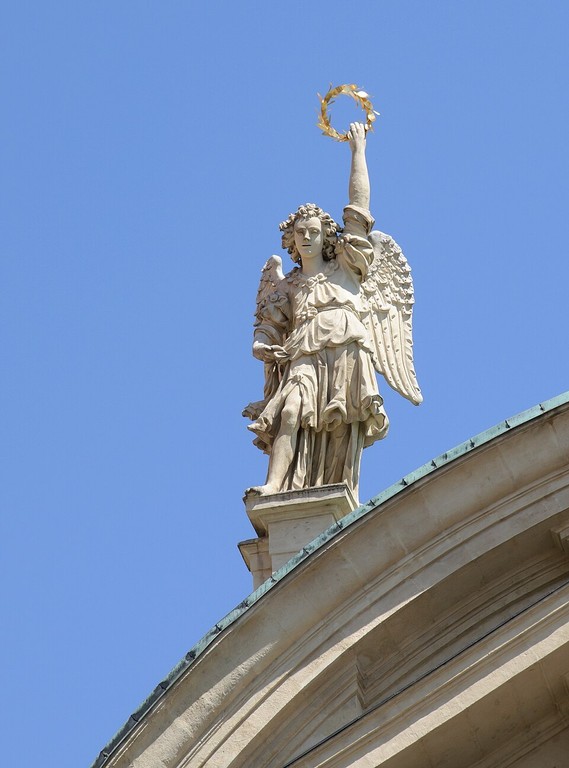
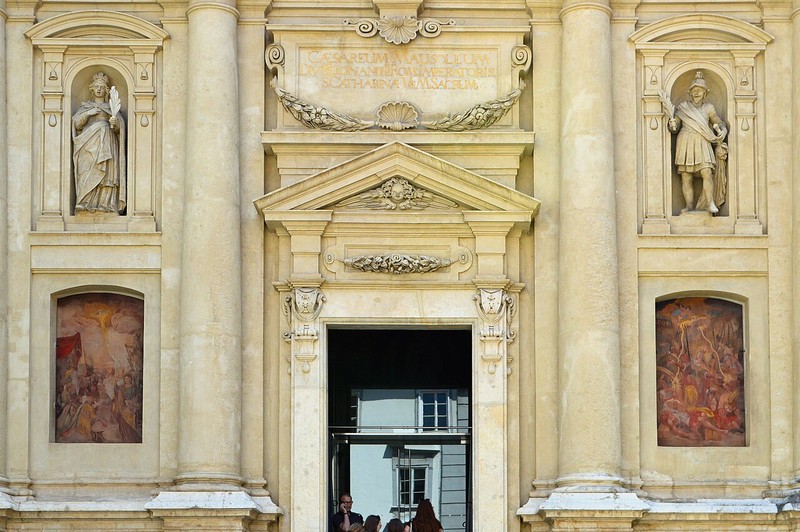
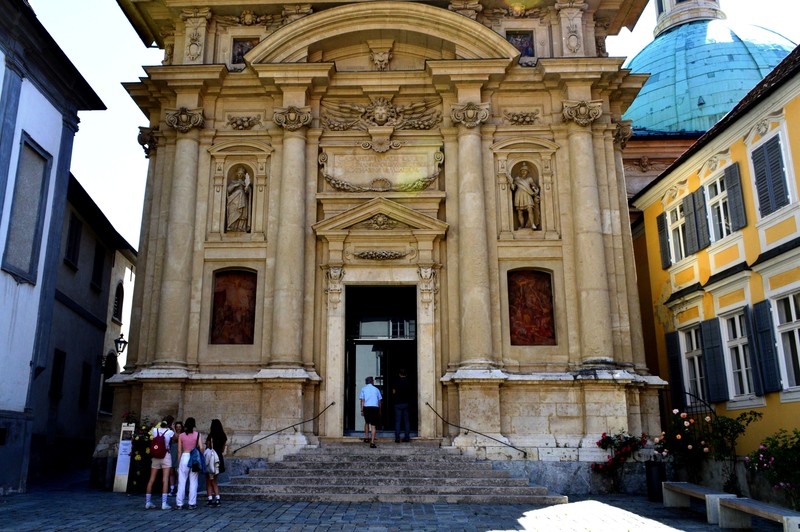
The mausoleum combines elements of the Late Renaissance, Mannerism and early Baroque. Its façade features a complex composition, prominent pediments, columns and sculptural details. The turquoise domes are especially striking above the rooftops of the old town and give the ensemble a distinctly southern European, almost Italian appearance.
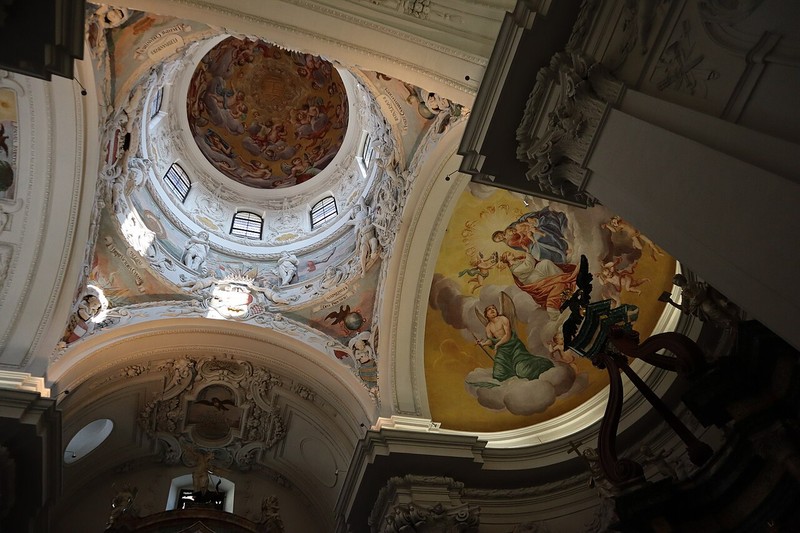
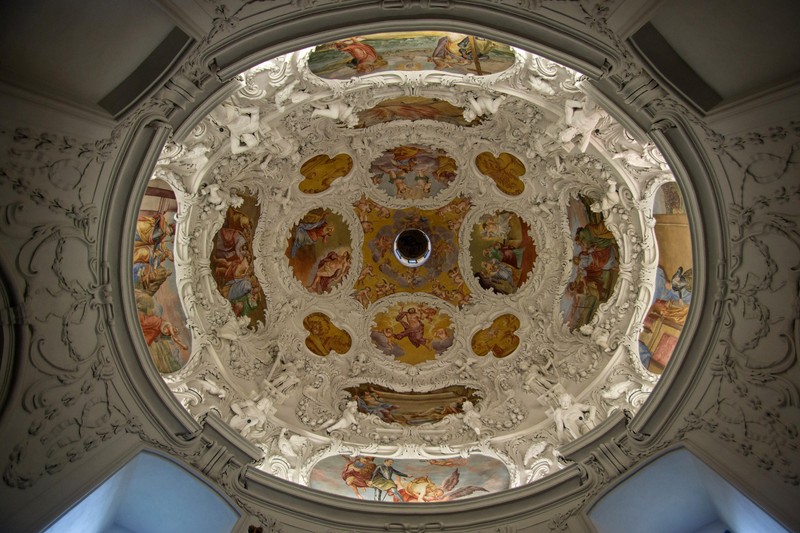
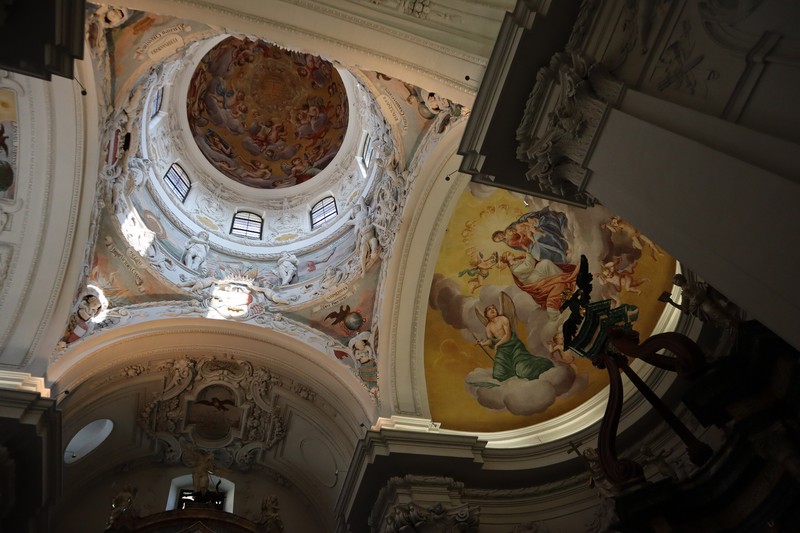
One of the building’s most unusual features is the oval dome above the burial chapel. It is an early example of this architectural solution outside Italy. The design unites the church and the memorial space into one ensemble, where architecture, sculpture and religious symbolism complement one another.
The façade and interior include allegorical figures and Christian symbols. Above the church entrance stands a statue of St Catherine of Alexandria, the church’s patron saint. Her image refers to the tradition of her martyrdom and emphasises the religious purpose of the complex.
St Catherine’s Church and the burial chapel
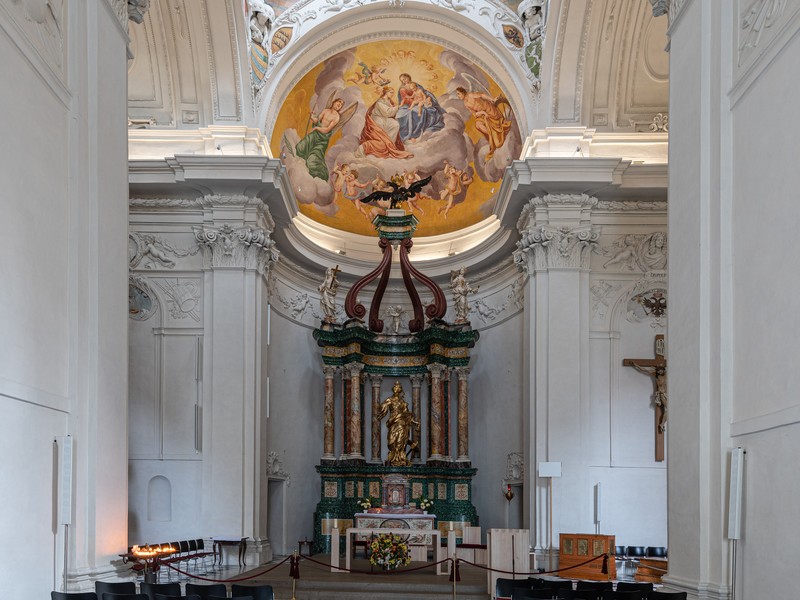
The Church of St Catherine of Alexandria is an integral part of the mausoleum. Its cruciform layout is connected to an oval burial structure. This arrangement distinguishes the complex from an ordinary palace chapel: it functions both as a church and as a monumental family tomb.
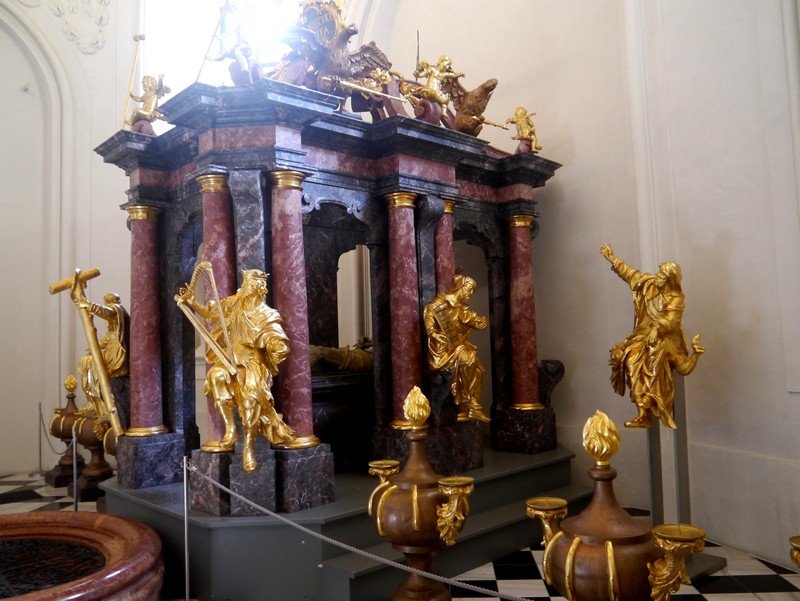
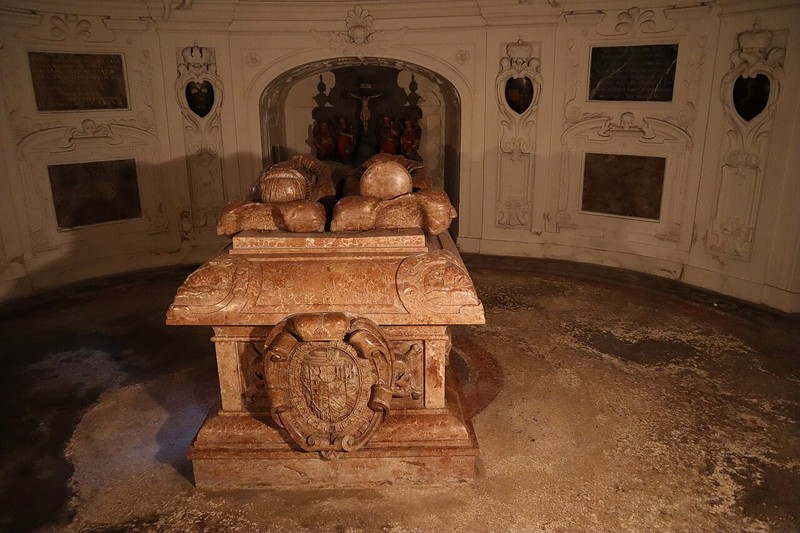
Ferdinand II and members of his family are buried within the complex. Among its historic funerary monuments is a red-marble sarcophagus associated with the family of Archduke Charles II. The interior contains sculptural and decorative details that reflect the religious beliefs and artistic tastes of the Habsburg era.
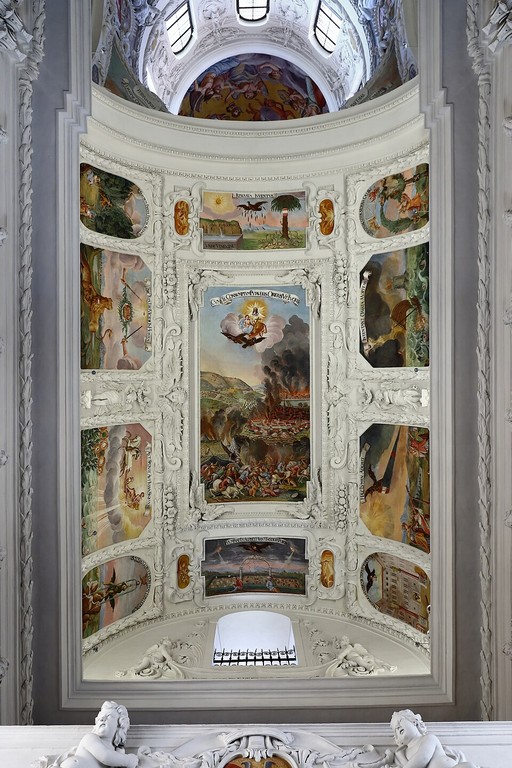
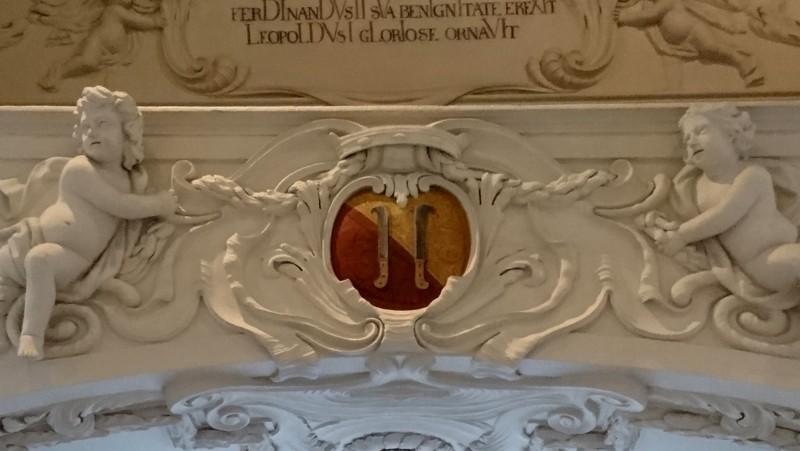
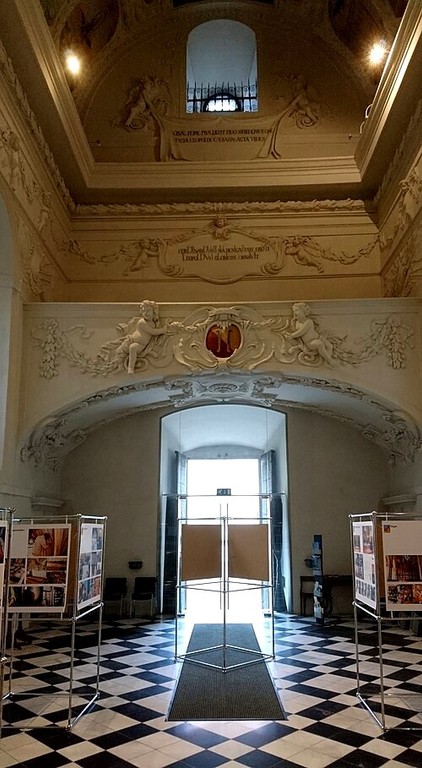
Baroque craftsmen played an important role in shaping the interior. Ornamental stucco, painted compositions and architectural details give the rooms a ceremonial atmosphere. The mausoleum demonstrates how art in the 17th and 18th centuries was used to express dynastic memory, religious devotion and imperial prestige.
The mausoleum within historic Graz
The mausoleum stands in central Graz, beside the Cathedral of St Giles. Together with Graz Castle, the former Jesuit complex and other historic buildings, it forms the “City Crown of Graz”, an architectural ensemble that reflects the city’s former role as a Habsburg residence.
After visiting the mausoleum, visitors can explore the cathedral, walk through the historic streets of the old town and continue to Graz Castle. The close proximity of these attractions makes the area easy to explore on foot. The historic centre is known for its mix of medieval buildings, Renaissance palaces and Baroque architecture.
Visiting the mausoleum
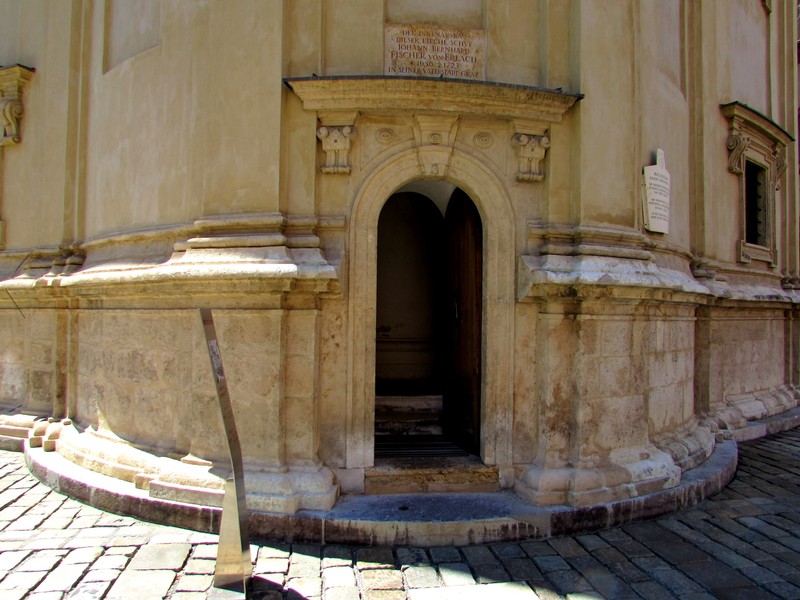
The mausoleum is located on Bürgergasse, next to Graz Cathedral. The historic centre is accessible by public transport, and the complex can easily be reached on foot from central stops. Visitors should remember that the church and burial chapel form part of a historic religious site.
According to local tourism and church information, the regular visiting season runs from April to October, when the complex is generally open Tuesday through Sunday. Winter visits may be arranged in advance as part of a guided tour. Opening hours, access to individual rooms and entry conditions can change, so check current details before travelling.
About half an hour is usually enough to see the mausoleum itself, but it can be combined with the cathedral and other parts of the City Crown for a longer walk through the historic centre. The site is particularly rewarding for visitors interested in architecture, Habsburg history and religious art from the 17th and 18th centuries.
Gallery