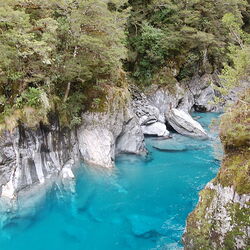
Mount Cook National Park
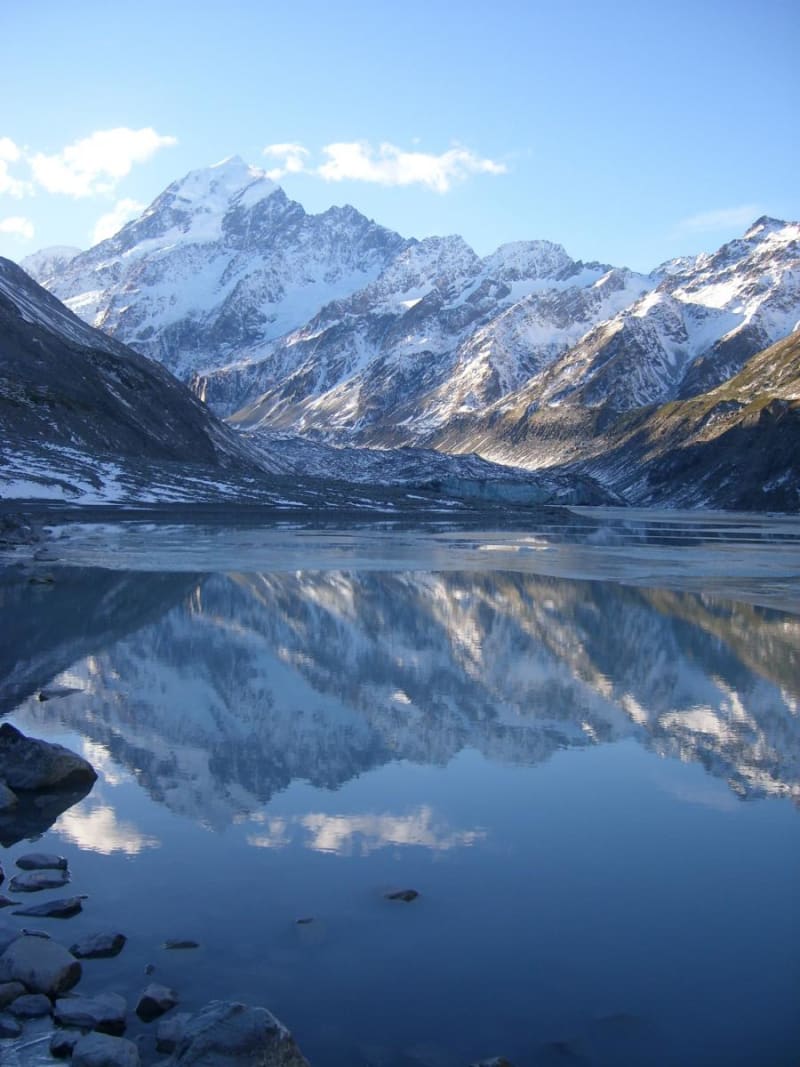
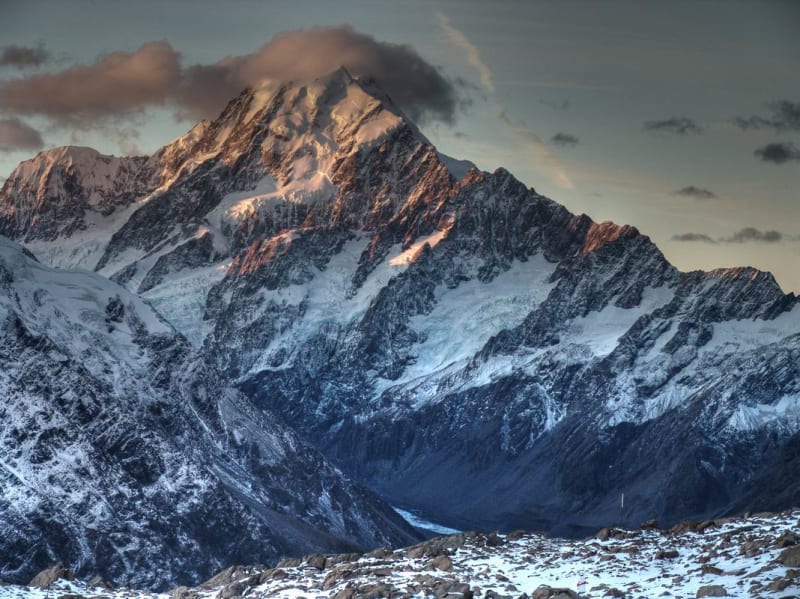
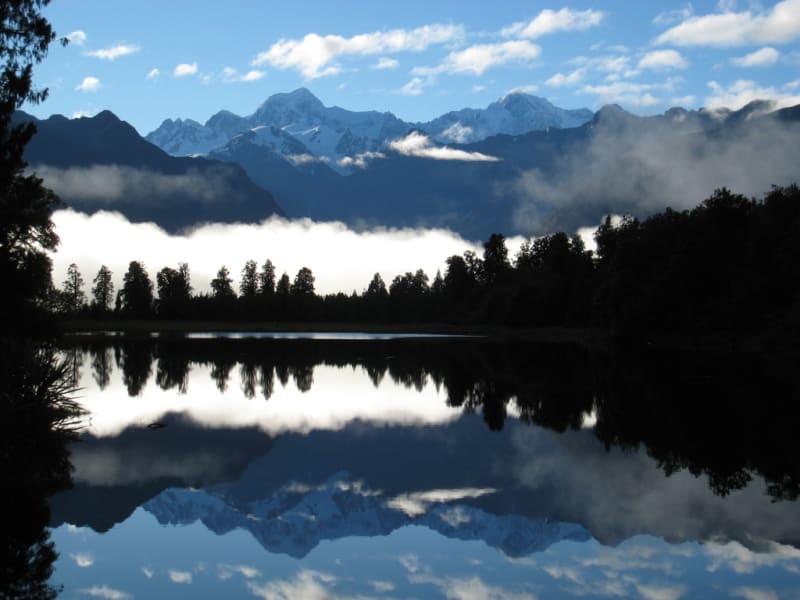
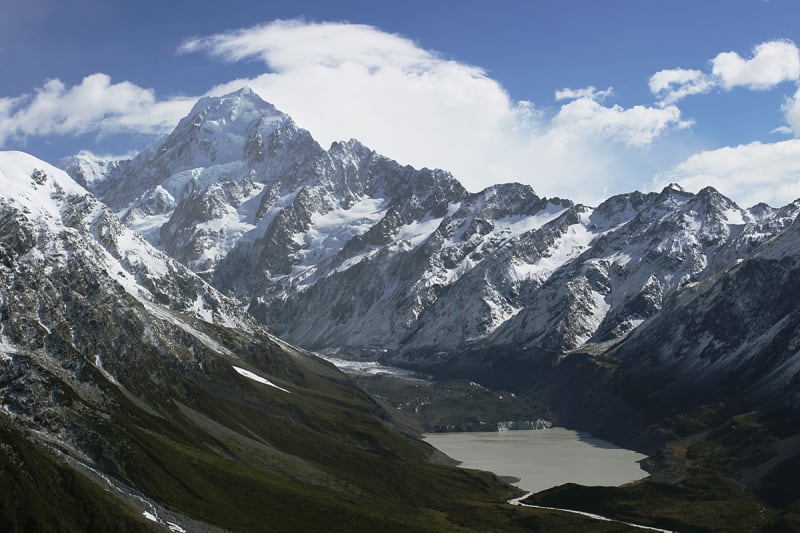
Mount Cook is a national park near the town of Twyzel in New Zealand. In October 1953, the territory was declared a national park. The park covers just over 700 km2. Glaciers occupy 40% of the park's territory, in particular, the Tasman Glacier on the slope of Mount Cook (3754 m). Of the 20 mountains in New Zealand, whose height exceeds 3,000 m, only Aspiring lies outside the park. The park is part of the Te Wahipunamu area, which is included in the World Heritage List for its outstanding natural value.
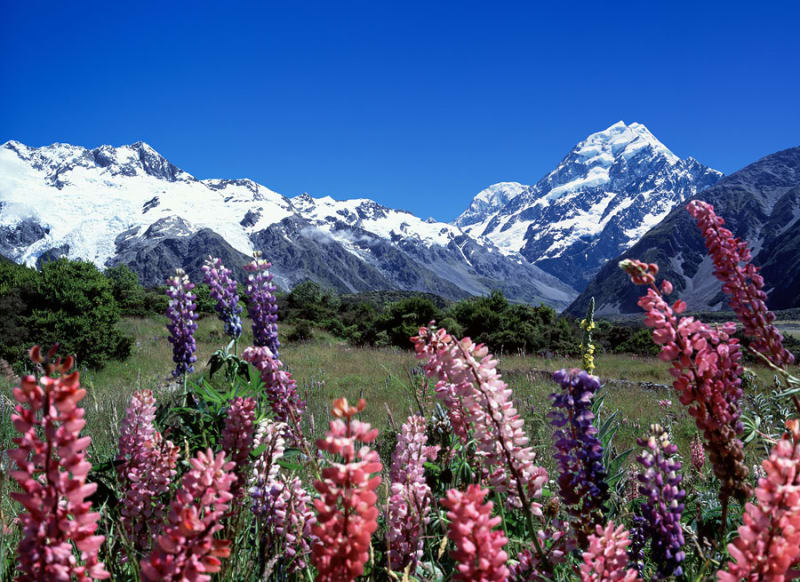
Mount Cook Park is especially popular with those who are keen on rock climbing, as the mountains of this park are great for training. But for those who prefer to contemplate the beauty of nature, this reserve will be very interesting. One of the attractions of Mount Cook Park is the Tasman Glacier. The Tasman Glacier, named after the Dutch navigator, has been melting for 20,000 years. The Tasman River flowing out of this glacier rushes first into a mountain valley, and then meanders into Lake Pukaki. The ice river running from the Tasman Glacier, between the Cook and Bruna ranges, stretches for 30 km and reaches a width of 2-3 km. It is very popular with tourists and skiers. According to New Zealanders, this is the longest ski run in the world.
Hermitage, the country's most famous mountain resort and tourist base, is located at the foot of Mount Cook. Climbers love to visit here. One of the most famous modern climbers, New Zealander Edmund Hillary, began training in these parts (Hillary and Tensing were the first to climb Mount Everest in May 1953). Mount Cook is clearly visible from Hermitage. You can take a closer look at the mountain using a telescope mounted on a pedestal next to the Hermitage Hotel. You can also fly on a special airline's light aircraft, which takes tourists and skiers to the glaciers from a small airfield. Or fly around Mount Cook and other peaks.
Flora and fauna of Mount Cook Park
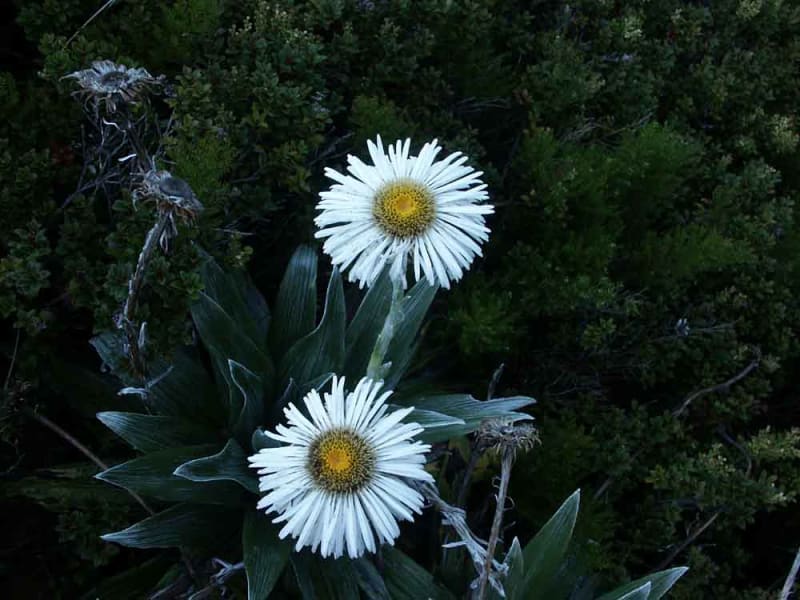
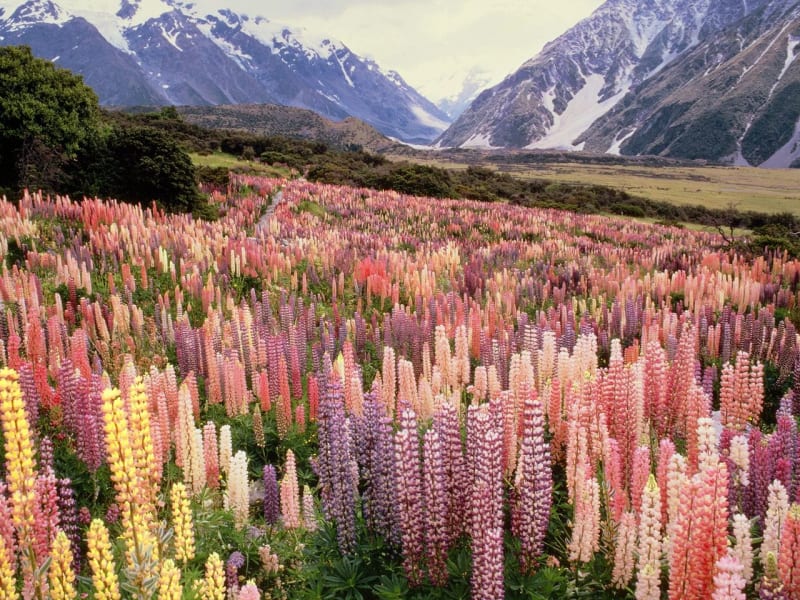
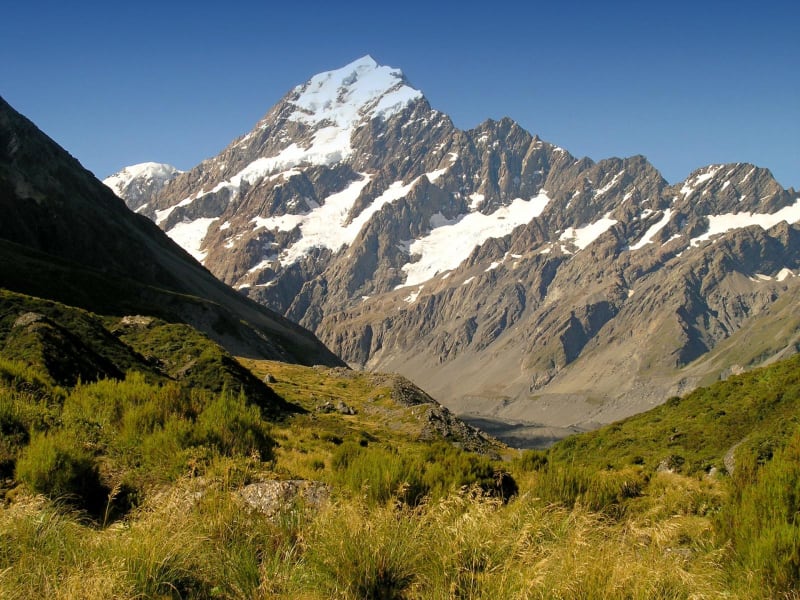
In addition to the beautiful mountains and glaciers, tourists can expect a unique flora and fauna. Edelweiss grows at a height of 900 meters, below there are violets, forget-me-nots, primroses. In Mount Cook Park, you can find a unique "Mount Cook lily" - a large buttercup. Among the animals, you can find Himalayan tare, chamois, red deer, which acclimatized here at the beginning of the 20th century. Hunting is allowed for some types of animals. Wonderful alpine meadows overgrown with grasses and beautiful flowers, amazing lakes, and views from the mountain make a walk through Mount Cook Park unforgettable.
The Legend of Mount Cook
The locals have a beautiful legend about Aoraki (Mount Cook) in New Zealand. Aoraki and his three brothers were the sons of Father Nebo. Their father took a fancy to an earthly woman and he went to her. His first wife cried for days and nights, and then the brothers decided to bring their father back, got into a magic canoe and sailed through the heavens to earth. They saw there that Father Nebo loved his new wife very much, and decided to return to their mother. But they got caught in a terrible storm, the canoe overturned, and they ended up in the water. There was no help, their hair turned white and their bodies turned to stone, and they turned into mighty mountains. Aoraki's older brother became the tallest of all mountains, Mount Cook, and his brothers stood next to him, standing slightly shorter.
Cook and Tasman are some of the most popular names in New Zealand. The islands, called New Zealand, were inhabited in the X-XIV centuries by Polynesians. The Dutchman Abel Janszon Tasman discovered them in 1642 for Europeans. The first words spoken about New Zealand by a European were these: "A big mountainous land." Englishman James Cook explored the islands in the second half of the 18th century and discovered them in 1769 for the second time to Europeans and, following secret instructions from the British Admiralty, declared New Zealand the possession of the English Queen. But the British began to settle the territory starting in 1840.