Freycinet National Park is one of the most scenic natural areas on the Australian island of Tasmania. Located on the island’s east coast, on the Freycinet Peninsula, it features granite mountains, white-sand beaches, turquoise bays and coastal forests. The park’s best-known attraction is Wineglass Bay, celebrated for its clear water and elegantly curved beach.
Nature and landscapes
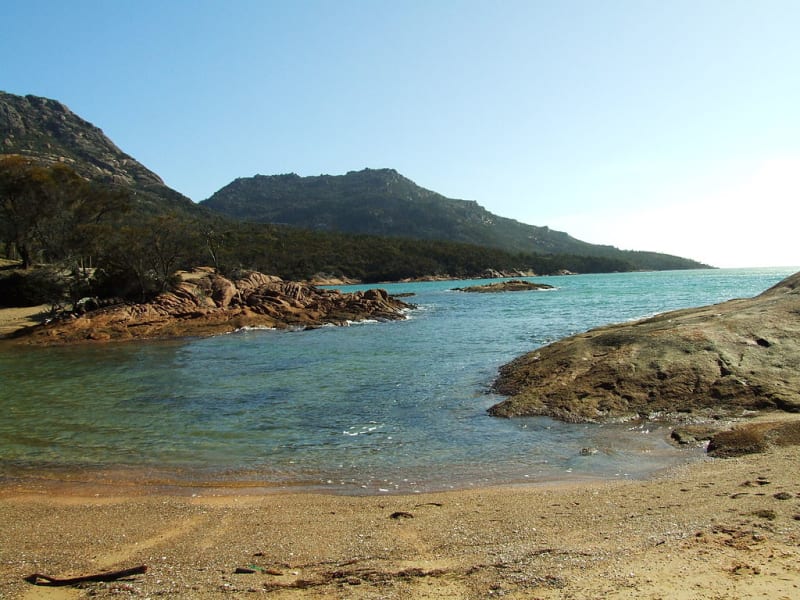
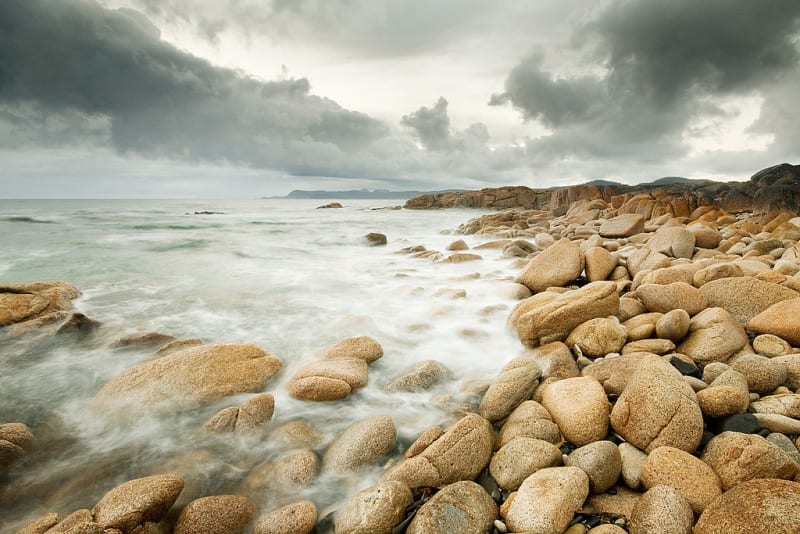
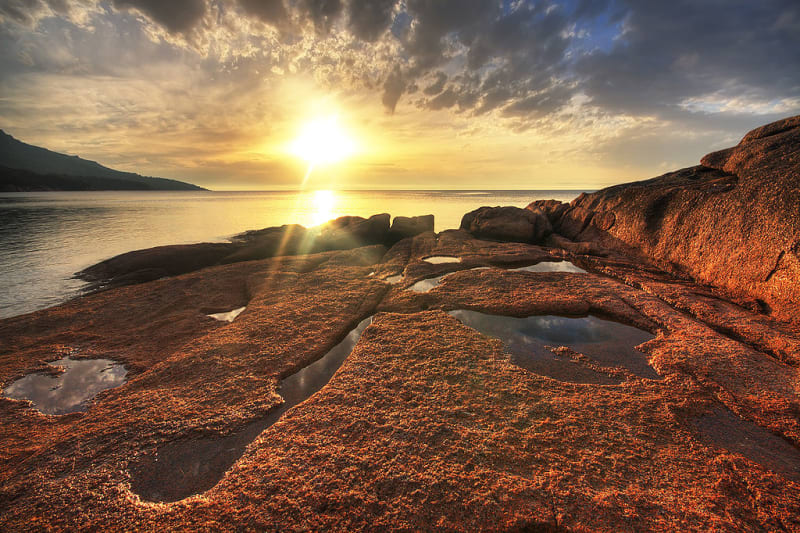
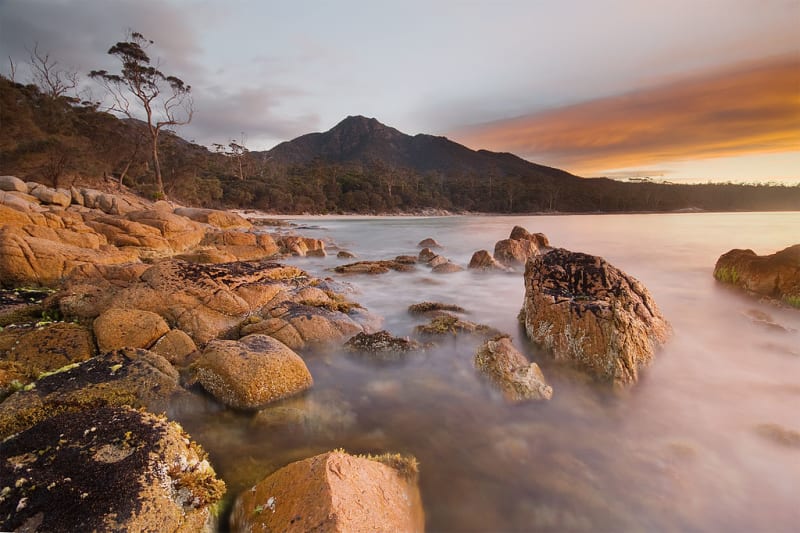
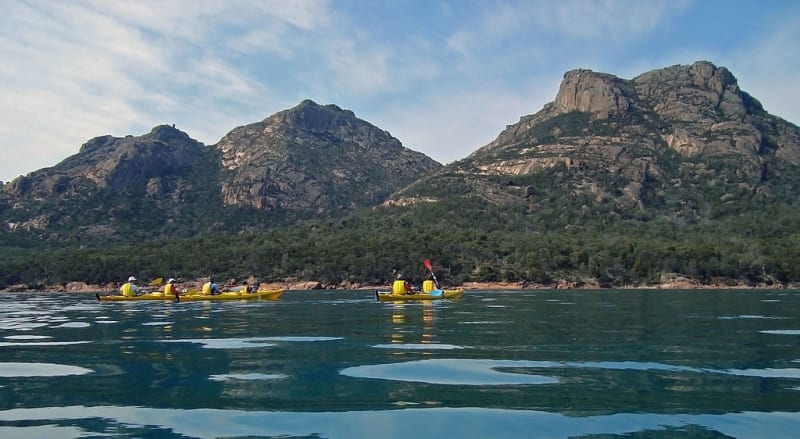
Freycinet’s scenery combines mountain peaks with a dramatic coastline. The granite range known as the Hazards rises above the bays, its rocky slopes creating a striking contrast with the blue water. Along the coast, visitors encounter sandy beaches, rocky headlands, secluded coves and patches of coastal woodland. One turn in a trail may reveal open ocean waves, while the next leads to a calm, sheltered lagoon.
The national park protects the peninsula’s natural environments, including a variety of plants and animals. Visitors can watch birds, look for native Australian wildlife and explore coastal ecosystems. To help preserve the area, take all rubbish away, do not feed wildlife and follow the park’s visitor rules.
Wineglass Bay
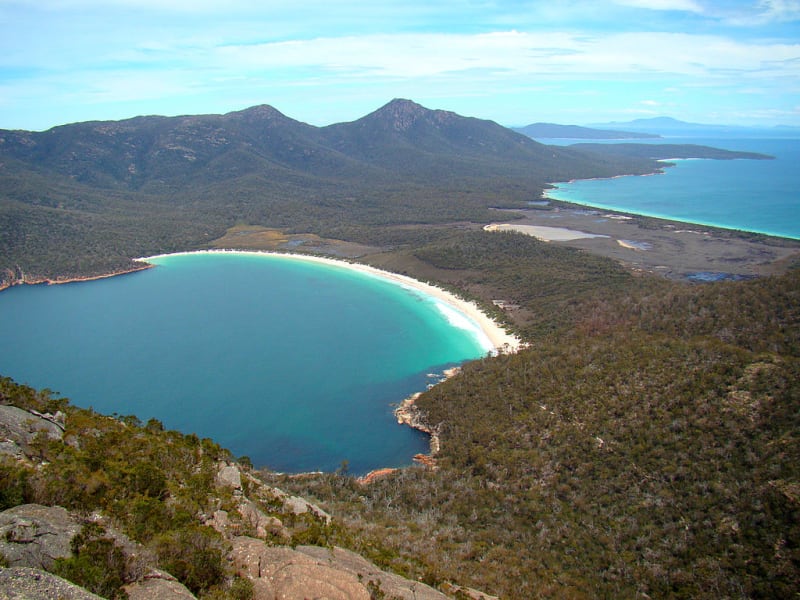
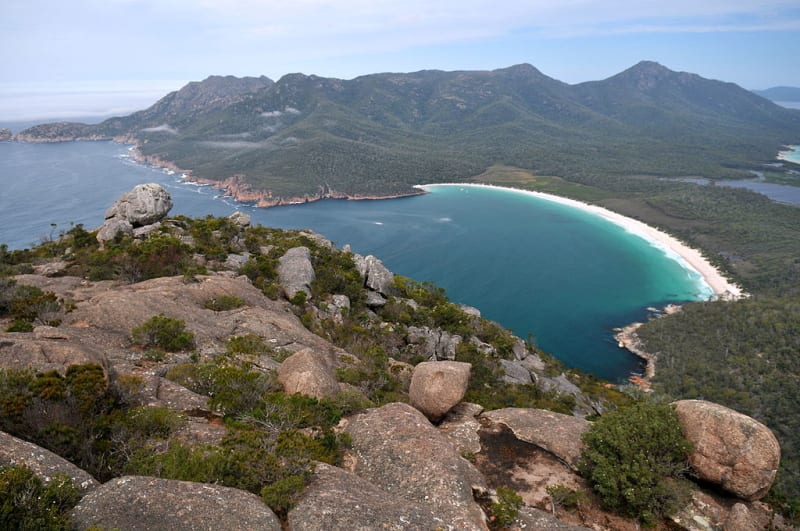
Wineglass Bay is the signature attraction of Freycinet National Park. Its name refers to the distinctive shape of the bay, which is particularly clear from above. White sand, transparent water and green hillsides create one of Tasmania’s most recognisable views.
To reach Wineglass Bay Lookout, follow a constructed trail through coastal woodland and past granite boulders. The return walk is about 2.6 kilometres and usually takes between one and one and a half hours. The path includes a steep climb and numerous steps. Visitors who wish to descend to the beach itself and continue along the coast should allow more time.
The longer Wineglass Bay and Hazards Beach circuit is approximately 11 kilometres and takes around four to five hours. It offers views of Wineglass Bay, Hazards Beach, woodland and other coastal landscapes. Before setting out, assess your fitness, check the weather and carry enough drinking water.
The Hazards and Mount Amos
The granite peaks of the Hazards form a dramatic backdrop to the park’s bays and beaches. Their slopes and summits attract hikers and landscape photographers. One of the best-known routes climbs Mount Amos, where panoramic views extend across Wineglass Bay and the surrounding coastline.
The Mount Amos hike is considerably more difficult than the walk to the main lookout. The return route is about 3.6 kilometres and takes approximately three hours. The track climbs over steep granite slabs that can become especially slippery after rain. This walk is suitable only for fit, experienced hikers with appropriate footwear. It is not recommended in wet weather.
Beaches and outdoor activities
Beyond Wineglass Bay, the national park offers many other places to enjoy the coast. Visitors can walk along the beaches, have picnics and admire the scenery. In sheltered bays, conditions may be suitable for swimming, kayaking and observing marine life. Fishing and birdwatching are also possible activities, provided local regulations are followed.
Friendly Beaches, located in a separate section of the national park, are particularly noteworthy. Long stretches of pale sand create a sense of space and seclusion. When travelling to the beaches, check road conditions and confirm access to the area you intend to visit.
When to visit
Freycinet can be visited throughout the year, although walking and beach conditions depend on the season and weather. During summer in the Southern Hemisphere, from December to February, there are generally more opportunities for beach activities and water sports, but visitor numbers also increase. Spring and autumn are suitable for hiking and wildlife watching, although the weather can change quickly. Strong winds and cool spells are possible on the coast even during warmer months.
Before a hike, check the forecast and choose a route suited to your fitness and experience. Some tracks include steep climbs, uneven granite surfaces and exposed cliffs. Swimming is not safe at every beach or in all conditions, and many coastal areas are not patrolled by lifeguards.
How to get to Freycinet National Park
The main park entrance is near the township of Coles Bay on Tasmania’s east coast. From the Tasman Highway, turn onto Coles Bay Road and follow the signs to the visitor centre. Driving from Hobart or Launceston generally takes about two and a half to three hours. Organised tours and available public transport options may also provide access.
A valid parks pass is required to enter Tasmania’s national parks. It can be purchased in advance, or visitors can check purchase options at the visitor centre. Drinking water is limited within the park, so bring sufficient supplies and refill bottles at designated locations. Before travelling, check official information about track access, parking and current restrictions.
Why visit Freycinet
Freycinet National Park combines dramatic mountain scenery, clear bays, sandy beaches and a variety of walking routes. Visitors can take a short walk to a lookout, spend a day by the sea or embark on a multi-day journey across the peninsula. The combination of granite mountains and turquoise water has made the park one of Tasmania’s best-known natural attractions and an excellent place to experience Australia’s wild landscapes.
Gallery