Corfe Castle
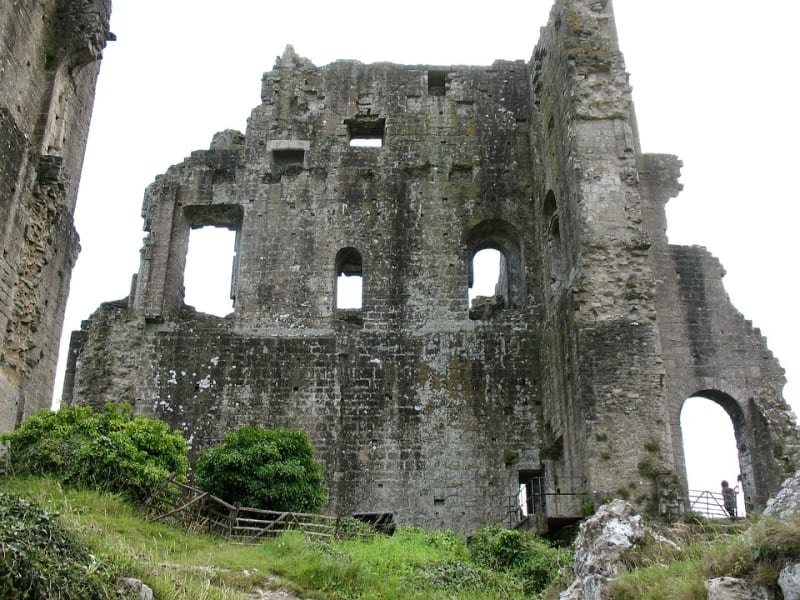
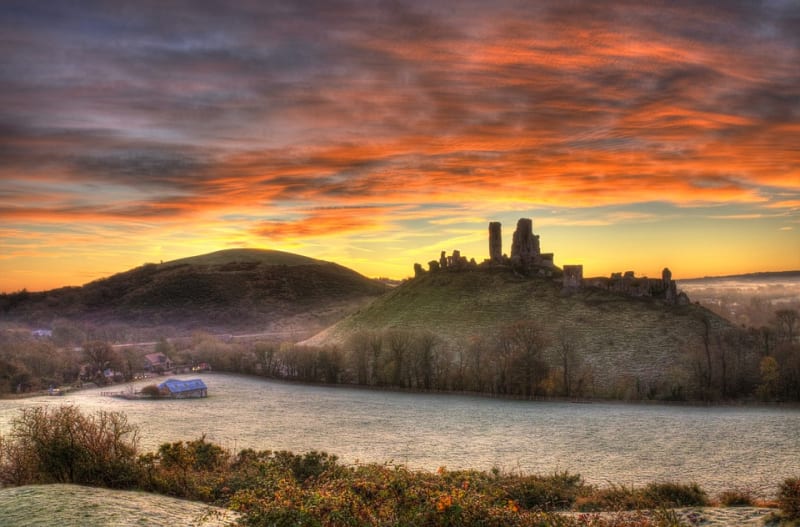
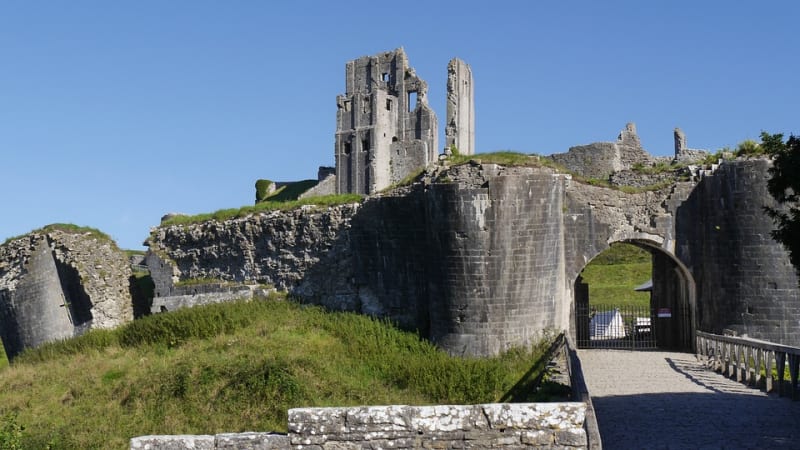
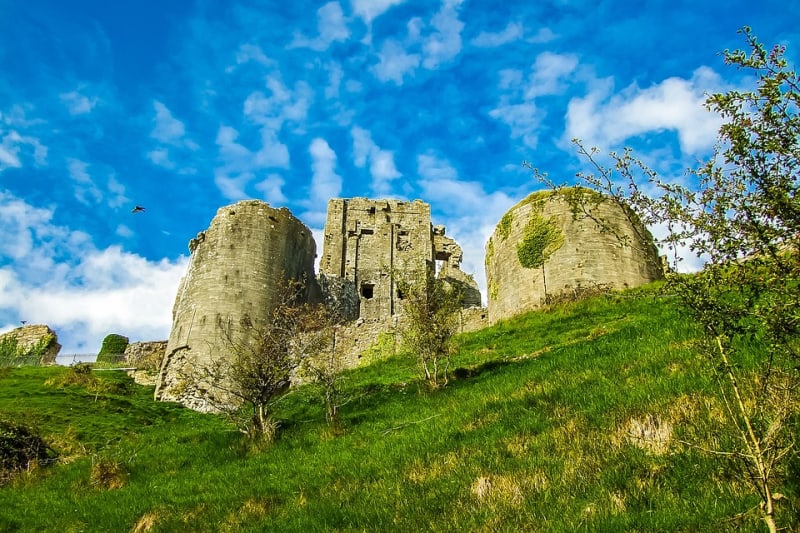
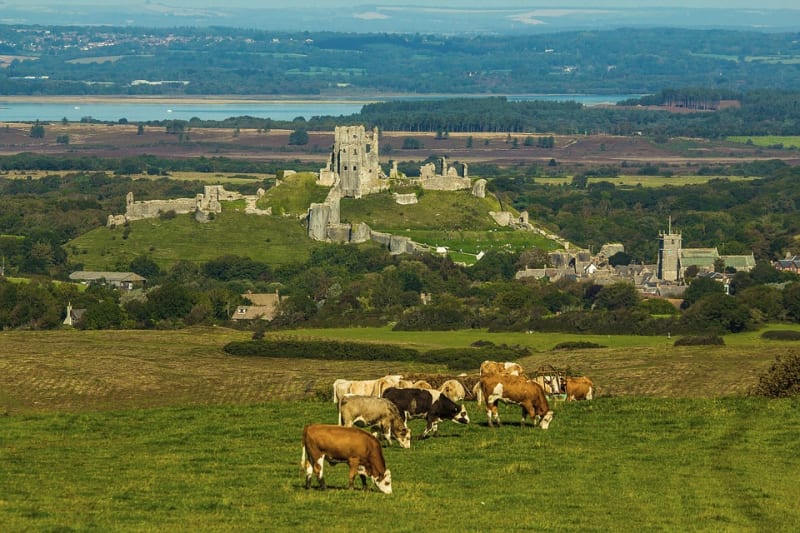
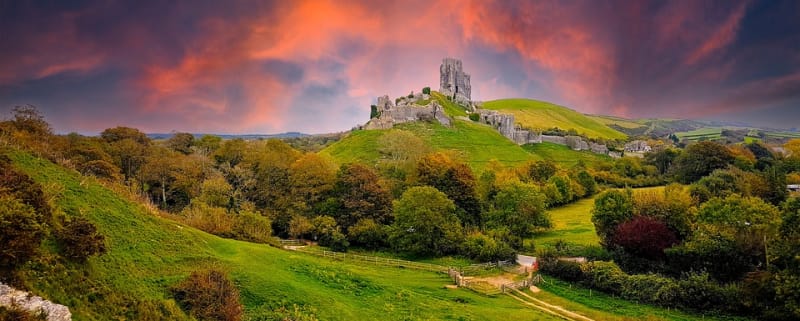
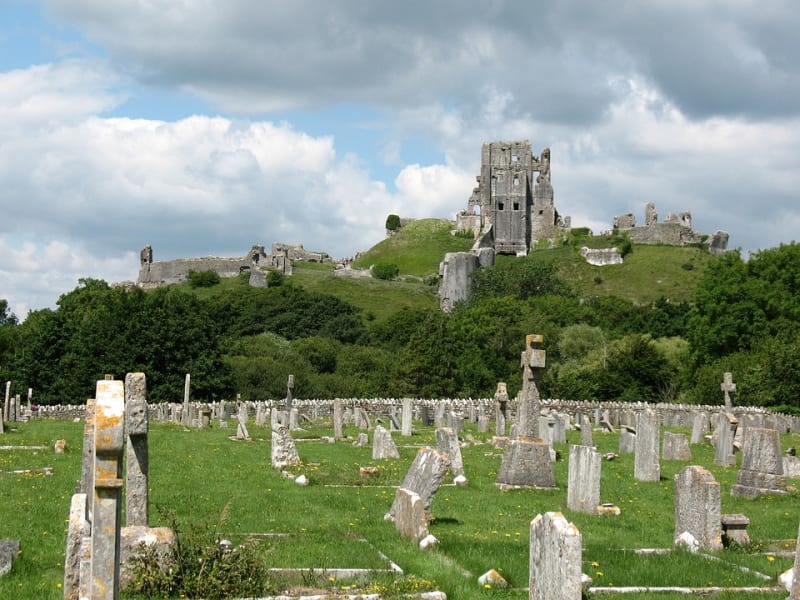
The early Norman castle, towering over the village of Corfe, is an unforgettable sight. Corfe Castle was built during the reign of William the Conqueror to control the passage through the Purbeck Hills on the road between Swanage and Wareham. However, there was a fortress on this site long before the Normans. There could have been a Roman military camp here, and in the 9th century there was a wooden stockade.
The scene of royal intrigues
Corfu played a role in history as early as 975. Edward the Martyr, the boy king of Wessex, was killed on the orders of his stepmother Elfrida to allow the even younger Ethelraid to take the throne. This ineffective 12-year-old ruler failed to prevent the Danes from capturing England in 980.
John's Tyranny
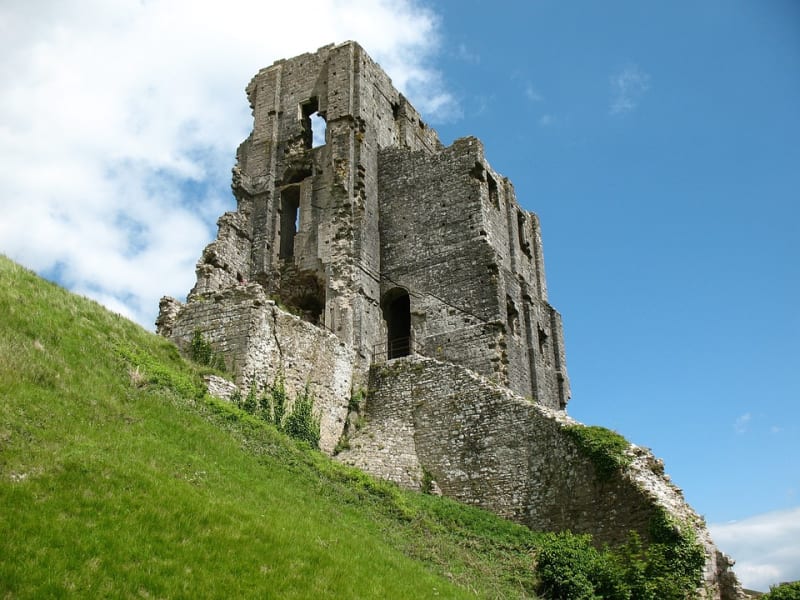
At the end of the 11th century, the Saxon castle was replaced by a small stone hall surrounded by a perimeter wall. This wall will later become an internal lock. King John expanded Corfe Castle by building an external curtain wall, a large hall, and a chapel. Later, he used Corfu to store part of his royal treasury, as well as political prisoners. Here he held his daughter Eleanor captive and allowed 22 of her French knights to starve to death in a dungeon. Another royal prisoner, Edward II, was held here until he was sent to Berkeley Castle and killed.
The Bravery of Lady Mary Banks
In 1635, Corfe Castle was sold to Sir John Banks, the Chief Justice of England, and used as a second home rather than a fortress. He spent most of his time in London, leaving Corfe in the care of his wife, Lady Mary Banks. The castle was besieged twice during the Civil War. The defenders, led by Lady Banks, resisted the troops for almost three full years until they were betrayed by one of their own soldiers. The indomitable Lady Banks fought to the bitter end, locking herself in her private chambers and throwing hot coals through the window to the attacking forces. Although she was finally forced to surrender, Lady Banks impressed the army commander so much with her bravery that she was allowed to leave the castle with her garrison and the keys to the castle. These keys are kept at the Banks family home in Kingston Lacey.
A modern copy
Subsequently, the lock was severely neglected and rendered unusable. The Korf Museum is located in the town, tracing the history of the village and the castle. An exact replica of the castle was created there before its destruction, using the same local grey limestone used in the construction of the original fortress and most of the slate-roofed cottages in the village.