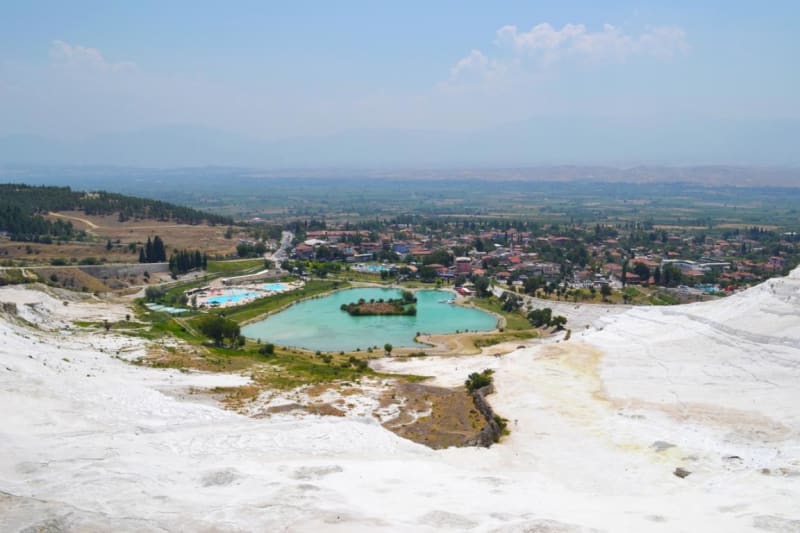
Pamukkale is one of Turkey's most extraordinary natural attractions, located in the southwest of the country in Denizli Province. Its name means “cotton castle” in Turkish and describes the landscape well: brilliant white terraces descend the hillside like frozen cascades of snow. They are formed by mineral deposits from hot springs that have shaped this remarkable terrain over thousands of years.
Pamukkale is known for its combination of natural wonders and ancient history. The area contains thermal springs, shallow natural pools and the ruins of the ancient city of Hierapolis. In 1988, Pamukkale and Hierapolis were jointly added to the UNESCO World Heritage List. The site attracts travellers, photographers and history enthusiasts who want to see one of Turkey's most recognisable landscapes.
How the White Terraces Formed
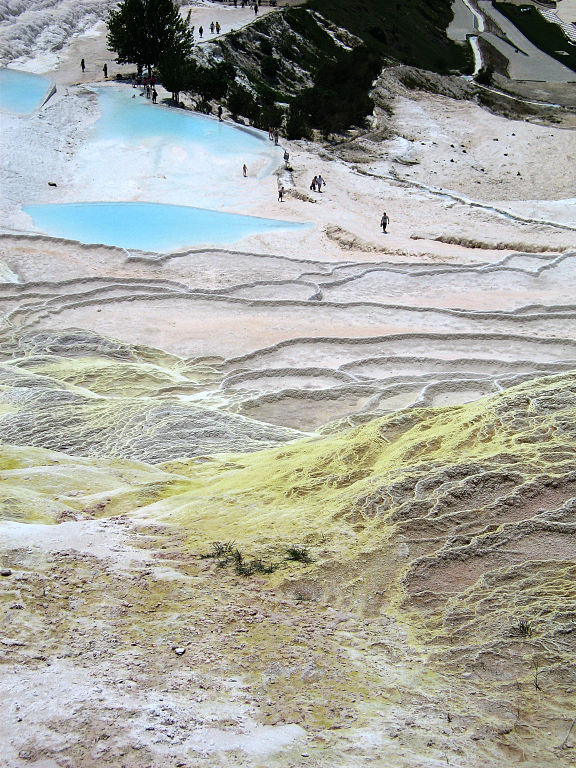
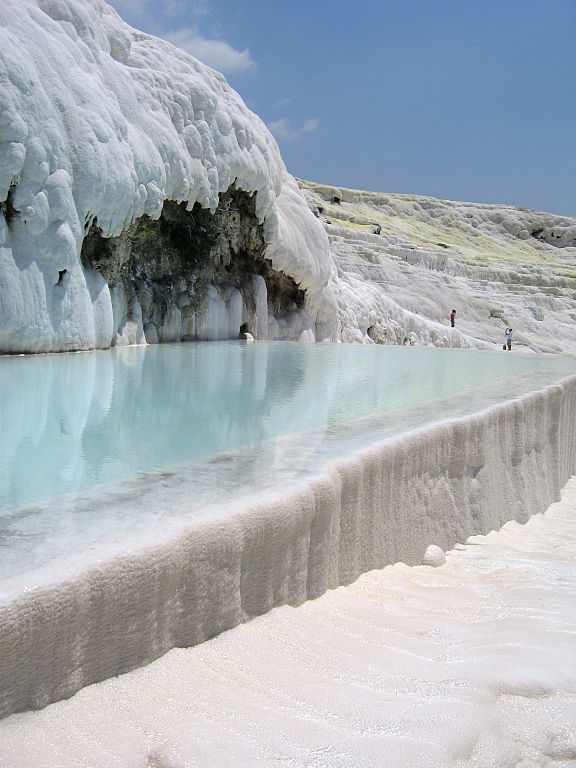
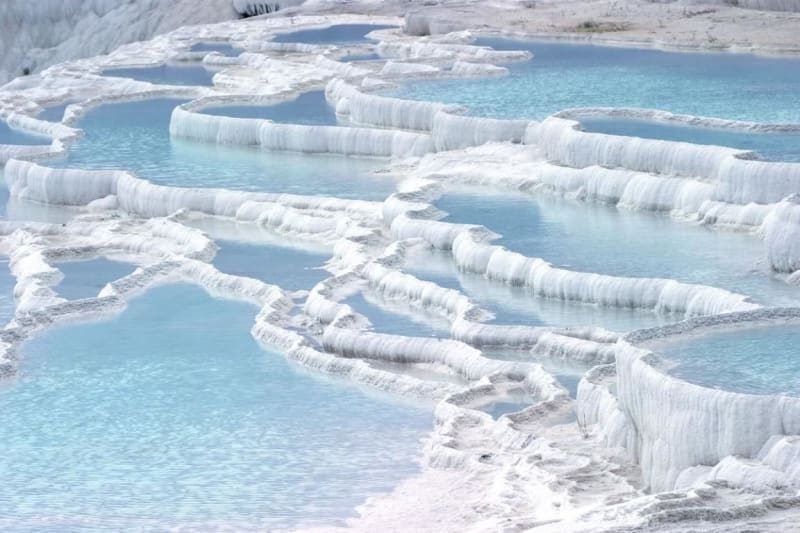
Pamukkale's defining feature is its white travertine terraces. They form when thermal water rises from deep underground. As it passes through limestone, the water absorbs dissolved calcium compounds and emerges warm at the surface. When the temperature changes and the water comes into contact with air, carbon dioxide is released and calcium carbonate gradually settles on the surface.
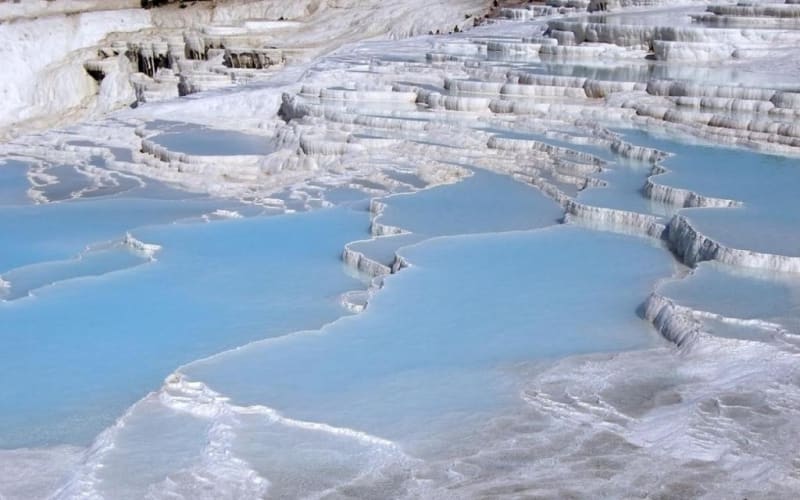
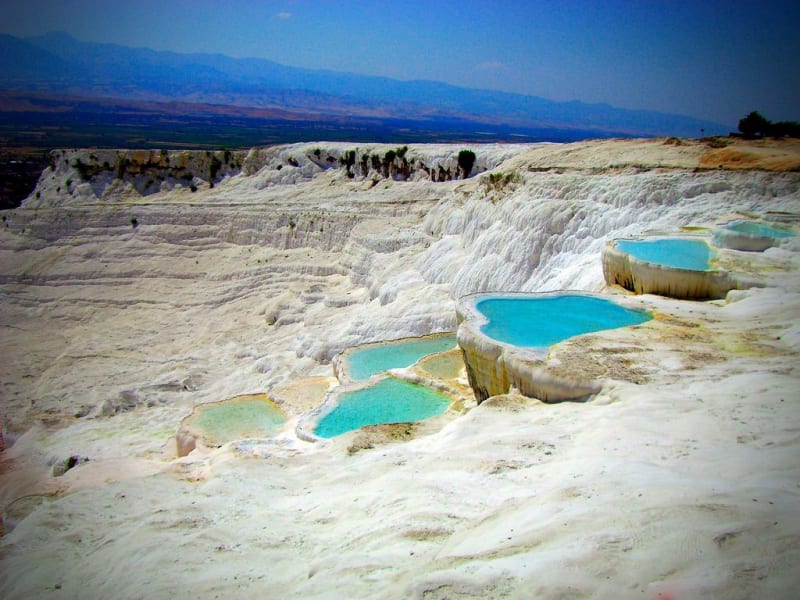
Over long periods, mineral deposits accumulate to create stepped ledges, small basins and natural rims. Water flows from one terrace to another, leaving thin white layers of minerals behind. This process has produced the unusual terrain that makes the hillside resemble a vast castle made of cotton.
The colour of the surface changes according to the light, humidity and amount of water present. In sunshine, the terraces appear dazzlingly white, while water in some pools takes on a blue tint. However, not every area remains filled with water all the time. Water flow is managed to support the natural formations and reduce damage.
Pamukkale's Thermal Springs
The thermal waters of Pamukkale have been known since ancient times. Their temperatures vary from one spring to another, but the water generally reaches the surface warm or hot. Its mineral composition and natural setting made the area an important destination for therapeutic bathing even in antiquity.
In ancient times, people travelled here to bathe in the springs and relax away from everyday concerns. Over time, the spa city of Hierapolis developed around them. Today, thermal water remains one of the region's main attractions, although swimming is not permitted everywhere. Access to some areas is restricted to protect the fragile travertine formations, and visitors must follow the rules of the protected site.
Pamukkale is primarily a natural monument, not a conventional water park. Before visiting, check the current regulations, accessible areas and bathing conditions. Do not leave marked paths or attempt to enter closed pools.
The Ancient City of Hierapolis
Above the white terraces lies Hierapolis, an ancient city founded in the second century BC. It developed around the thermal springs, which attracted visitors from different parts of Asia Minor. During the Roman Empire, Hierapolis became an important centre for relaxation, healing and religious life.
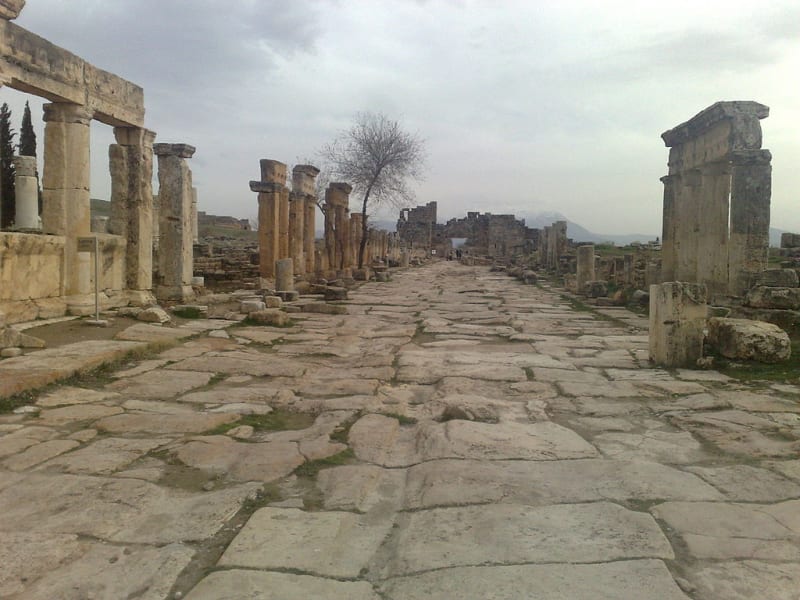
Today, the ruins include remains of streets, public buildings, temples and other structures. The archaeological site helps visitors imagine how the ancient city was organised and understand the role played by its hot springs. Monumental Roman-era buildings, surviving sections of colonnades and traces of ancient urban infrastructure are especially interesting.
Hierapolis was repeatedly affected by earthquakes, which are common in the region. Some buildings were destroyed, while others were rebuilt over the centuries. Despite this, the archaeological area remains one of the most important historical complexes in southwestern Turkey and adds a rich cultural dimension to Pamukkale's natural beauty.
The Ancient Theatre
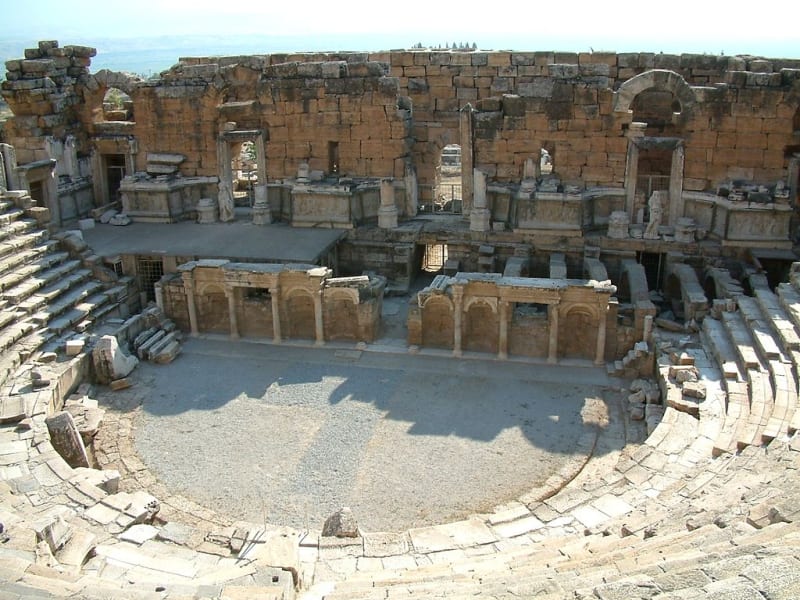
One of Hierapolis's most impressive structures is its ancient theatre, built into a hillside. Its monumental seating rows and surviving architectural details reveal the scale of public life in the ancient city. The theatre hosted performances and large gatherings for residents and visitors alike.
The surviving sculptural decoration of the stage is particularly striking. Its ornaments and reliefs reflect artistic traditions of the Roman period. The theatre is one of the most distinctive archaeological attractions in the complex and deserves time during a walk through the ancient city.
Cleopatra's Pool
Near the archaeological area is a famous ancient pool often called Cleopatra's Pool. It lies among thermal springs and is known for its warm mineral water, in which fragments of ancient columns and stone structures can be seen. According to legend, the pool is connected with the Egyptian queen Cleopatra, but there is no reliable historical evidence that she visited the site.
Swimming in the pool is generally available for a separate fee and is subject to the site's rules. Water temperature and access conditions may change depending on how the facility is operated. Check opening hours and current restrictions before visiting, especially during the peak tourist season.
Cleopatra's Pool is appealing not only because of the chance to bathe in thermal water but also because of its unusual atmosphere: visitors relax among ancient ruins that recall the long history of Hierapolis.
Walking on the Travertine Terraces
The best-known activity at Pamukkale is walking along the white terraces. Visitors can follow a designated route and see the mineral formations at close range. In certain permitted areas, it is possible to feel warm water beneath your feet, but care is needed because the surface can be slippery and uneven.
To protect the travertine, follow staff instructions and stay out of closed areas. In some places, visitors must remove their shoes to reduce damage to the surface. Do not scrape off minerals, leave litter or use cosmetic products in the natural pools. These simple rules help preserve the unique landscape for future generations.
The terraces are especially beautiful in the soft light of early morning or evening. At these times, the white slopes take on delicate shades and the shadows emphasise the shape of the natural basins. Sunset over Pamukkale is often one of the most memorable moments of a trip, although the areas open for walking may vary by season and current regulations.
Best Time to Visit
Pamukkale can be visited throughout the year, but spring and autumn are usually the most comfortable seasons. Daytime temperatures are often suitable for longer walks across the travertine terraces and archaeological area. The surrounding countryside becomes particularly green in spring, while the heat gradually eases in autumn.
Summers in the region can be extremely hot, so it is best to arrive early in the morning or later in the afternoon. Walking through exposed areas at midday can be tiring because there is little shade and the white surface reflects sunlight. There are generally fewer visitors in winter, but the weather can be cool and access conditions may change.
Before travelling, check the weather forecast, opening hours and current access rules. Bring comfortable shoes for the archaeological area, sun protection and drinking water. If you plan to walk barefoot on permitted sections of the travertine, choose footwear that is easy to remove and put back on.
How to Get to Pamukkale
Pamukkale is located about 20 kilometres north of the city of Denizli. Denizli is the main transport hub for reaching the natural terraces. It can be reached by bus or train from several major Turkish cities, after which visitors can continue by local transport or taxi.
Many travellers visit Pamukkale on a day trip, but it is also possible to spend more time in the area. Staying overnight in a nearby settlement makes it easier to reach the terraces early, when tour groups are often fewer, and explore Hierapolis at a relaxed pace.
There are several entrances to the complex, and the time needed depends on whether you plan to visit only the travertines or also the ancient city and Cleopatra's Pool. For a full visit, set aside most of the day and review the current site map in advance.
Why Visit Pamukkale
Pamukkale combines an extraordinary natural landscape, thermal springs and a renowned archaeological complex. Its white terraces were created by long geological processes, while nearby Hierapolis tells the story of an ancient city that developed because of these waters.
A visit shows how closely natural processes and history can be connected. Pamukkale is ideal for nature lovers, photographers and archaeology enthusiasts, as well as travellers who want to discover a different side of Turkey beyond its seaside resorts. Treating the travertine terraces with care helps preserve this remarkable place, which remains one of the country's most recognisable symbols.
Gallery