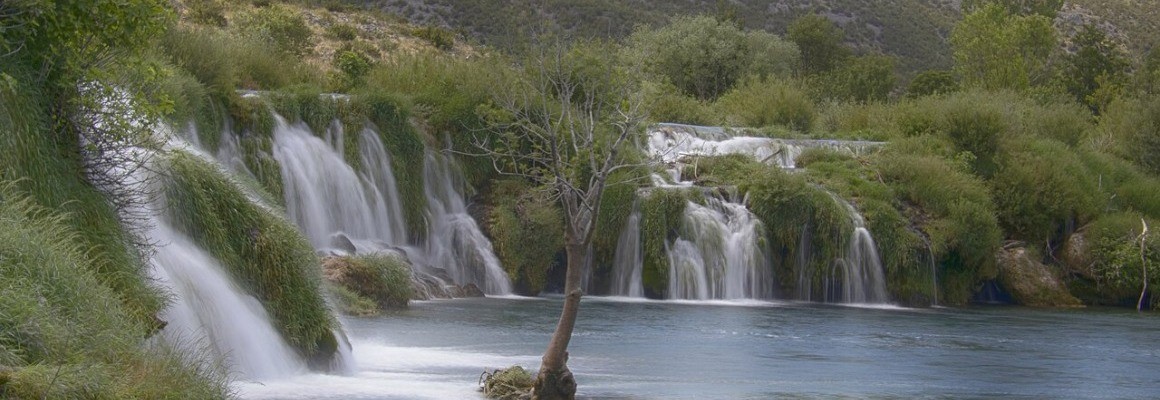
Plitvice Lakes National Park is one of Croatia’s best-known natural attractions. Located in the central part of the country, it features forested hills and mountainous landscapes of the Dinaric region. Its defining feature is a chain of lakes connected by waterfalls, cascades and streams. In 1979, the park was inscribed on the UNESCO World Heritage List.
Lakes and waterfalls
The park contains 16 named larger lakes, as well as numerous smaller bodies of water. Natural travertine barriers separate the lakes and gradually form through the interaction of water, mineral deposits, mosses, algae and microorganisms. This process continues today, meaning the landscape is constantly evolving.
The lakes are divided into the Upper and Lower Lakes. The Upper Lakes are surrounded by dense forests and generally have gentler shores. The Lower Lakes lie in a limestone canyon with steep slopes and prominent rock walls. Water flows from one lake to another, creating cascades and waterfalls. One of the park’s best-known sights is the Great Waterfall near the Lower Lakes.
Wildlife and natural habitats
Forests cover much of the park, interspersed with meadows and areas of natural vegetation. Brown bears, wolves, lynx and numerous bird species inhabit the area. The aquatic environment and travertine barriers support a variety of plants and specialised communities of organisms. Keeping the water clean is essential to the natural processes that created the lakes.
Exploring the national park
Visitors can choose from walking routes of different lengths. Wooden walkways and marked trails lead along the shores and close to waterfalls, offering views of the clear water from different perspectives. Some routes include a ride on a panoramic electric train or an electric boat crossing on Lake Kozjak. The best route depends on the time available and current conditions in the park.
Before your visit
The park welcomes visitors in different seasons, although access to certain trails and transport services may change because of weather or other circumstances. Check the official website before travelling and select a suitable route in advance. Comfortable footwear is recommended, and visitors must remain on marked paths and follow conservation rules. Swimming in the lakes is prohibited.
Plitvice Lakes are remarkable not only for their scenery but also for the geological processes that continue to shape the landscape. The park is an excellent place to discover Croatia’s natural heritage, walk through forest trails and observe waterfalls within a protected ecosystem.
Gallery