Mount Nemrut, also known as Nemrut Dağ, is one of Türkiye’s most remarkable archaeological sites. At an elevation of about 2,150 metres, enormous stone statues of gods, mythical figures and King Antiochus I overlook the surrounding mountains. The monument is located in Adıyaman Province in southeastern Türkiye, within the Eastern Taurus range.
History of the monument
The sanctuary and monumental tomb were commissioned by Antiochus I Theos, ruler of the Kingdom of Commagene in the first century BC. Commagene stood at the meeting point of Greek and Persian cultures, and this blend is reflected in the site’s sculpture and religious symbolism. Antiochus sought to honour his ancestors, associate himself with the gods and preserve his memory for eternity.
The centre of the complex is a huge mound made of small stone fragments. It is now about 50 metres high and roughly 150 metres in diameter. A burial chamber is believed to lie beneath the mound, but its exact location has never been established despite archaeological investigations.
Colossal statues and terraces
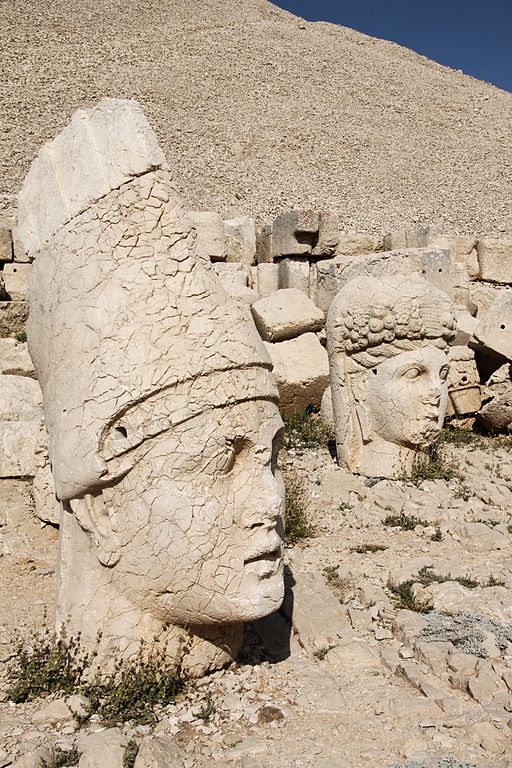
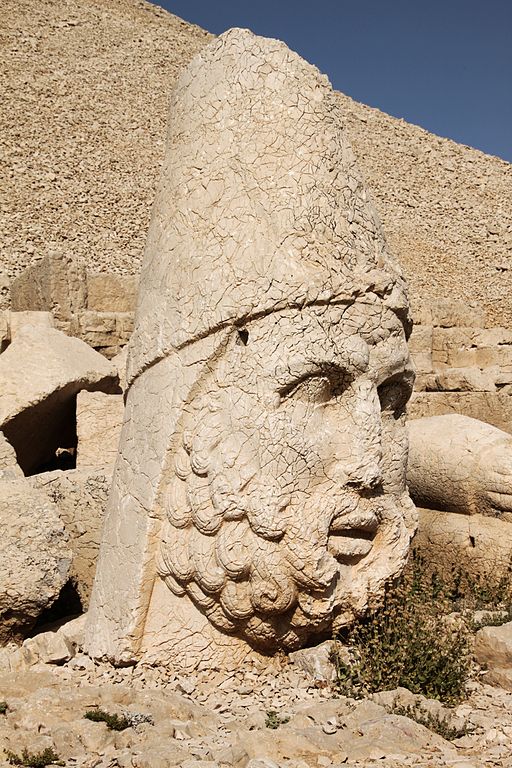
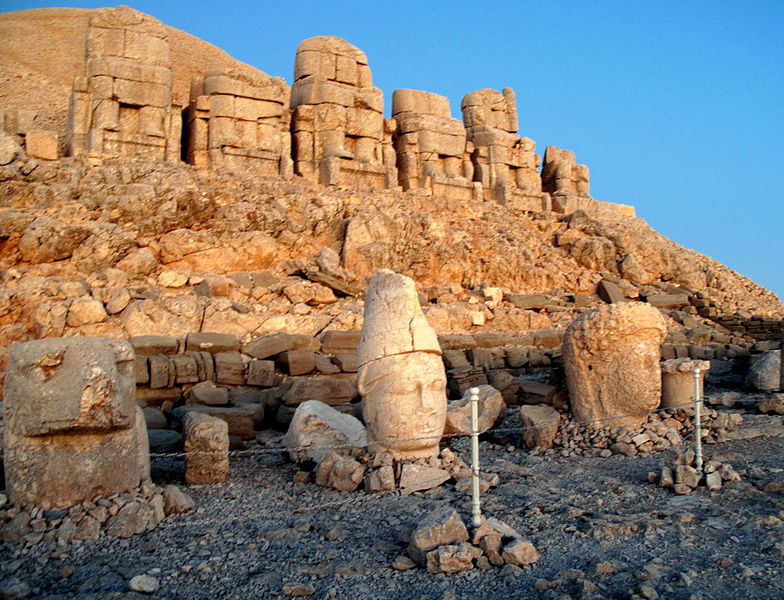
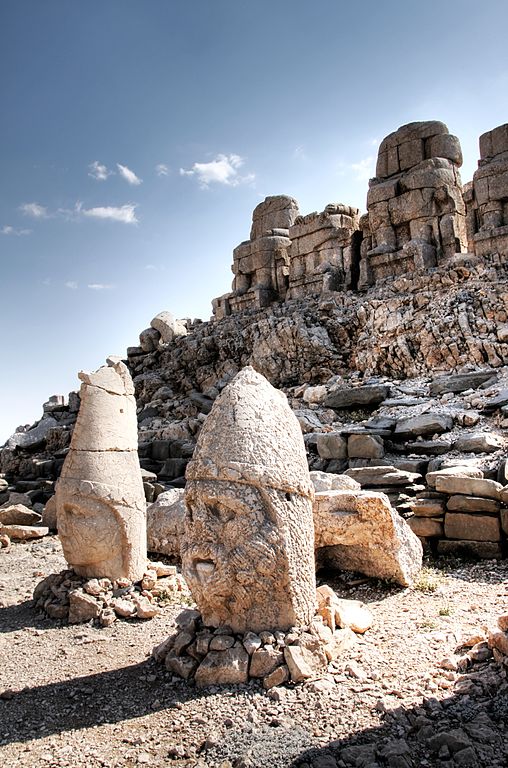
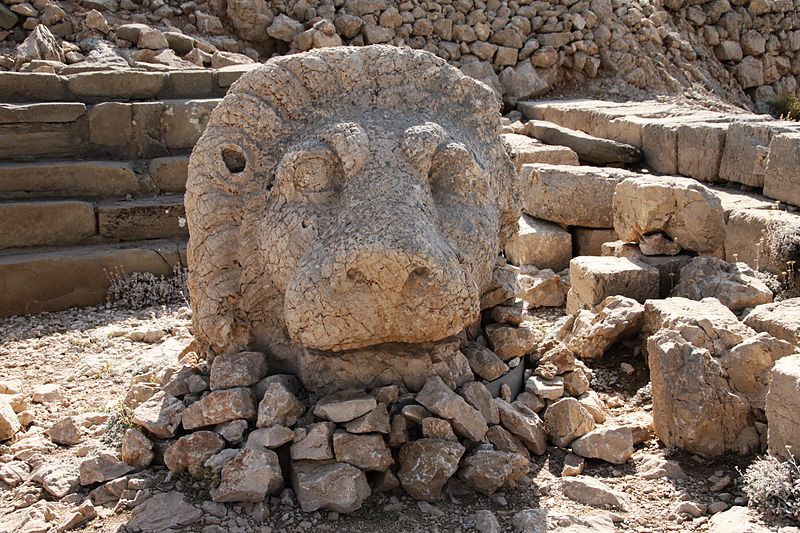
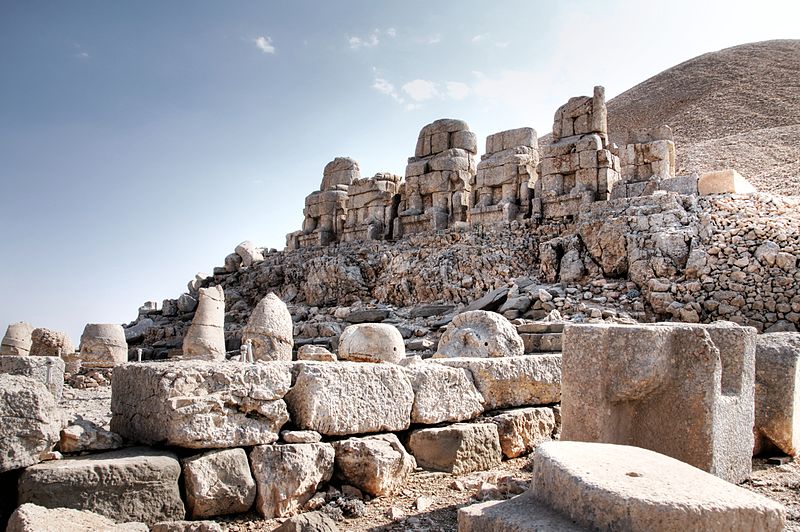
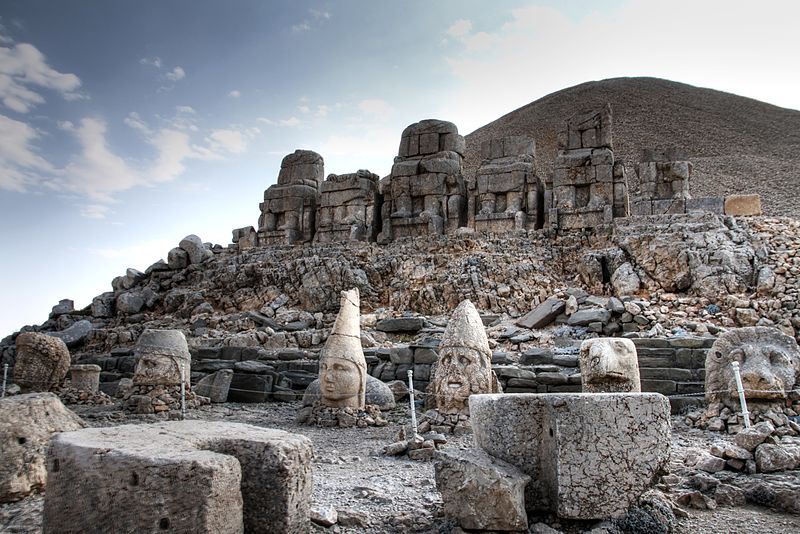
The mound is surrounded by eastern, western and northern terraces. The eastern and western terraces feature monumental statues approximately 8–10 metres high. They represent Antiochus I and deities including Zeus, Apollo and Heracles, combining Greek and Persian religious traditions. Lions and eagles stand among the other sculptures, symbolising strength and authority.
The heads of many statues fell from their bodies over time and now rest near the bases of the monuments. This distinctive arrangement has become the site’s defining image. Reliefs, inscriptions and representations of the king’s ancestors also survive on the terraces.
Sunrise and sunset views
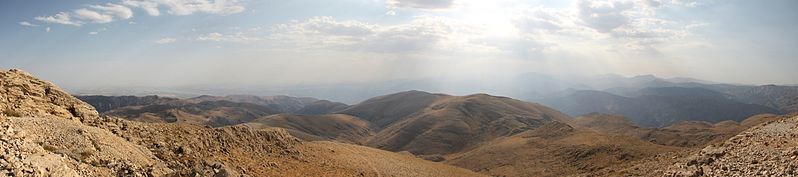
Many visitors come to Mount Nemrut to watch the sunrise or sunset among the ancient statues. Changing light brings out the colour and texture of the stone and casts dramatic shadows across the sculptures. The summit offers broad views over mountain ridges and valleys.
Conditions can be cold and windy at this altitude, even in summer, especially before sunrise. Visitors generally walk part of the way from the vehicle drop-off point. Uneven ground, steps and conservation restrictions should be taken into account.
A UNESCO World Heritage Site
The ruins attracted renewed attention in 1881, followed by archaeological surveys and excavations, including work in the mid-twentieth century. In 1987, Mount Nemrut was inscribed on the UNESCO World Heritage List for its outstanding Hellenistic monuments and the way they reflect the meeting of Greek and Persian traditions.
The site lies within a national park covering about 138.5 square kilometres. Other Commagene monuments in the wider area include ancient fortifications, the Karakuş Tumulus and the Roman Cendere Bridge.
Visiting Mount Nemrut
Adıyaman, Kahta and Malatya are common bases for visiting the mountain. Road access depends on the season and weather; snow and low temperatures can restrict access during colder months. Check local road and visitor information before travelling.
Bring warm layers, sturdy footwear, water and a flashlight if you plan to arrive before dawn. Do not climb on the statues, touch fragile fragments or leave marked paths. Mount Nemrut is both a spectacular viewpoint and a fragile archaeological treasure.
Gallery