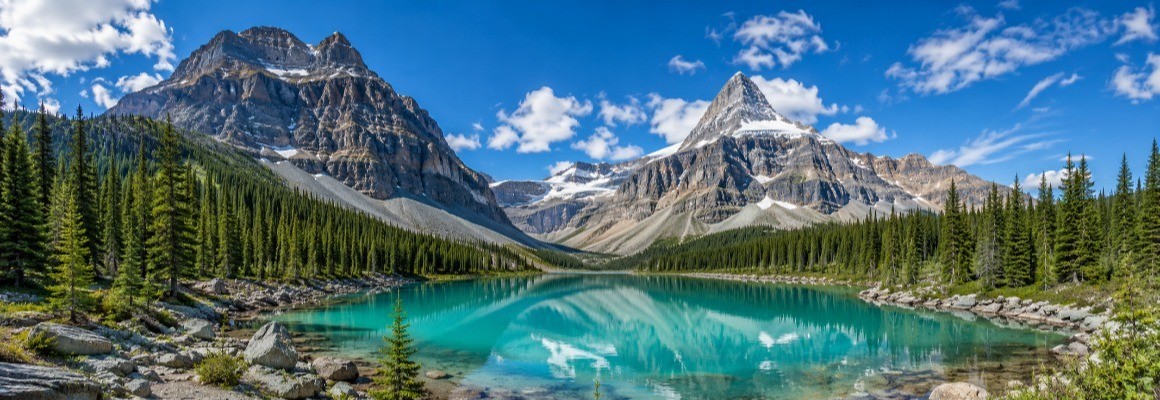

Kootenay National Park lies in southeastern British Columbia, in the Canadian Rocky Mountains. Covering about 1,406 square kilometres, it combines high mountain ranges, glacial valleys, dense forests, mountain rivers, deep canyons and natural hot springs.
Kootenay is known for its striking contrasts. Dry grassy slopes, cool coniferous forests, alpine meadows and rugged mountain summits occur within the same protected area. Established in 1920, the park is part of the UNESCO Canadian Rocky Mountain Parks World Heritage Site.
History and establishment
Kootenay National Park was established in 1920 through an agreement between the Canadian federal government and British Columbia. One goal was to build a road connecting the Bow and Columbia valleys across the Rocky Mountains. Land along the route was set aside for conservation and eventually became the national park.
Long before the park was created, Indigenous peoples, including the Ktunaxa and Secwépemc, used and cared for these lands. Mountain valleys, rivers and forests were important to traditional community life. Today, Parks Canada works with Indigenous partners on conservation and cultural heritage.
Marble Canyon
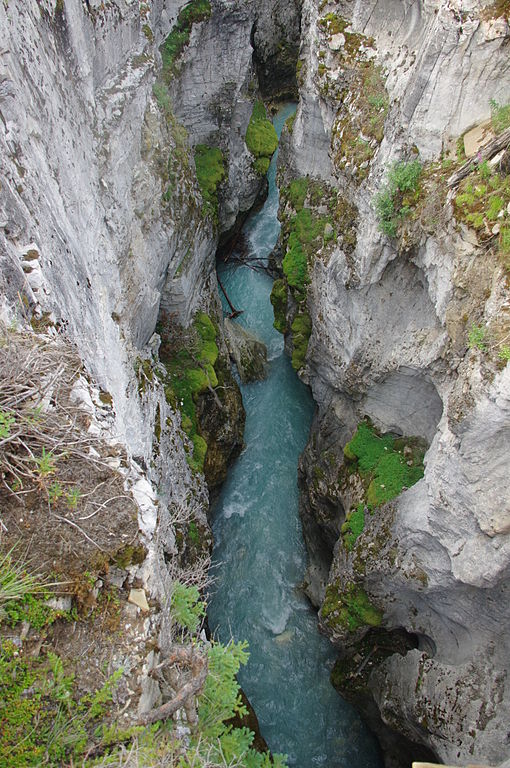
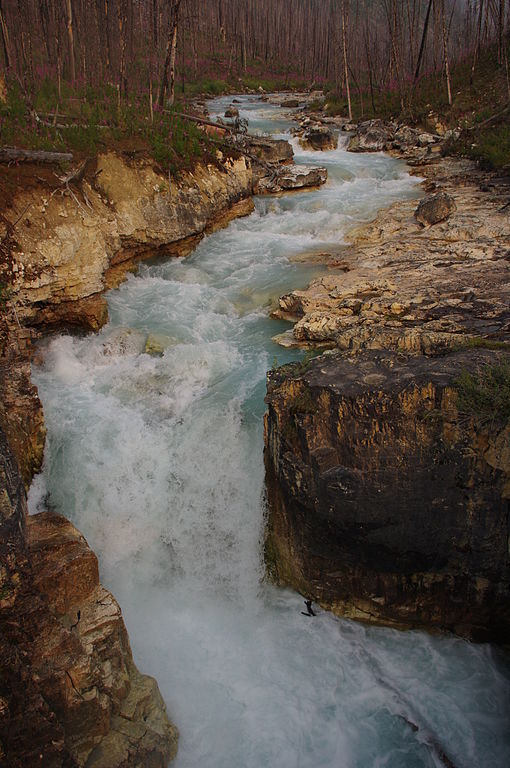
Marble Canyon is one of Kootenay's best-known attractions. The narrow gorge was carved over time by water acting on limestone. In places, steep rock walls rise high above the stream, which rushes between the rocks below.
Short walking trails with bridges and viewpoints follow the canyon. They provide views into deep crevices, flowing water and unusual rock formations. Stay on designated paths and keep away from cliff edges.
Radium Hot Springs
Radium Hot Springs is one of the park's main visitor attractions. Natural mineral-rich water is heated underground and emerges near geological faults. The developed facility includes warm mineral pools and a separate cooler swimming pool.
A visit to the springs can be a relaxing way to unwind after a hike. The facility is near the park's southern boundary and the village of Radium Hot Springs. Check opening hours, seasonal conditions and admission fees on the official Parks Canada website before visiting.
The Banff–Windermere Highway
The Banff–Windermere Highway crosses the national park, connecting the Banff area in Alberta with the Columbia Valley in British Columbia. It is considered one of the most scenic drives in the Canadian Rockies.
Along the way, travellers can see mountain peaks, forested slopes, rivers and broad valleys. Parking areas, viewpoints and trailheads are located beside the road. Wildlife sometimes appears near the highway, so drivers should obey speed limits and remain especially alert at dawn and dusk.
Paint Pots
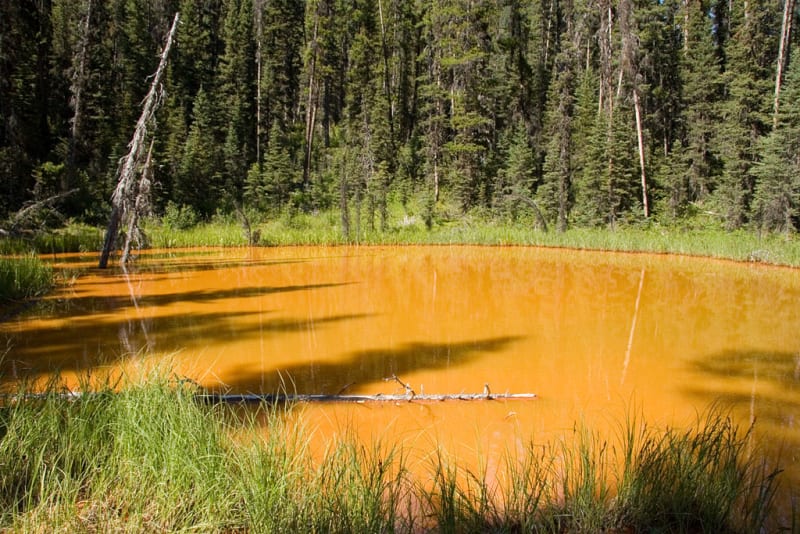
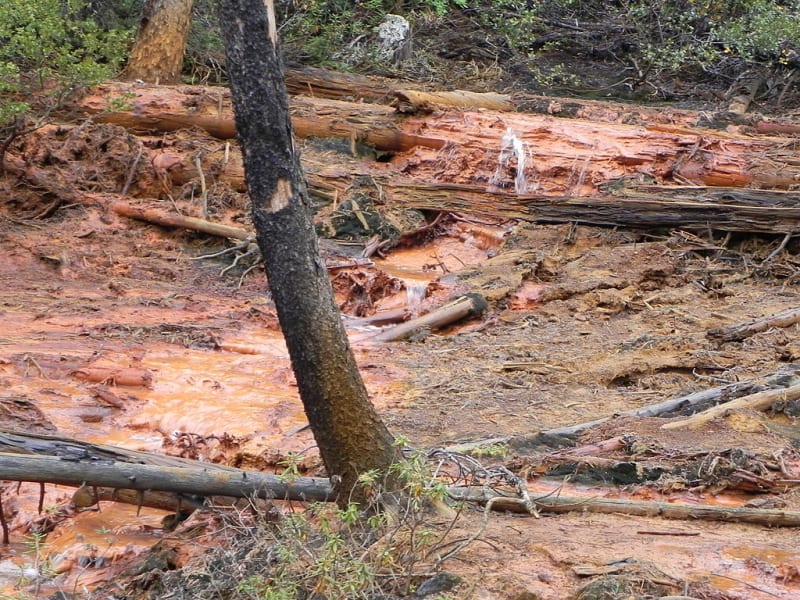
Paint Pots is an unusual natural attraction known for mineral springs rich in iron compounds. Mineral deposits colour the ground yellow, orange and reddish brown, creating a striking contrast with the surrounding coniferous forest and green slopes.
The name refers to the colourful mineral deposits, which resemble natural pigments. Ochre materials from the area have been significant to Indigenous peoples for generations. Visitors can explore the landscape along a short developed trail. Avoid walking on fragile areas or disturbing the mineral deposits.
The Kootenay River valley and mountain scenery
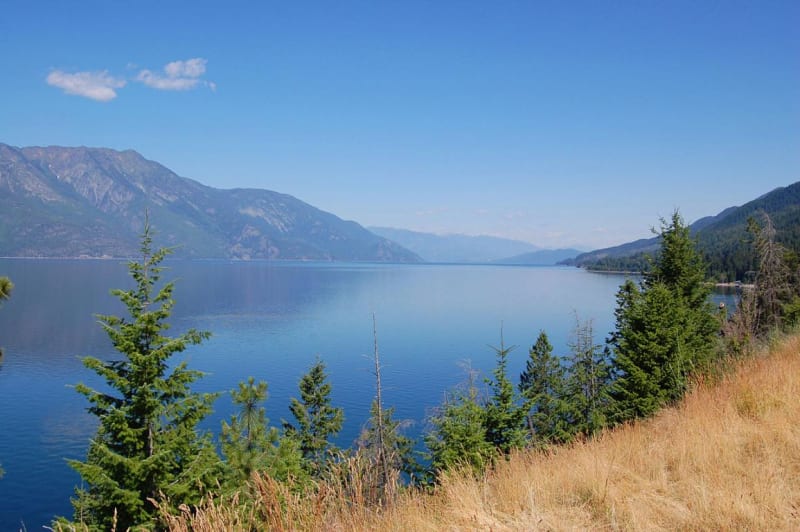
The Kootenay River and its surrounding valleys are central to the park's landscape. Water cuts through rock, sustains forest ecosystems and creates diverse habitats along the riverbanks. Open sections of the valley reveal a transition from dry grassy slopes to dense forests and wetter mountain environments.
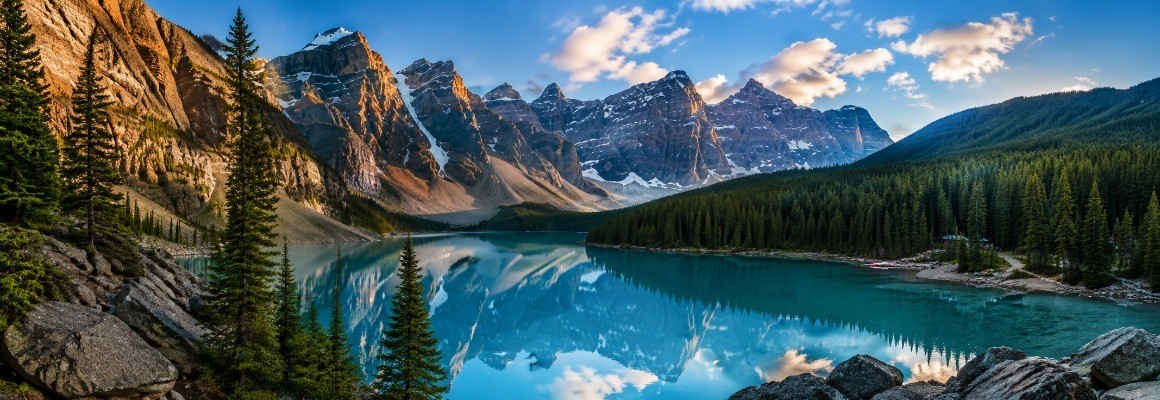
The park's mountain ranges consist largely of sedimentary rocks that have been folded, uplifted and eroded over millions of years. Glaciers carved deep valleys and distinctive landforms. Kootenay is therefore of interest both to travellers and to people studying the geology of the Rocky Mountains.
Hiking and outdoor recreation
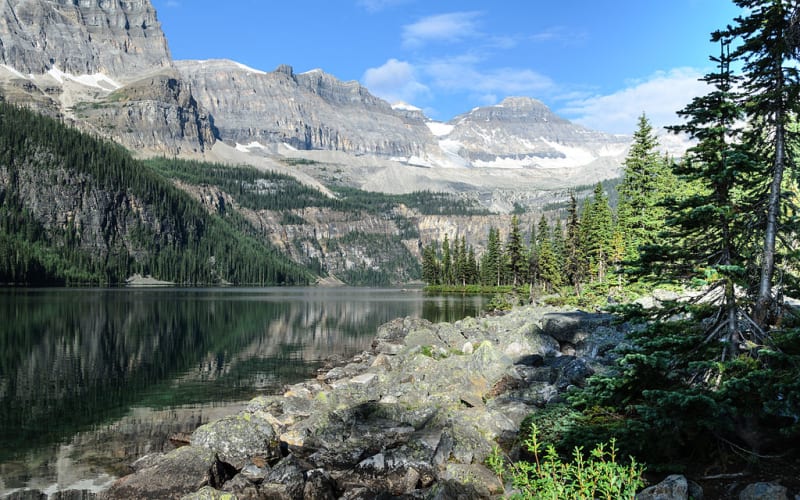
The park has trails of different lengths and difficulty levels. Short walks near Marble Canyon and Paint Pots are good options for a brief visit. Longer routes lead to mountain lakes, forested valleys and viewpoints overlooking the ranges and glacial terrain.
Visitors planning multi-day hikes should check trail conditions, backcountry camping rules and any registration requirements. Mountain weather can change rapidly, and some routes include steep climbs, rocky sections and snow patches even during warmer months.
Plants and wildlife
Kootenay protects a wide range of natural environments. Dry slopes support grasses and shrubs, valleys are dominated by coniferous forests, and higher elevations feature alpine meadows and mountain tundra. Changes in elevation and climate support many plant and animal species.
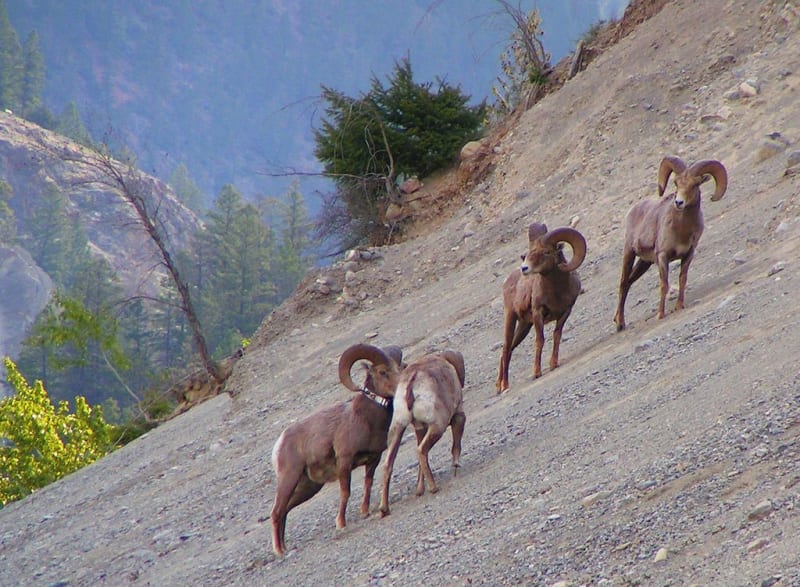
Wildlife includes black bears, grizzly bears, moose, deer, mountain goats, bighorn sheep and other Rocky Mountain species. Eagles, owls and birds adapted to mountain forests and open landscapes are also present. Observe animals from a safe distance, never feed them, and store food and waste so that wildlife cannot access it.
When to visit Kootenay National Park
Summer is the most popular season. Many hiking trails, viewpoints and visitor attractions are generally accessible, and July and August are suitable for longer walks. Rain, sudden cold spells and thunderstorms are still possible in the mountains.
In spring, nature begins to awaken, although snow may remain at higher elevations. In autumn, the forests take on golden colours and visitor numbers decrease. Some roads and trails may close in winter or require special preparation. Check current advisories and trail conditions on the Parks Canada website before travelling.
How to get to the park
Kootenay lies along the Banff–Windermere Highway in southeastern British Columbia. The southern entrance is convenient to reach from the village of Radium Hot Springs, while the northeastern part of the park can be approached from Banff in Alberta. A car is the most practical way to visit the different attractions because public transport does not operate inside the park.
There are no fuel stations, shops or regular food services within the park. The nearest services are in Radium Hot Springs and Invermere, outside the southwestern boundary, while Banff also offers extensive visitor facilities. Refuel before entering and bring your own food and water.
Travel tips
Before your trip, check highway and trail conditions, parking availability, wildlife advisories and possible closures. Bring sturdy footwear, water, sun protection, rain gear and warm layers. Mobile phone service may be unavailable in remote parts of the park, so download maps in advance and tell someone about your planned route.
Current restrictions on water activities are also important. According to Parks Canada, all waterbodies in Kootenay National Park are closed to watercraft and angling until March 31, 2027, as part of measures to prevent the spread of aquatic invasive organisms. Check for updates before visiting.
Kootenay National Park is a land of contrasts, where hot springs meet glacial valleys and colourful mineral deposits and narrow canyons complement the scenery of the Rocky Mountains. Its scenic highway, accessible walking trails and rich natural environment make it suitable for both a short stop and a longer journey through western Canada.
Gallery