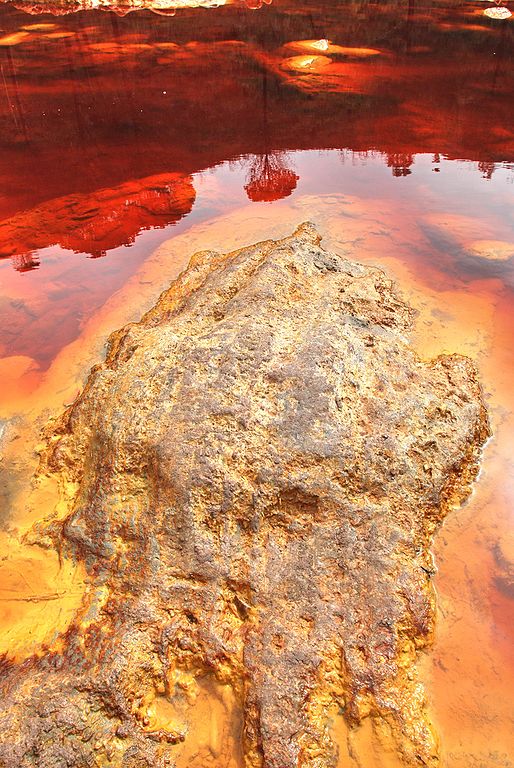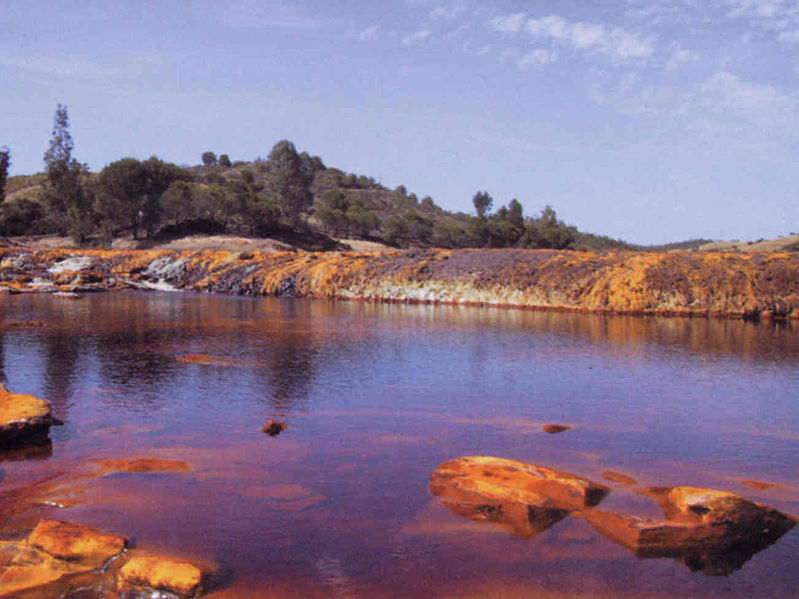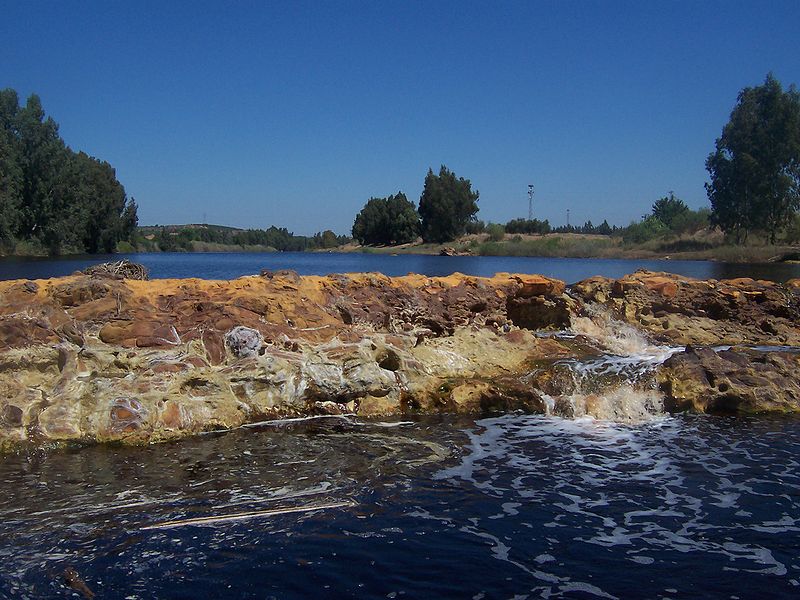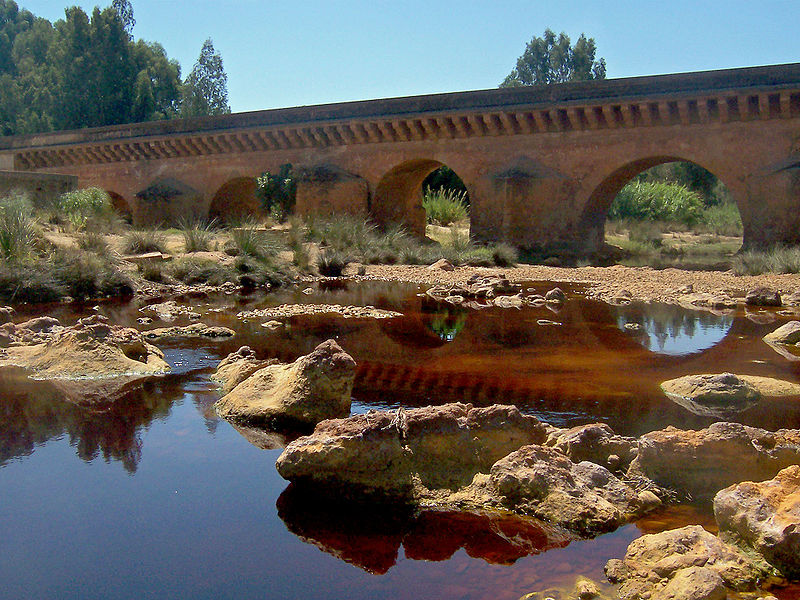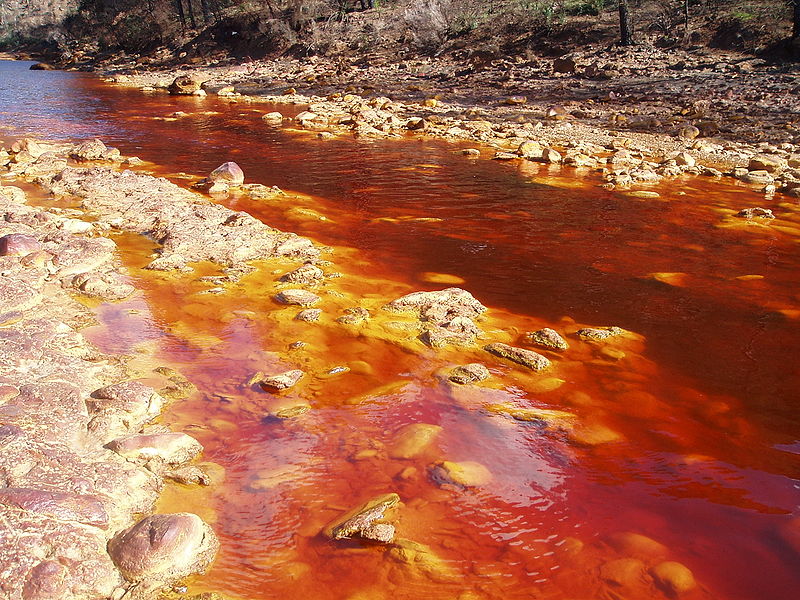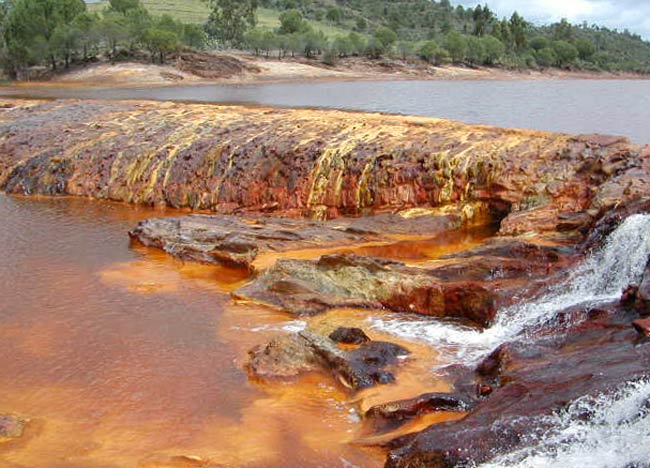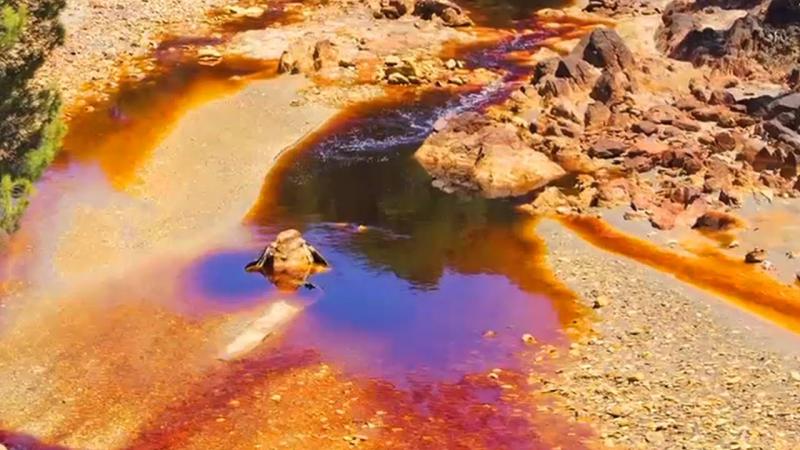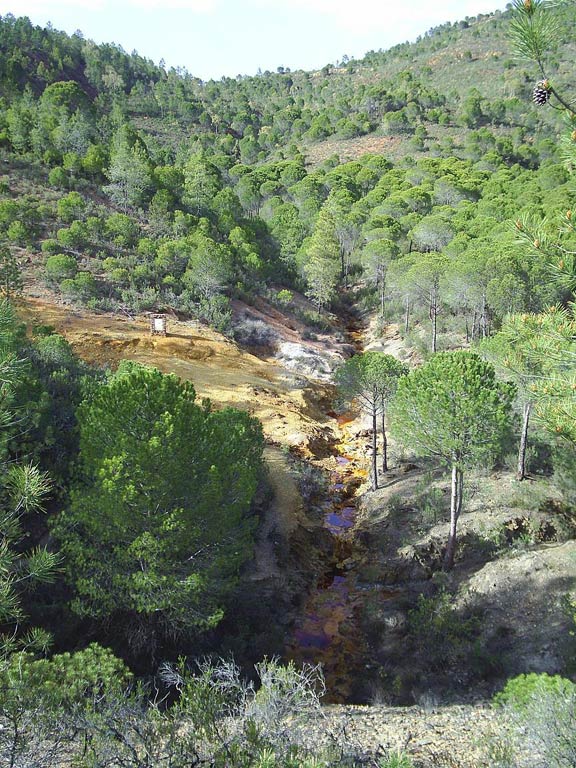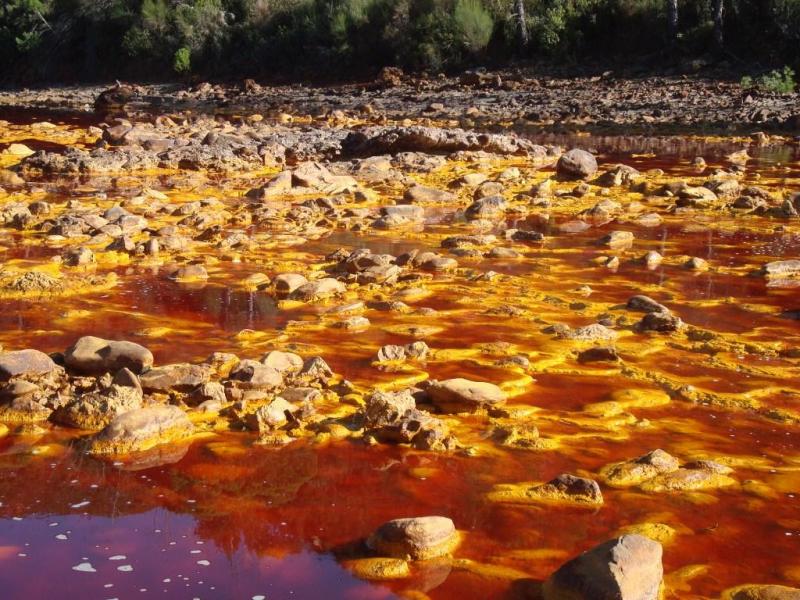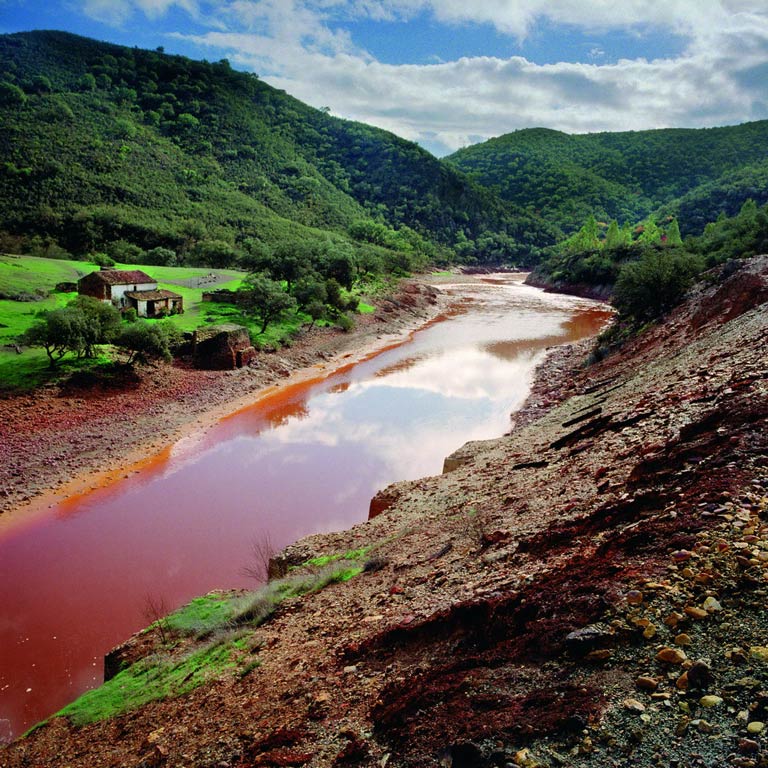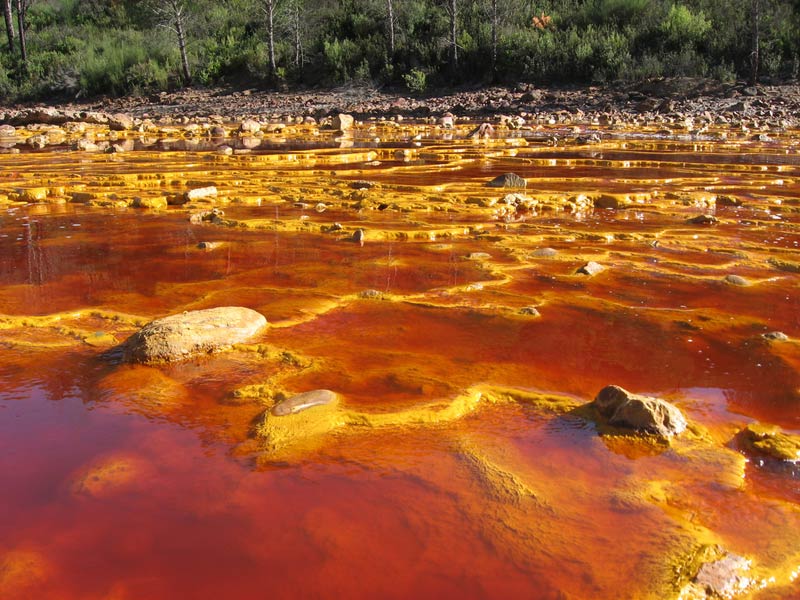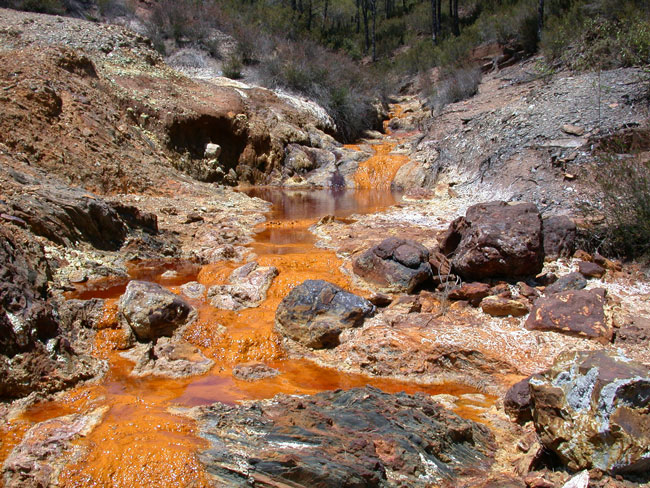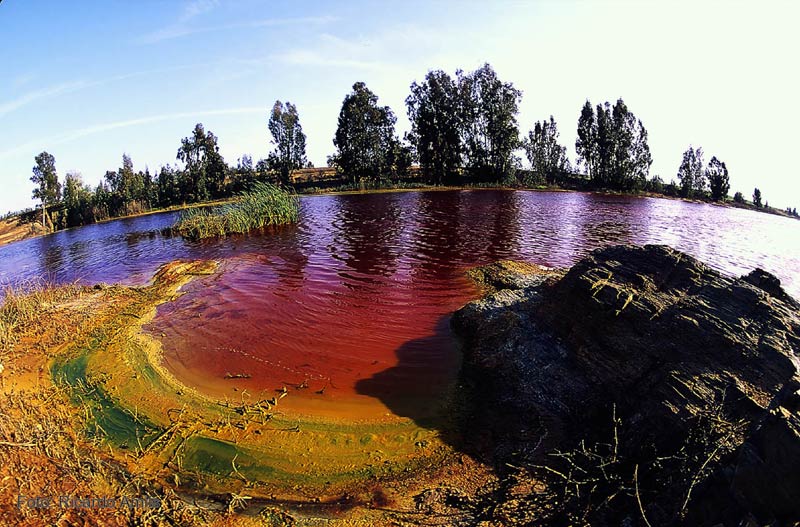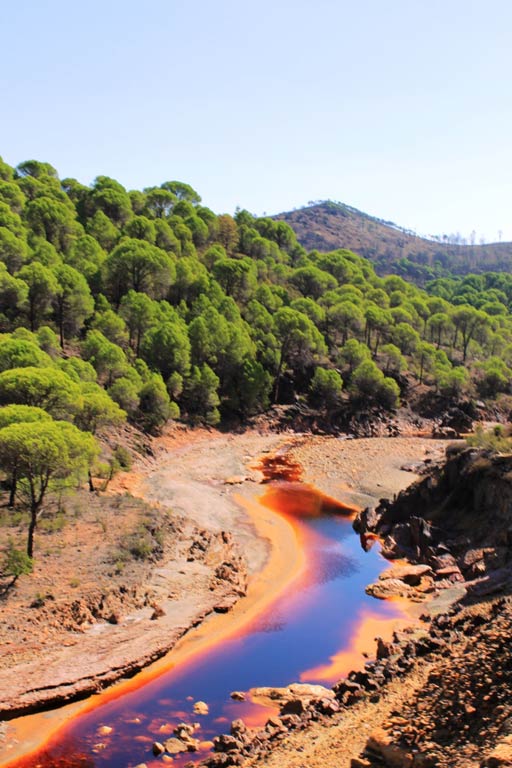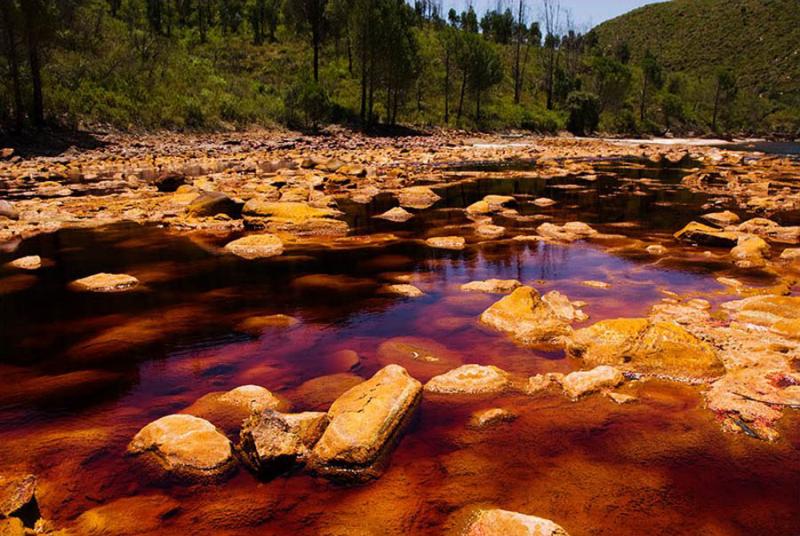

Rio Tinto is an unusually colored river that flows through the territory of Spain. It originates in the Andalusian Mountains. The waters of the river have long been famous for their acidity, which is pH = 1.7-2.5. Many years ago, it was here that minerals such as copper, gold, and silver were mined. As a result, various quarries were formed at the mining site, and the water in the river acquired a rich red hue, absorbing acids and metals.
Mining has been going on in the Rio Tinto River for 5,000 years, which has led to its pollution and transformation into a dangerous place. The year 1930 became famous for the largest number of fossils, after which there was a decline in production. In 1986, copper mining stopped here, and later gold and silver. Of course, the largest quarries have left their mark and still continue to infect the waters of the Rio Tinto River with metals.
Aerobic bacteria, which are actively developing in the Rio Tinto River, have aroused particular interest among researchers. As scientists say, it is these substances that serve as a source of acidity. The bacteria feed on the mineral waters that are on the surface of the river near the rocks, and also rise from the mines.
According to many scientists, this is exactly the composition rivers on other planets can have. During repeated studies of the waters, the mineral jarosite was found, an analog of which was found on the surface of Mars. This fact gave the right to declare that there is life on Mars. However, this statement has been challenged.
Today, this "rusty" Rio Tinto river, whose name translates as "red river", is a completely lifeless stream of brown water that brings death to all living organisms. It is dangerous for the human body. It is strictly forbidden to swim in its waters, not a single fish is found in it.
But still, although this river is completely uninhabitable, it has become very famous among various scientists and testers. The local area is a suitable testing ground for the latest space technology.
Gallery