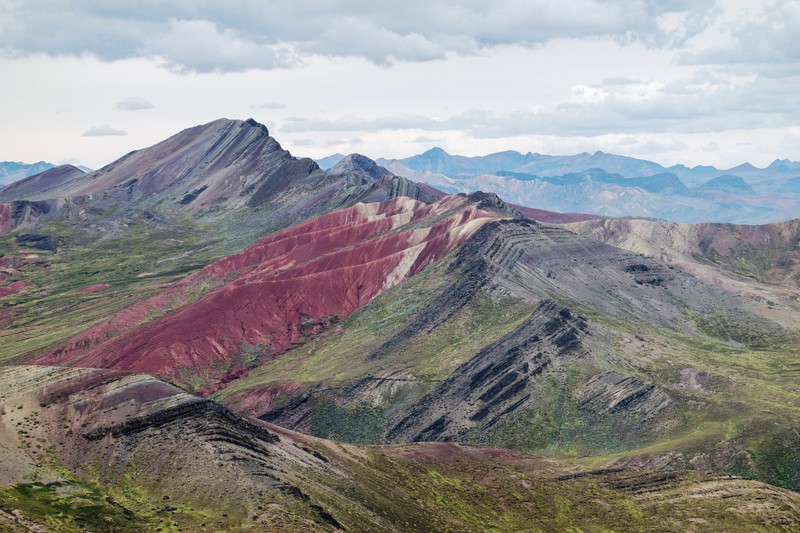
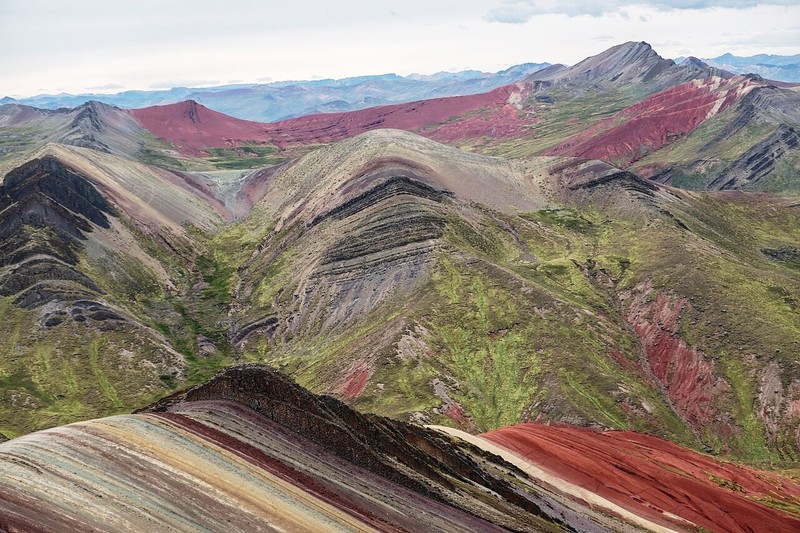
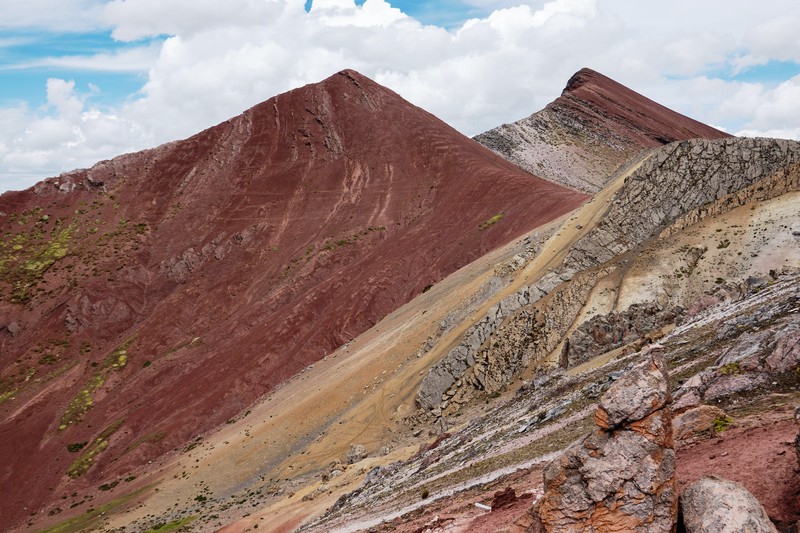
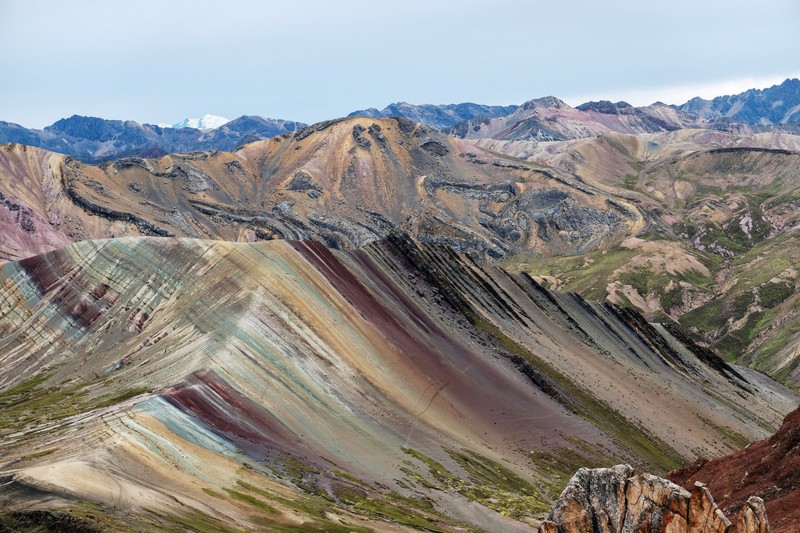
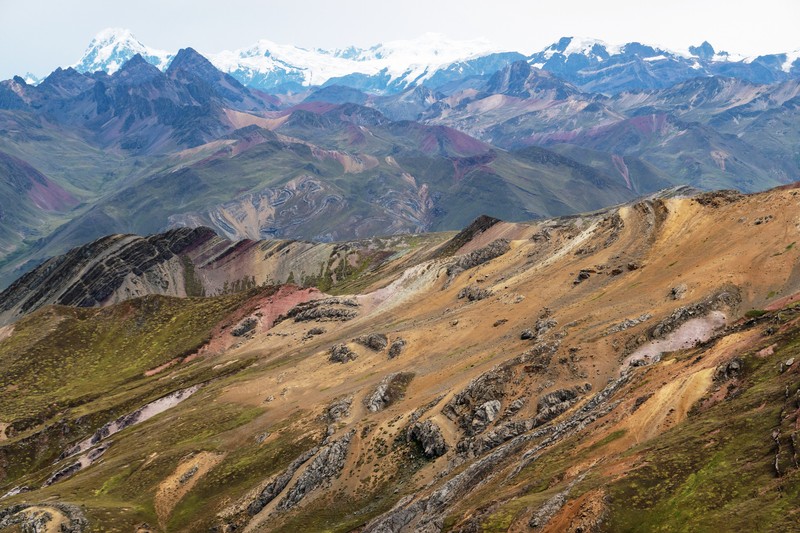
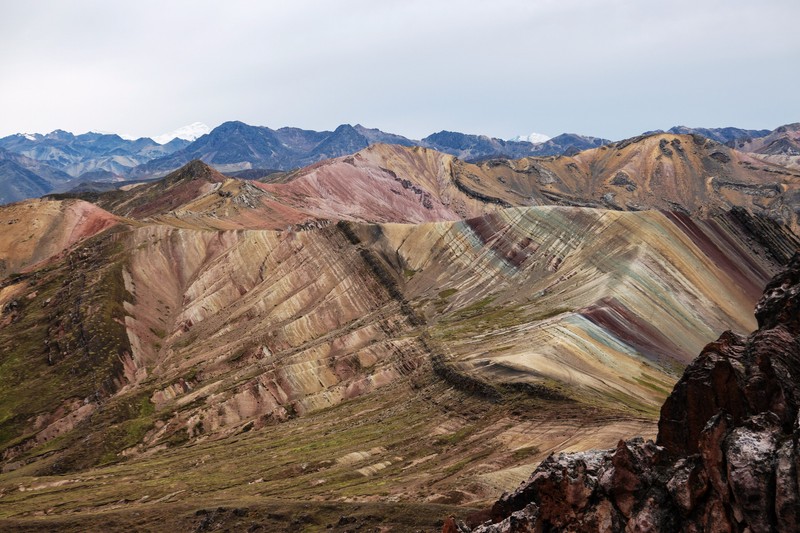
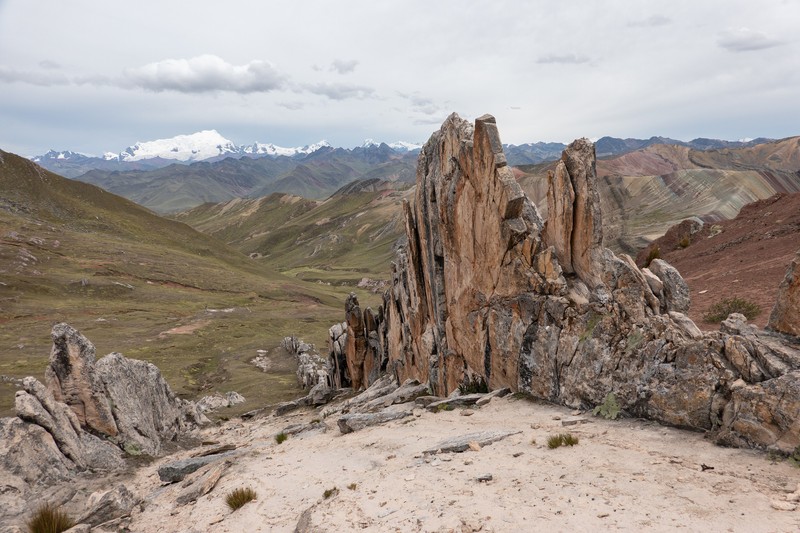
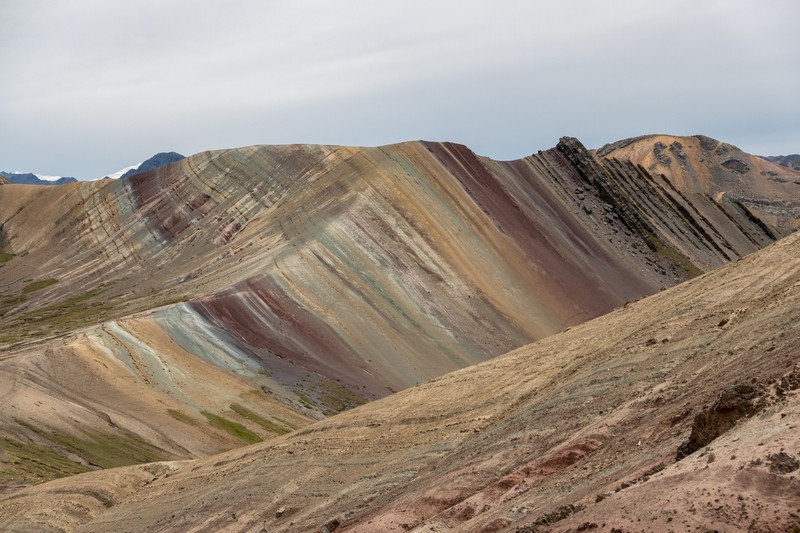
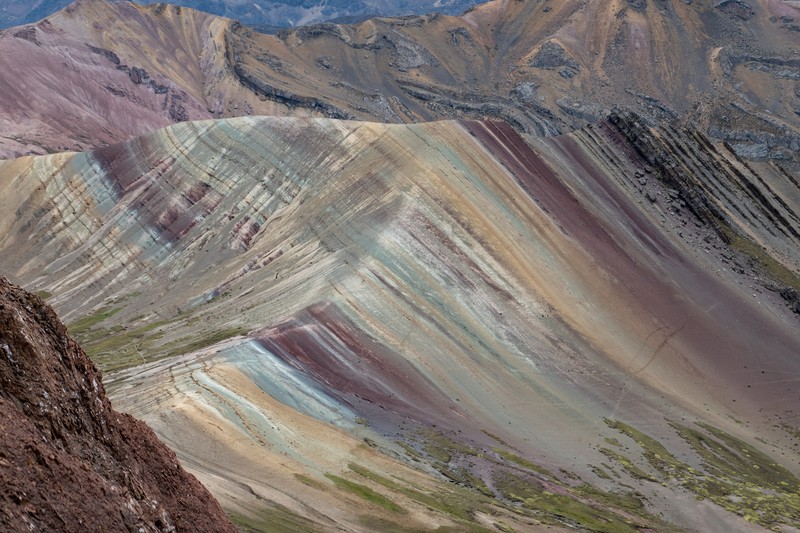
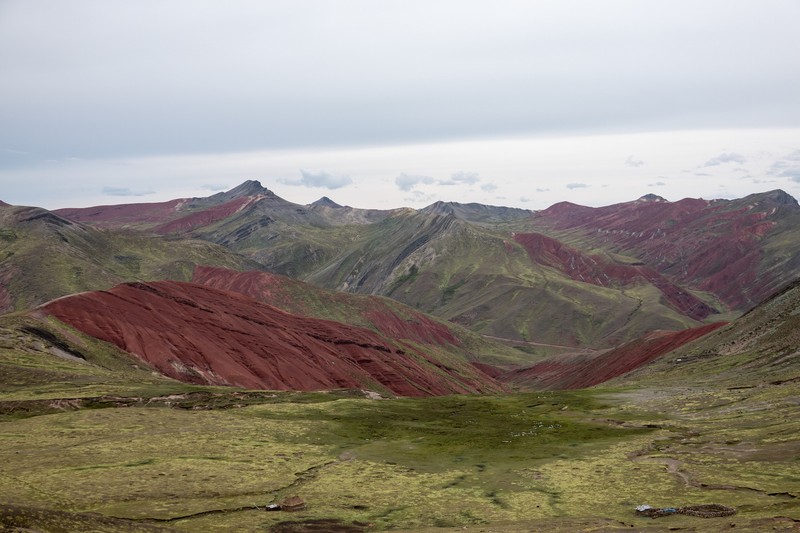
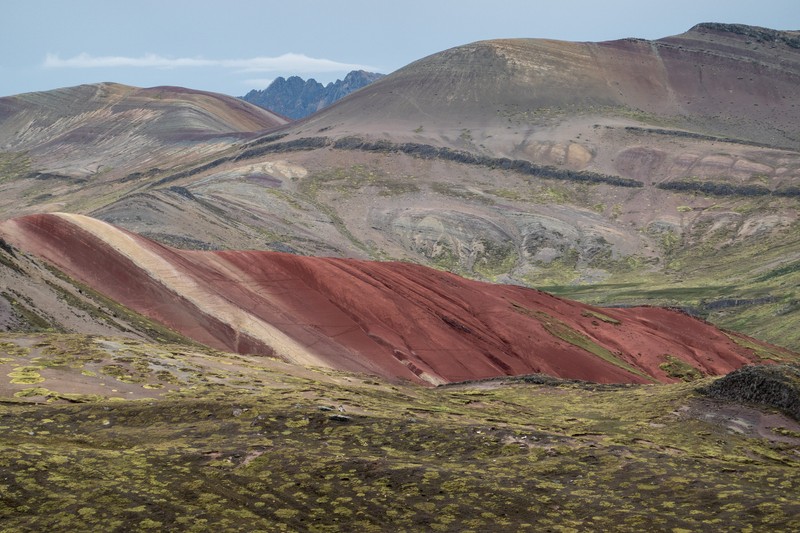
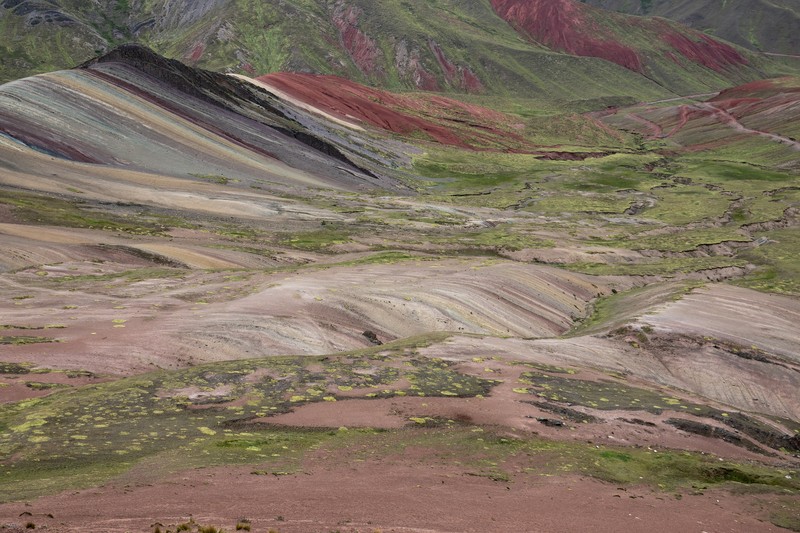
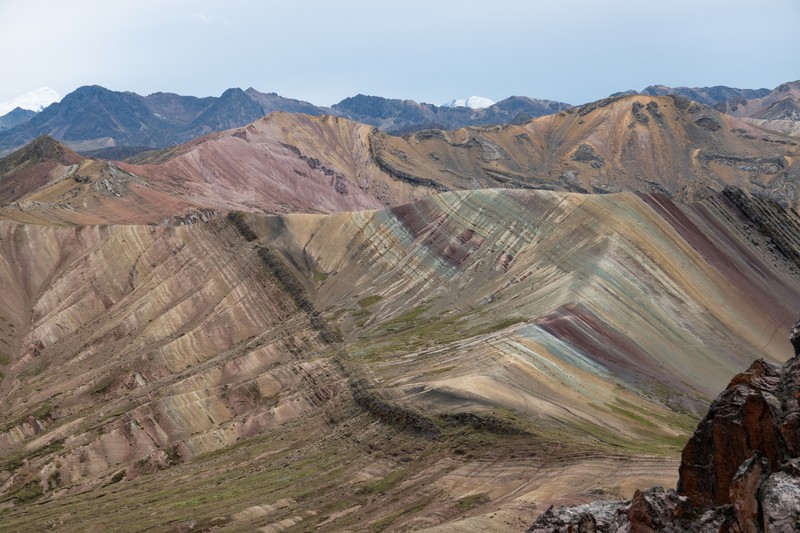
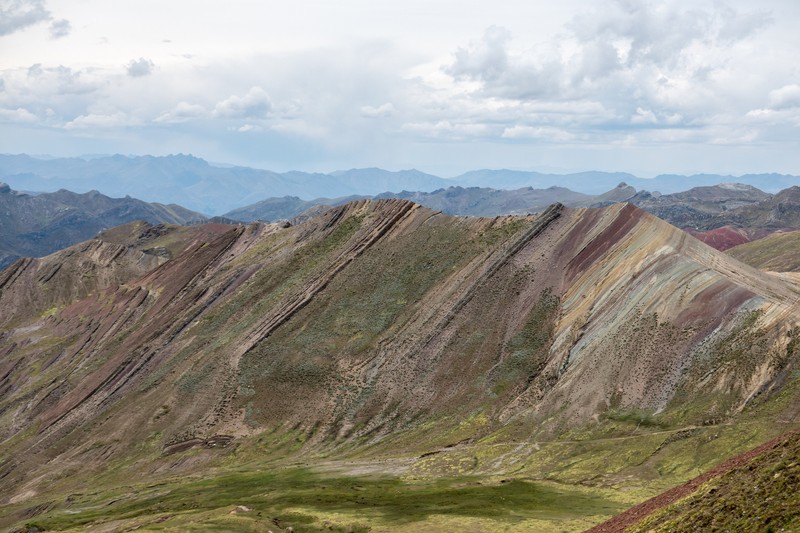
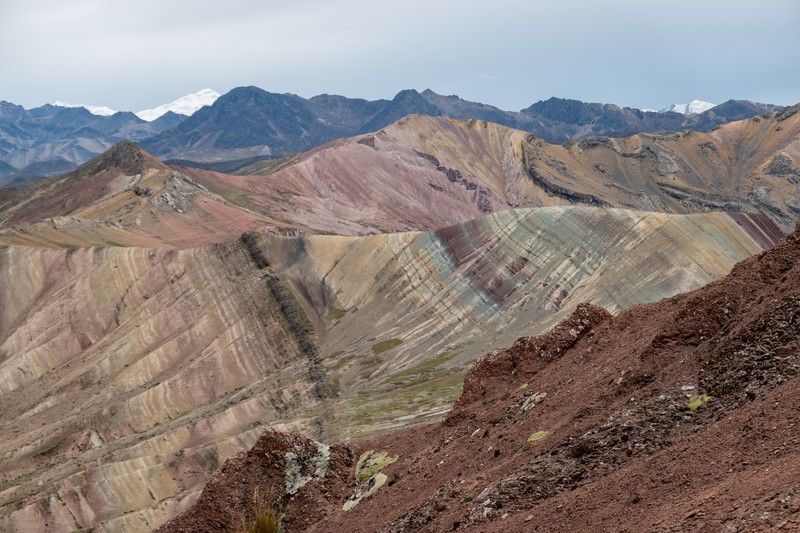
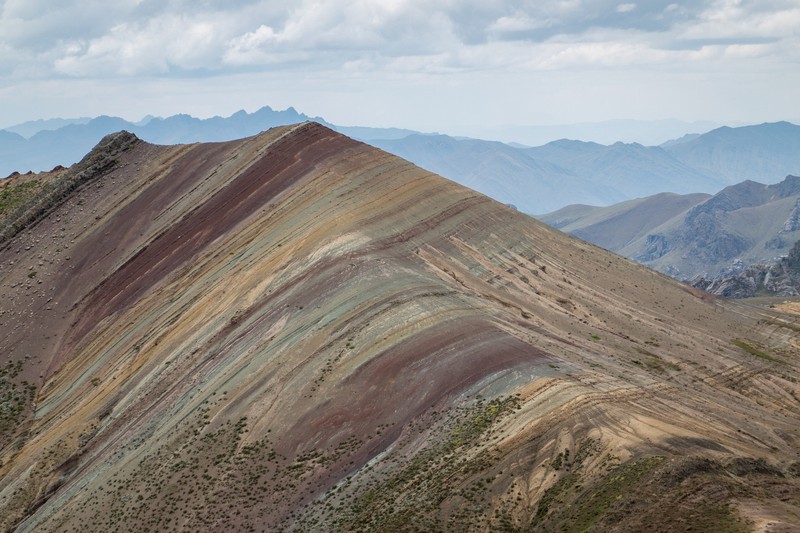
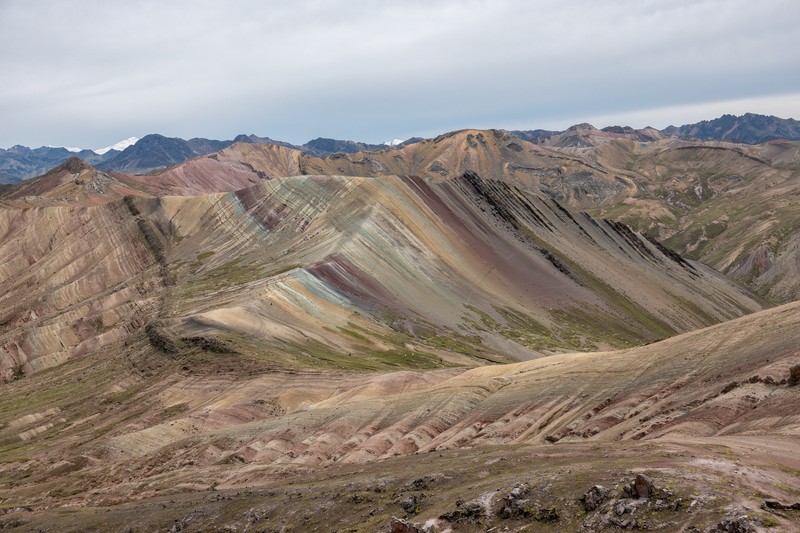
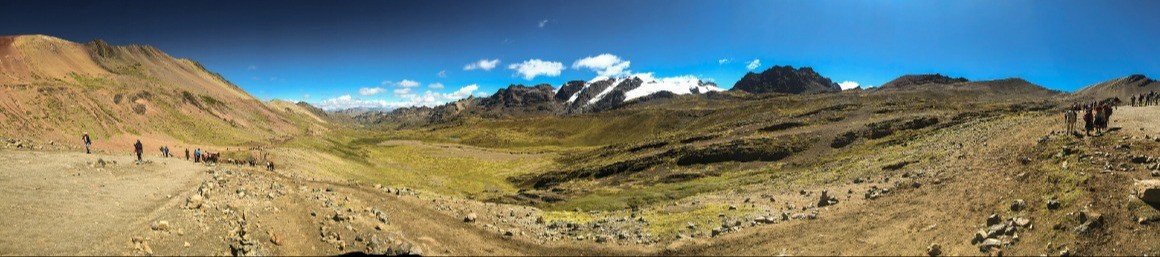
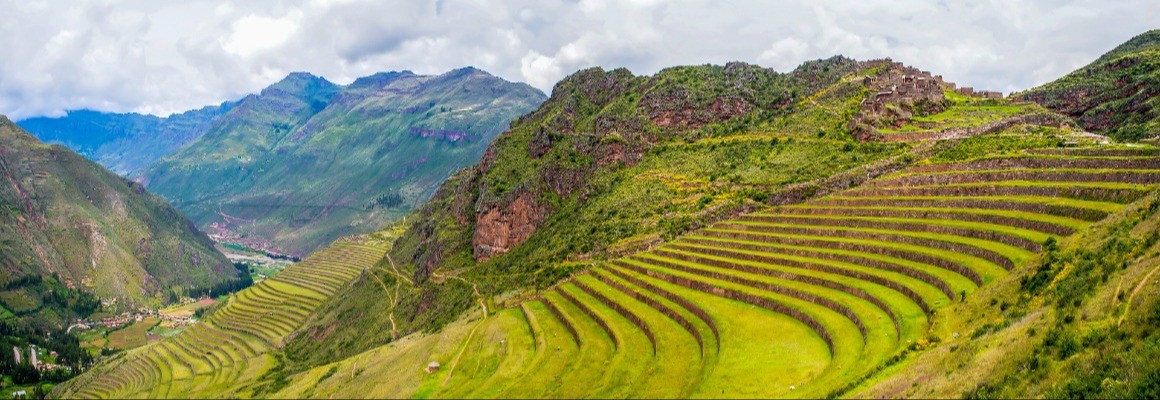
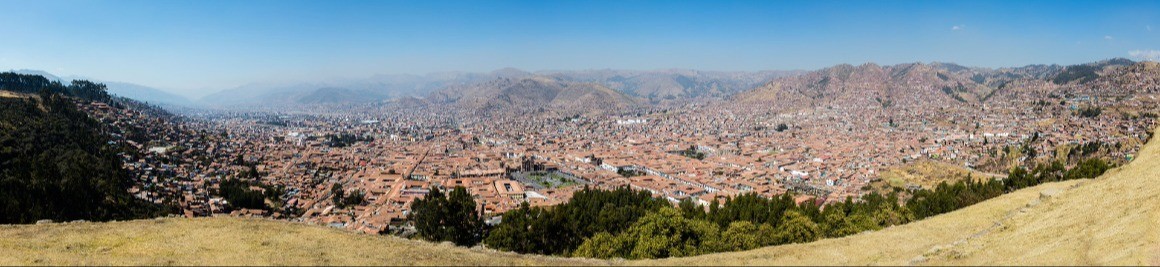
Palccoyo is a scenic mountain range in the Peruvian Andes, often known as the Palccoyo Rainbow Mountains. Located in the Cusco region near Checacupe, it attracts visitors with its colourful slopes, stone forest and panoramic views of snow-capped Ausangate. Unlike the famous Vinicunca, Palccoyo features several striped mountains and can be explored on a comparatively short hiking route.
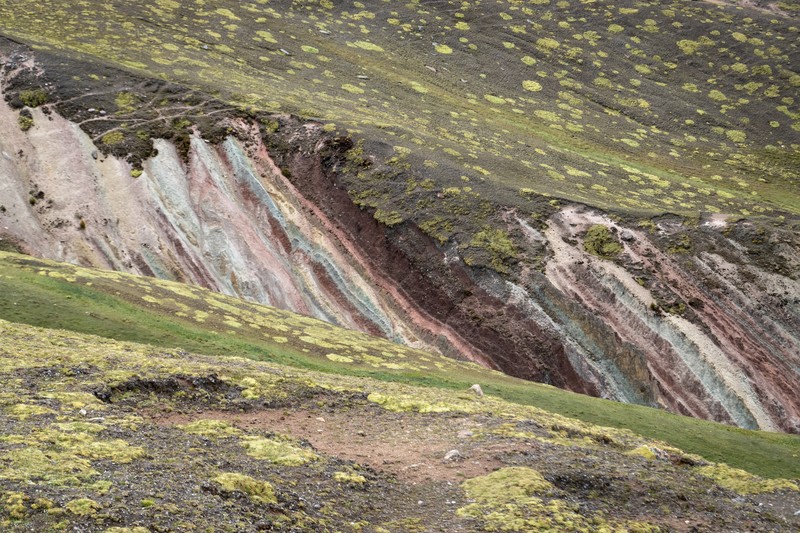
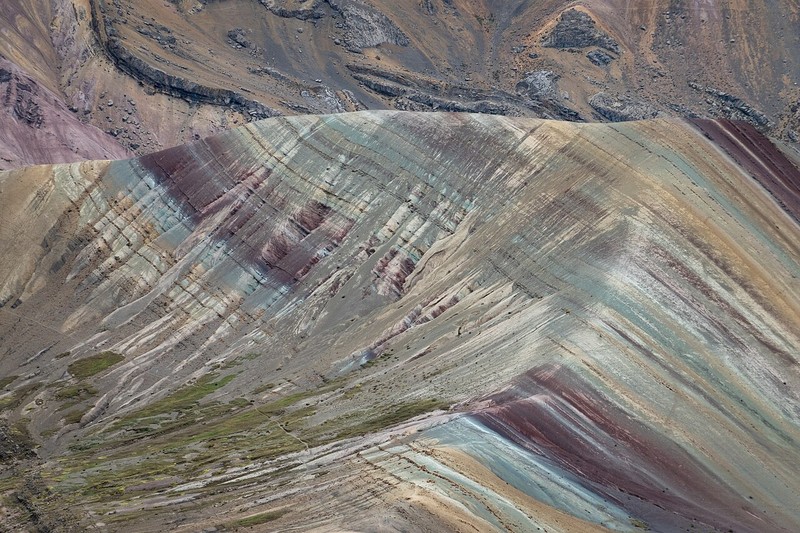
The colourful bands were formed by layers of sedimentary rock and minerals accumulated over millions of years. Red, yellow, green, ochre and purple shades reflect differences in mineral composition. Erosion gradually exposed these geological layers, creating an extraordinary natural landscape.
Location and scenery
Palccoyo lies in Checacupe District, Canchis Province, around 100 kilometres south of Cusco. Viewpoints reach approximately 4,800–4,900 metres above sea level. On clear days, visitors can see Ausangate, one of the best-known mountains in the Cusco region and a sacred peak for local Quechua communities.
The main attractions are three colourful mountains and a remarkable stone forest. Wind, water and temperature changes have shaped the rocks into unusual towers and pillars. Viewpoints offer wide panoramas of highland valleys, mountain ridges and snow-covered peaks.
Why the mountains are colourful
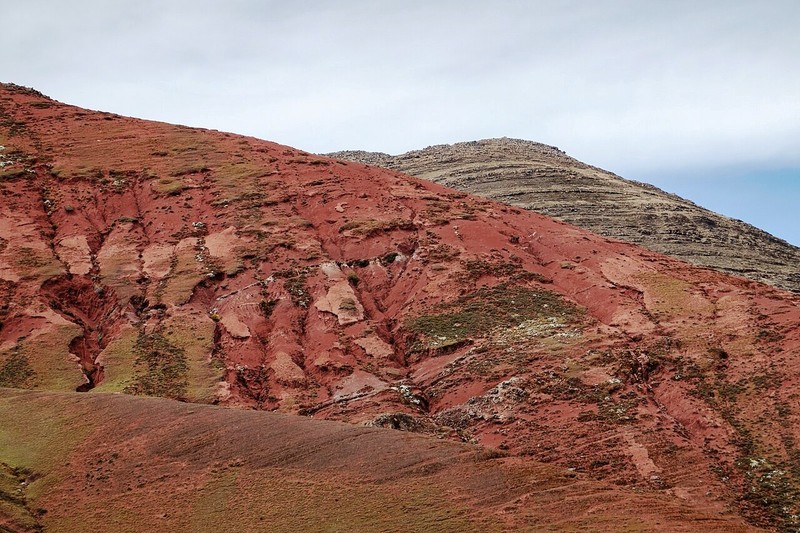
The colours result from geological processes that took place over millions of years. Sedimentary layers containing different minerals accumulated, compacted and rose during the formation of the Andes. Erosion later exposed them at the surface. Red shades are often associated with iron oxides, while yellow, green and ochre tones depend on other minerals and rock compositions.
The appearance changes with sunlight, cloud cover and moisture. On clear days, the bands are especially vivid, and some colours may look more intense after rain. Wet sections of the trail can become slippery, however, so visitors should walk carefully.
Palccoyo and Vinicunca
Palccoyo is often compared with Vinicunca, known as Rainbow Mountain or the Mountain of Seven Colours. Both attractions are in the Cusco region and feature colourful geological layers. Palccoyo, however, consists of several striped mountains that can be viewed from different angles. Its walking route is generally shorter and less steep than the climb to Vinicunca.
The walk from the parking area to the main viewpoints often takes about 40–45 minutes, although the duration depends on the route and weather. Despite the relatively short walk, an altitude of around 4,900 metres places considerable strain on the body. Acclimatization in Cusco or the Sacred Valley is advisable before the excursion.
Nature and preparing for the trip
Highland vegetation includes grasses such as ichu, mosses and other low-growing plants. Llamas and alpacas can be seen in the region, while vicuñas, vizcachas and Andean foxes live in the wider surroundings. Observe wildlife from a distance and do not leave litter.
The relatively dry season, generally from April to October, is often preferred for visiting. The journey from Cusco usually takes several hours, and many tours are organised as full-day excursions. Check road conditions, access rules and tour arrangements before setting out.
Bring hiking shoes, warm layers, a windproof or waterproof jacket, a hat, sunglasses, sunscreen and enough water. At this altitude, even a short walk can cause breathlessness, headaches or weakness. If you begin to feel unwell, stop ascending and descend.
Why visit Palccoyo
Palccoyo is an unusual natural attraction where the geological history of the Andes appears in vivid colours. The rainbow mountains, stone forest, highland valleys and views of Ausangate create a remarkable panorama. It is an appealing alternative to Vinicunca for visitors seeking a shorter route and varied scenery, although the high altitude still requires careful preparation.
Gallery