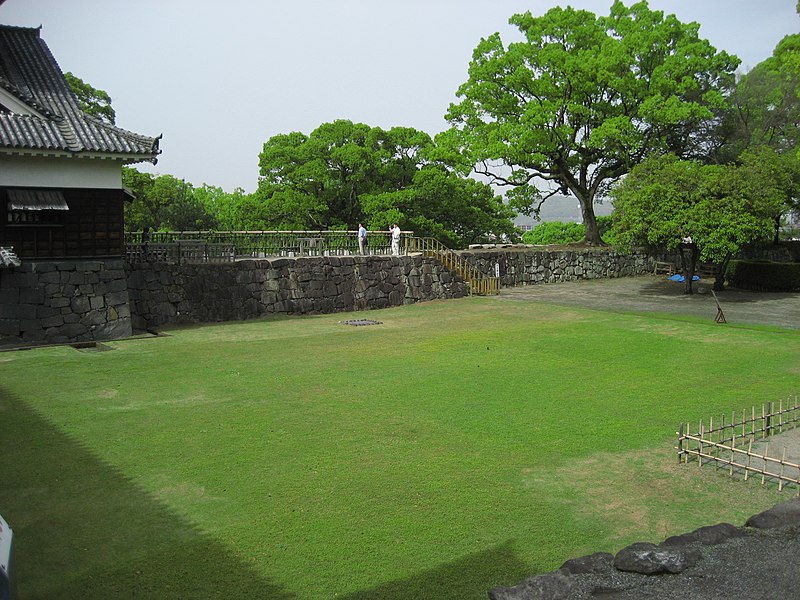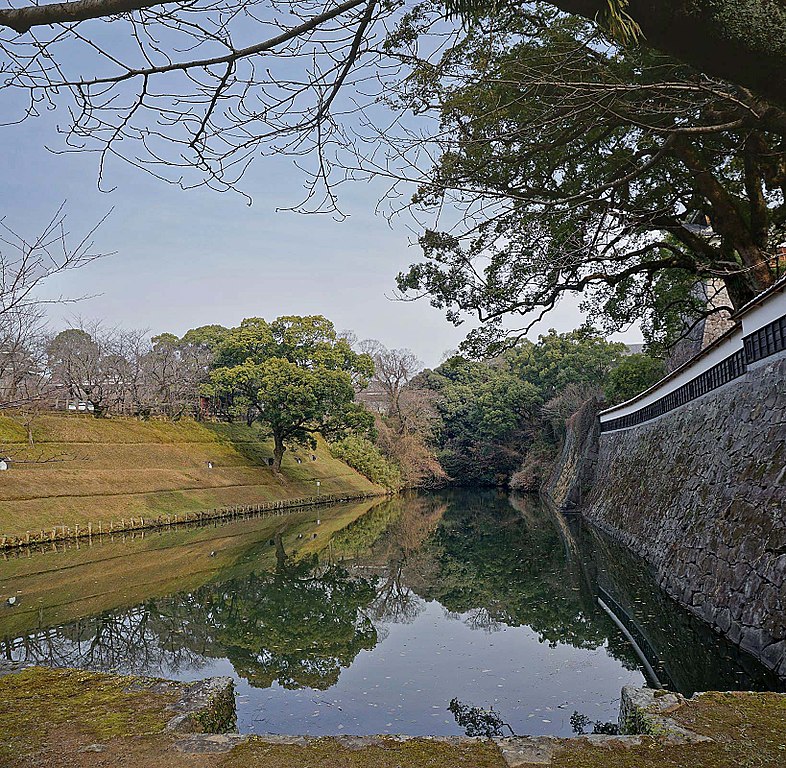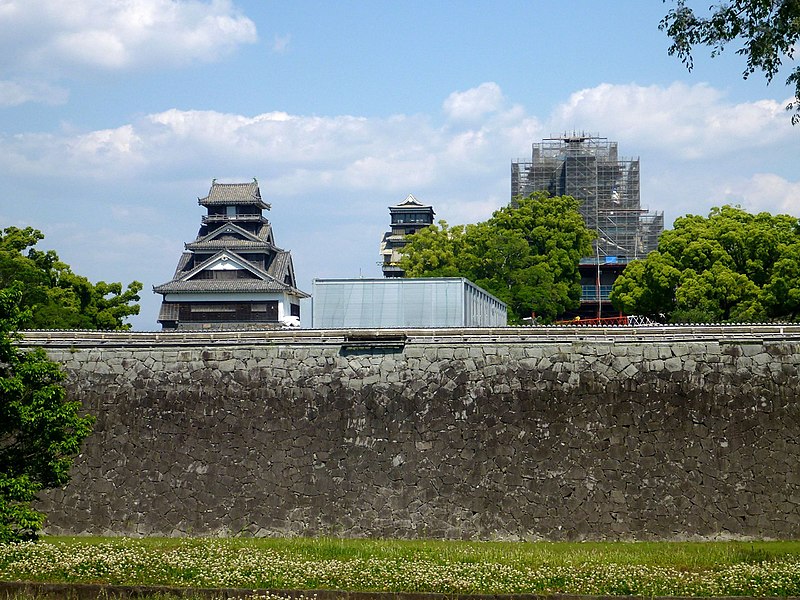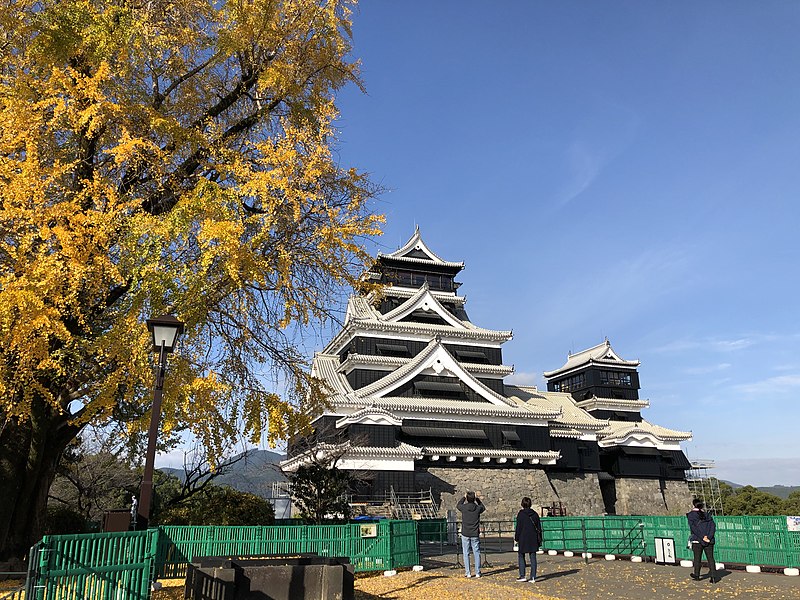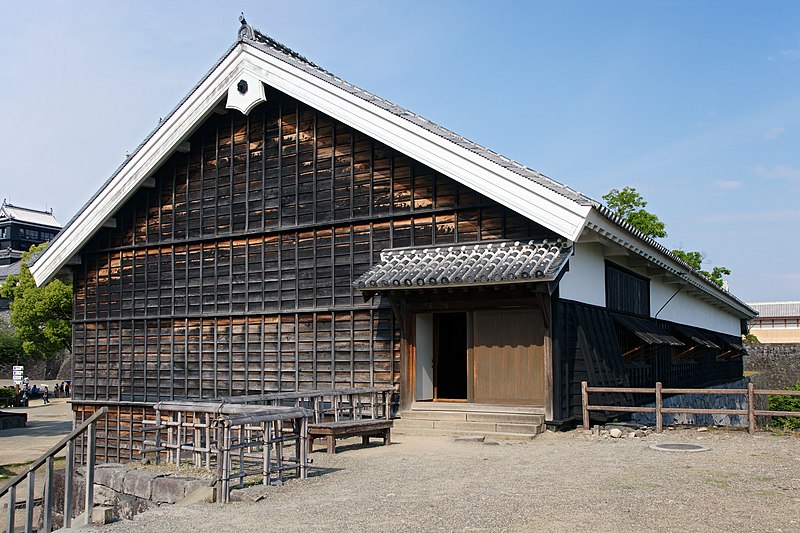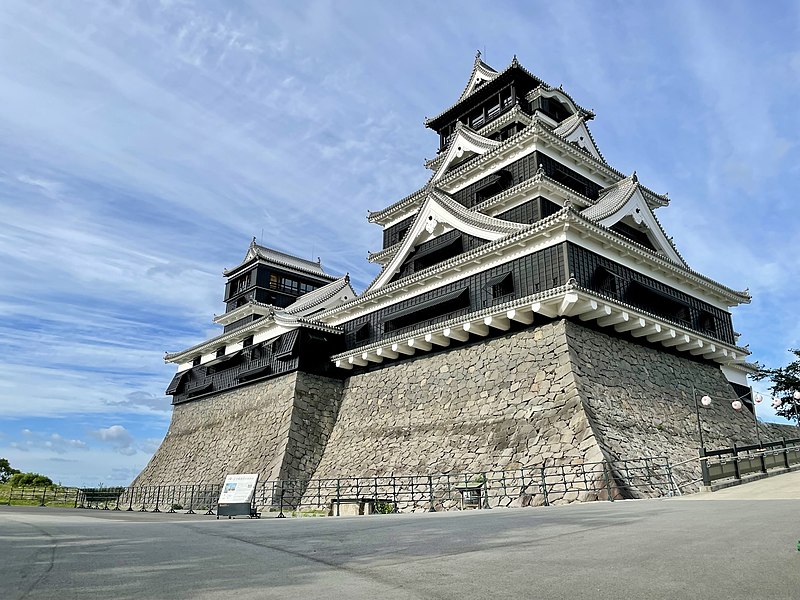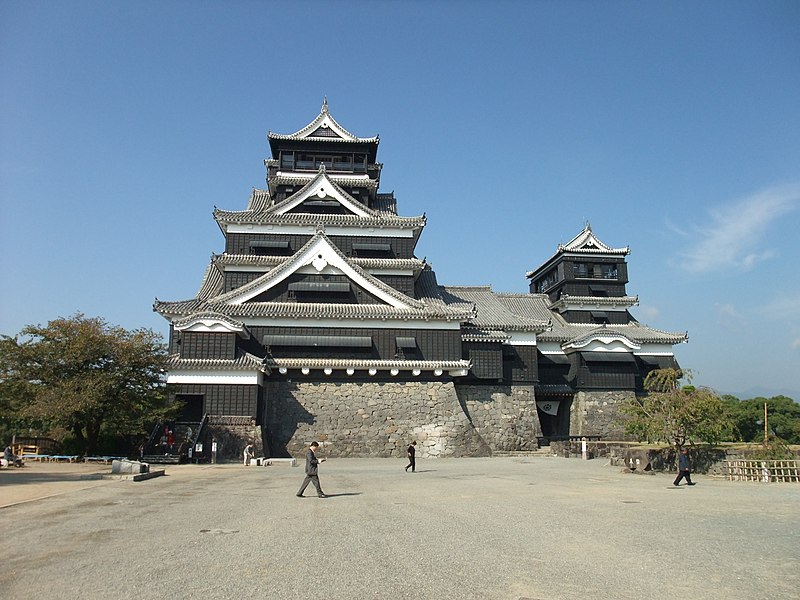

The history of Kumamoto Castle dates back to the 14th century, when a small fortified fort was located in its place. Kato Kiyomasa, the owner of these lands, decided to significantly expand the fortification and built a majestic castle here, which housed a large military garrison.
History of Kumamoto Castle
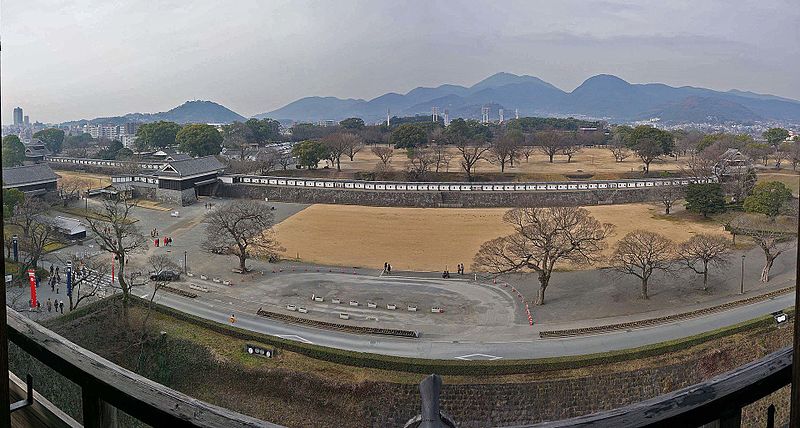
In 1607, all construction work was completed. Kumamoto Castle included two high ring walls. The length of the outer ring is 13 kilometers, the inner ring is 5 kilometers. In case of a siege, 120 wells with drinking water were prepared on the territory, in addition, a large number of ginko trees were planted. Its fruits were planned to be eaten, and the leaves are suitable for making tea. Due to the abundance of these trees, the fortress was also called "Ginko Castle".
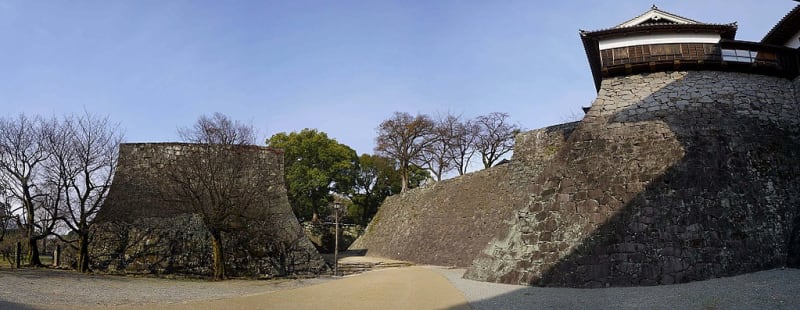
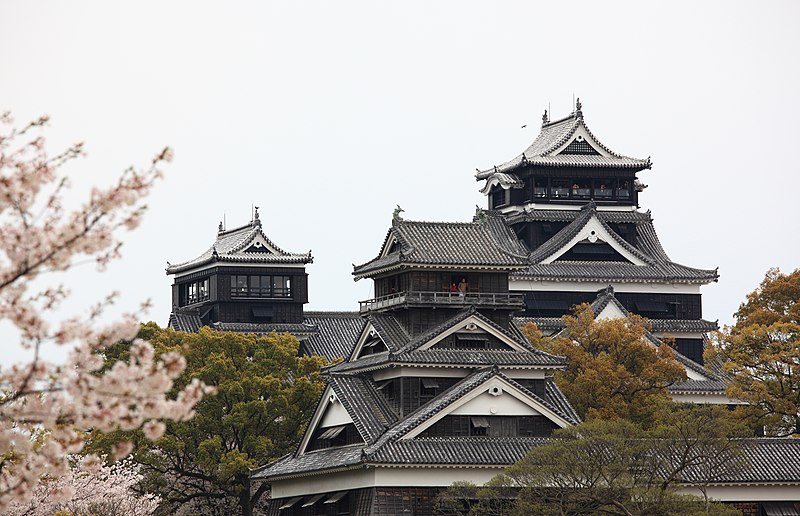
Another name for Kumamoto Castle is associated with the color of the walls. Because of the black, impregnable barriers, many built in a special way, the former fort was nicknamed "Raven Castle".
Over the next two centuries, Kumamoto Castle served as a reliable fortress. Its walls, like the walls of many castles in Japan, were built using special technology, it was impossible to climb them without special ladders, the enemy simply rolled down the slippery barriers.
Having survived various military operations, the castle fell from a severe fire that occurred here in the middle of the 19th century. The samurai rebel Saigo Takamori was hiding behind the fortress walls. He held the castle for 50 days and never retreated. After that, a fire started, the results of which turned out to be devastating, leaving only the foundation of the entire structure.
The new life of the castle
The global restaurant was started already in the 20th century. The Japanese treat their history with great trepidation, so all the work on restoring the lost Kumamoto Castle was carried out with great care, the main task was to preserve authenticity as much as possible. Of the 49 towers, 13 were restored, and of the more than 100 wells, 17 were returned to their original form.
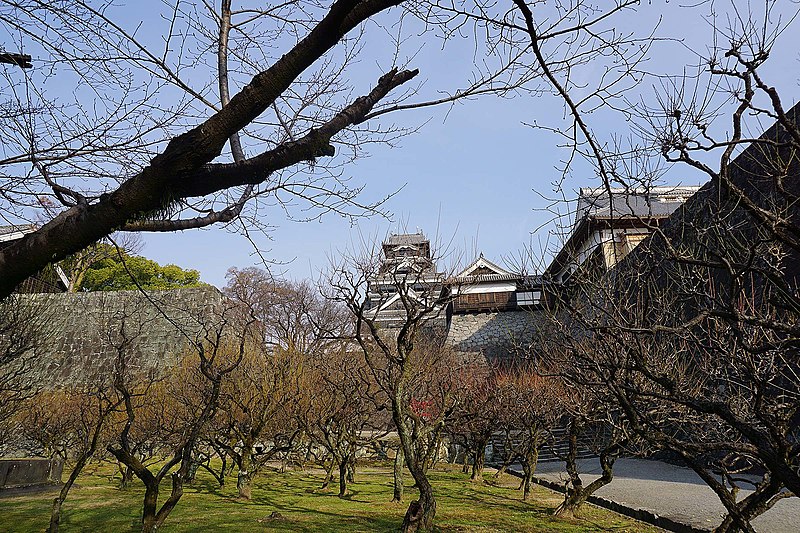
The second stage of restoration work began on the territory in 2007. At the same time, a whole grove of beautiful cherry trees was planted here. Interestingly, these trees used to be planted to strengthen the soil at castle sites. Their lush bloom did not play the most important role, but it was an essential addition.
Today, guests of Kumamoto Castle can visit the extensive museum dedicated to its history, as well as the two families who owned it at different times.
Kumamoto Castle is one of the 12 castles in modern Japan that have been preserved, and they are the country's national treasure. Every year, tourists from all over the world come to see them, as well as locals who honor their history.
Gallery