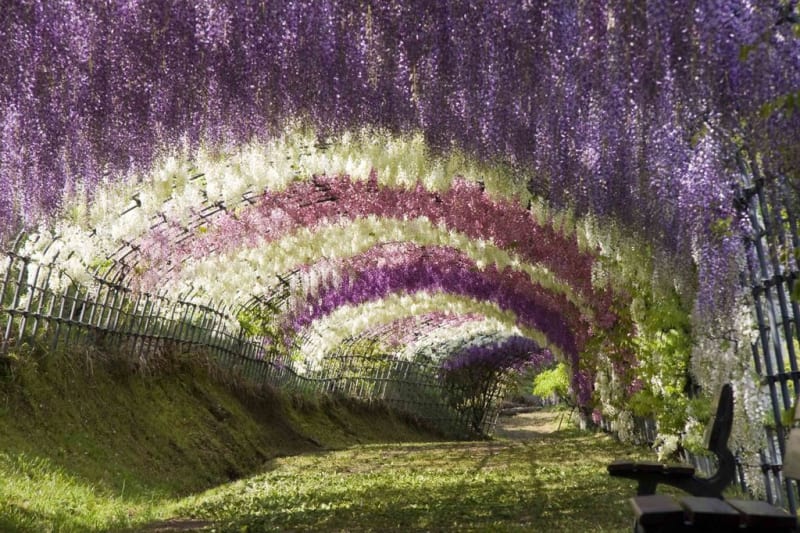
Kawachi Fujien is a private garden in Kitakyushu, on the Japanese island of Kyushu. Set among green hills, it is famous for its unusual floral structures formed by mature wisteria vines. In spring, long hanging flower clusters create tunnels and canopies in shades of white, pink, lilac, and purple. In autumn, the garden changes character as Japanese maple leaves turn brilliant colors.
Unlike many large Japanese parks, Kawachi Fujien opens to visitors only during selected seasons. Most guests arrive during the wisteria bloom, usually from late April to early May. A second visiting period takes place in autumn, when trees around the garden structures develop yellow, orange, and red foliage. These seasonal openings help protect the plants and allow visitors to see the garden at its most striking.
The Famous Wisteria Tunnels
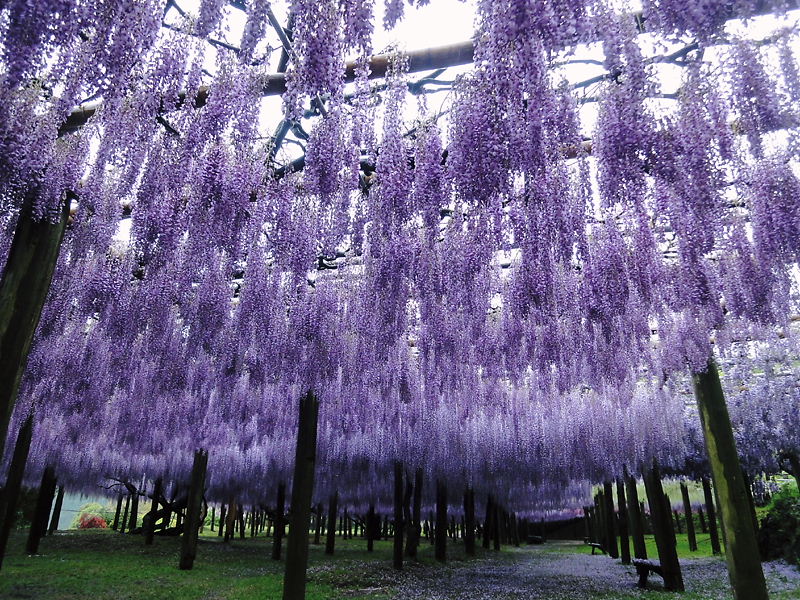
The garden's main attraction is a pair of tunnels formed by intertwined wisteria branches. They are approximately 80 and 110 meters long. The vines are trained over special supports, creating a floral ceiling above the paths. Hanging clusters form a living canopy that visitors can walk beneath and admire at close range.
During the flowering season, the colors range from white and pale pink to bluish lilac and deep purple. At peak bloom, the tunnels become long corridors lined with flowers. Soft light filtering through the foliage and blossoms creates a distinctive atmosphere that has made the garden famous well beyond Japan.
The tunnels are especially popular with photographers. For striking pictures, visitors can shoot along the path to emphasize perspective or focus on individual wisteria clusters. Crowds can be heavy during peak bloom, so the opportunity to take photographs without interruption depends on the time of day and visitor numbers.
A Large Canopy of Flowers
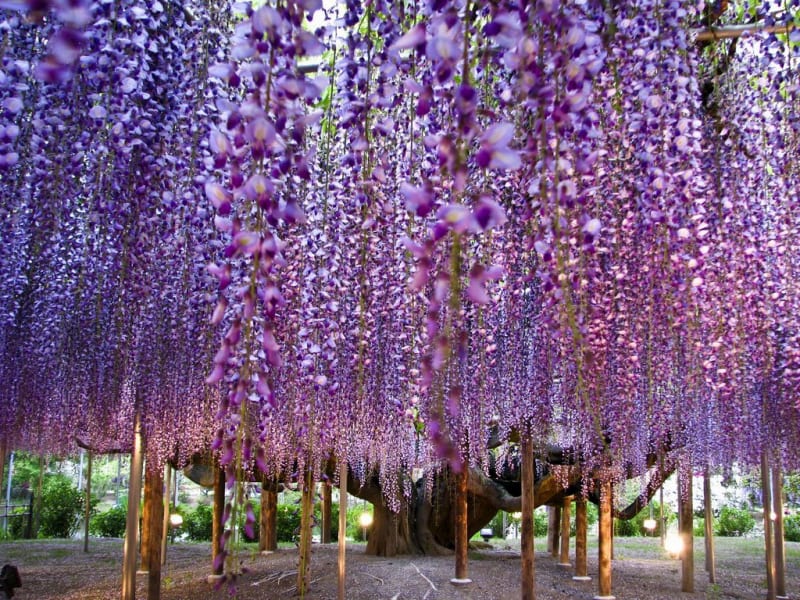
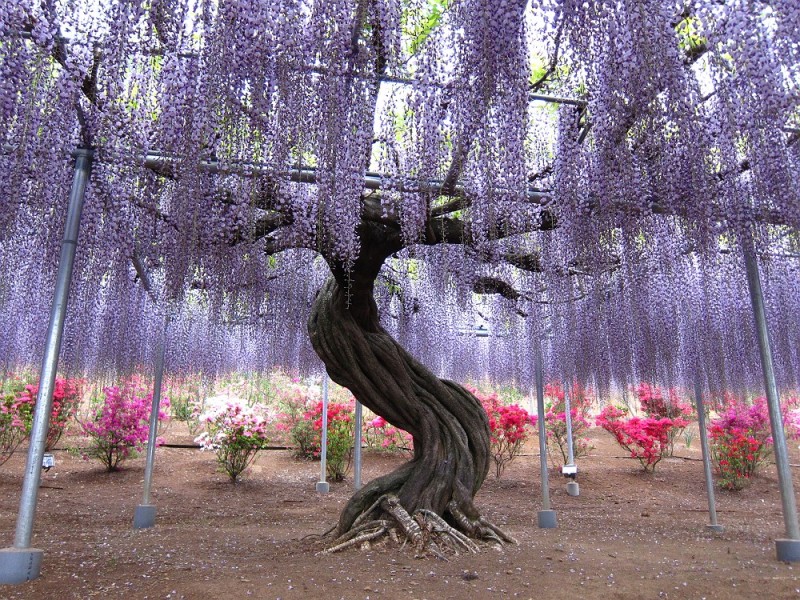
Beyond the tunnels, the garden contains large structures where wisteria vines form a broad floral canopy. Intertwining vines create a dense roof of greenery and hanging blossoms. From below, it resembles a flower dome whose colors change according to the variety and stage of flowering.
Wisteria is known for its long flower clusters that hang elegantly from the branches. The garden features different varieties and color forms of the plant. The combination of shades gives the displays depth and allows visitors to appreciate the canopies as complete landscapes rather than isolated plantings.
A walk through the garden reveals wisteria from several perspectives: inside the tunnels, beneath the floral structures, and from elevated sections. Some viewpoints look down over the plantings, helping visitors appreciate the scale of the garden and the patterns formed by the flowering vines.
When Wisteria Blooms
The main flowering period usually falls in late April and early May. Exact dates vary with temperature, rainfall, and the conditions of each year. In a warm spring, the flowers may open earlier, while cooler weather can delay the peak bloom.
The tunnels are most impressive when many flower clusters are open but still retain their fresh color. The garden is especially popular during this period because it often coincides with Japan's Golden Week holidays. Entry may require an advance ticket for a specific date and time slot.
Check the garden's official announcements when planning a trip. Do not rely only on photographs from previous years or on a fixed calendar date, because the condition of the plants can vary considerably. The garden may be closed to the public outside its flowering season.
Autumn Maples and the Second Visiting Season
Kawachi Fujien is also worth visiting in autumn. The garden opens again so visitors can enjoy the changing foliage. Hundreds of trees, including Japanese maples, grow in and around the floral structures, and their leaves gradually turn yellow, orange, and red.
The autumn period usually runs from mid-November to early December. The atmosphere differs noticeably from spring: instead of long hanging flower clusters, colorful leaves, soft light, and the contrast between red crowns and green foliage become the main features. Paths among the trees allow visitors to appreciate the autumn scenery at close range.
Some maple areas are on slopes, so comfortable walking shoes are useful. The timing of peak color depends on the weather and can change from year to year. Check the opening dates and current foliage conditions before visiting.
The Garden's History
The story of Kawachi Fujien is linked to the dream of its founder, Masao Higuchi, who wanted to create a garden where visitors could enjoy a wide variety of wisteria. Different varieties were planted on the hilly grounds and trained over supports, gradually forming the flower tunnels and canopies.
Over time, the garden became known for its unusual architecture made from living plants. Photographs spread through travel publications and social media, attracting travelers from many countries. Kawachi Fujien is often mentioned among Japan's notable flower attractions, particularly for its spring wisteria display.
The garden's popularity made it necessary to manage visitor numbers on the busiest days. Restrictions and advance reservations help reduce congestion on narrow paths and protect the plant structures.
Exploring the Garden
Most of the visit takes place along paths beneath the wisteria and around the floral structures. The route allows visitors to see the tunnels, canopies, and different plantings before stopping at scenic points for photographs. The garden is not an enormous botanical park; its appeal lies in carefully arranged floral displays.
Some paths run along slopes and may be uneven. During the flowering season, certain sections can become crowded, so walk carefully and follow staff instructions. Do not pull on the vines, pick flowers, or climb onto the supports, as the structures need careful treatment.
It is worth looking not only at the overall colors but also at individual flower clusters. Their length, shape, and shades vary by variety. A leisurely visit can reveal details that are not always obvious in photographs.
How to Get to Kawachi Fujien
The garden is in the Kawachi area of Kitakyushu, in Fukuoka Prefecture. It can be reached by car or public transportation from other parts of the city. One option is to travel to Yahata Station, take a bus, and continue on foot. The final part of the route can be lengthy, so check current schedules and transfer options before setting out.
During peak bloom, transportation conditions change because of the large number of visitors. Special buses or additional traffic arrangements may operate in some years. If you plan to drive, check parking availability and any restrictions on access in advance.
Because the garden opens only during selected seasons, travel plans should be based on its official opening dates. Check the Kawachi Fujien website before leaving to avoid arriving when the garden is closed or when tickets for your preferred time are no longer available.
Practical Tips for Visitors
If your main goal is to see the wisteria, plan your visit for spring and follow the latest bloom reports. Tickets for the most popular days may sell out in advance, so do not wait until arriving in Kitakyushu to arrange entry. Admission rules and prices can vary depending on the season and the condition of the flowers.
Wear comfortable shoes suitable for paths and small slopes. On sunny days, bring water, a hat, and sun protection. When the garden is crowded, follow the route rules and avoid lingering in narrow passages if a queue has formed behind you.
Kawachi Fujien is one of Japan's most unusual places to experience wisteria. In spring, its tunnels and canopies become layered displays of white, pink, and purple blossoms, while autumn brings brilliant maple foliage. Its seasonal opening makes careful planning essential for anyone hoping to see the plants at their most beautiful.
Gallery