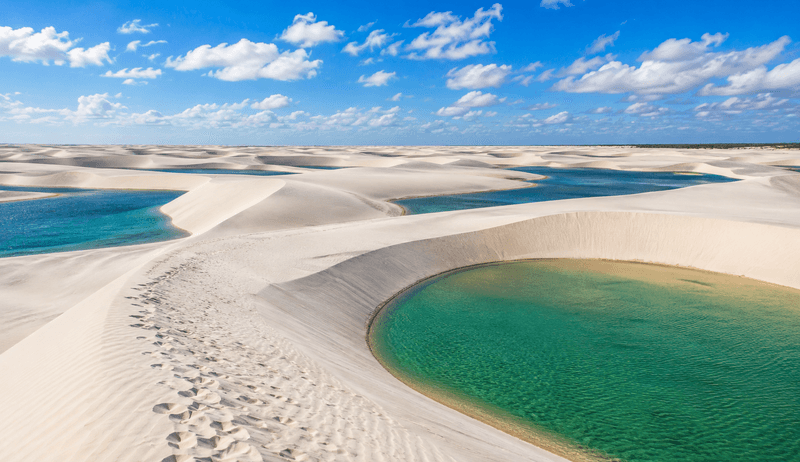
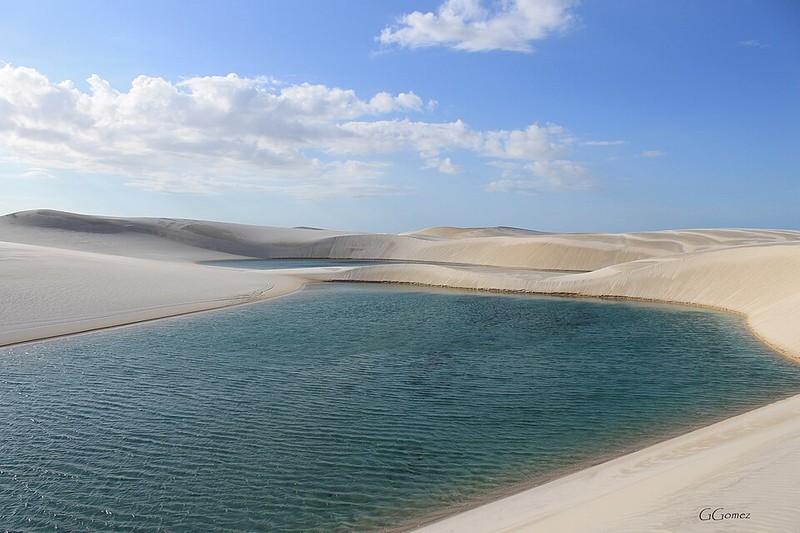
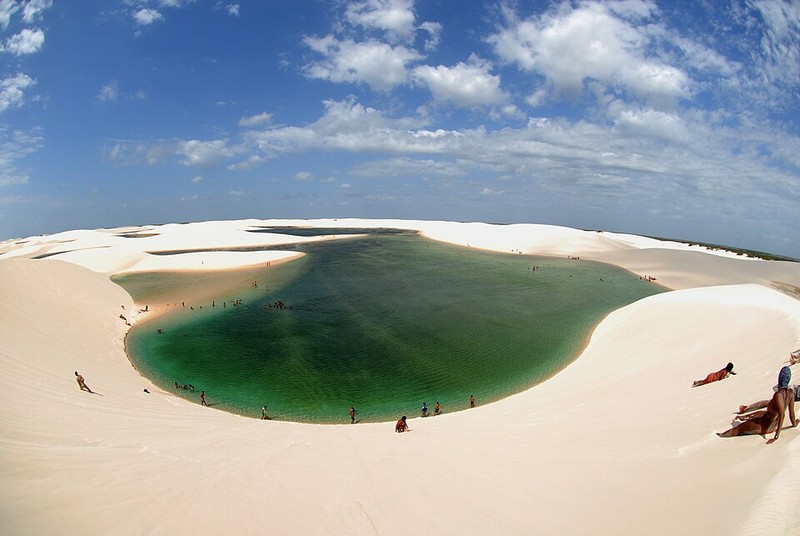
Lençóis Maranhenses National Park is one of Brazil’s most extraordinary natural attractions. Located in the northeast of the country along the coast of Maranhão, it is famous for vast white sand dunes separated by clear freshwater lagoons. From a distance, the landscape resembles an endless desert, but rainfall is sufficient to create chains of lakes between the dunes every year.
The park covers more than 156,000 hectares. Its landscape is constantly reshaped by wind and rain: sand hills shift, dune contours change, and lagoons fill with water or gradually disappear. The combination of white sand, blue water, and tropical vegetation makes Lençóis Maranhenses one of South America’s most recognizable natural destinations.
How the dunes and lagoons formed
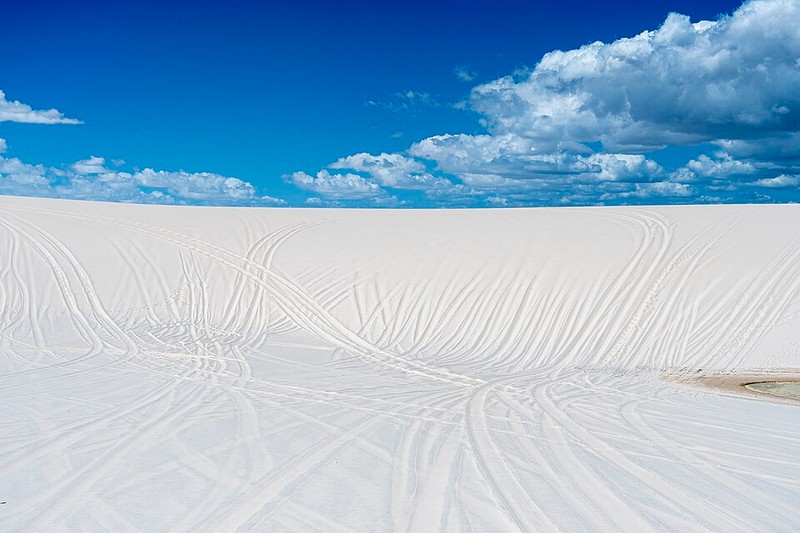
The landscape developed through marine sedimentation, the movement of sand, and the action of wind. Sand from the coast is gradually carried inland, where the wind shapes it into long chains of crescent-shaped dunes. Some ridges rise considerably above the surrounding terrain, while parts of the dune field extend for dozens of kilometres.
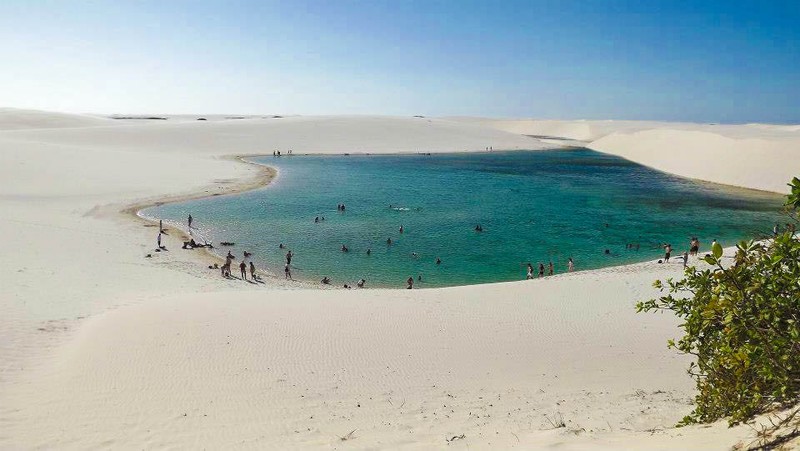
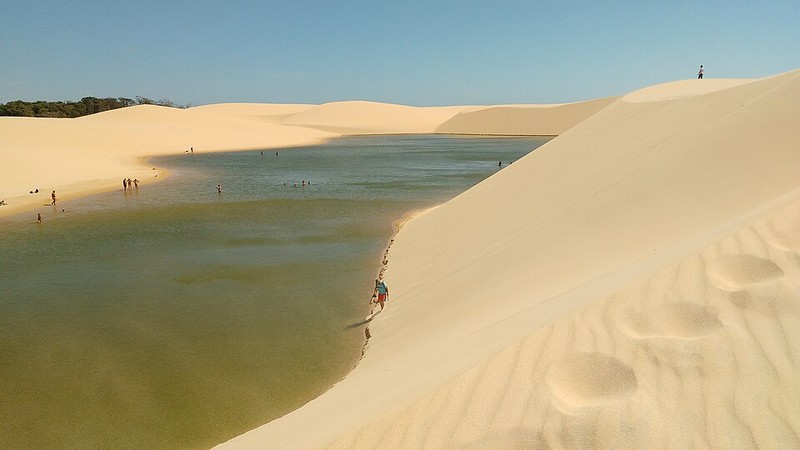
The park’s defining feature appears during the rainy season. Rainwater fills depressions between the dunes, creating lagoons of different sizes, depths, and colours. The water comes mainly from rainfall, so these lakes do not have conventional river sources. Depending on sunlight, water composition, and natural conditions, the lagoons can look turquoise, blue, or greenish.
During the dry season, many temporary pools shrink or disappear, leaving pale depressions between the sandy ridges. When the rains return, the water comes back, but the shape and position of the lagoons may change. As a result, the park’s landscape is never exactly the same.
A UNESCO World Heritage Site
Lençóis Maranhenses National Park was added to the UNESCO World Heritage List in 2024. This international recognition reflects the exceptional beauty of the landscape and its geological significance. The park contains one of South America’s largest coastal dune systems, illustrating how wind, rainfall, and coastal conditions shape the terrain over long periods.
The park lies in a transition zone between three major Brazilian natural regions: the Cerrado, Caatinga, and Amazon. Its landscape therefore includes more than dunes and lagoons. Coastal restinga forests, mangroves, rivers, and marine environments also occur here. Together, these habitats support local biodiversity.
Plant and animal life
Despite its desert-like appearance, the park is not a lifeless expanse of sand. Water, seasonal changes, and the presence of different ecosystems create conditions for numerous plant and animal species. Shrubs and trees grow in wetter areas, while mangrove forests occur along parts of the coast.
Birds, fish, reptiles, and other animals adapted to changing conditions inhabit the park and surrounding ecosystems. Temporary lagoons provide important aquatic habitats, while rivers and mangroves support a diversity of organisms. Protecting these natural systems is essential to the health of the entire region.
The most beautiful lagoons
The lagoons are the main reason travellers visit Lençóis Maranhenses. Set among tall sand ridges, they create a striking contrast with the white dunes. In sunny weather, the water takes on vivid colours, while the smooth lines of the sand are reflected on its surface.
Popular excursion areas include the surroundings of Barreirinhas and Santo Amaro. Depending on the route, visitors explore different groups of lagoons, climb dunes, and stop beside the water to rest or swim where permitted. The appearance and water levels of the lagoons change throughout the year, so the experience depends greatly on the season.
Barreirinhas and Santo Amaro
Barreirinhas is one of the region’s main tourist centres and a common starting point for trips into the park. Guided excursions use authorised off-road vehicles on approved routes, and visitors can also join dune walks and trips to the lagoons. The town offers accommodation, restaurants, and tourist services.
Santo Amaro provides access to other sections of the dune field. Some routes from here lead to lagoons surrounded by high sand hills and reveal less developed corners of the park. The best base depends on the scenery you want to see, the time available, and the excursions operating during your visit.
When to visit
Timing is especially important when planning a visit to the lagoons. The rainy season generally falls in the first half of the year, after which water gradually accumulates in the depressions between the dunes. In many areas, the most impressive scenery appears after the rains, when the lagoons are full. During the dry months, some temporary lakes shrink or disappear completely.
Exact timing depends on rainfall in a given year. Before booking, check lagoon conditions with local guides or tour operators. The national park is open to visitors throughout the year, although access to individual routes and the appearance of the landscape can vary.
How to reach the national park
One of the main ways to reach the region is to travel from São Luís, the capital of Maranhão, to Barreirinhas. The journey takes several hours and can be made by bus, transfer, or organised tour. Another option is to travel through Santo Amaro, which provides access to different parts of the park.
Most of the dune area is not suitable for independent travel in an ordinary car. Many excursions use authorised off-road vehicles and accredited guides. Travel conditions depend on the weather, road conditions, and the regulations of the protected area, so it is best to arrange the route in advance.
Practical tips for visitors
For walking across the dunes, bring comfortable footwear, lightweight clothing, a hat, sunscreen, and plenty of drinking water. There is little shade on exposed sandy areas, and the heat can be intense even on cloudy days. A waterproof cover for your phone and camera is also useful.
Choose official excursions and follow the instructions of local guides. Unauthorised vehicles must not drive across open dunes, and visitors should not leave litter, light fires, or damage the natural environment. Before swimming, follow the guidance of your tour leader and take local conditions into account. These rules help protect the fragile landscape and make visits safer.
Lençóis Maranhenses National Park is a rare place where sand dunes and freshwater lakes form a single living landscape. Changing lagoons, pale sand, and the vast coastal scenery create an extraordinary natural world worth experiencing in person.
Gallery