Bohemian Switzerland is one of the most striking natural regions of the Czech Republic. Located in the northwest of the country near the German border, it is known for unusual sandstone cliffs, towering rock formations, deep gorges, dense forests, and winding rivers. Bohemian Switzerland National Park was established on 1 January 2000. It is the youngest of the Czech Republic’s four national parks and protects a distinctive landscape and its natural ecosystems.
How the landscape was formed
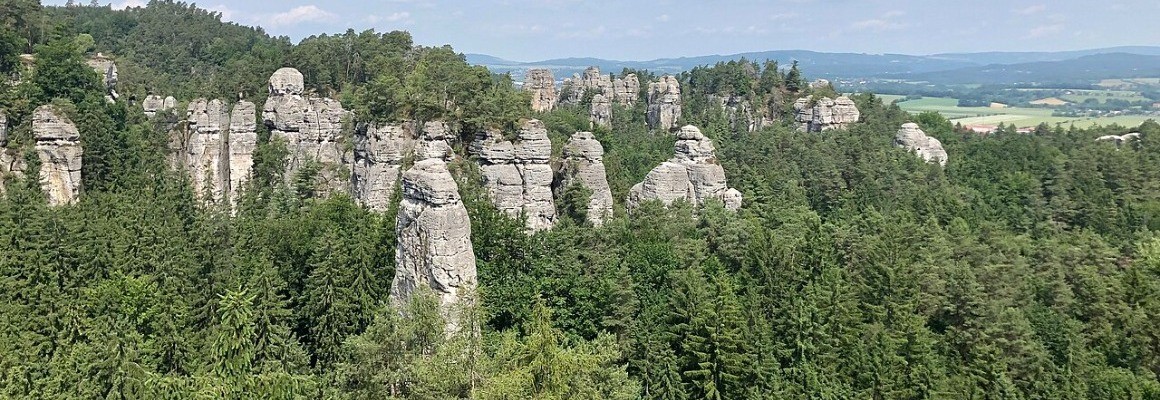
The story of the local rocks began about 90 million years ago, when much of the area lay beneath a shallow sea. Sand accumulated on the seabed and gradually hardened into thick layers of sandstone. After the sea retreated, wind, water, frost, and other natural forces slowly reshaped the rock. Over millions of years, they created cliffs, narrow gorges, rock towers, arches, and intricate stone labyrinths.
The region forms part of the Elbe Sandstone Mountains, which continue across the German border. On the German side lies Saxon Switzerland National Park. Together, the two areas form a cross-border natural region with similar geological features but their own attractions and hiking routes.
Why is it called Switzerland?
The name Bohemian Switzerland is linked to the impressions of artists in the 18th century rather than to its geographical location. Swiss painters Adrian Zingg and Anton Graff worked in Dresden and travelled through the Elbe Valley. The cliffs and gorges reminded them of the landscapes of their homeland, and the romantic name gradually became established. Travellers, artists, and nature lovers later helped turn the area into a popular destination.
Pravčická Gate: the symbol of Bohemian Switzerland
The region’s most famous natural landmark is Pravčická brána, or Pravčická Gate. This enormous natural sandstone arch has become one of the symbols of the Czech Republic. Its span is about 26.5 metres and its height is approximately 16 metres. It formed through the gradual weathering and erosion of the surrounding rock and is considered the largest natural sandstone arch in mainland Europe.
The arch is surrounded by dramatic rock formations and wooded slopes. Viewpoints offer impressive vistas across the stone formations and green valleys. Nearby stands Falcon’s Nest, a historic building constructed in 1881 at the initiative of Prince Edmund Clary-Aldringen. Climbing onto the arch itself is prohibited because sandstone is fragile and the restriction helps protect this unique natural monument.
The gorges of the Kamenice River
Another defining feature of Bohemian Switzerland is the deep gorge system of the Kamenice River. Over time, the river cut through sandstone, creating narrow passages enclosed by high, steep walls. Mosses and ferns grow on the rocks, while shaded sections maintain a cool, humid microclimate. The contrast between pale stone, dark water, and green vegetation gives the gorges a distinctive atmosphere.
Boat trips operate on certain sections, allowing visitors to travel between the cliffs and beneath small rock overhangs. Well-known sites include Wild Gorge and Edmund’s Gorge. Boat services depend on the season, natural conditions, and park management decisions, so visitors should check current information before travelling.
Forests, rocks, and viewpoints
Beyond its famous arch and river gorges, the region offers a wide variety of landscapes, including wooded plateaus, basalt hills, rock labyrinths, and deep valleys. One notable summit is Růžovský vrch, which rises to about 619 metres above sea level. From selected viewpoints, visitors can see the patchwork of forests, rock formations, and open spaces typical of northern Bohemia.
Plants and wildlife
Bohemian Switzerland protects not only dramatic rock formations but also diverse natural habitats. Beech and mixed forests cover much of the region, while cool, damp gorges support mosses, ferns, and plants adapted to low light. Rare birds, including peregrine falcons and black storks, inhabit rocky ledges and forest areas. Clean water and relatively undisturbed habitats are important for the region’s wildlife.
Nature conservation is especially important because these ecosystems are vulnerable to trampling, pollution, and disturbance. Visitors should stay on marked trails, take their rubbish away, avoid lighting fires, and respect closed areas.
Tourism and nature conservation
Interest in Bohemian Switzerland grew considerably during the 19th century. Improved railway connections and the creation of hiking trails made the rocky landscape easier to reach. Hotels, viewpoints, and resting places appeared near popular attractions. The area was designated a protected landscape area in 1972, and the national park was established in 2000.
In July 2022, a major forest fire caused significant damage to parts of the region. Subsequent work focused on visitor safety, repairs to selected areas, and monitoring the forest’s natural regeneration. Some routes may be temporarily closed because of falling-tree risks, trail damage, or conservation work.
What to know before visiting
Bohemian Switzerland is ideal for hiking, photography, geology, and peaceful time outdoors. Many visitors come for a day trip, while a longer stay allows them to explore different parts of the region at a more relaxed pace. Before travelling, check official national park notices about closed trails, fire risks, boat trips, and seasonal restrictions. Comfortable footwear, drinking water, and enough time will make a visit safer and more enjoyable.
Why visit Bohemian Switzerland?
Bohemian Switzerland combines unusual geology, forest scenery, natural rock arches, and deep river gorges. Pravčická Gate is the region’s best-known symbol, but quiet forest paths, panoramic viewpoints, and narrow passages beside the Kamenice River can be just as memorable. The landscape reveals how wind and water shaped a remarkable natural world over millions of years, one that is now carefully protected.
Gallery