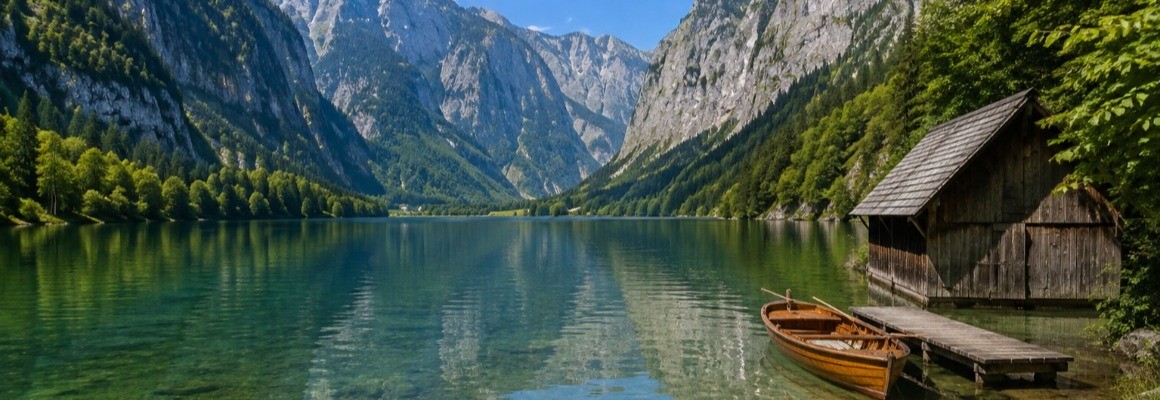
Berchtesgaden National Park is a spectacular protected area in the Bavarian Alps of southern Germany, close to the Austrian border. Rocky peaks rise above deep valleys, dense forests, and clear mountain lakes. The park attracts hikers, nature lovers, and visitors seeking some of the most impressive alpine scenery in Central Europe.
Established in 1978, it is the only national park in the German Alps and covers approximately 210 square kilometres. Its best-known natural landmarks include Lake Königssee, Mount Watzmann, the Wimbach Valley, and Lake Hintersee. The park forms part of the UNESCO-recognised Berchtesgadener Land Biosphere Region.
History of the national park
The Berchtesgaden Alps have long attracted travellers with their dramatic cliffs, mountain forests, and lakes. As tourism grew, protecting the region's natural ecosystems became increasingly important. The national park was established in 1978 to conserve alpine landscapes, natural processes, and wildlife habitats.
Its guiding principle is to allow nature to develop with as little human interference as possible. In large parts of the park, forests, mountain streams, and other natural communities are left to follow their own course. Researchers study wildlife, vegetation, and the effects of climate change on alpine ecosystems.
The park is part of the Berchtesgadener Land Biosphere Region, recognised by UNESCO in 1990. The biosphere region is much larger than the national park and includes settlements and traditional agricultural landscapes.
Mount Watzmann
Watzmann is one of the most recognisable mountain groups in the Bavarian Alps. Its highest summit reaches approximately 2,713 metres above sea level. The distinctive line of peaks towers over the valleys and creates a dramatic backdrop for Lake Königssee.
The Watzmann East Face is particularly famous for its enormous wall of rock rising above the surrounding landscape. It attracts experienced climbers, but ascents require proper training, suitable equipment, and favourable weather. Most visitors enjoy the mountain from valley trails and scenic viewpoints.
Lake Königssee
Königssee is one of Germany's most beautiful alpine lakes. It stretches between steep rock walls and resembles a Norwegian fjord. Its clear water often appears emerald green, with the colour changing according to light, depth, and weather. The lake reaches a maximum depth of about 192 metres.
Many sections of the shoreline are inaccessible on foot because of the steep cliffs. One of the best ways to experience the scenery is to take an electric passenger boat across the lake. The journey reveals towering rock faces, forests, and mountain slopes. Visitors may also hear the famous echo that reverberates across the water from the surrounding cliffs.
St Bartholomew's Church
St Bartholomew's Church stands on the western shore of Königssee and is one of the region's best-known landmarks. Its red domes and pale walls contrast beautifully with the dark mountains and green water. Visitors usually reach the church by passenger boat and can explore the accessible paths nearby.
The landing area can become busy during the main tourist season, so checking boat schedules and tickets in advance is recommended. Journey times depend on the chosen stop and operating conditions.
Lake Hintersee and the Ramsau Valley
Hintersee is a small mountain lake near the village of Ramsau. Forests, boulders, and steep slopes surround its calm water, creating a particularly photogenic landscape. Walking paths around the lake allow visitors to enjoy the scenery without undertaking a demanding mountain ascent.
The Ramsau area is also known for traditional alpine scenery and access to the Klausbach Valley. Forests, mountain pastures, and wildlife habitats can be explored along its trails. In autumn, the surrounding trees take on golden and reddish colours, while winter brings a quieter, snow-covered landscape.
The Wimbach Valley
The Wimbach Valley reveals a wilder side of the Alps. A mountain stream flows between steep slopes, and sections of the valley contain extensive deposits of stones and rock debris shaped by natural processes. Glaciers, flowing water, and frost weathering have helped create this distinctive landscape.
Hikers should wear suitable footwear and check conditions before setting out. Weather can change rapidly at higher elevations, and trails may become slippery after heavy rain.
Alpine plants
Vegetation changes with elevation throughout the park. Lower slopes support forests containing spruce, beech, larch, and other trees typical of Central European mountains. Higher up, forests gradually give way to shrubs, alpine meadows, and rocky terrain.
Mountain meadows support flowering plants such as gentians and edelweiss. In spring and summer, the slopes become colourful, while shaded areas remain cooler. Plants in these environments are adapted to short growing seasons, strong winds, and rapid temperature changes.
Picking flowers or collecting plants is not permitted in the protected area. Visitors should stay on marked trails rather than stepping onto fragile vegetation for photographs.
Wildlife in the national park
Berchtesgaden provides habitat for alpine marmots, chamois, deer, golden eagles, and bearded vultures. Marmots live in mountain meadows and rocky areas, while chamois move confidently across steep slopes. Golden eagles use rising air currents to soar above valleys while searching for prey.
Conservation work includes monitoring birds of prey and supporting the return of the bearded vulture to the Alps. Wildlife sightings are never guaranteed, so patience and respect for animals are essential. Visitors should keep their distance and never feed wild animals.
Hiking and outdoor activities
The park has an extensive network of walking trails and alpine routes, ranging from easy valley walks to demanding mountain ascents. Trails around Hintersee, through the Klausbach Valley, and near Königssee are suitable starting points for discovering the landscape. More difficult routes lead to high pastures, mountain passes, and summits.
Before hiking, check official maps and warnings, carry sufficient water and food, charge your phone, and tell someone about your planned route. Weather on the peaks can be very different from conditions in the valley.
Haus der Berge visitor centre
Haus der Berge, the national park's information and education centre in Berchtesgaden, offers an introduction to the region's natural environment. Its permanent exhibition, “Vertical Wilderness,” explores habitats ranging from the depths of Königssee to the summit of Watzmann.
Interactive displays explain mountain lakes, forests, alpine meadows, rocky habitats, wildlife, and seasonal changes. The centre is suitable for adults and families with children. Check current opening hours and exhibition information before visiting.
When to visit
Summer and early autumn are generally the best seasons for hiking. Many trails are accessible, transport services operate, and alpine meadows may be in bloom. However, cold weather, strong winds, fog, and thunderstorms can occur at high elevations even in summer.
Spring brings new growth, but snow may remain on higher trails. Autumn offers colourful forests and often fewer visitors, while winter brings snowy scenery and more restricted access. Always follow local warnings and check trail conditions before leaving.
Königssee is beautiful throughout the year, but boat schedules and access to some locations vary with the season and weather.
How to get there
The national park lies in southeastern Bavaria near the Austrian border. Berchtesgaden is a convenient base and can be reached by train and bus. Travellers also arrive through Salzburg or Munich and continue by public transport or car.
To visit Königssee, head to the Schönau am Königssee area and walk to the boat landing. Hintersee and the Ramsau Valley can be reached by bus or car. The best route depends on which part of the park you intend to explore.
Cars cannot access every natural area inside the park. Some places can be reached only on foot or by designated transport, so allow enough time for the return journey and check bus and boat timetables.
Visitor guidelines
Visitors should remain on marked trails, take their rubbish away, and avoid disturbing wildlife. Picking plants, lighting fires, camping outside permitted areas, and flying drones without authorisation are prohibited.
Berchtesgaden National Park brings together towering mountains, clear lakes, forests, and alpine meadows. It offers opportunities for hiking, wildlife watching, and learning about the natural world of the Alps. Responsible visiting helps preserve this remarkable landscape for future generations.
Gallery