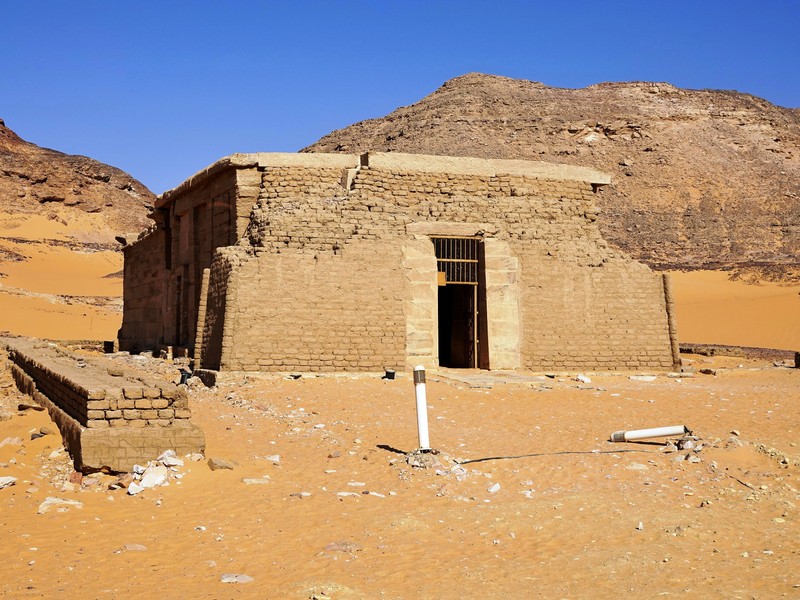
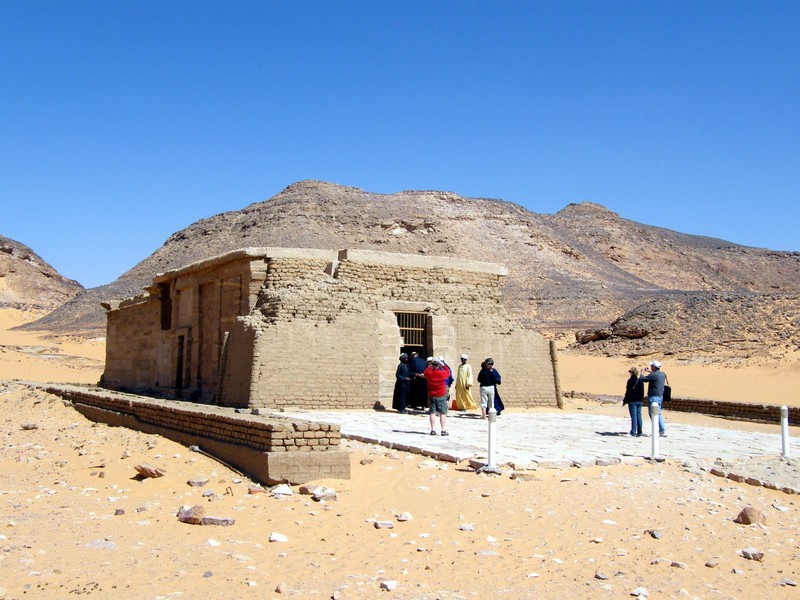
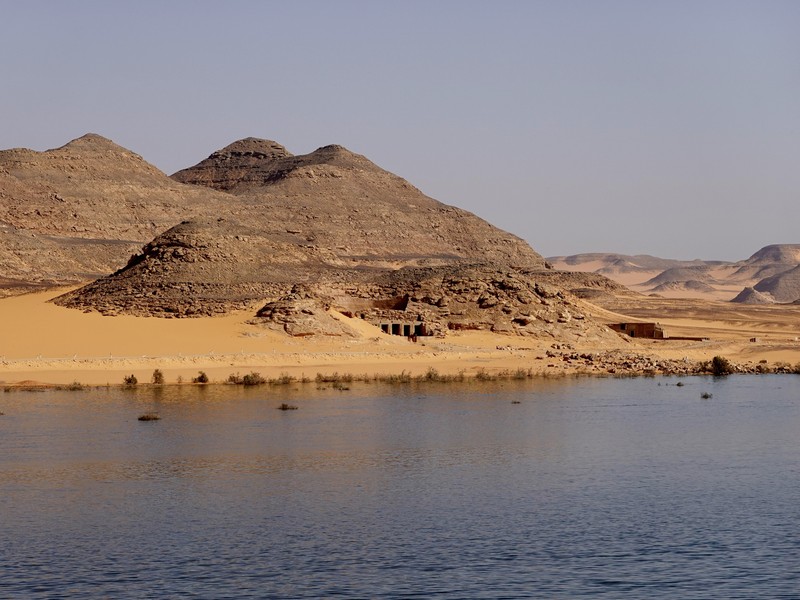
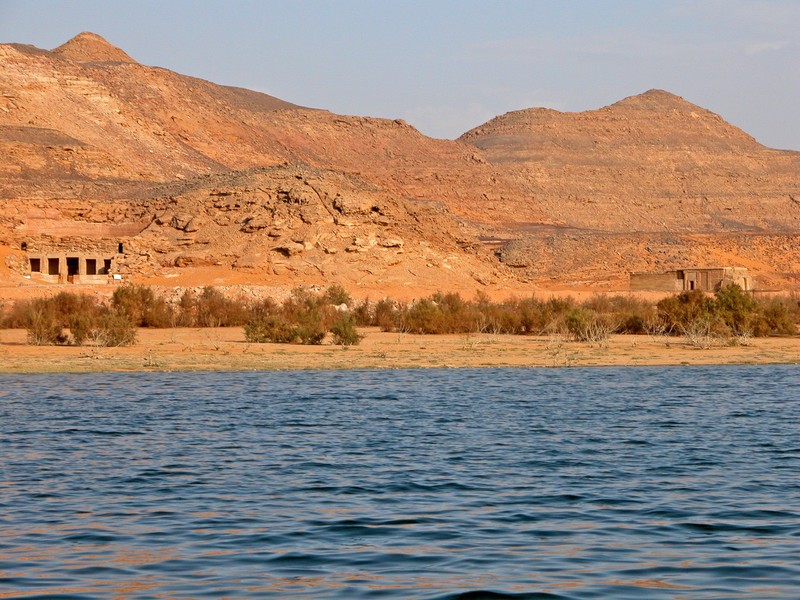
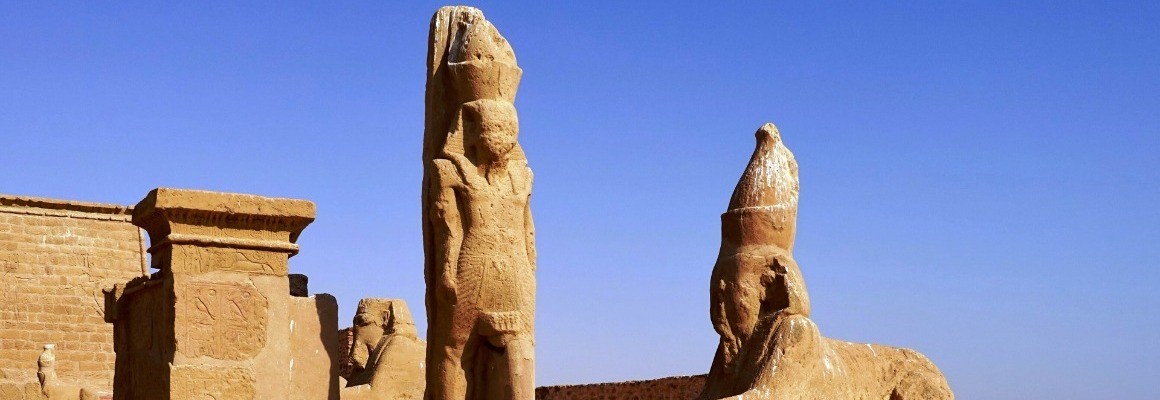
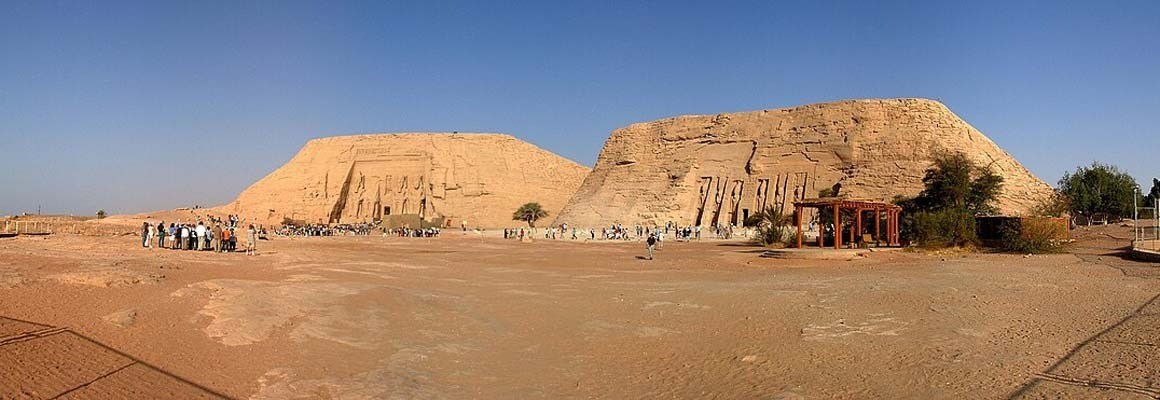
The Temple of Amada is one of the oldest surviving temples on the shores of Lake Nasser and an important monument of the New Kingdom in historic Nubia. It is located at New Amada in southern Egypt, about 160 km south of Aswan. Construction began under Pharaoh Thutmose III in the 15th century BCE, and his successors Amenhotep II and Thutmose IV continued the work. The temple was dedicated to Amun-Ra and Ra-Horakhty. It is especially known for its well-preserved painted reliefs and historical inscriptions describing Egyptian military campaigns. In the 20th century, the monument was rescued from the rising waters of Lake Nasser by being moved to a new location.
History of the Temple of Amada
The temple was founded during the Eighteenth Dynasty under Thutmose III, one of the best-known pharaohs of ancient Egypt. His reign in the 15th century BCE was marked by military campaigns, territorial expansion and the strengthening of Egyptian influence in Nubia. Building a sanctuary in this region had both religious and political significance: monumental architecture asserted royal authority and demonstrated the connection between southern territories and Egyptian civilisation.
Construction continued under Thutmose III’s son, Amenhotep II. Later, Thutmose IV added a columned hall in front of the sanctuary. Three generations of Eighteenth Dynasty rulers therefore contributed to the temple. During the Nineteenth Dynasty, particularly under Seti I and Ramesses II, the building also received additions and restoration work.
Amun-Ra and Ra-Horakhty
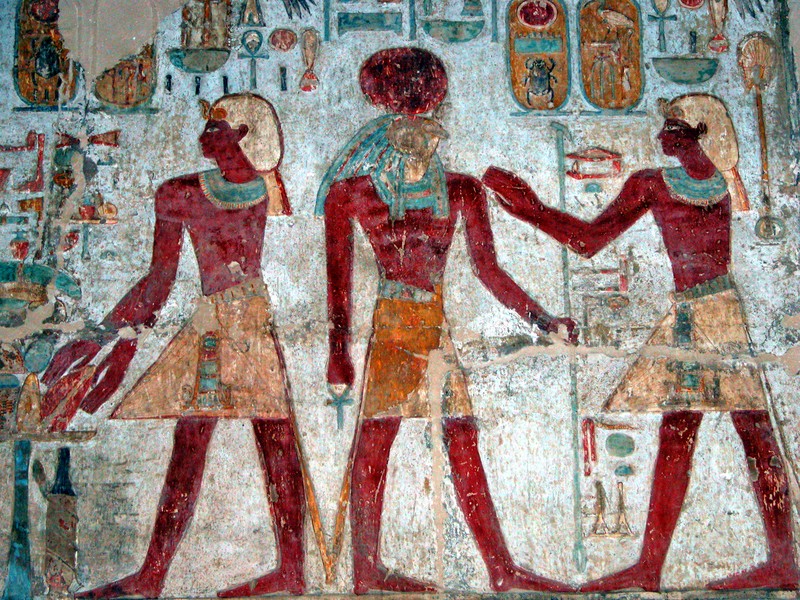
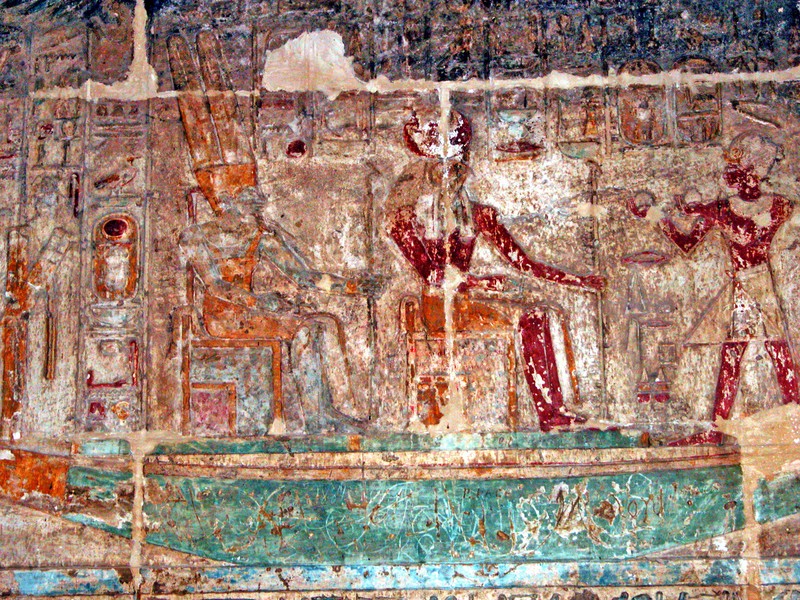
The temple’s principal deities were Amun-Ra and Ra-Horakhty. Amun-Ra combined the characteristics of Amun, especially revered at Thebes, with those of the sun god Ra. During the New Kingdom, he occupied a central position in Egyptian religious life. Ra-Horakhty was a solar deity associated with the heavenly horizon and the daily movement of the sun.
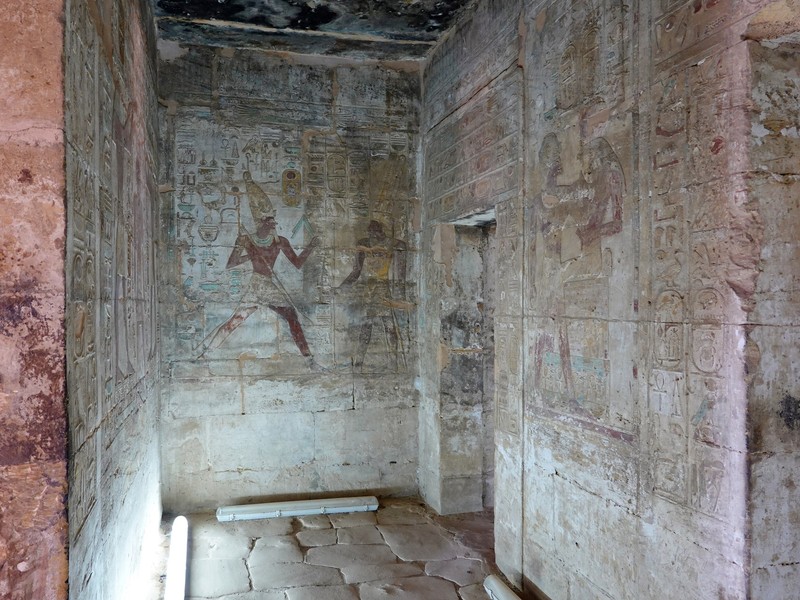
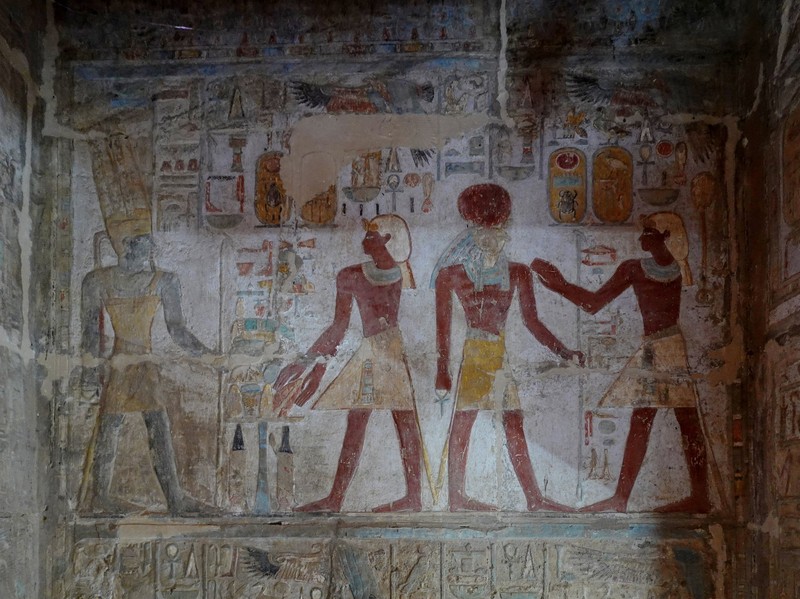
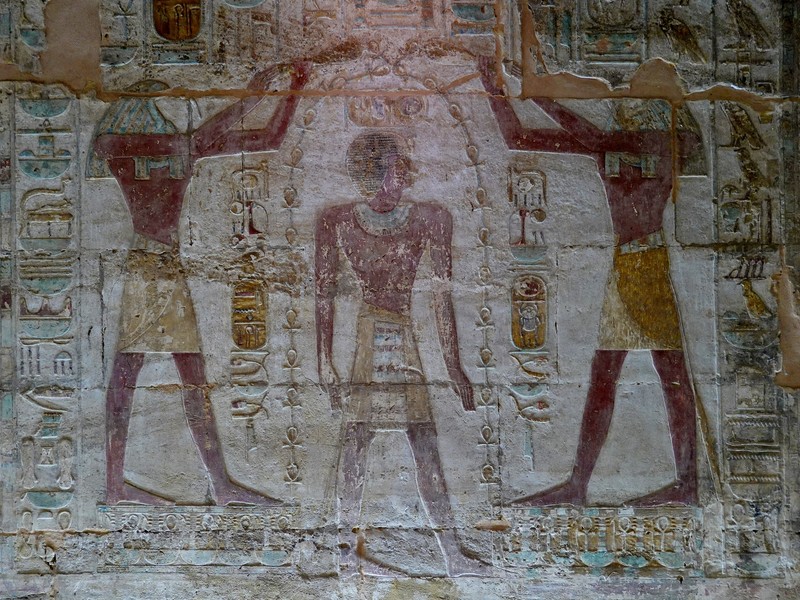
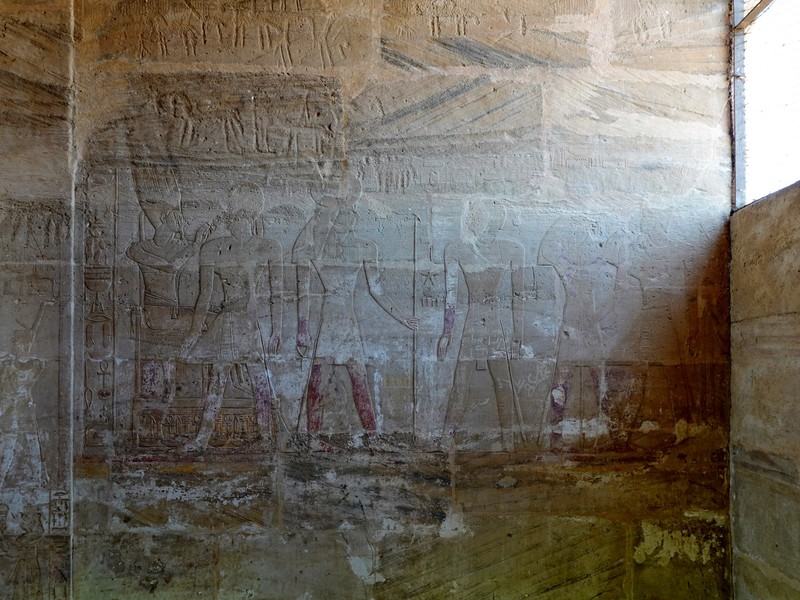
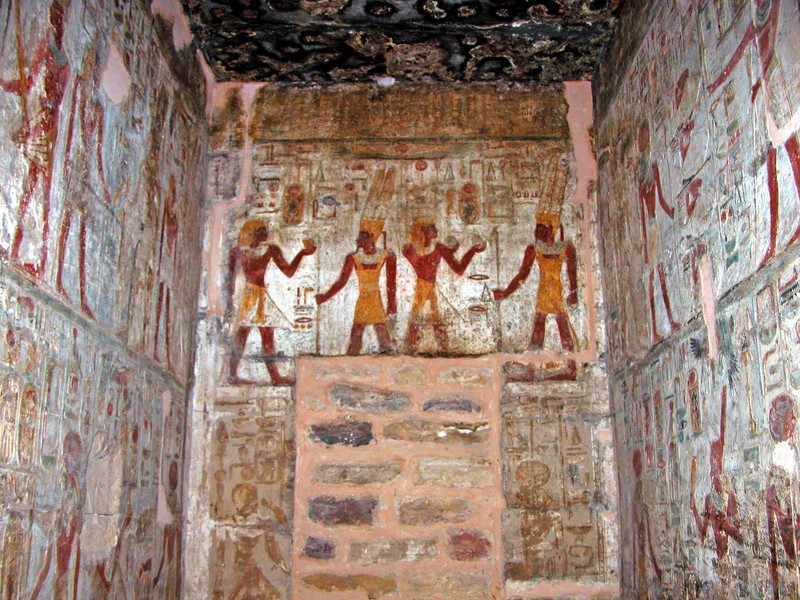
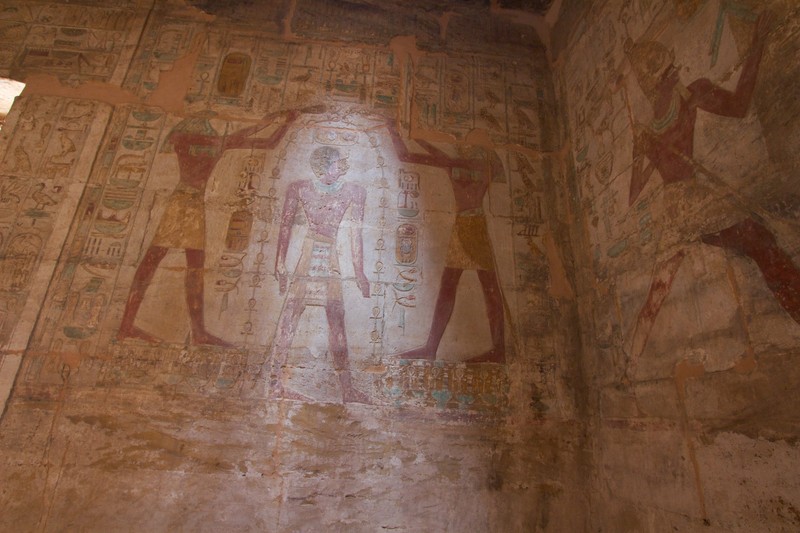
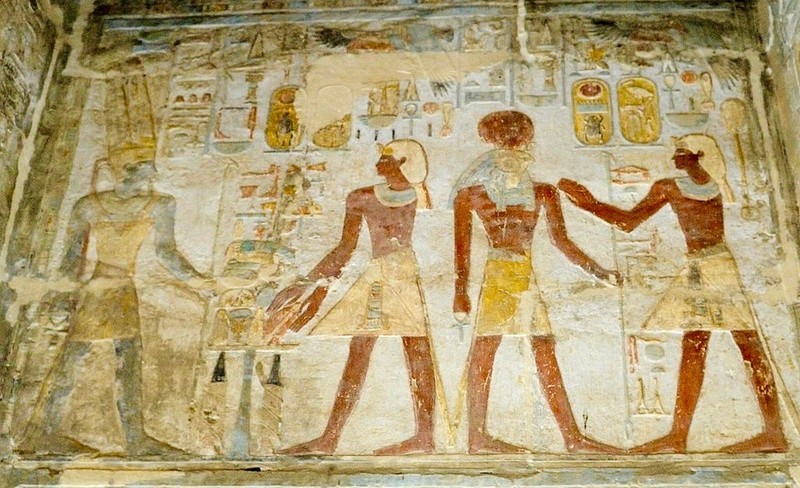
The reliefs show pharaohs making offerings to the gods and participating in ritual ceremonies. Such scenes emphasised the ruler’s role as an intermediary between humanity and the divine world. The temple was not only a place of worship but also a setting where rituals reinforced the relationship between the pharaoh, the gods and the prosperity of the state.
Architecture and interior decoration
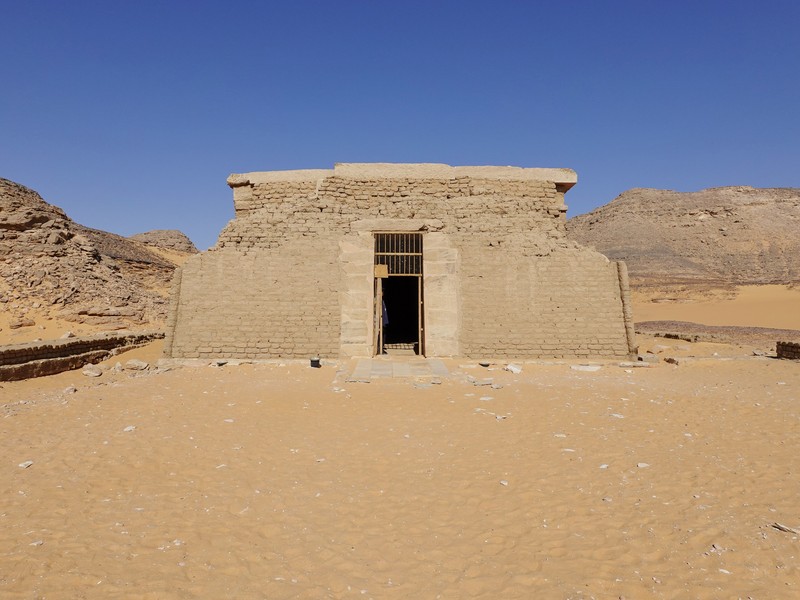
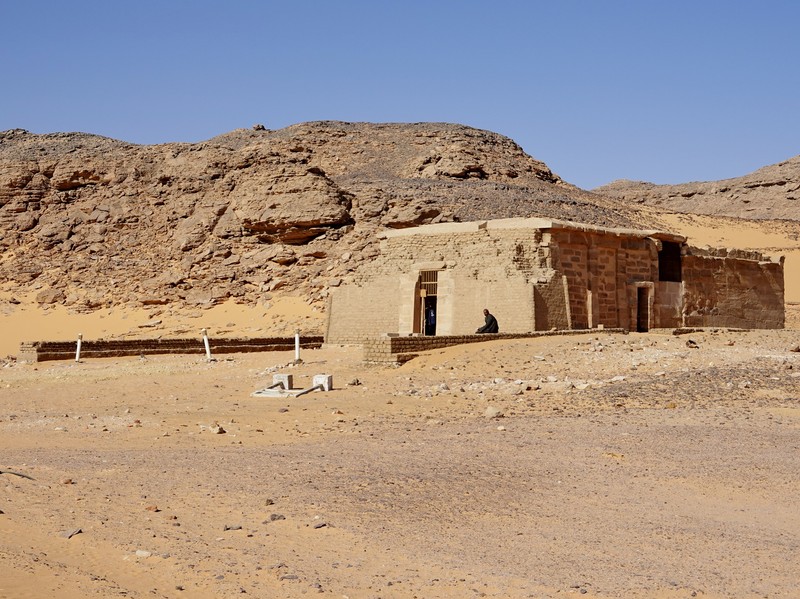
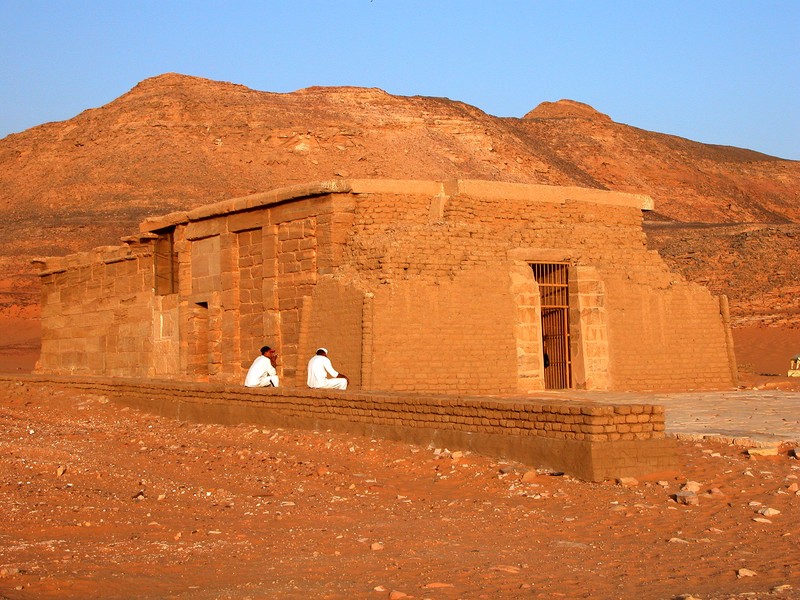
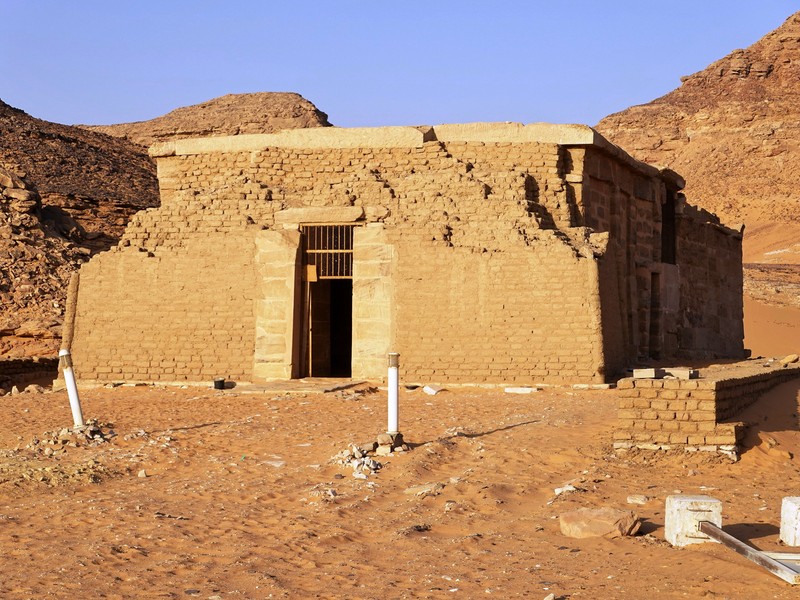
The temple was built mainly from sandstone. Its layout includes an entrance area, a courtyard, a columned hall and inner rooms leading to the sanctuary. The front section was enlarged under Thutmose IV, who added a hypostyle hall in front of the main temple.
Although relatively modest in size compared with Karnak or Luxor Temple, Amada has distinctive architecture. Its interior preserves reliefs depicting kings, gods and religious ceremonies. The painted decorations are particularly valuable because they give an impression of the original colour and richness of ancient Egyptian temples.
Historical inscriptions and military campaigns
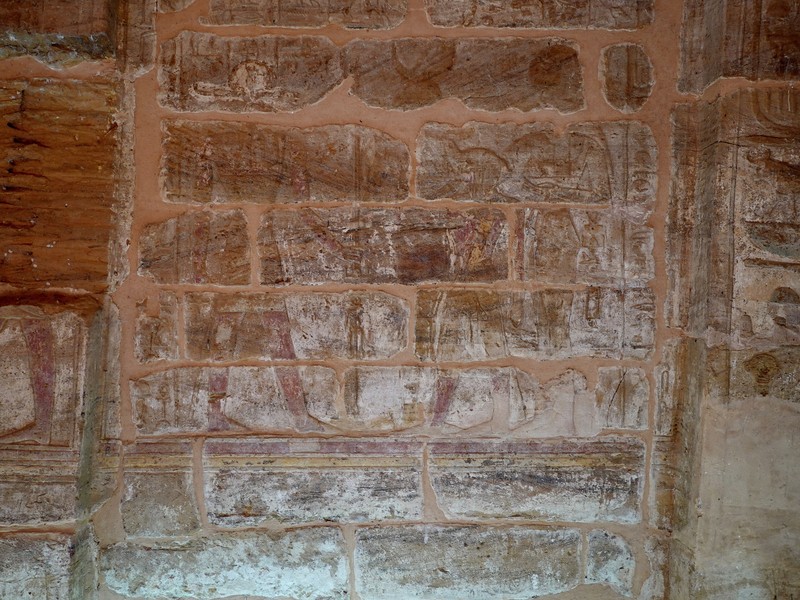
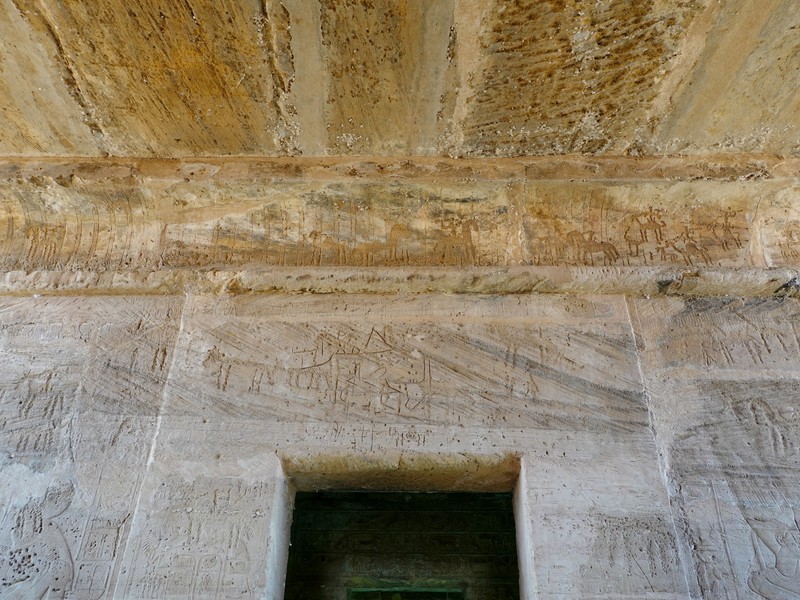
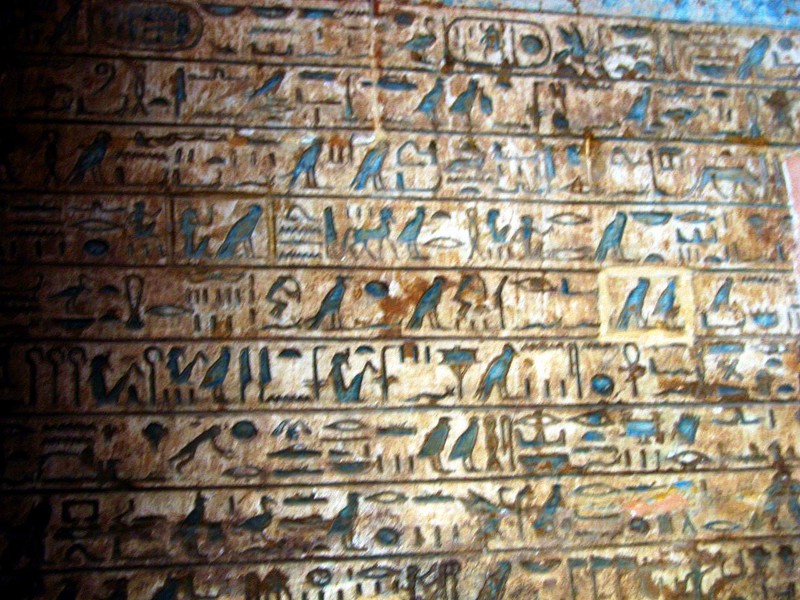
An important inscription on the rear wall of the sanctuary dates to the reign of Amenhotep II and describes his campaign in Asian territories. Another historical text is associated with Pharaoh Merneptah and records the repulsion of a Libyan attack on Egypt. These inscriptions are valuable sources for the military history and royal propaganda of ancient Egypt.
They also reveal how pharaohs celebrated their victories and linked the success of the state to divine support. The Temple of Amada is therefore both a religious monument and a significant historical source.
Why the reliefs are so well preserved
During the medieval period, the temple was adapted for Christian worship. Some walls were covered with plaster bearing Christian paintings. This layer partially protected the ancient Egyptian reliefs and painted decoration from direct environmental exposure.
When the later coatings disappeared or were removed, researchers were able to study the earlier images and inscriptions. The interior retained a substantial part of its original decorative programme, making Amada particularly valuable for research into the art of the Eighteenth and Nineteenth Dynasties.
Relocation and rescue from flooding
In the 20th century, construction of the Aswan High Dam and the formation of Lake Nasser threatened to submerge the temple. In 1960, UNESCO launched an international campaign to preserve Nubia’s archaeological monuments. Because of the exceptional value of its painted reliefs, the temple was moved as a complete structure rather than dismantled into numerous individual blocks.
In 1964–1965, the building was transported on metal rails about 2.5–2.6 km from its original location to higher ground. Today, the temple stands at New Amada alongside the Temple of al-Derr and the Tomb of Pennut. In 1979, the Nubian monuments were inscribed on the UNESCO World Heritage List.
What to see and how to visit
During a visit, pay particular attention to the painted reliefs, hieroglyphic inscriptions, the columned hall added by Thutmose IV and the historical texts of Amenhotep II and Merneptah. The trip can be combined with visits to the Temple of al-Derr and the Tomb of Pennut, both located in the same archaeological complex.
The temple lies about 160 km south of Aswan. Because it is far from major tourist centres, it is best to plan the visit in advance and check available routes, transport options and access arrangements.
Gallery