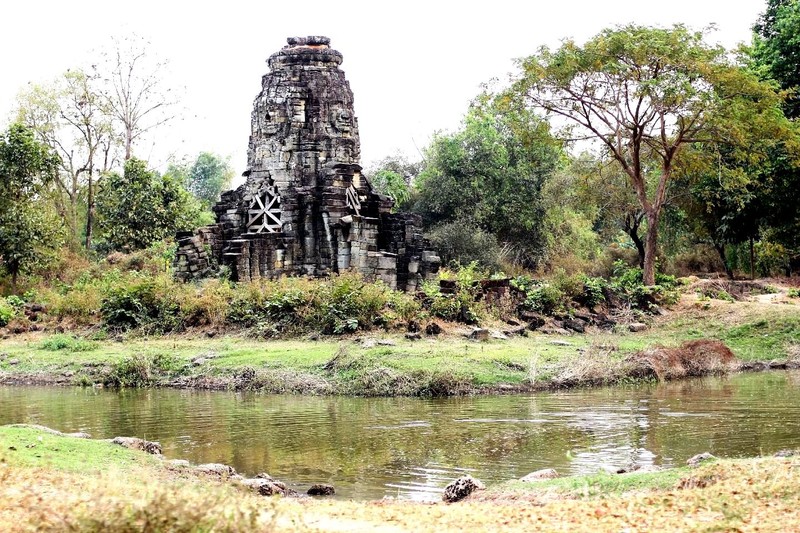
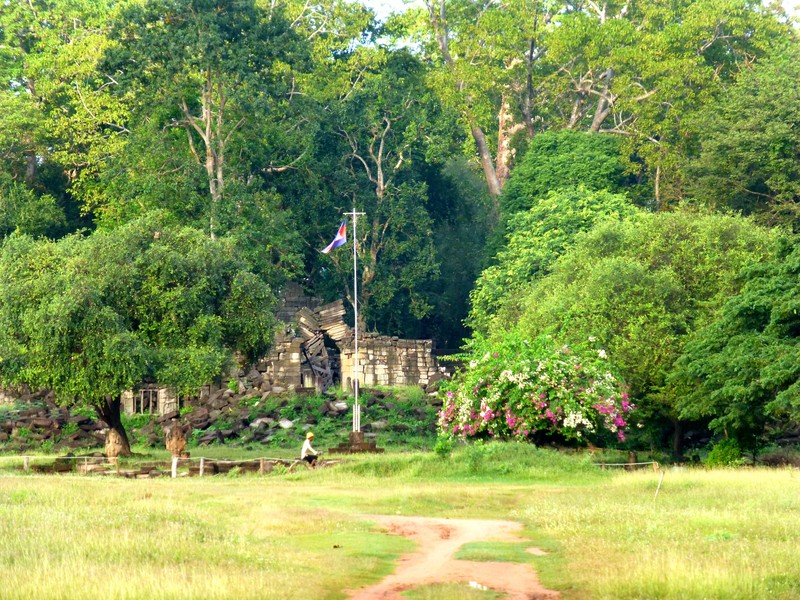
Banteay Chhmar is an ancient temple complex in northwestern Cambodia, in Banteay Meanchey Province near the Thai border. Dating to the Khmer Empire, it is one of the largest and least studied examples of Angkorian architecture outside the famous Angkor region. Its ruins stand among rural settlements and tropical vegetation, away from the country’s main tourist routes.
The site is known for massive stone walls, collapsed towers, galleries of bas-reliefs and remains of an ancient water system. It reveals not only a religious centre but also a settlement connected to royal roads, agriculture and water management. Banteay Chhmar is included on Cambodia’s UNESCO World Heritage Tentative List.
History of the temple complex
The main structures date from the late 12th to early 13th century and are associated with King Jayavarman VII. The architecture reflects the Bayon style, including face towers and extensive sculptural decoration.
According to the commonly presented historical interpretation, the temple commemorated Prince Srindrakumara and four companions who were said to have saved his life during a battle against the Cham. The complex later declined as structures collapsed, vegetation spread and looting damaged the site. Many buildings remain in ruins today.
Architecture of an ancient city
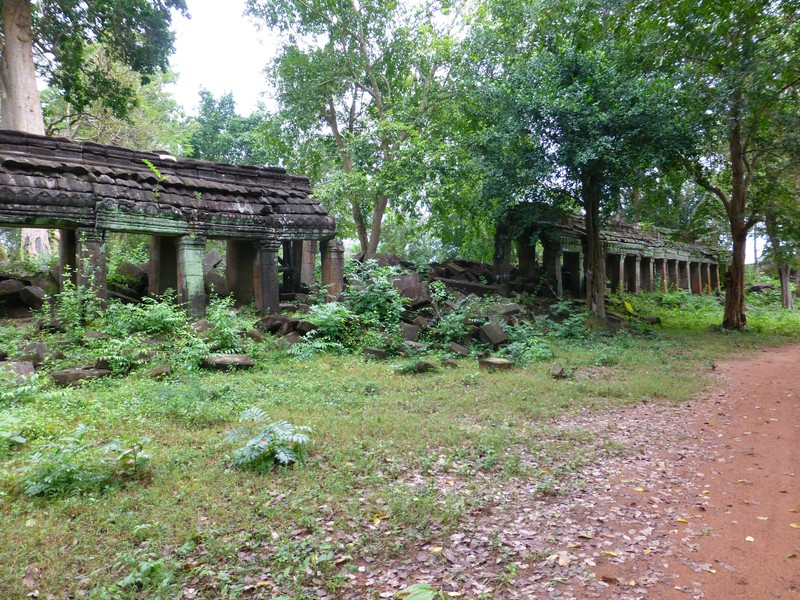
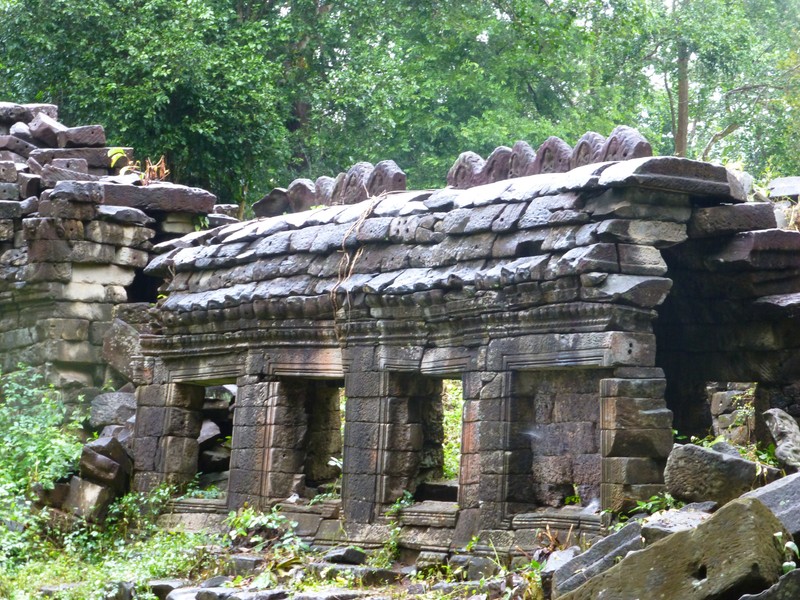
Banteay Chhmar is a large architectural complex rather than a single temple. The main temple area measures about 770 by 690 metres and is surrounded by a wide moat. Galleries, sanctuaries, pools and additional buildings once occupied the interior, while earthworks and other religious structures formed part of the wider site.
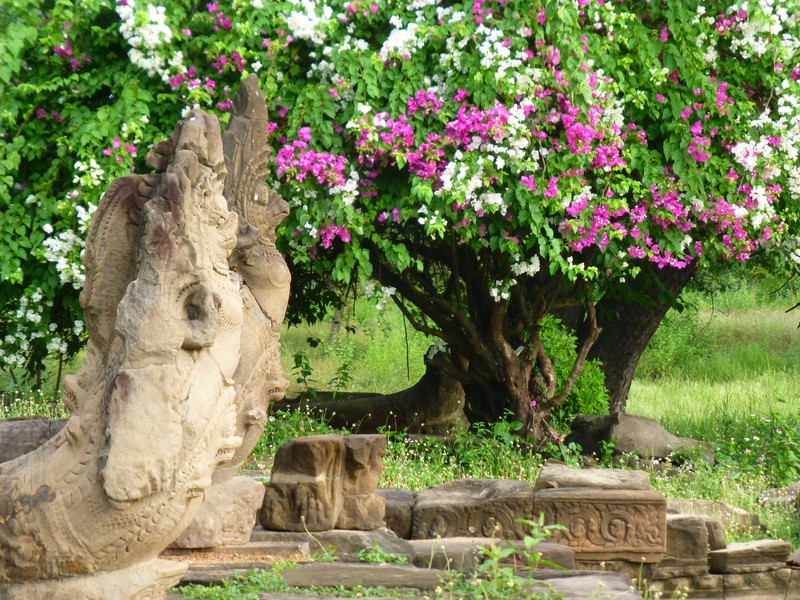
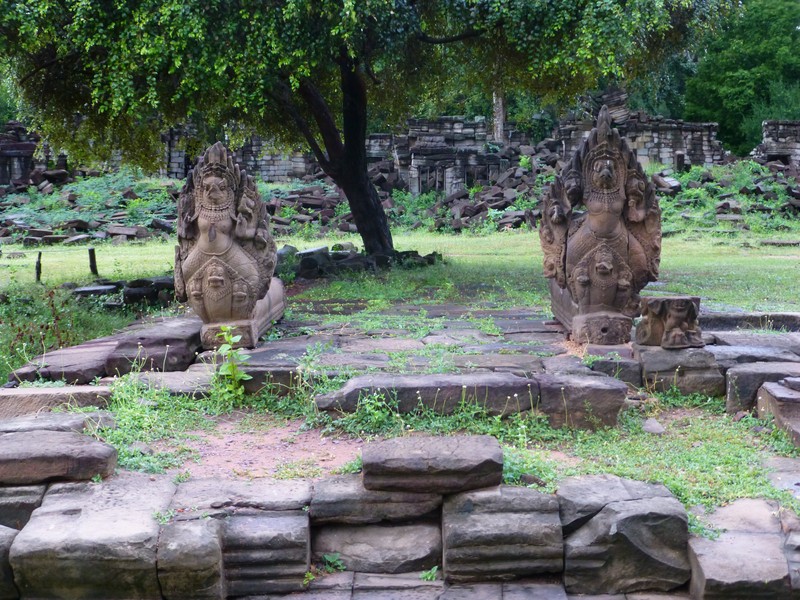
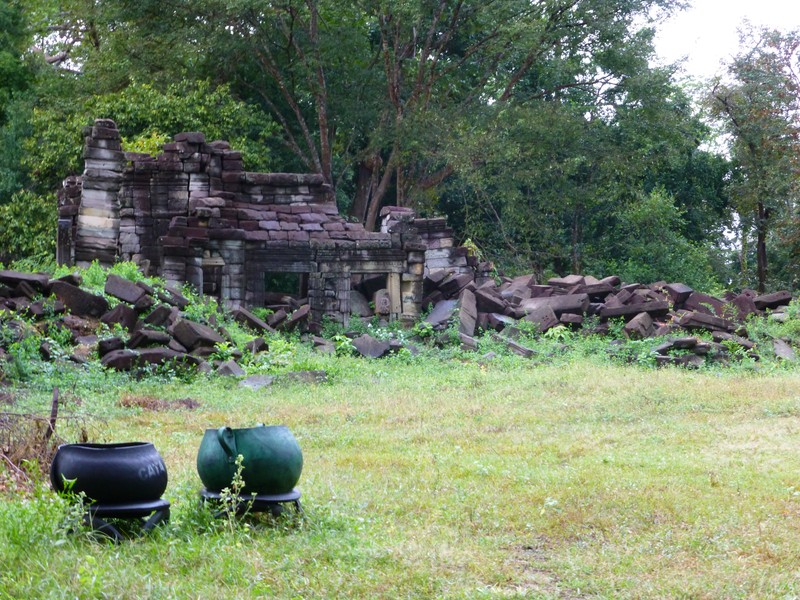
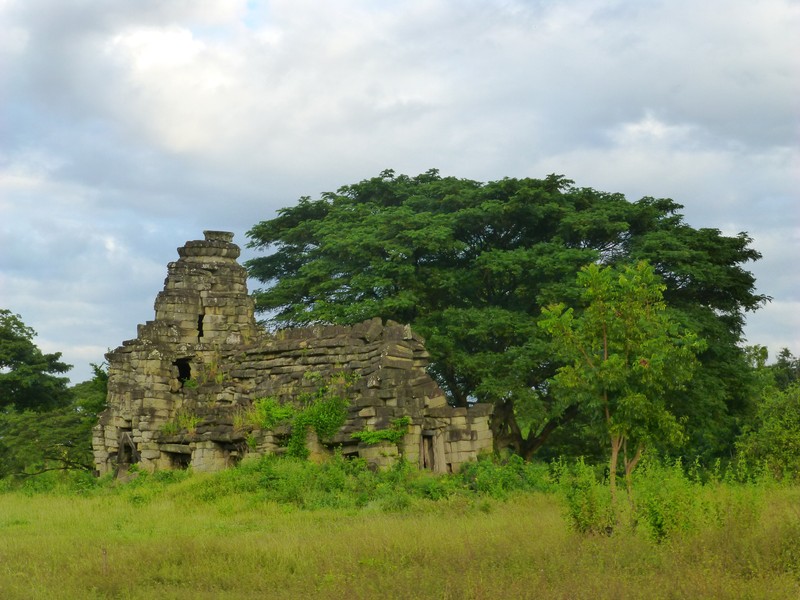
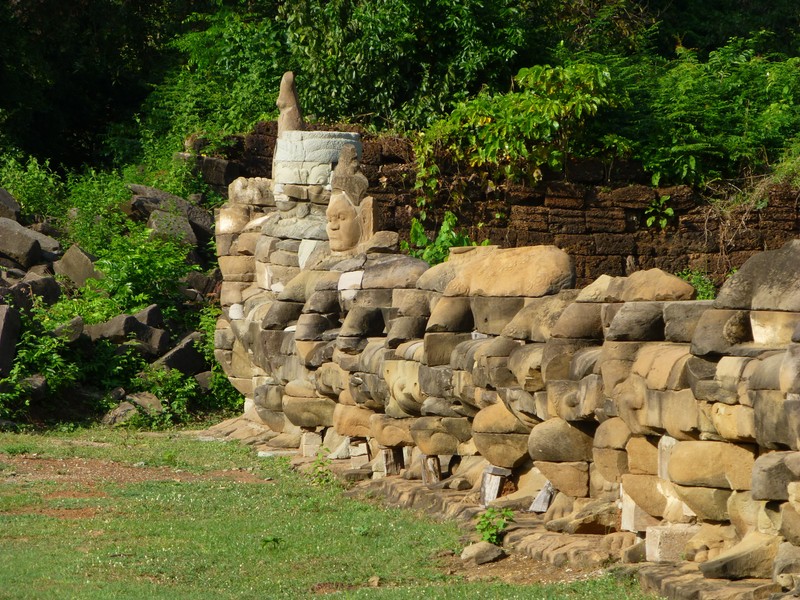
Builders used sandstone and laterite. Visitors can now see fallen galleries, fragments of walls, stone blocks and surviving towers. Walk carefully because some structures are unstable and vegetation may conceal loose stones.
Stone faces and bas-reliefs
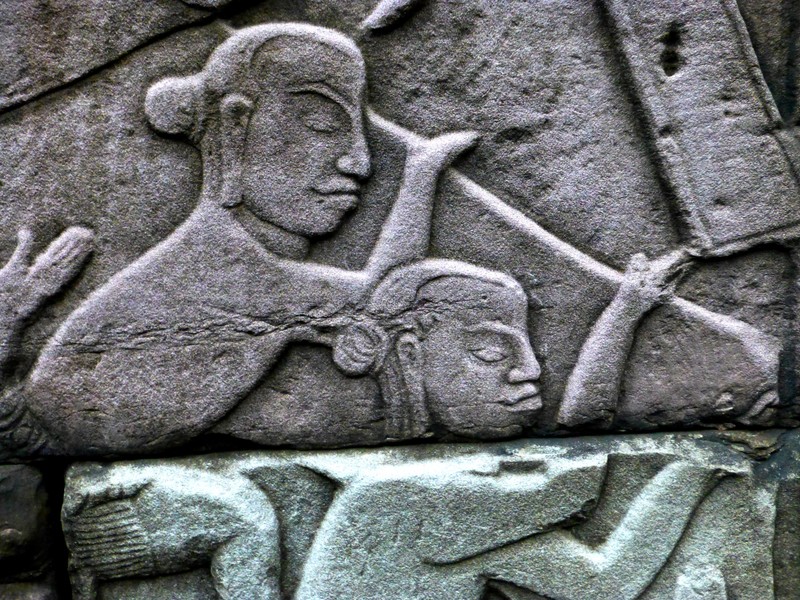
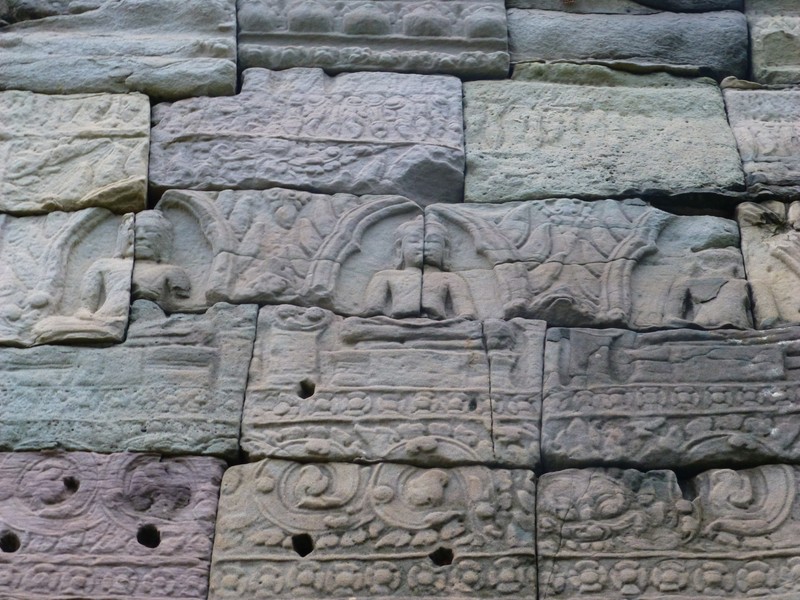
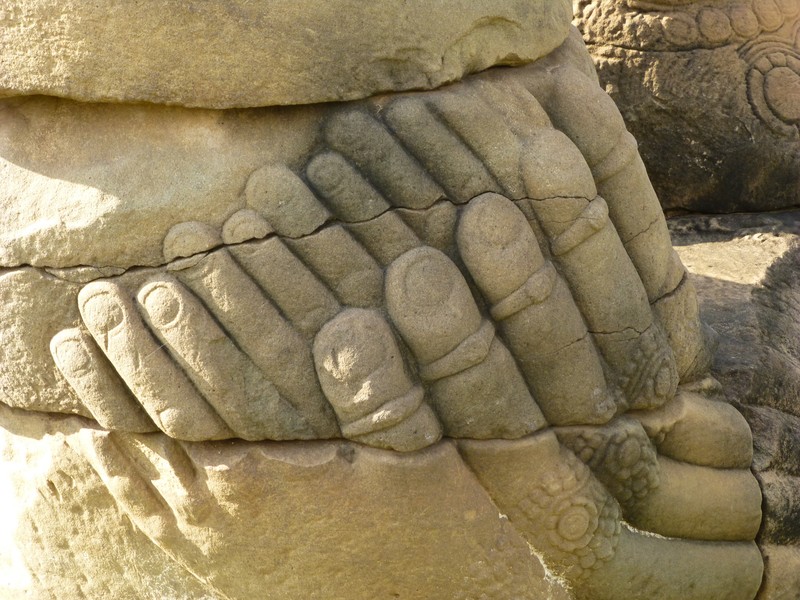
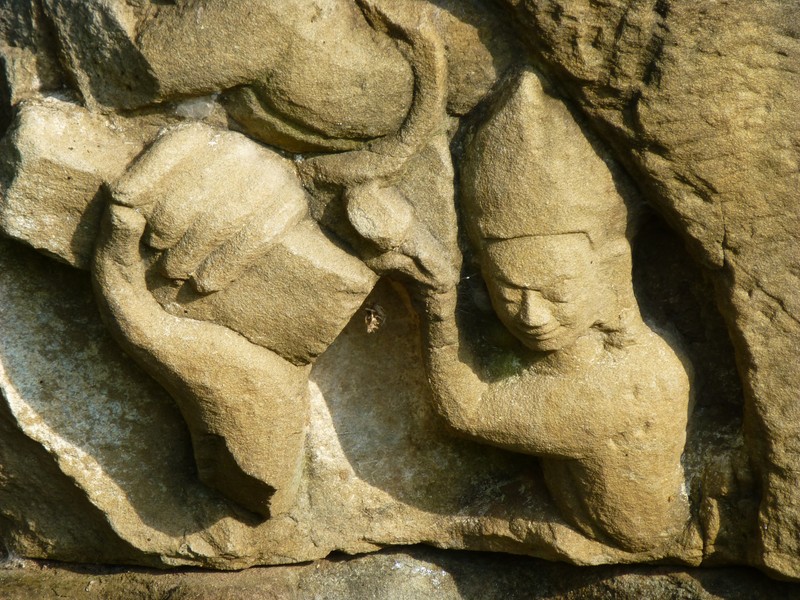
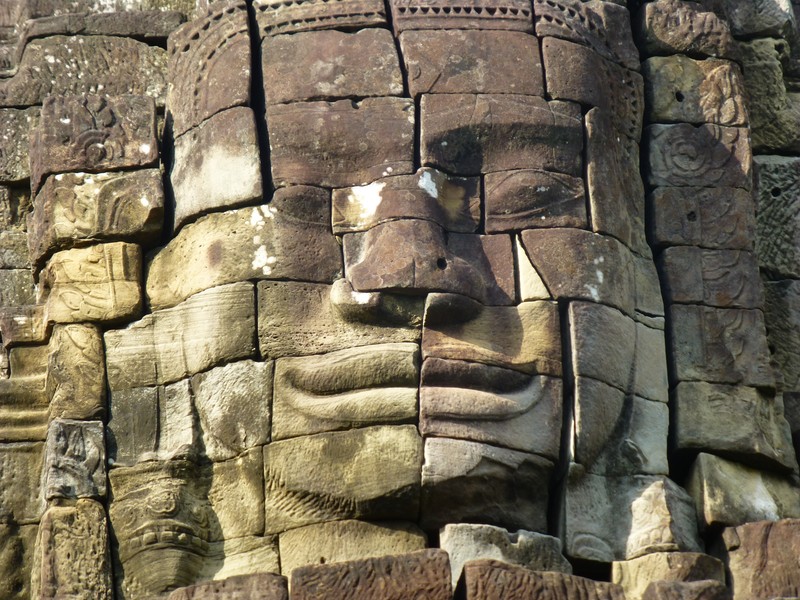
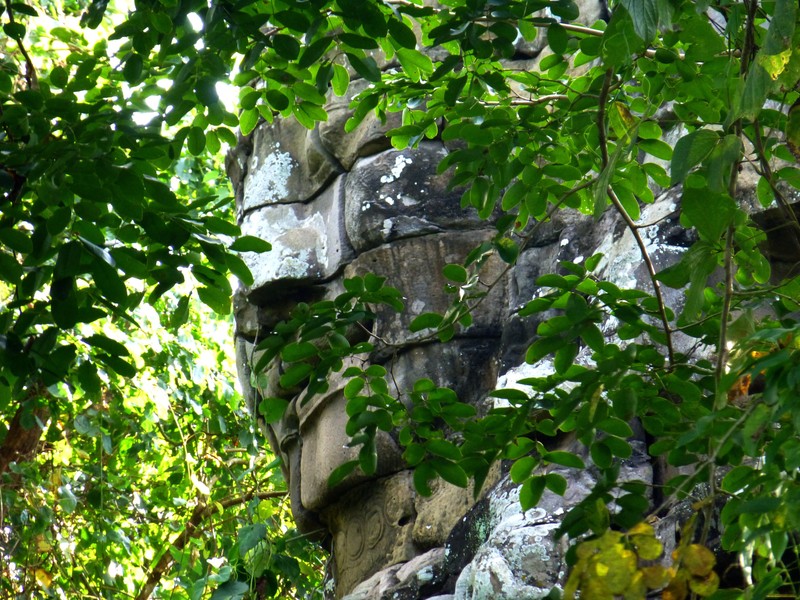
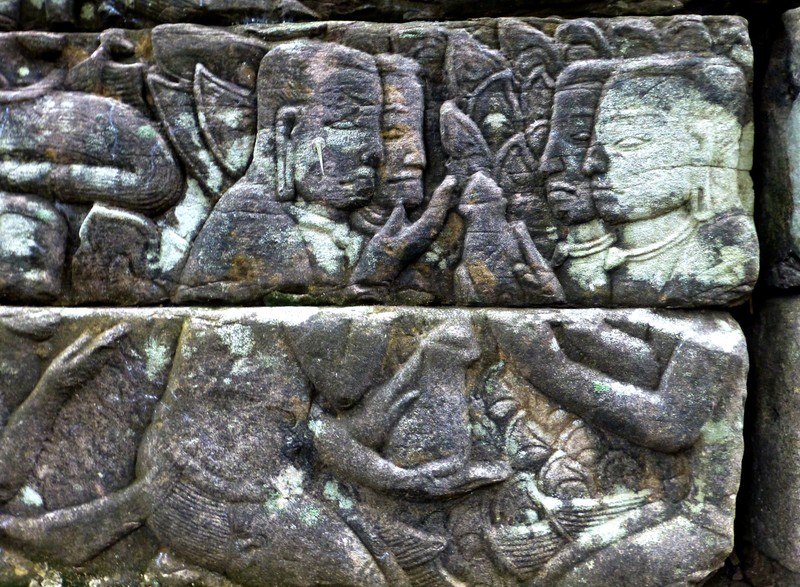
One distinctive feature of Banteay Chhmar is its towers and architectural elements decorated with human faces, recalling the sculptures at Bayon in Angkor Thom. The bas-reliefs are equally important: they depict Khmer-Cham battles, processions, royal ceremonies and scenes of everyday life.
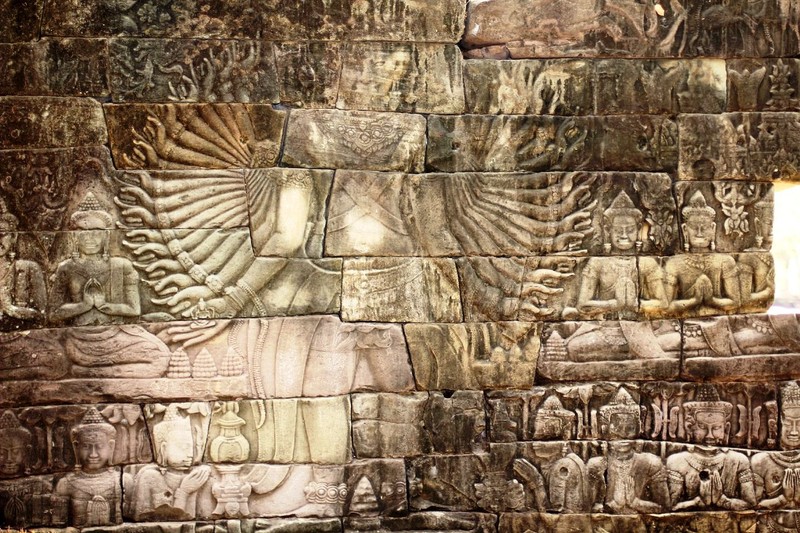
Especially notable are images of the multi-armed Avalokiteshvara on the western gallery. This bodhisattva of compassion highlights the Buddhist character of the complex. Some carvings are damaged or partly hidden by fallen stones, so allow time for a careful visit.
Religious traditions and water management
The complex combines Buddhist, Hindu and local religious motifs, reflecting the spiritual diversity of the Khmer Empire during Jayavarman VII’s reign. Some buildings outside the central enclosure may have served as monasteries or hospitals, although the precise purpose of every structure remains under study.
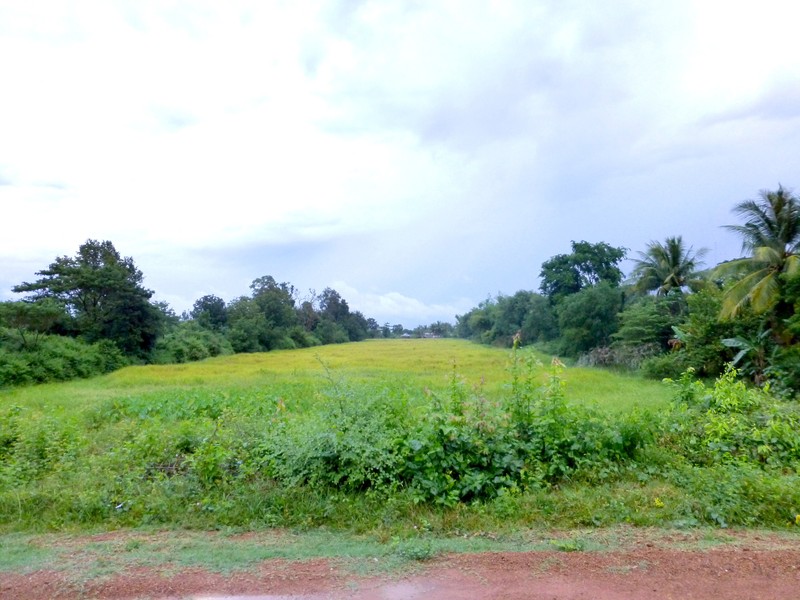
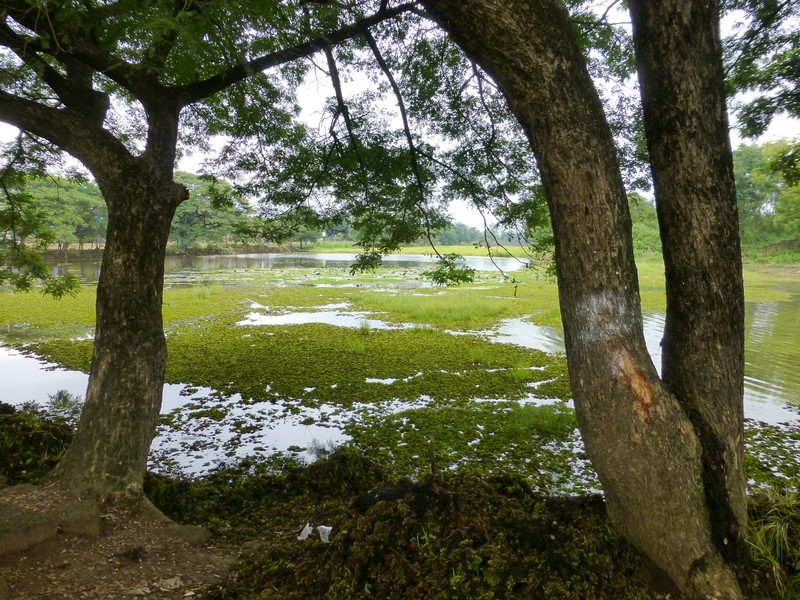
East of the main temple lies the large artificial reservoir known as Rahal, measuring approximately 1.6 by 0.8 kilometres. An artificial island with a sanctuary stood at its centre. The reservoir and associated channels had practical and symbolic roles, connecting temple architecture with agriculture and the surrounding landscape.
Local villages and conservation
Modern villages surround the ruins, and residents work in agriculture, crafts and tourism. Community-based initiatives organise guided visits, homestays and cultural activities, helping local people benefit from tourism while supporting heritage conservation.
Banteay Chhmar is on UNESCO’s Tentative List, which means it is being considered as a possible future World Heritage nomination; it is not yet the same as inscription on the World Heritage List. Conservation work focuses on stabilising vulnerable structures and protecting original stonework.
When to visit and how to get there
The dry season, roughly November to April, is generally convenient for visiting. During hotter months, start early and bring plenty of water. In the rainy season, the vegetation becomes lush, but roads and paths may be slippery.
The complex lies in Banteay Meanchey Province, about 65 kilometres north of Sisophon. Visitors can travel by car, taxi or local transport when available. Check road conditions and return transport before setting out; a local guide can be helpful for locating more distant shrines.
Practical tips and reasons to visit
Bring drinking water, a hat, sun protection and shoes with good grip. Do not climb walls or towers, move stones or cross barriers. Set aside several hours if you want to explore the history in detail.
Banteay Chhmar offers a chance to experience a large Khmer imperial temple city beyond Angkor’s best-known monuments. Its stone faces, bas-reliefs, ruined galleries and ancient reservoirs reveal the architectural and engineering achievements of the period.
Gallery