Massandra Palace
The Massandra Palace is one of the most famous sights of Crimea, which became the filming location for such films as: Hearts of Three, Mad Day or the Marriage of Figaro, Inhabited Island.
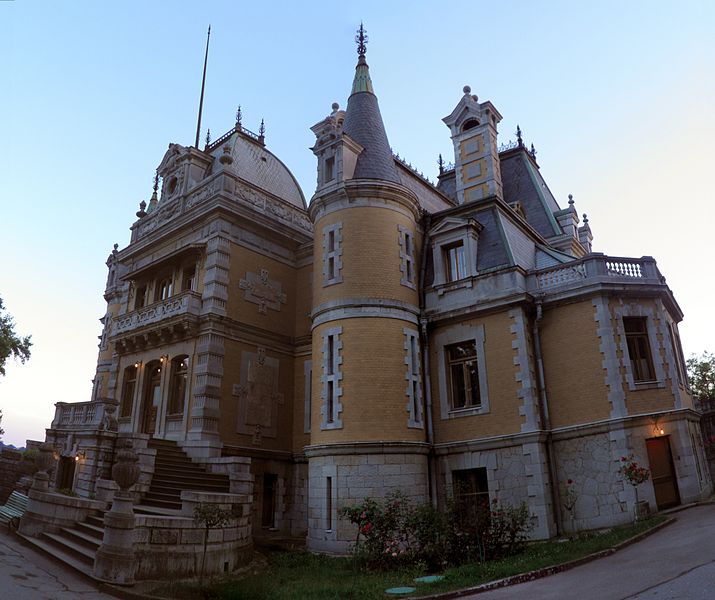
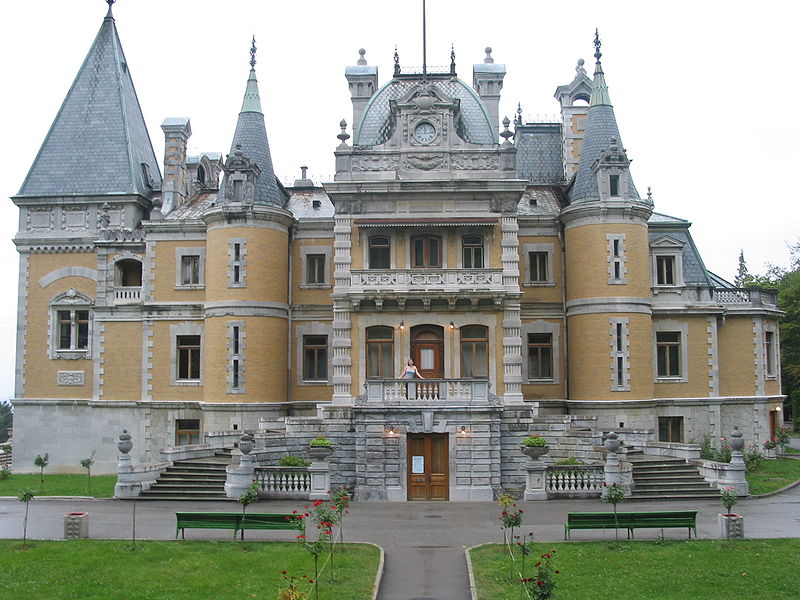
Massandra used to belong to different people, from merchants to princes, and only Prince Vorontsov decided to build a palace in this place. The construction of the Massandra Palace began in 1881 under the direction of the French architect Etienne Bouchard. But when the construction was nearing its end, the architect unexpectedly died, and later in 1882, the prince himself. So the construction was frozen for 10 years. In 1889, Dolgostroy was bought by the Appanage Department for Emperor Alexander III. The completion of the palace was entrusted to Maximilian Mesmacher, who added decorative elements to the building that changed the palace beyond recognition. In 1902, the palace was ready. After Alexander III, the palace was owned by Nicholas II, but none of the royal personages ever stayed overnight in the palace.
After the revolution, a health resort for tuberculosis patients was set up in the palace. After the Second World War, the Magarach Institute of Viticulture and Winemaking was located here for some time. Since 1948, the Massandra Palace has become a state dacha where the leaders of the USSR loved to spend time on vacation. Since 1992, the Massandra Palace has become a museum.
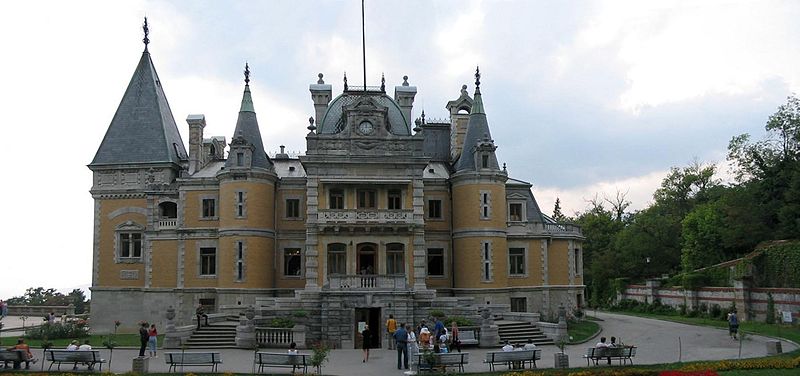
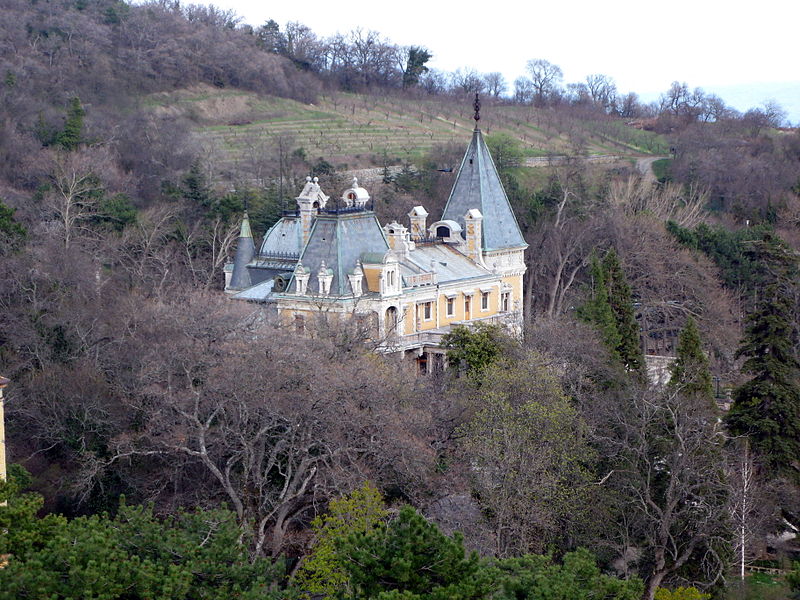
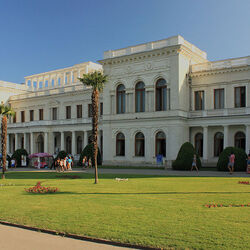
The Massandra Palace is made in different architectural styles. The northern part of the facade is made in the classical style, but on the opposite side - the southern one, the elements of the non-Moorish style are clearly visible. Chimneys rise like minarets, and the main entrance is guarded by two lion sculptures made by Italian sculptor Giovani Bonnani. Everything was well thought out in the palace, there was even a separate electric generator, and the water came from a sacred spring that gushed from under the church of John the Baptist. The temple was located next to the palace, but it was destroyed by the earthquake of 1927, and later completely dismantled, leaving only the altar from which the spring gushed.