Terracotta Army
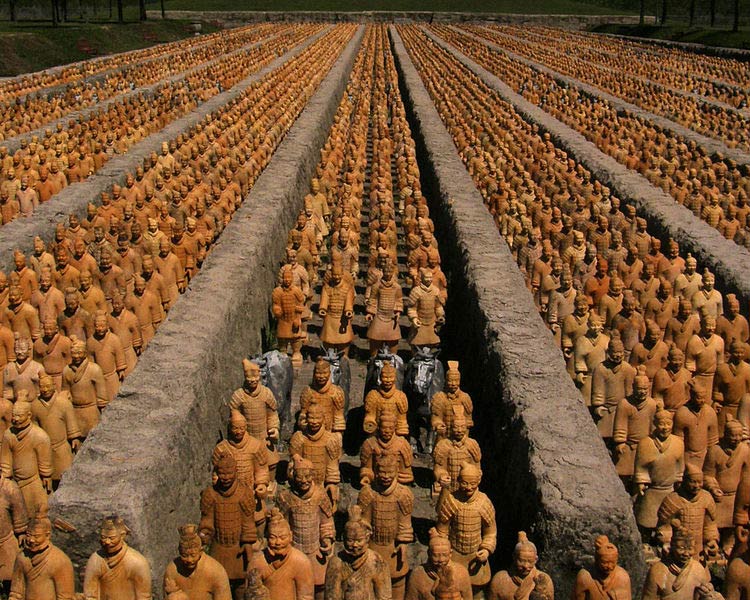
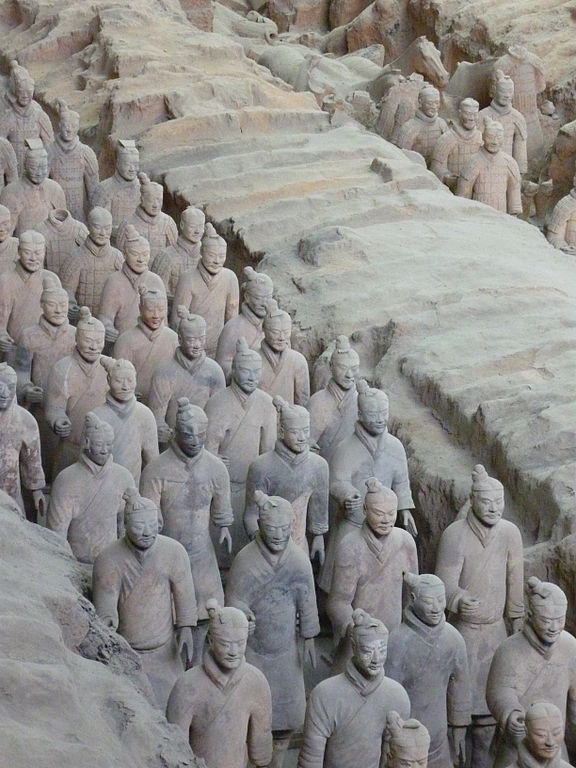
The Terracotta Army is a burial site of clay soldiers near the city of Xi'an, found in 1974 near the tomb of the Chinese emperor. The statues of at least 8,099 soldiers were buried together with Emperor Qin Shi Huang, who united China and connected all the links of the Great Wall. They might have been supposed to protect the emperor in the other world, but besides the terracotta army, the remains of more than 70,000 thousand workers and their families were found nearby.
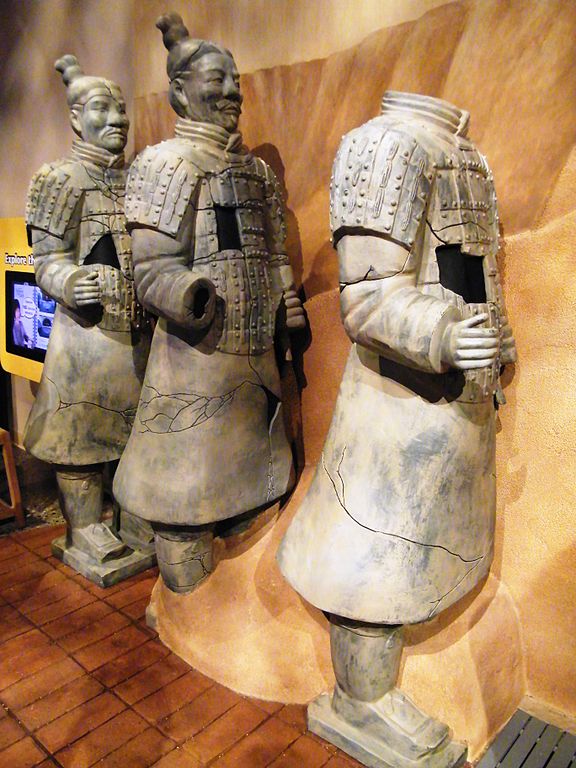
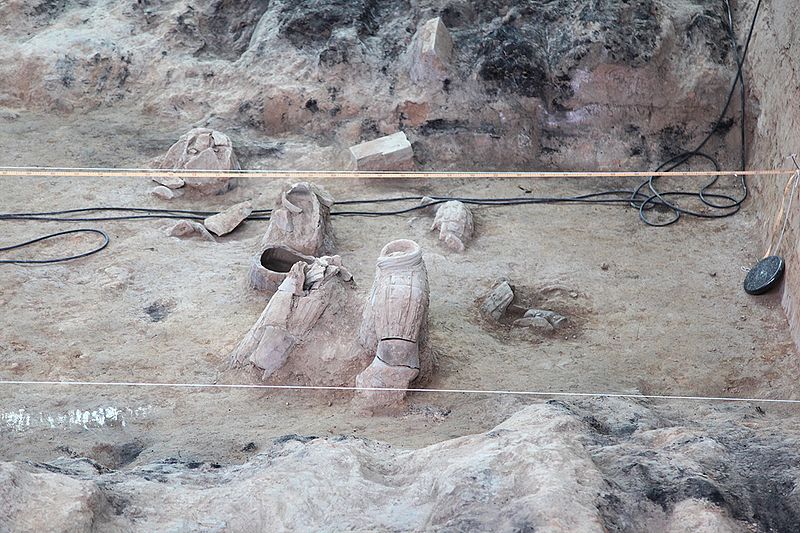
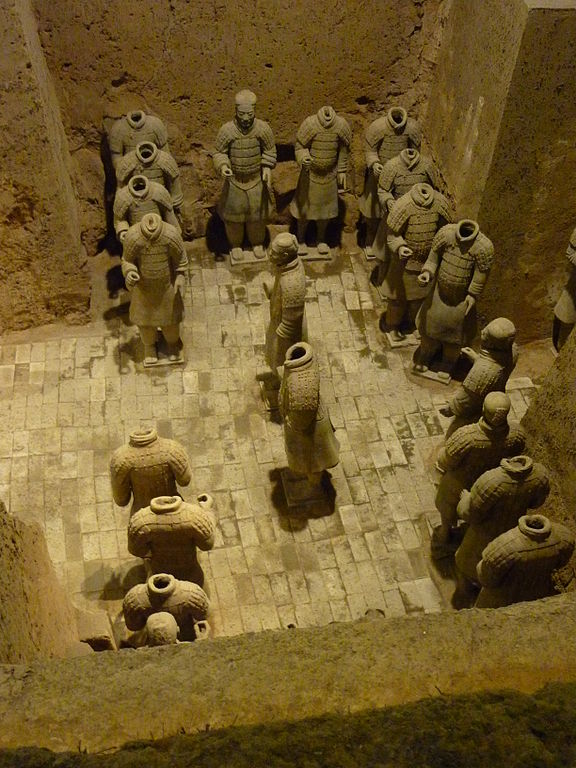
The statues were accidentally stumbled upon by peasants who were trying to drill a well. The terracotta army stands in combat formation in the sail crypts one and a half kilometers from the tomb of the emperor himself on Mount Lishan. During the pollen studies on the statues, it turned out that clay was taken from this mountain for some sculptures, the place of manufacture of the remaining sculptures could not be determined. Horses weighing more than two hundred kilograms were made next to the mountain, soldiers - 135 kg, and it was easier to deliver them from other provinces without damaging them during transportation.
The construction of the tomb began in 247 BC and was completed only 38 years later. In 210 BC, the emperor was buried in the tomb, and according to the records of the Chinese historian Sima Qian, in order to look appropriate and not be bored in the afterlife, a large amount of jewelry was buried with the emperor, as well as 48 concubines and more than 8000 statues of archers, infantrymen and horses were buried alive. After the emperor's death, the tomb was looted, and a fire caused the ceiling to collapse, covering a huge terracotta army. But perhaps this story was invented in order to hide the treasures hidden in the tomb. After all, according to another legend, the tomb of the emperor should be 4 times larger than what has already been excavated at the moment. Excavations are carried out rather slowly so as not to damage valuable archaeological finds.
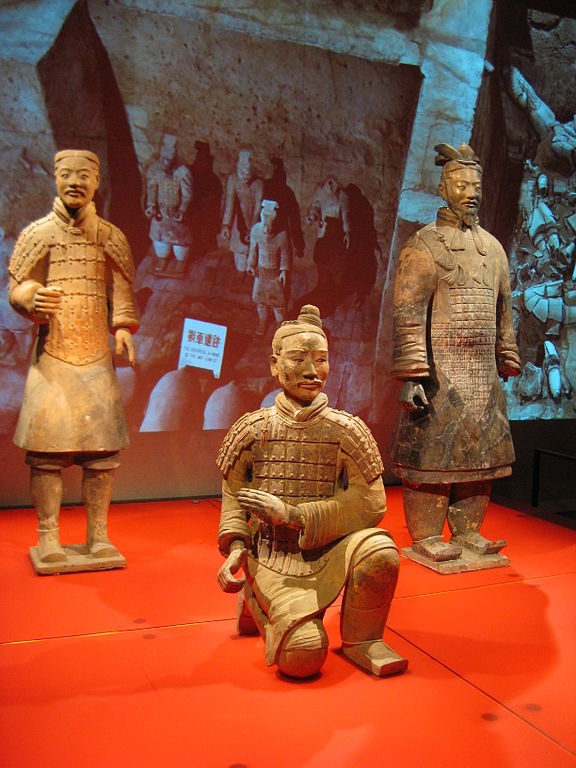
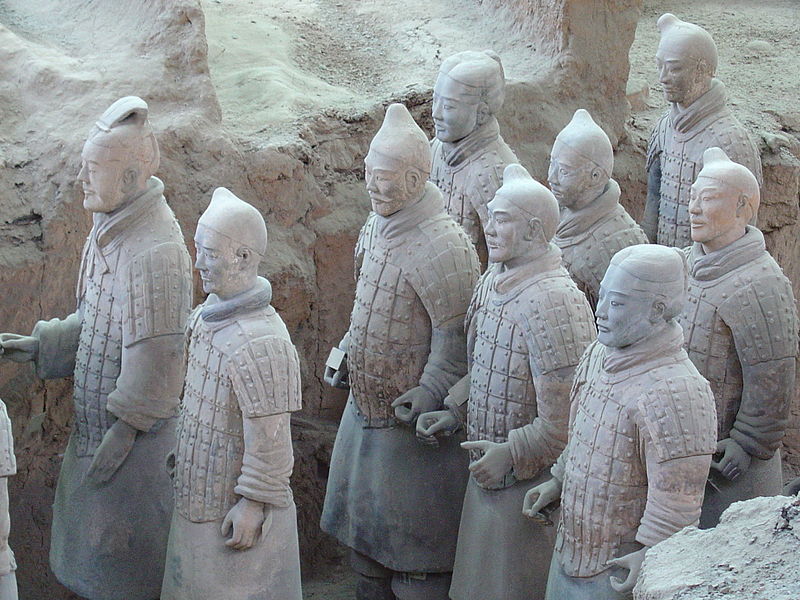
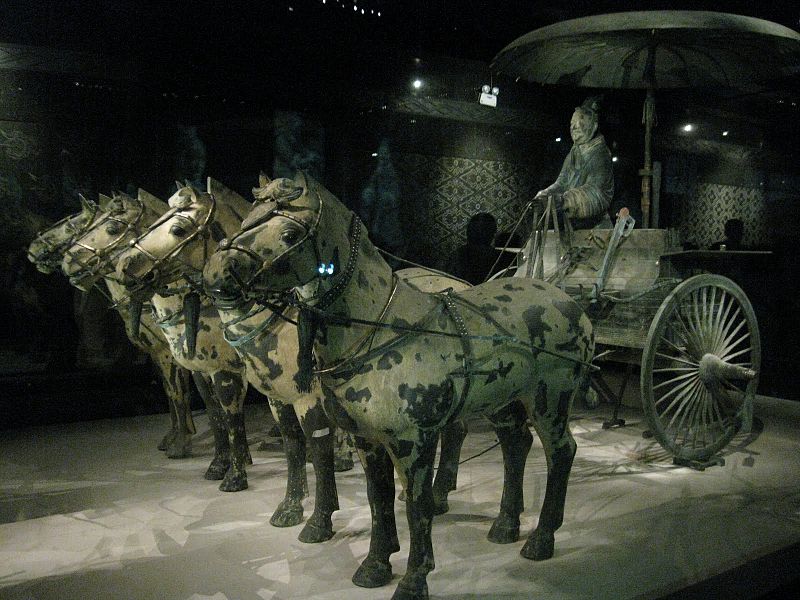
The figure of each soldier was made individually, they are all unique and it is impossible to find 2 similar soldiers. The soldiers of the terracotta army had different ranks, among the types of weapons found: bows, swords, spears and even crossbows. In addition to the clay soldiers, bronze chariots were found in 1980, each drawn by 4 horses. The chariots consisted of more than 3,000 parts, with elements of gold and silver in the classic Chinese style using tigers, phoenixes, and dragons. It is believed that the chariots were supposed to carry the emperor in the afterlife.
Many people call the terracotta army the eighth wonder of the world, and this is no coincidence. It took a lot of effort to make statues with such detailed processing. Scientists still do not know exactly how the sculptures were fired, because huge furnaces for firing statues have not been found. The soldiers' weapons are made of chrome-plated bronze, which makes them shine like new after two thousand years. It is worth considering that chrome plating was invented in the 1920s in Germany.