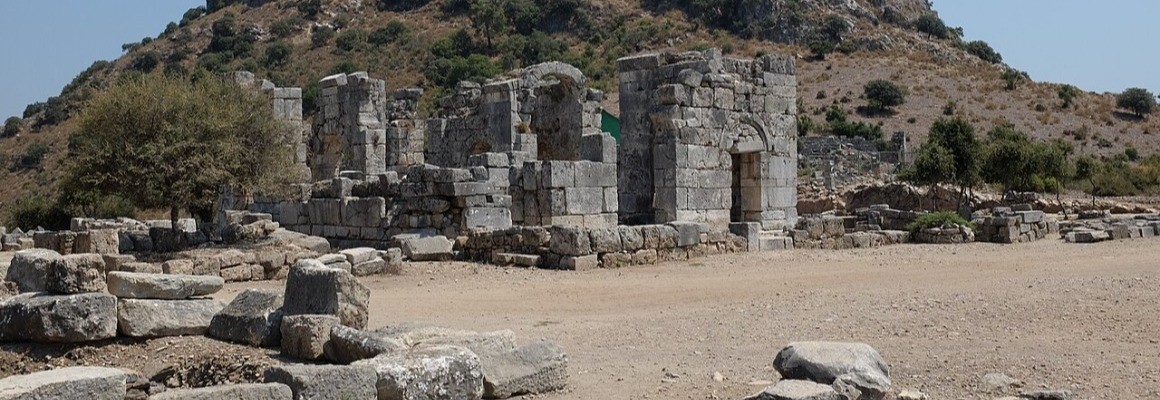
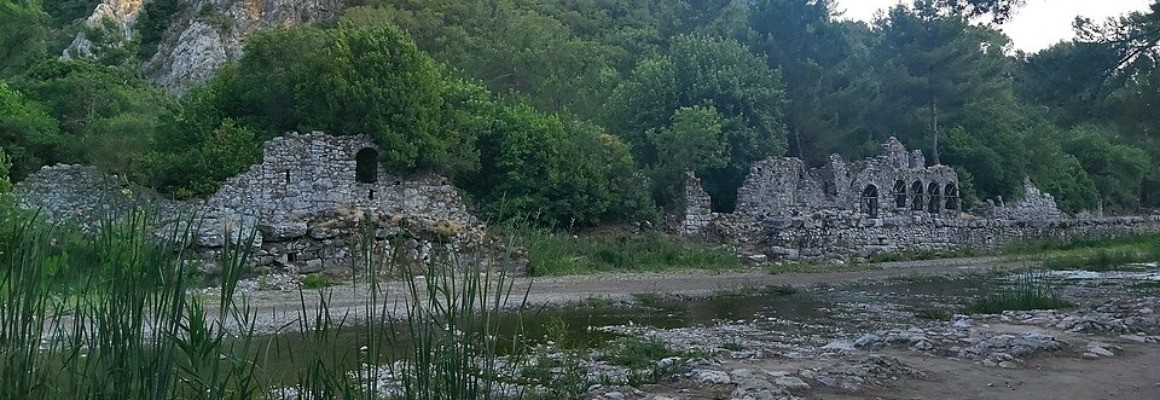
Tlos is one of the oldest cities of ancient Lycia in southwestern modern-day Turkey. Its ruins lie near Yakaköy village in the Seydikemer district of Muğla Province, on a hillside overlooking valleys and mountains. The archaeological site is known for its rock-cut tombs, fortress remains, ancient theatre, stadium and structures from different periods.
History of Tlos
Tlos was an important centre of Lycia, a region with its own cultural, linguistic and political traditions. The name “Dalawa” appears in Hittite sources and is associated with the area, while Lycian inscriptions refer to the city as “Tlawa”. Archaeological evidence indicates a long history of settlement.
The elevated location gave the city a strategic advantage. Its steep slopes offered natural protection and provided views over the surrounding countryside. Tlos participated in the political and economic life of Lycia and was connected at different times with the Persian Empire, Hellenistic kingdoms and Rome.
The city continued to develop during the Roman period, when public buildings and venues for gatherings and entertainment were constructed. With the spread of Christianity, Tlos also became an important religious centre and remained an episcopal city into the medieval period. The area was used in later centuries as well, including during the Ottoman era; in the 18th century, it stood near local trade routes.
The acropolis and fortress
One of the most striking features of Tlos is its acropolis, set on a high rocky hill. Steep slopes provided natural defence, supplemented by fortifications. From the upper area, visitors can enjoy panoramic views of the valleys, mountains and surrounding countryside. The remains of defensive structures reflect the city’s long and layered history.
Lycian rock-cut tombs
The rock-cut tombs are among Tlos’s most remarkable monuments. In Lycia, tombs were often carved into cliffs and designed to resemble the façades of houses or temples. Some feature details reminiscent of columns, pediments and wooden building techniques. Their placement on the slopes illustrates the importance of burial customs in Lycian culture.
The ancient theatre and public buildings
The archaeological area contains the remains of an ancient theatre, a stadium, public structures and sections of city walls. The theatre was an important part of civic life, and its ruins help visitors imagine the scale of the ancient settlement. Many buildings survive only in fragments, including stone foundations, wall sections and architectural details.
Lycian culture and landscape
The Lycians developed their own inscriptions, distinctive rock-cut tombs and regional networks. At Tlos, local traditions combined with influences from Greek and Roman culture. The ruins blend into a hilly landscape, and different points along the route offer views of the valley and mountain horizons.
How to get to Tlos
Tlos is in the Seydikemer district of Muğla Province. The most convenient options are travelling by car or joining an excursion from coastal resort areas, including the region around Fethiye. Journey times depend on the starting point. If travelling by public transport, check connections and return options in advance.
Best time to visit and practical tips
Spring and autumn are generally comfortable seasons for exploring the ruins. Summer can be hot, and shade is limited in exposed areas, so an early visit is advisable. Check current opening hours, admission fees and visitor rules before travelling. Allow several hours, wear sturdy footwear, and bring water and sun protection. Avoid climbing unstable walls or touching fragile archaeological features.
Why visit Tlos
Tlos brings Lycian history to life through the remains of an ancient city. Its rock-cut tombs, acropolis, theatre and mountain scenery make it a rewarding destination for travellers interested in archaeology, ancient civilisations and historic sites away from major resorts.
Gallery