Las Médulas is an extraordinary historic landscape in north-western Spain, in the province of León, within the autonomous community of Castile and León. It is known for reddish rock towers, deep ravines, and slopes covered with chestnut trees. Its unusual mountain shapes were formed not only by natural erosion but also by centuries of human activity. In antiquity, the area contained some of the largest gold-mining operations of the Roman Empire.
In 1997, Las Médulas was added to the UNESCO World Heritage List. Its importance lies in the unique combination of archaeological remains and natural scenery, which shows how dramatically ancient technology could transform the environment. Today, abandoned mines, rock formations, forests, and viewpoints attract visitors interested in history, nature, and hiking.
History of the Roman Gold Mines
Gold deposits in the Las Médulas area were exploited before the arrival of the Romans, but large-scale mining began in the first century AD, after the territory became part of the Roman Empire. Gold was extracted here for roughly two centuries and played an important role in the imperial economy. In terms of the scale of ancient mining, Las Médulas is one of the most remarkable surviving examples of Roman engineering.
The Romans used a method known as ruina montium, often translated as “breaking down the mountains.” A network of canals and underground galleries was cut into the terrain, and large volumes of water were then directed through the system. The pressure weakened and collapsed sections of the loose rock. The resulting material was washed to separate gold particles from the soil.
The system required water from distant sources. It was transported through an extensive network of channels, some running considerable distances from the mines. These hydraulic works demonstrate the engineering knowledge and resources invested in extracting precious metal.
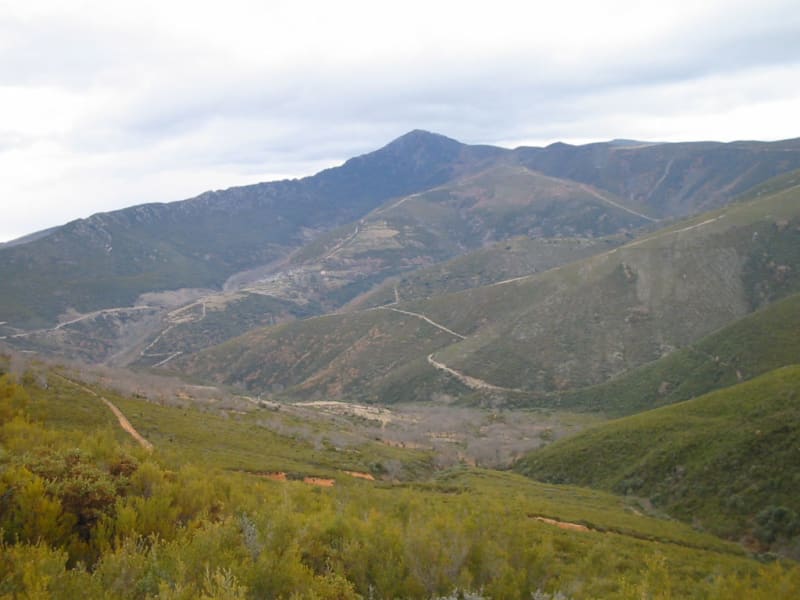
Mining ended in the early third century, after which natural processes gradually reshaped the area. The absence of later large-scale industrial exploitation helped preserve many traces of the ancient operations. Visitors can still see steep red slopes, spoil heaps, tunnels, and unusual rock formations that reveal the history of Roman mining.
Red Cliffs and an Unusual Landscape
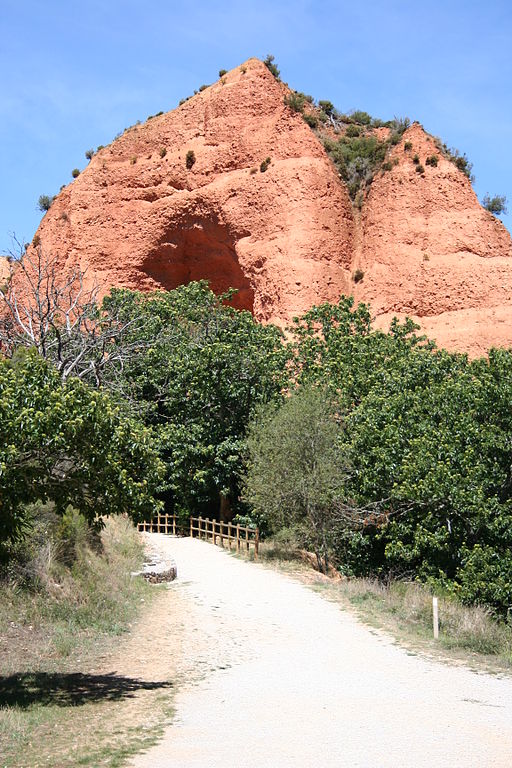
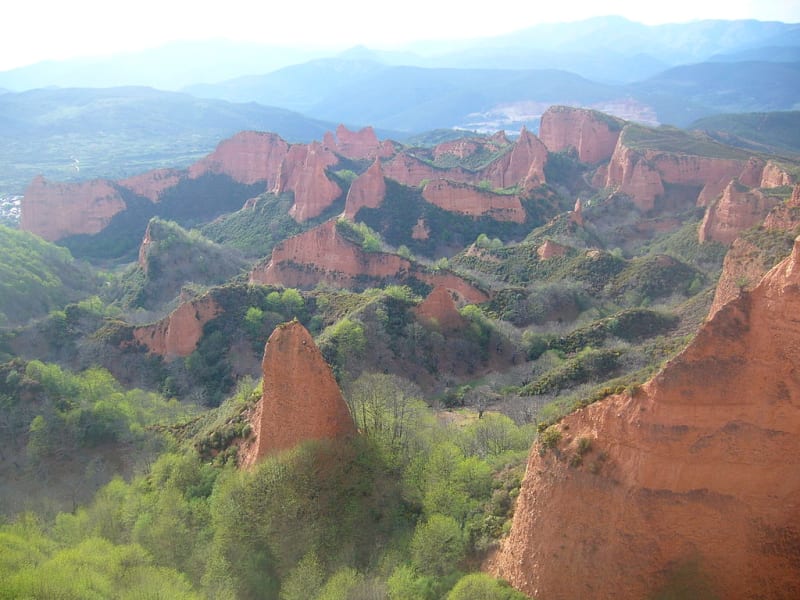
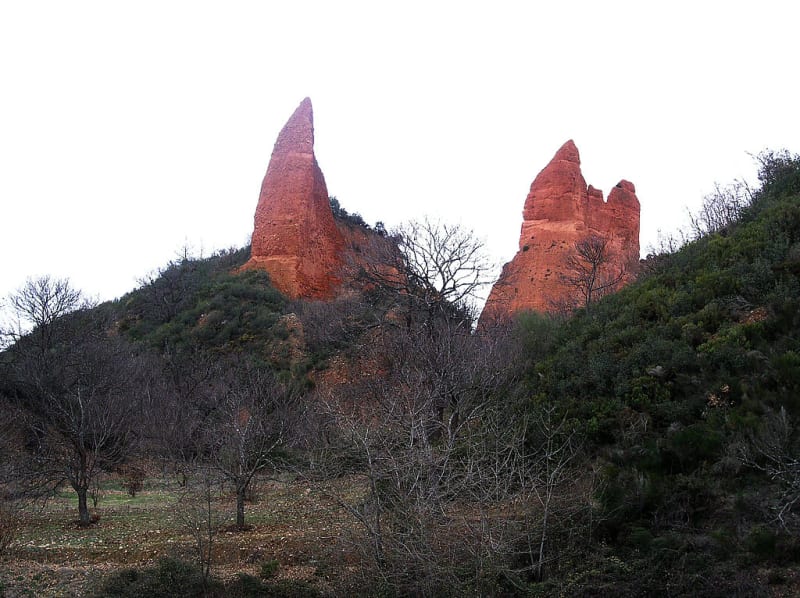
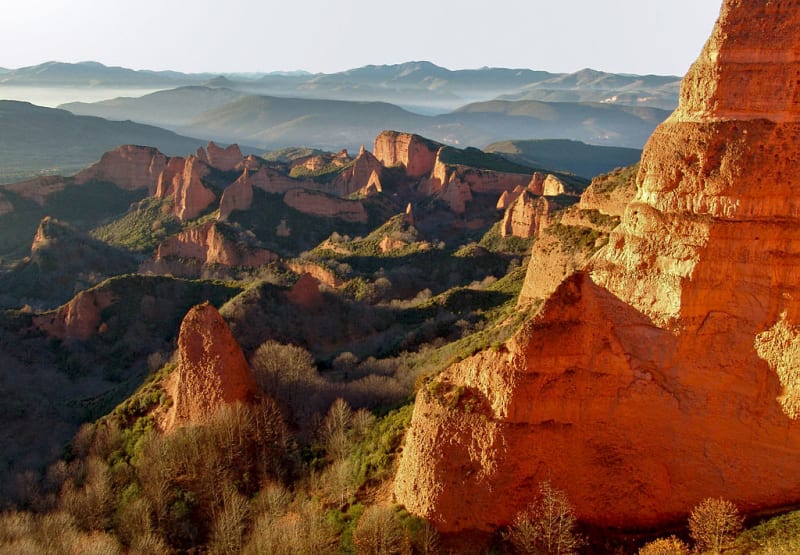
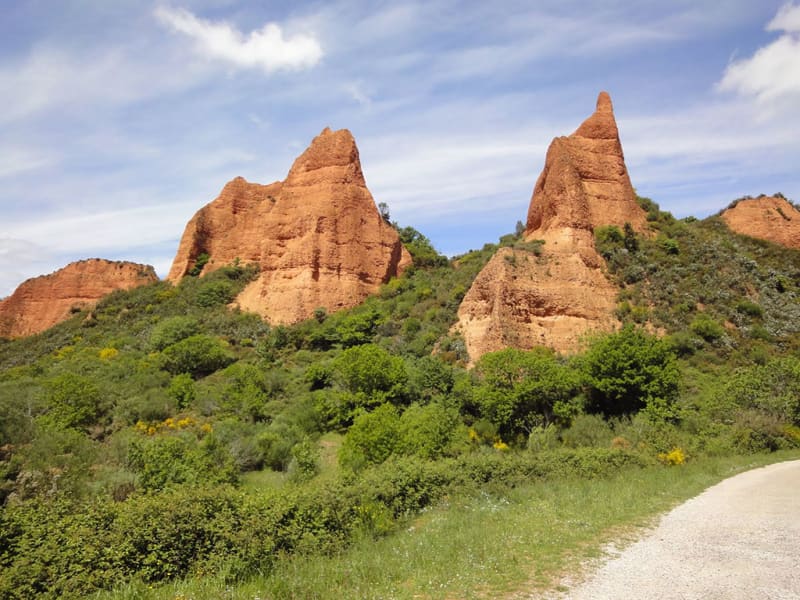
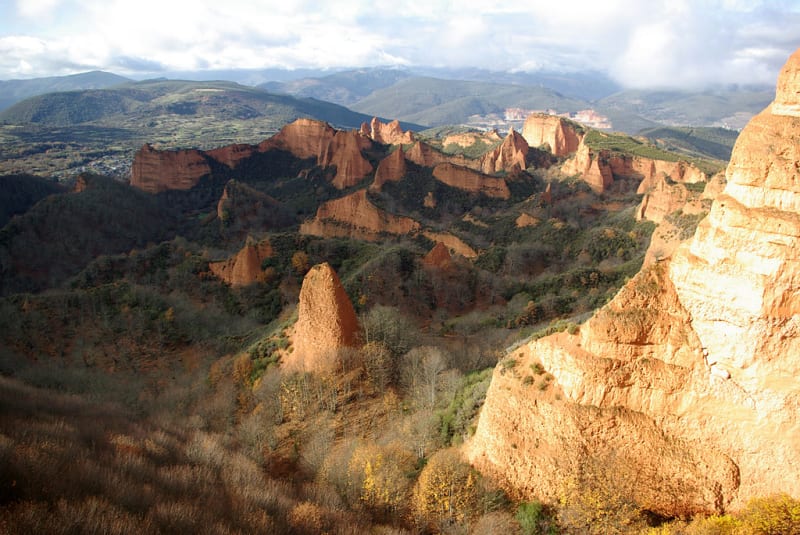
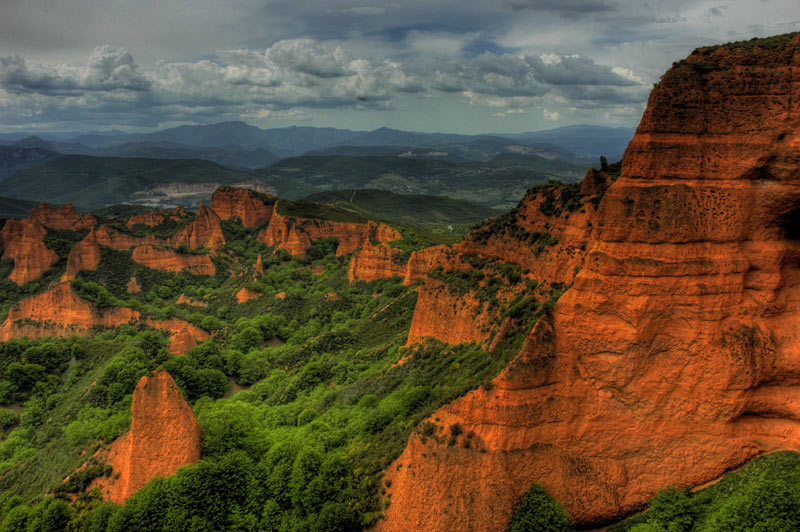
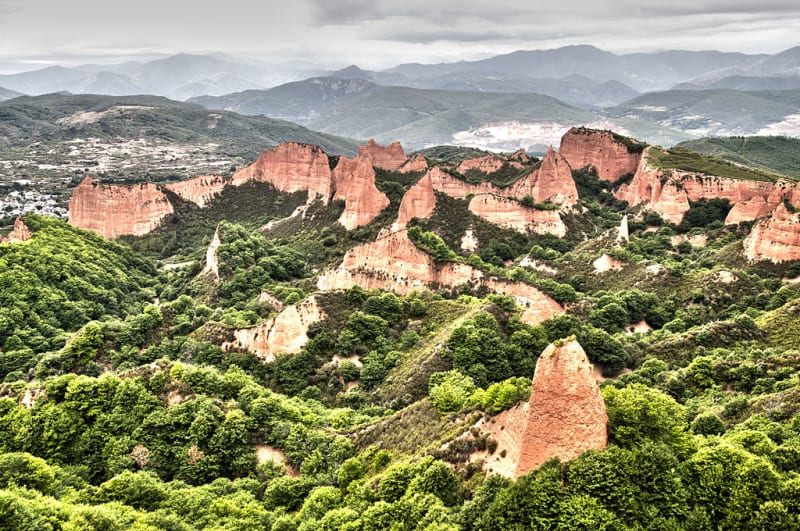
The defining feature of Las Médulas is the contrast between reddish-orange rock and dense green vegetation. Sharp formations rise above the woods, some peaks resemble towers, and the slopes are cut by deep gullies and channels. The terrain reflects both ancient mining activity and natural erosion.
The landscape is particularly striking in the soft light of early morning or evening, when shadows emphasize the relief and the red hues become more vivid. In spring and summer, the rocks are surrounded by greenery; in autumn, chestnut trees take on golden and copper tones. The area attracts not only archaeologists but also photographers, artists, and travellers looking for unusual scenery.
Las Médulas is not an entirely natural formation. Its present appearance results from the interaction of human activity and natural processes over many centuries. This combination gives the site exceptional historical and cultural value.
Orellán Viewpoint
One of the best-known views of Las Médulas can be seen from Mirador de Orellán, approximately eight kilometres from the village of Las Médulas. The viewpoint overlooks the red rock formations, wooded slopes, and distinctive peaks shaped by ancient mining.
The viewpoint is especially popular with photographers. On clear days, the outlines of the rock towers and the scale of the former mining area are easy to appreciate. Check access conditions and road information before travelling. During the tourist season, the viewpoint can be busy, so early morning is a good choice for a quieter visit.
Caves and Traces of Ancient Mining
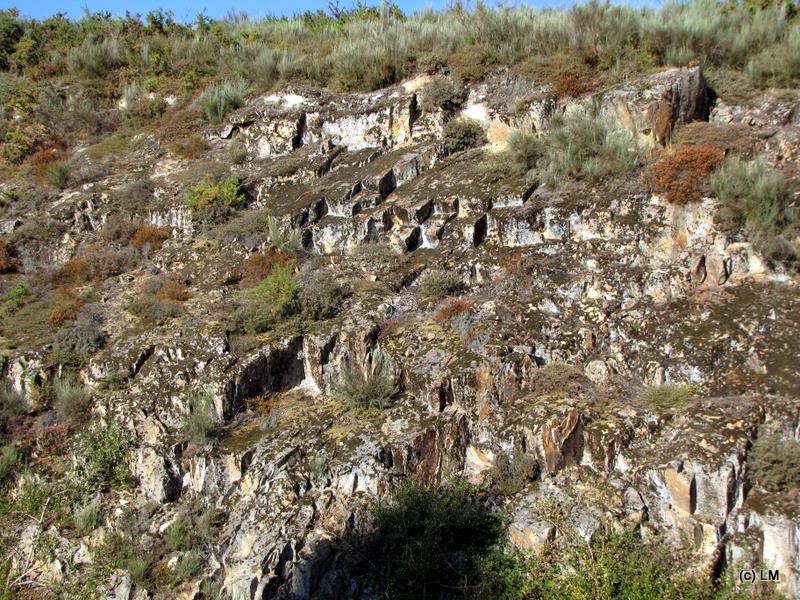
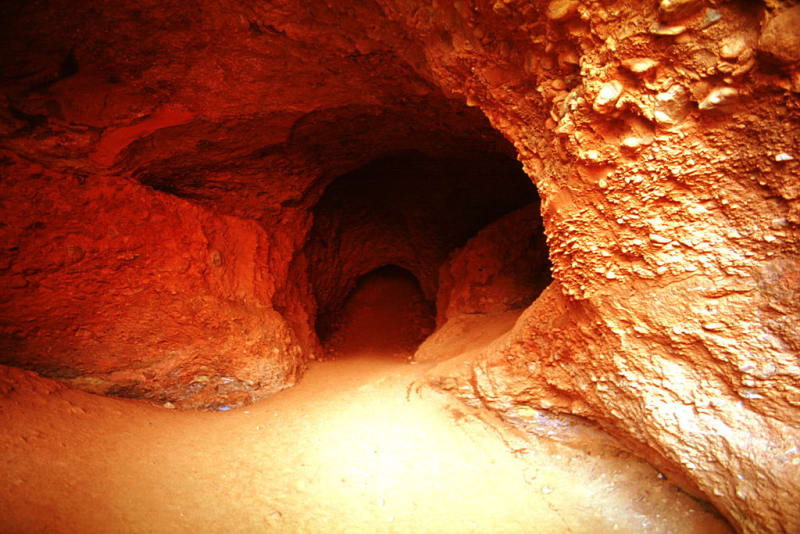
Las Médulas preserves sections of old workings, passages, and cavities associated with Roman gold extraction. Notable features include Cueva Encantada, or “Enchanted Cave,” and Cuevona, often translated as “Large Cave.” These formations help visitors imagine the scale of the rock removal required to obtain gold.
Not every passage is safe for independent exploration, and access to some areas may be restricted because of unstable rock or conservation rules. Follow signs and stay behind barriers. Local guides and the information centre can help explain the mining history and the ancient hydraulic system.
Chestnut Forests and the Natural Environment
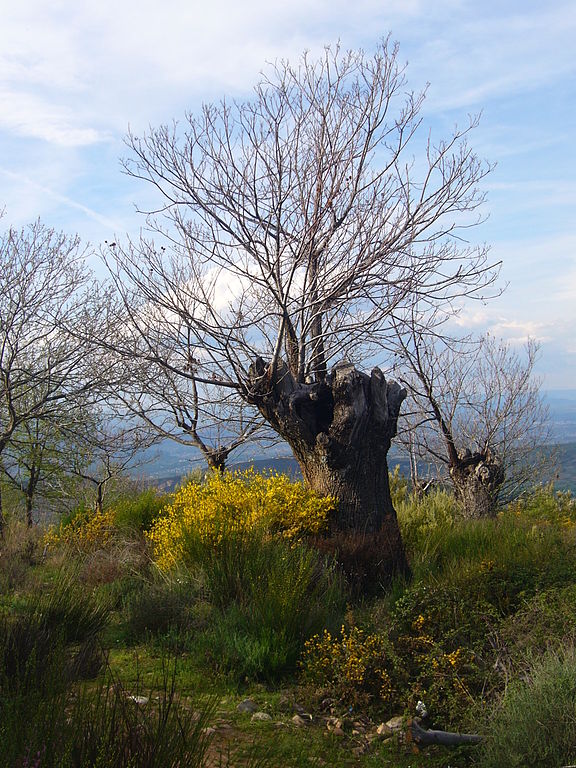
Despite the extensive changes made to the landscape in antiquity, Las Médulas is now rich in vegetation. Chestnut trees, oaks, and other plants typical of the region cover the slopes. The woods create a striking contrast with the red rock and provide shade along some walking routes.
Chestnut groves have long been part of the area's cultural landscape. In autumn, visitors may see ripening chestnuts and enjoy warm foliage colours. The modern scenery combines archaeological traces, forests, and rural land.
Walking Trails and Hikes
Las Médulas can be explored on foot using trails of different lengths. Popular routes pass through the village, chestnut groves, and areas with views of the red formations. Walking allows visitors to examine the landscape closely, spot traces of ancient workings, and appreciate the scale of the terrain transformed by Roman engineers.
Allow several hours to see the main attractions. If you want to take longer trails, visit viewpoints, and explore archaeological features in more detail, you can spend most of the day in the area. Comfortable shoes are important because some paths are uneven, include climbs, and may become slippery after rain.
In summer, bring water, a hat, and sun protection. Check the weather, trail access, and current restrictions before setting out. Do not climb unstable rocks or enter unequipped tunnels.
Archaeological Centre and Nearby Attractions
The village of Las Médulas has an archaeological information centre where visitors can learn about the area's history, Roman gold-mining techniques, and the formation of the modern landscape. A visit helps explain the cliffs, channels, and mining remains seen along the trails.
The trip can be combined with other destinations in the El Bierzo region. Nearby attractions include Ponferrada and its historic Templar castle, Villafranca del Bierzo, and the Monastery of Santa María de Carracedo. The region is also connected with historic pilgrimage routes to Santiago de Compostela, making it possible to extend the visit into a broader journey through north-western Spain.
Best Time to Visit
Las Médulas can be visited in every season, and each offers a different view of the landscape. In spring, the slopes become especially green; in summer, the contrast between vegetation and red rock is striking; and in autumn, the forests develop warm colours. Winter is usually quieter, but cool and rainy weather can affect trail conditions.
Morning and evening are good times for photography because the sunlight emphasizes the shape of the rocks. In warmer months, start earlier if you plan a long walk. Before travelling, check the information centre's opening hours, cave access conditions, and the availability of viewpoints.
How to Get to Las Médulas
Las Médulas is in the El Bierzo area of León province, about twenty kilometres from Ponferrada. Travelling by car from Ponferrada or other towns in the region is generally the most convenient option. Roads pass through rural areas and small settlements, and reaching some viewpoints may require an additional drive.
If using public transport, check bus routes and schedules in advance because services in rural areas may be limited. During the tourist season, also check parking arrangements and access to the most popular sites. Allow at least half a day to explore the area properly.
Why Visit Las Médulas
Las Médulas is a rare place where the history of ancient industry has become part of a remarkable landscape. Red cliffs, forests, old workings, and traces of Roman water channels reveal an ambitious engineering project created almost two thousand years ago. It is more than a scenic destination: it is a cultural landscape that helps explain Roman technology and its impact on the environment.
Las Médulas is an excellent destination for anyone interested in archaeology, ancient Roman history, geology, and hiking. Its unusual terrain, historic remains, and forest trails make it one of the most memorable places in Castile and León.
Gallery