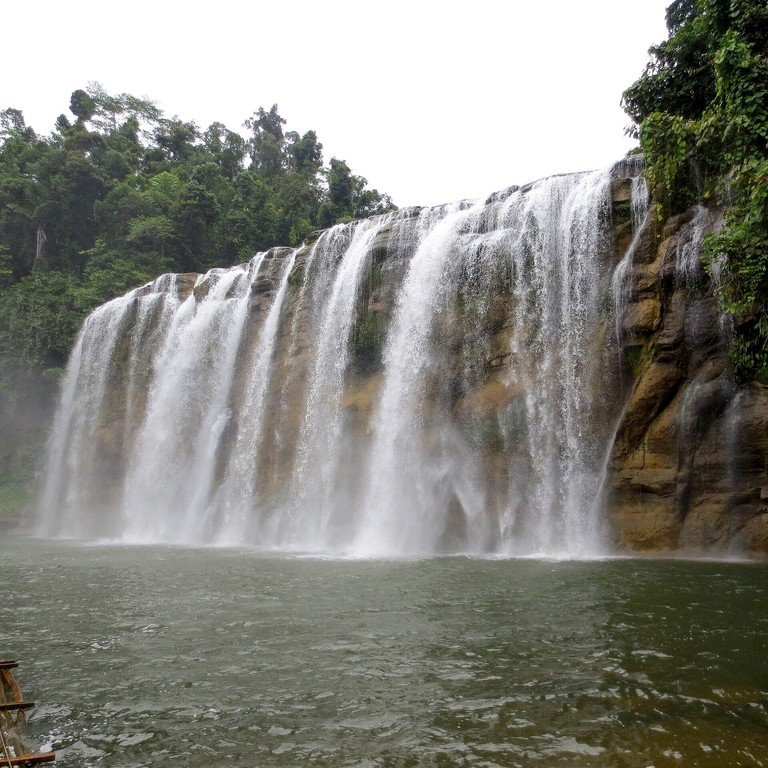
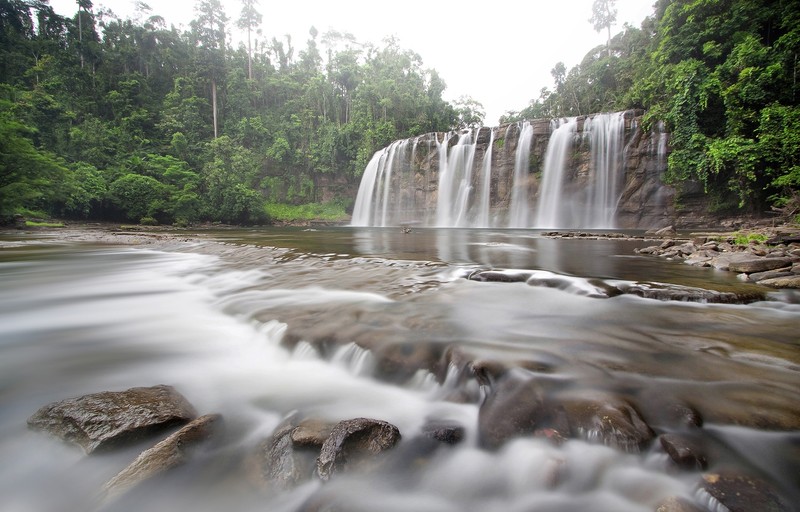
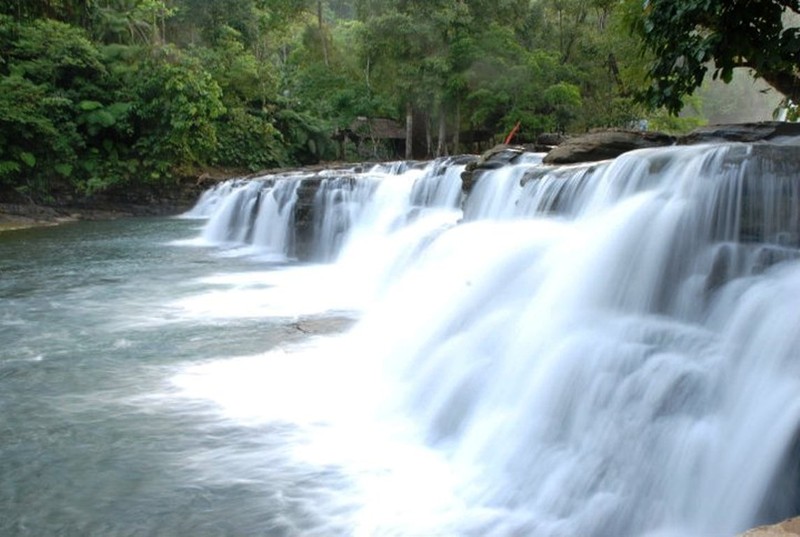
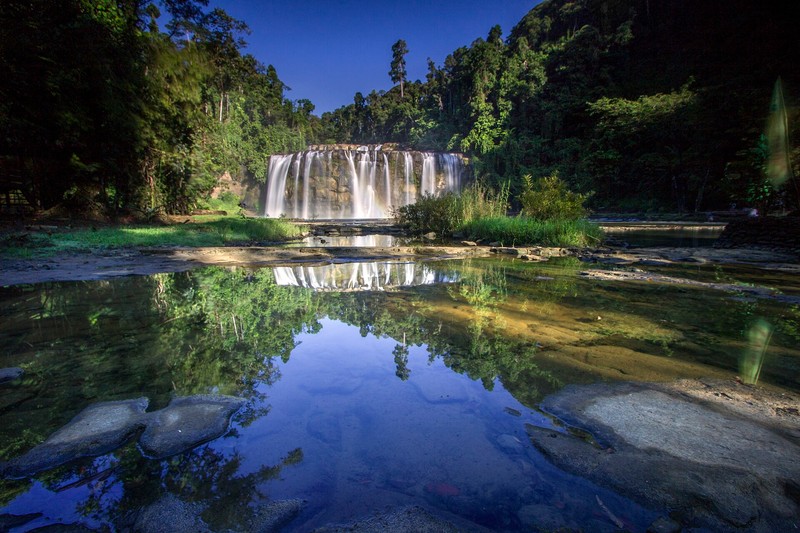
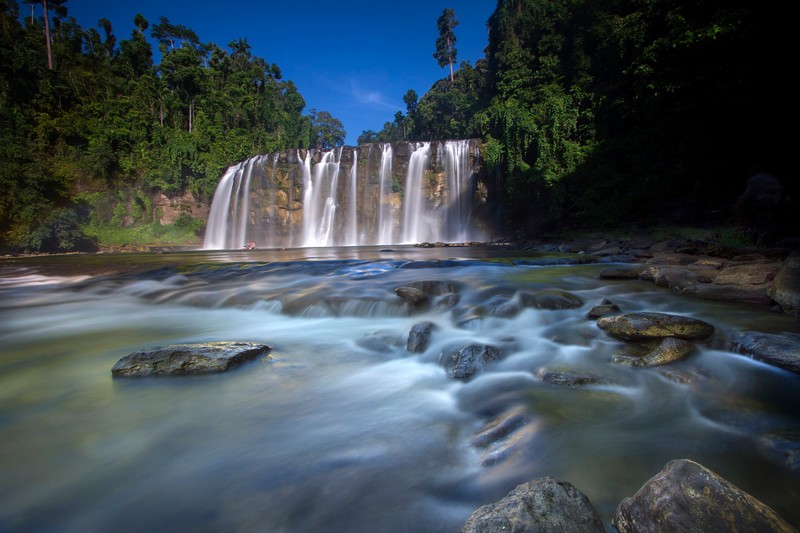
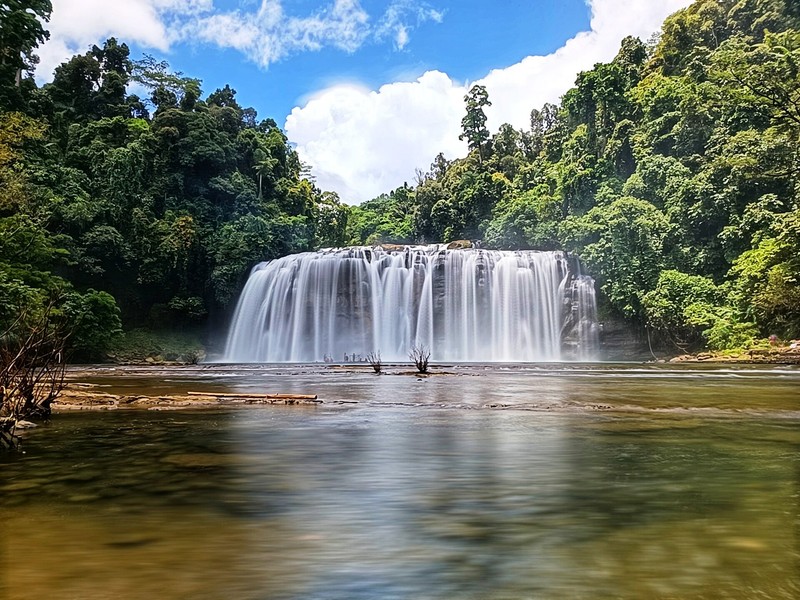
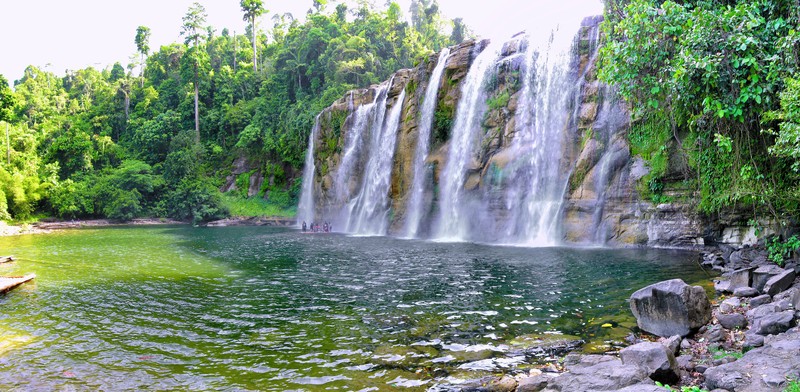
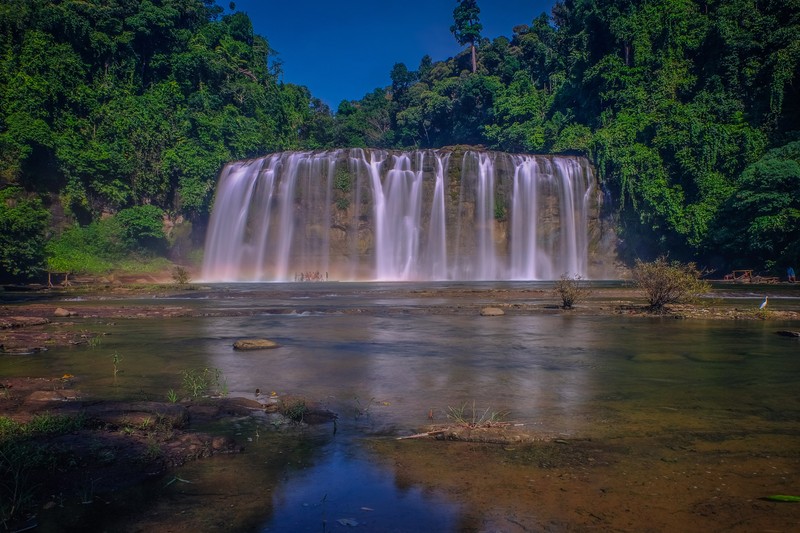
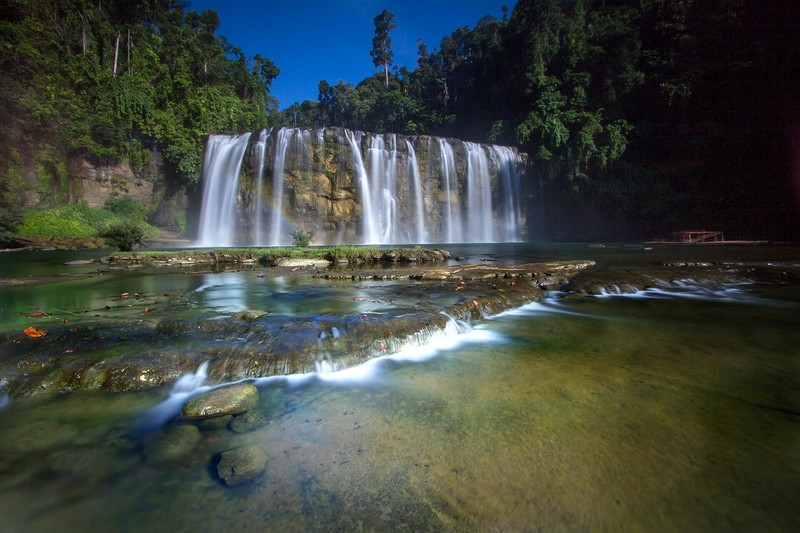
Tinuy-an Falls is one of the most impressive natural attractions in the southern Philippines. It lies amid dense tropical forest on Mindanao Island, in Surigao del Sur province, near the city of Bislig. Its broad white curtain of water, cascading over a rocky ledge in several tiers, has made Tinuy-an famous well beyond the region. It is often called the “Little Niagara of the Philippines” because of its unusual width and powerful flow.
The waterfall is located in Barangay Borboanan, approximately 45–60 minutes by road from central Bislig. The surrounding landscape features tropical vegetation, tall trees, and damp rock faces. The contrast between white foam, dark stone, and the rich green forest is especially striking. Tinuy-an attracts nature lovers, photographers, and travelers who want to discover a less familiar side of the Philippines away from popular beach resorts.
Height and features of the waterfall
Tinuy-an is best known for its width, which reaches approximately 95 meters according to city tourism sources. The water plunges about 55 meters, forming several cascades. The flow spreads across a broad rock face, creating the impression of an enormous curtain of water. Different descriptions may give different measurements because the total height, the vertical drop of an individual tier, and the width of the waterfall can be measured in different ways.
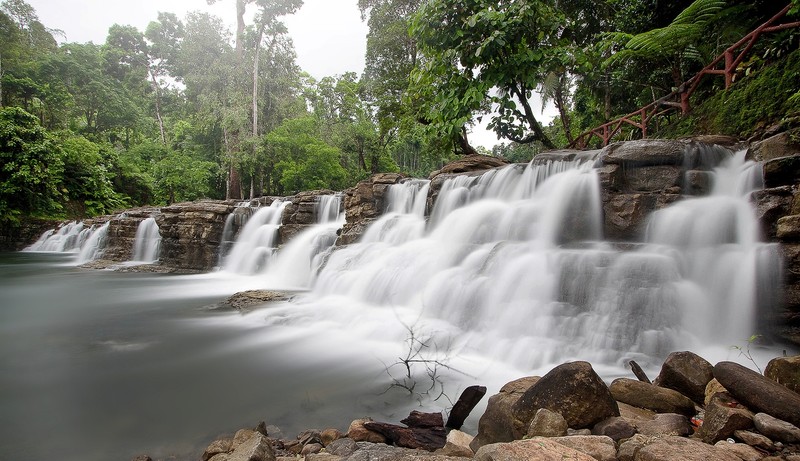
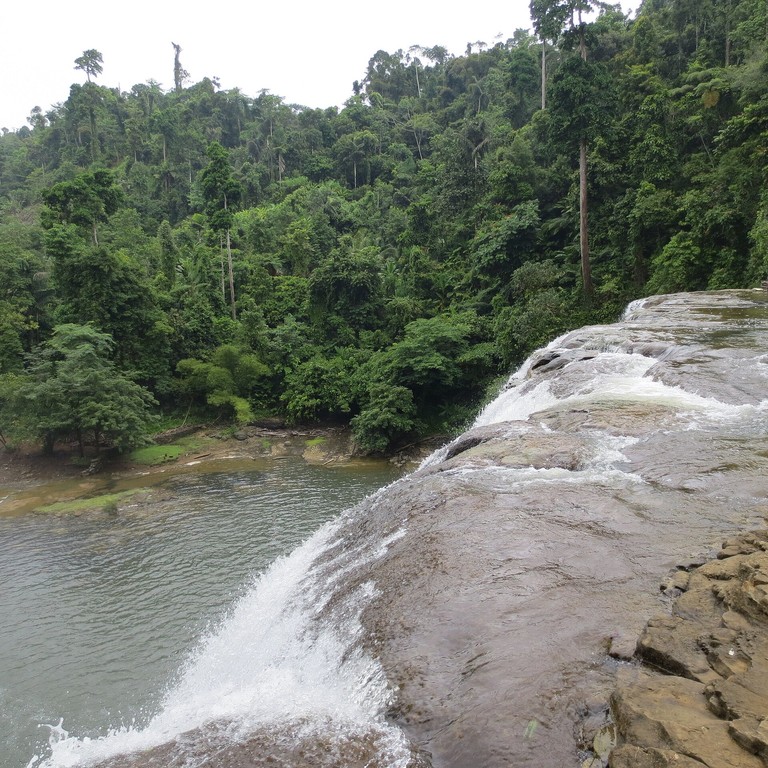
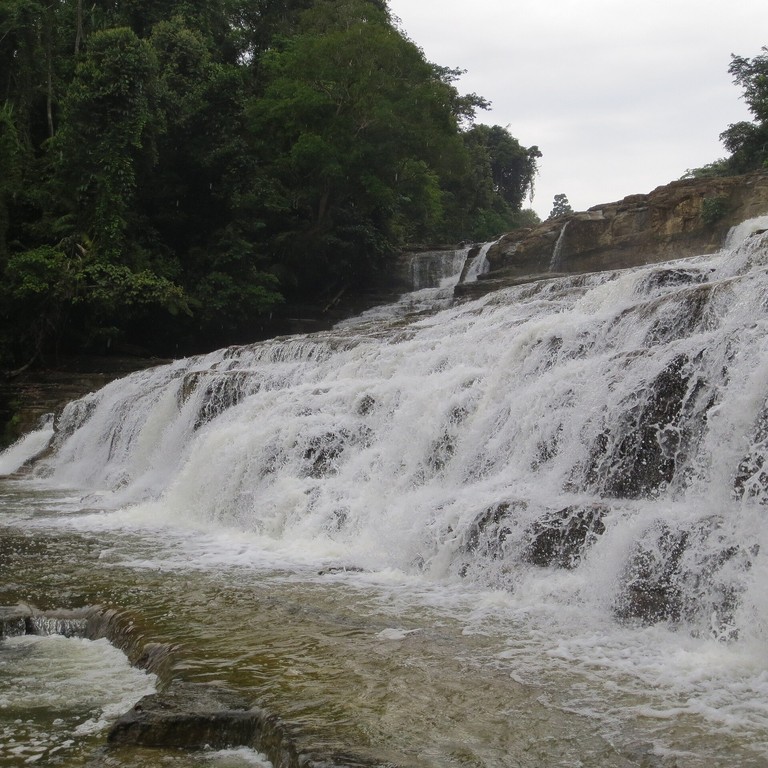
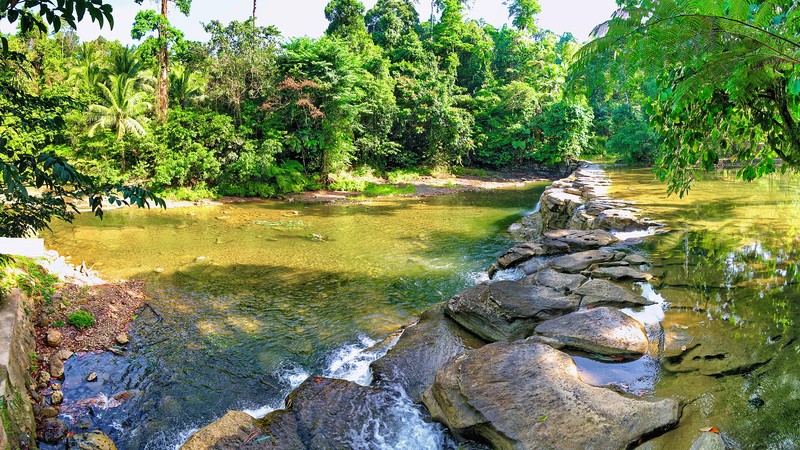
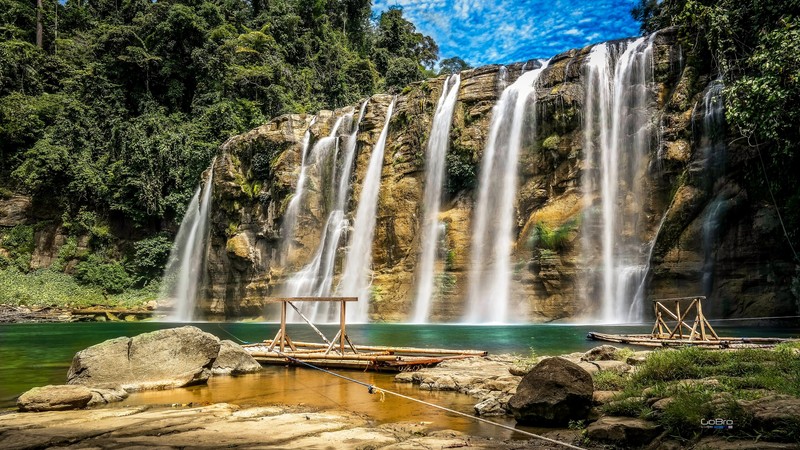
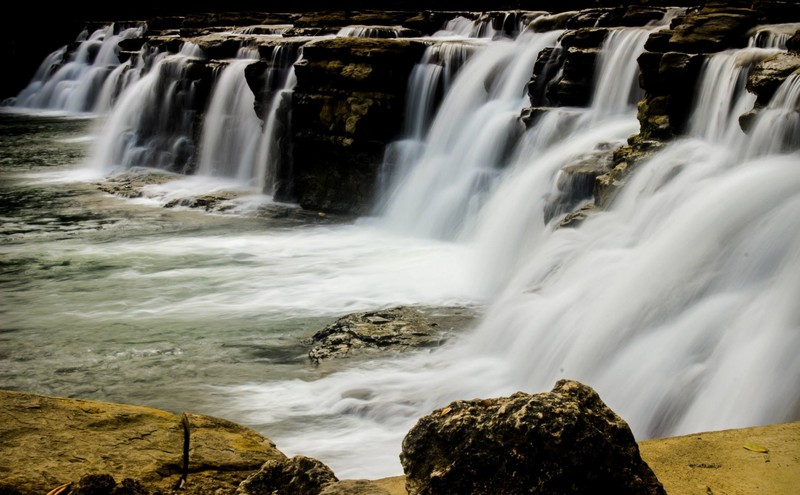
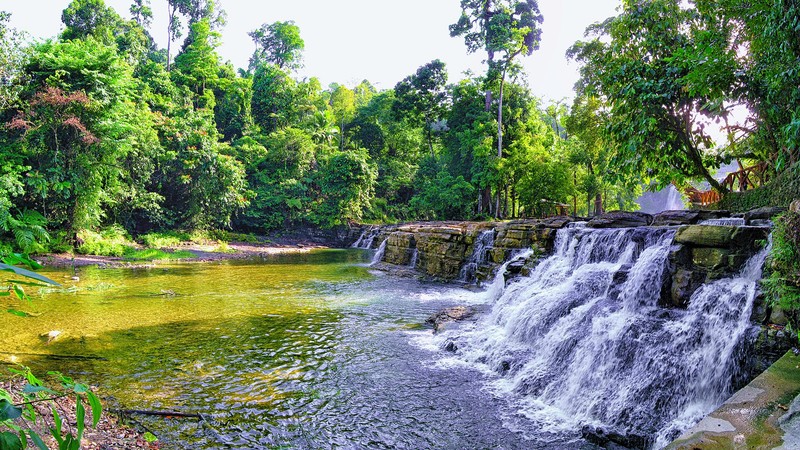
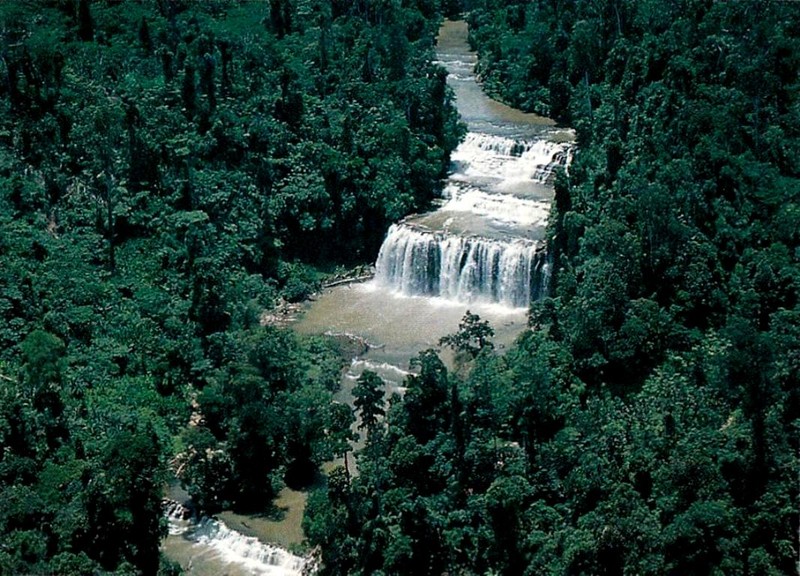
The waterfall consists of several levels, each with its own flow pattern and surrounding terrain. At the lower level, water gathers in a natural pool, while higher up visitors can see additional cascades and sections of rocky streambed. During the rainy season, the flow usually becomes fuller and louder. In drier months, some sections may appear calmer, and the volume depends on recent rainfall.
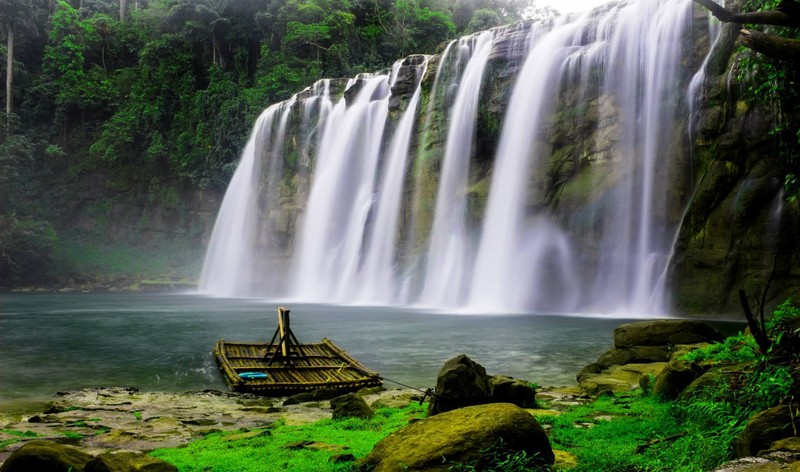
Tinuy-an's unusual shape sets it apart from many tall but narrow waterfalls. Instead of a single thin stream, it presents a wide wall of falling water that looks particularly impressive from the viewing areas. Its combination of width, multiple tiers, and forest setting has earned it the nickname “Little Niagara.”
Rainbows above the cascades
One reason Tinuy-an is so popular is the rainbow that sometimes appears in the mist near the base of the falls. When sunlight passes through tiny water droplets, it bends and reflects, creating a colorful arc against the white water. Local observations suggest that suitable conditions often occur in the morning, roughly between 9 and 11 a.m., although a rainbow depends on cloud cover, the sun's position, and the density of the spray.
An early visit is therefore especially convenient for photographers. Soft light helps reveal the details of the surrounding greenery, while sunlight can emphasize the shape of the cascades. However, the view is not guaranteed: a rainbow may not appear on overcast days, and the water can become cloudier after heavy rain.
Bamboo rafts and swimming
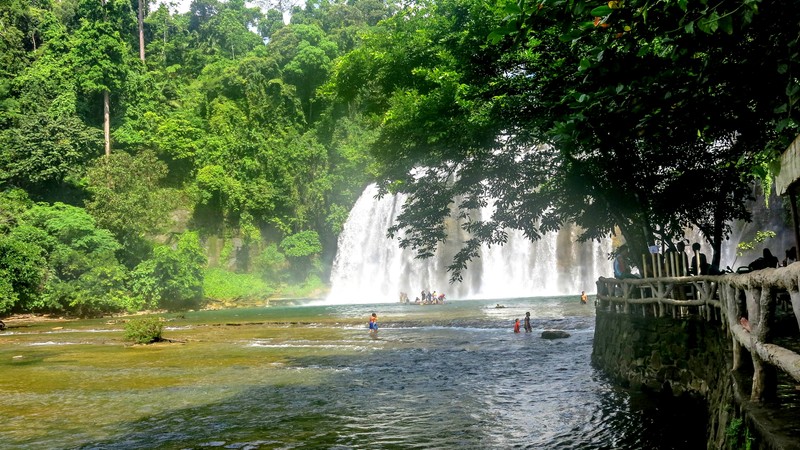
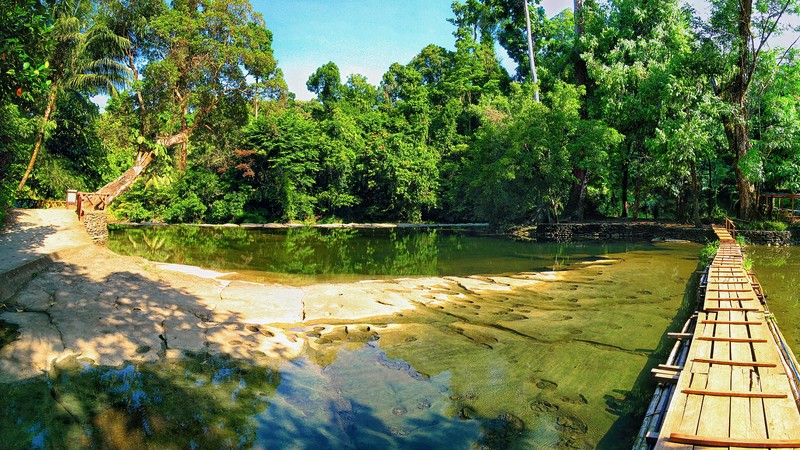
Bamboo raft rides may be available to visitors at the waterfall. They offer a way to approach the curtain of water and feel its spray rather than viewing it only from the shore. The ride reveals the scale of the falls from below and provides a memorable impression of the force of the falling water. Availability and operating conditions should be confirmed locally.
Near the base of the cascades, there may also be areas where visitors can relax beside the water or swim, provided staff permit it and current conditions are safe. The proximity of the waterfall requires caution: currents can be strong, rocks can be slippery, and the depth and condition of the pool can change with the season. Do not swim beyond barriers, approach hazardous sections, or attempt to pass beneath the falling water without staff approval.
Bring footwear with a nonslip sole, a change of clothes, and a waterproof case for your phone or camera. Move slowly on wet steps and rocks and remain on designated paths. If management restricts access to certain tiers because of rain or water conditions, follow those restrictions.
Tropical forest and natural surroundings
Tinuy-an is surrounded by dense vegetation typical of the humid tropical regions of Mindanao. Tall trees, ferns, vines, and other plants create a green backdrop for the cascades. Humid air, the sound of flowing water, and the shade of the forest canopy give the site the atmosphere of a secluded natural refuge.
The Tinuy-an watershed is important for local biodiversity. Regional tourism materials mention a wide variety of plant and animal species, including the Philippine eagle, a rare bird of prey threatened with extinction. Mindanao's forests provide habitats for many endemic species, making the preservation of vegetation and aquatic ecosystems important not only for tourism but also for conservation.
During a walk, listen to the sounds of the forest and notice the variety of plants, but do not pick flowers, damage trees, or disturb wildlife. Not all forest areas around the waterfall are open to unrestricted access, and some locations may have protected status or special access rules.
The legend behind the name
A local legend associated with the waterfall is told in Surigao del Sur province. One version describes Indigenous people who were cruelly forced to perform hard labor. According to the story, they eventually decided to free themselves from their oppressors. During a crossing on a bamboo raft, they directed it toward the waterfall's edge, causing their captors to perish. The tale portrays the falls as a place connected with the struggle for freedom and resistance to cruelty.
The name Tinuy-an is associated with the Cebuano word “tinuyo-an,” which can convey the idea of an intentional act undertaken to achieve a goal. In local explanations, it is also interpreted as a place people want to return to again and again. The legend should be understood as part of the region's oral tradition rather than a documented historical event. Stories of this kind give natural landmarks cultural meaning and help pass local memory to future generations.
Best time to visit
Tinuy-an can be visited at different times of the year, but the experience depends on rainfall and road conditions. During the rainy season, the waterfall generally carries more water and its broad curtain looks especially powerful. Prolonged downpours, however, can make trails slippery, worsen access roads, and lead to temporary restrictions.
Travel during a drier period may be easier for getting around and taking photographs, although the flow can sometimes be less intense. Morning is a good time to view the cascades and offers a chance of seeing a rainbow in the spray. Before setting out, check the local weather forecast and confirm that the waterfall is open to visitors.
How to reach Tinuy-an Falls
The main nearby base is Bislig City in Surigao del Sur province on Mindanao Island. The trip from the city center to the waterfall usually takes around 45–60 minutes, depending on road conditions and transport. For the final stretch, travelers often use local motorcycle taxis known in the Philippines as habal-habal, or arrange a car or minivan in advance.
Bislig can be reached by road from other cities in the region. One option is to travel via Butuan and continue by bus or minivan toward Bislig. Travel time depends on schedules, road conditions, and the point of departure. Visitors coming from Manila or other major cities should check available flights and onward ground connections in advance because transport options can change.
The final road section may be uneven, dusty, or muddy after rain. It is wise to arrange a local driver ahead of time, ask about road conditions, and allow extra time for the return journey. For travelers exploring Mindanao over several days, Bislig can be a convenient place to stay overnight.
Nearby attractions
A visit to Tinuy-an can be combined with other natural attractions in southern Surigao del Sur. Near Bislig are Hinayagan Cave and Hagonoy Island, known for its beaches and coastal scenery. Another well-known regional destination is the Enchanted River in the neighboring municipality of Hinatuan. Visiting several sites provides a broader introduction to Mindanao's natural diversity.
When planning an itinerary, consider distances, road conditions, and local transport schedules. Avoid scheduling too many stops in a single day, especially during the rainy season. Allow enough time to enjoy the waterfall itself, walk through the forest, and explore the surrounding area at a relaxed pace.
Responsible visits to a natural landmark
Protecting Tinuy-an depends on visitors treating the water and forest environment carefully. Do not leave litter, use cleaning products in the natural pool, damage plants, or remove natural objects as souvenirs. Follow staff instructions, observe rules for swimming and raft rides, and respect local access regulations.
Tinuy-an is more than a spectacular waterfall; it is part of Mindanao's natural heritage. Its broad cascades, tropical forest, morning rainbows, and local legends make a visit memorable. For travelers hoping to experience the natural beauty of the Philippines beyond its best-known resorts, Tinuy-an Falls is a remarkable discovery.
Gallery