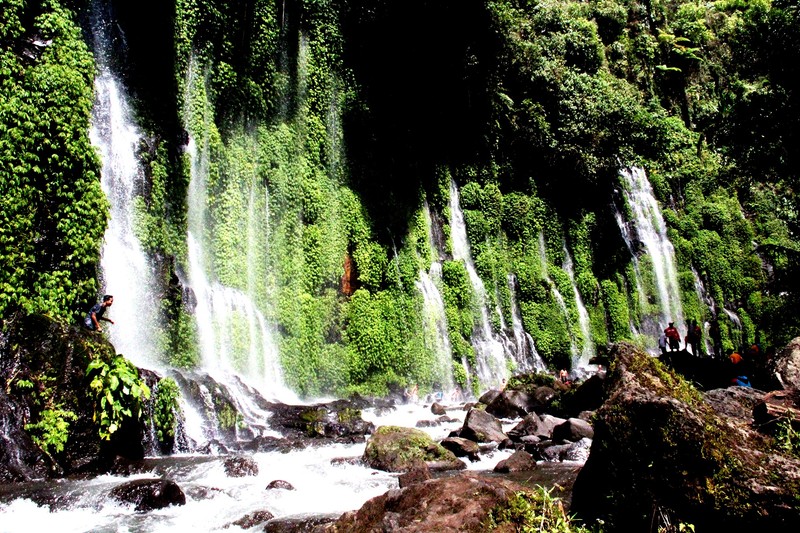
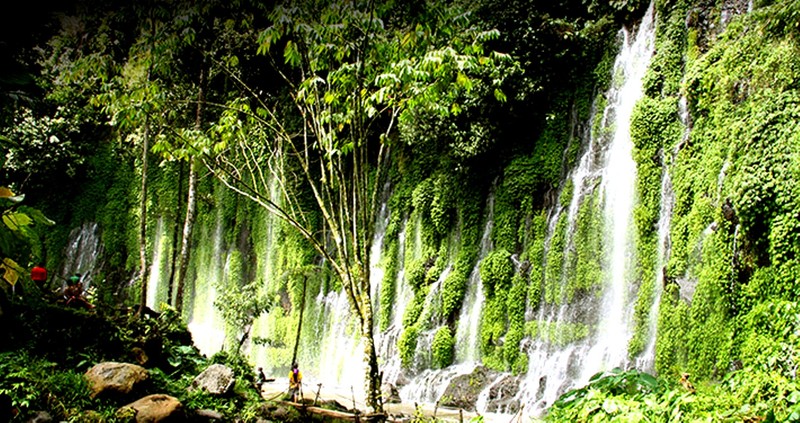
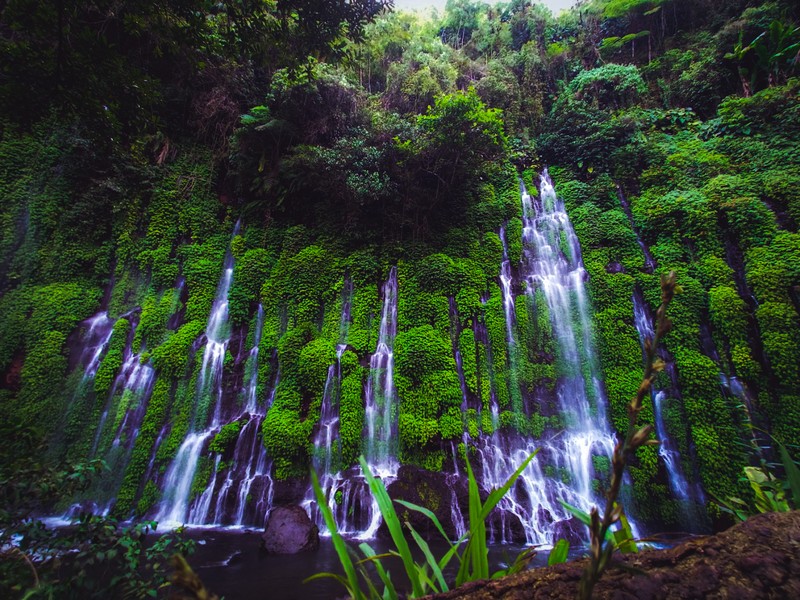
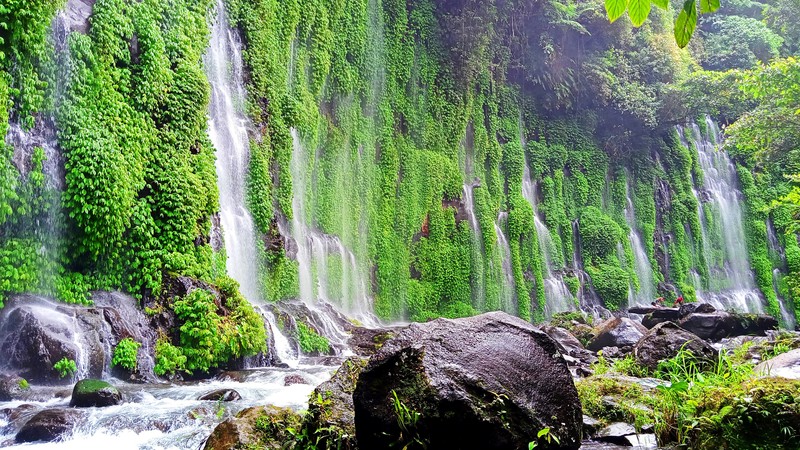
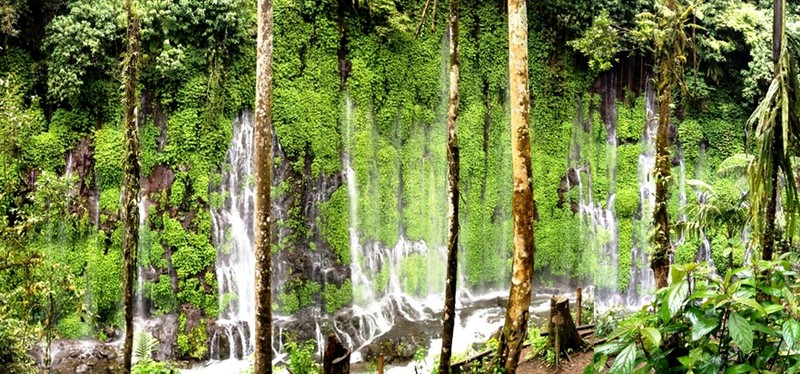
Asik-Asik Falls is an unusual natural attraction on Mindanao Island in the southern Philippines. It lies in the municipality of Alamada, Cotabato province, amid hills and tropical vegetation. Unlike most waterfalls, its water does not appear to flow from a river running over the top of a cliff. Instead, it seems to emerge directly from a densely vegetated rock face. Numerous thin streams descend across the green slope, forming an enormous natural curtain.
The waterfall is approximately 140 meters wide, and parts of the cascade reach around 60 meters in height. The rock face is covered with mosses, ferns, and other moisture-loving plants. Water flows from many cracks and openings, joining into small streams that shimmer against the lush greenery. The combination of water, stone, and vegetation creates the impression of a living wall threaded with silver ribbons.
Asik-Asik is considered one of the most unusual natural attractions in North Cotabato. It draws travelers, photographers, and ecotourism enthusiasts who want to see a distinctive waterscape away from large cities and popular beach resorts. The name Asik-Asik is associated with a word meaning “sprinkle” or “spray” in a local language, an apt description of its many delicate streams.
A unique wall of water
The main feature of Asik-Asik is its unusual water source. There is no obvious riverbed or large stream above the falls that could explain such a broad flow. Instead, water emerges from cracks and openings in the rock hidden behind dense vegetation. It spreads across the wide ledge and runs downward in many separate streams.
The water is thought to come from underground springs or water-bearing layers within the mountain. However, the exact workings of this natural system cannot be determined from appearance alone; hydrological and geological studies are needed to understand how the water moves. The unusual way water emerges directly from the slope has made Asik-Asik distinctive among the Philippines' natural attractions.
Unlike waterfalls where the main flow plunges in one powerful stream, Asik-Asik disperses water across a broad rocky surface. Moss and ferns soften the outline of the cliff, while constant moisture sustains vivid greenery. In sunny weather, individual streams sparkle in the light; on overcast days, the landscape takes on more subdued tones.
Tropical vegetation and the natural environment
The rock face is covered with moisture-loving plants. Ferns, mosses, and small plants able to cling to wet stone are especially noticeable. The constant flow keeps the surface damp, supporting a plant community different from that found on the drier surrounding hillsides.
The waterfall lies in a mountainous area near the slopes of the Ragang massif, which is also known by other local names. The surrounding landscape includes hills, forest patches, rural settlements, and agricultural land. It offers a view of Mindanao's inland natural environment, quite different from its coastal districts and island beaches.
The ecosystem around the falls depends on water quality, the preservation of vegetation, and the stability of the slopes. Trampling plants, leaving litter, and damaging moss-covered areas can gradually harm this fragile environment. Visitors should therefore use authorized routes and avoid attempting to climb the wet rock face.
How the waterfall became known
For a long time, Asik-Asik remained little known beyond nearby settlements. Local residents knew of its existence, but its remote position among hills and dense vegetation discouraged widespread visits. The waterfall gained broader attention in the early 2010s, when photographs of its unusual wall of water began circulating online.
In 2010, the falls drew the attention of local officials during an inspection of an area affected by natural hazards. Photographs shared on social media subsequently attracted travelers and photographers from other parts of the country. Asik-Asik later became one of the best-known natural attractions in Cotabato province.
Its growing popularity created new opportunities for local residents through transport, visitor guiding, and tourism services. At the same time, it became increasingly important to manage access so that tourism would not damage the environment. For places like this, tourism development must be balanced with the protection of slopes, vegetation, and water sources.
The descent to the falls
The journey to Asik-Asik is part of the adventure. After traveling along local roads, visitors reach an entrance area where the descent to the base of the waterfall begins. Route descriptions mention a long flight of stone steps running along the hillside. The descent brings visitors gradually closer to the falls and reveals how separate streams combine into a broad curtain of water.
The return climb takes more effort than the descent, especially in hot and humid weather. Assess your fitness in advance, bring drinking water, and take your time on the steps. Footwear should fit securely and have a nonslip sole. After rain, both stone and soil can become particularly slippery.
The route, the condition of the stairs, and the sections open to visitors may change depending on weather, maintenance, and decisions by local authorities. Before traveling, confirm that the site is open, learn the current visitor rules, and ask whether the full route to the base is accessible. Older travel descriptions do not guarantee that every section will be open on the day of your visit.
Best time to visit
Asik-Asik is in a tropical region where rainfall occurs at different times of the year. Wet weather sustains the flow and lush greenery, but heavy rain can make access roads and steps dangerous. During drier periods, getting around may be easier, although the strength of the flow depends on the springs and recent rainfall.
Before traveling, check the local weather forecast and seek current information from the Alamada municipal tourism office. If heavy rain has recently occurred, consider the risk of landslides, washed-out roads, and temporary closures. Safety is more important than seeing the waterfall on a particular day.
For photography, choose a time when the light reveals the fine streams of water and the texture of the green cliff. In bright sunshine, droplets may sparkle, while diffused light helps capture the details of ferns and moss. The experience depends not only on the time of day but also on weather, water volume, and access to viewing areas.
How to get to Asik-Asik Falls
The waterfall is located in Sitio Dulao, within Barangay Upper Dado in the municipality of Alamada, Cotabato province, on Mindanao Island. Travelers often use the towns of Midsayap and Libungan as starting points, from which local public transport can take them to Alamada. From there, transport along local roads to the trailhead usually needs to be arranged.
For the final stretch, visitors often use motorcycle taxis known in the Philippines as habal-habal. The ride may involve rough roads, so agree on the fare, pickup location, and return time in advance. Larger regional transport hubs include Cotabato City, Davao, and General Santos, but the best route depends on transport schedules and where you arrive on Mindanao.
After reaching the entrance area, visitors descend the steps to the waterfall. Travel time depends on road conditions, weather, transport, and walking pace. It is best to start early and leave extra time for the return journey, rest, and possible changes to route conditions.
What to bring
Light clothing, comfortable shoes with good grip, and a small backpack are suitable for a trip to Asik-Asik. Because the area is humid, bring a towel, spare clothes, and a waterproof bag for electronic devices. Drinking water is especially important because of the stairs and the climb back up.
Do not assume that all supplies, food, or services will be available directly at the falls. Check what facilities are operating before you travel and bring what you need. If traveling with children or people who have difficulty climbing stairs, assess the route's demands in advance.
Do not drink water from natural sources without confirmed treatment, even if it looks clear. Avoid using soap, shampoo, or other products in the water or near the point where it emerges from the rock.
Safety and conservation
Asik-Asik looks like a natural wall of plants and water, but the cliff beneath it can be dangerous. Wet rocks are extremely slippery, and some sections may crumble or become unstable after heavy rain. Do not climb the waterfall wall, cross barriers, or enter closed areas for a photograph.
Visitors should follow staff instructions, stay on marked paths, and observe temporary restrictions. If local authorities close the site because of weather, unstable slopes, or maintenance work, postpone the visit. Checking current rules is particularly important because access conditions may change over time.
Do not leave litter, damage ferns or moss, carve marks into rocks, or remove plants as souvenirs. Careful behavior helps preserve the unusual microclimate of the rock face and the natural appeal of the site.
What to see nearby
A visit to Asik-Asik can be part of a wider journey through inland Mindanao. Cotabato province is known for its rolling hills, rural settlements, and other natural attractions. Around Alamada, visitors can learn more about local communities and regional agriculture, while the roads between settlements offer views of the surrounding uplands.
When planning additional stops, allow for long distances and the limitations of local transport. Not every natural attraction has regular public transport or well-maintained access roads. If you want to visit several places in one day, arrange the itinerary in advance with a local driver or tourism office.
Asik-Asik's importance for local tourism
The waterfall has become an important tourism symbol for Alamada and Cotabato province. Its popularity brings attention to less familiar parts of Mindanao and creates opportunities for residents who provide services to visitors. When managed responsibly, tourism can support the local economy while encouraging the protection of natural landscapes.
However, the popularity of a natural attraction requires thoughtful management. Maintaining stairs and paths, controlling visitor numbers, handling waste, and protecting slopes are all important for the long-term preservation of the area. Access may be restricted at certain times, so current information from local authorities should be obtained before visiting.
Why visit Asik-Asik Falls
Asik-Asik impresses not only through its size but also through the unusual way its water appears. A broad wall of separate streams, green ferns, moss, and wet rock creates a landscape unlike conventional waterfalls with a single central flow. The walk down to the base adds an element of adventure, while the surrounding hills reveal the natural character of inland Mindanao.
For nature lovers, Asik-Asik offers a chance to see a rare type of waterscape and discover a less familiar part of the Philippines. To make the trip enjoyable, check access conditions in advance, prepare for the staircase, and follow safety rules. Respectful visits will help preserve the beauty of this place for future travelers.
Gallery