Trollstigen, also known as the Trolls' Path, is one of Norway's most famous mountain roads. It is located in the Vestland region, near the town of Åndalsnes. The road winds through a dramatic mountain valley surrounded by towering cliffs, waterfalls, and steep slopes. Its hairpin bends, narrow sections, and substantial change in elevation have made it a renowned destination for travellers from around the world.
The road forms part of the Geiranger–Trollstigen National Tourist Route. It connects the Isterdalen Valley with a mountain plateau and climbs to around 700 metres above sea level. In places, the road runs close to sheer rock faces, while its winding turns gradually overcome the steep terrain. The journey offers views of mountain peaks, green valleys, and rushing water.
History of the Road
Trollstigen opened in 1936 after several years of construction. Building the road was difficult because of the steep slopes, rocky terrain, and harsh mountain climate. Engineers relied on substantial manual labour and carefully planned construction techniques to create a route through terrain that had seemed almost impassable.
The Norwegian name Trollstigen translates as “the Trolls' Ladder” or “Trolls' Path.” It refers to Norwegian folklore, in which trolls are mythical beings associated with mountains, forests, and rocky landscapes. The towering cliffs and unusual mountain silhouettes suit the name well.
Since opening, the road has become an important tourist attraction. It draws motorists, motorcyclists, photographers, and travellers exploring western Norway. Over time, viewpoints and visitor facilities were developed near the upper section of the hairpin road.
The Famous Hairpin Bends
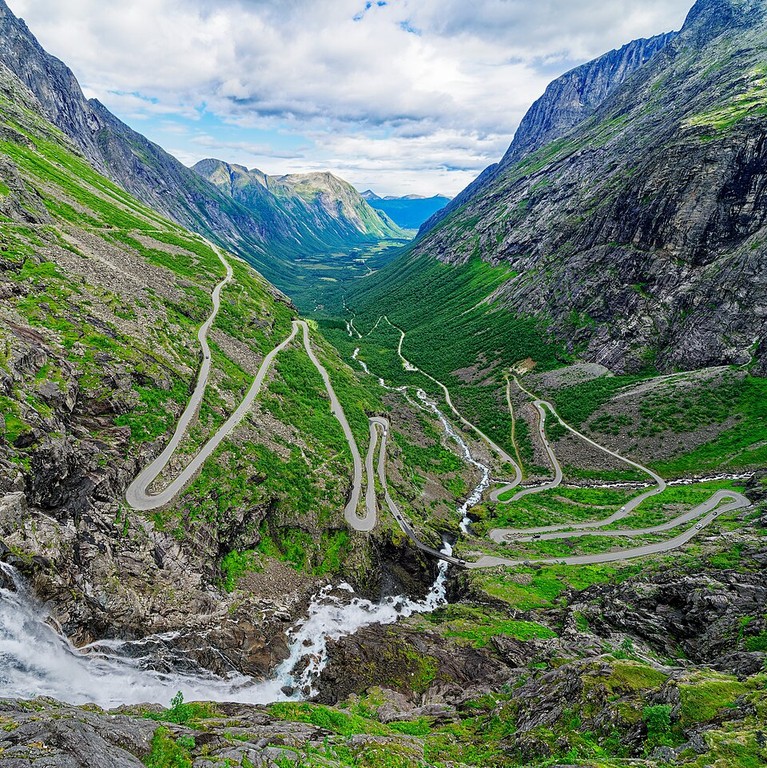
The defining feature of Trollstigen is its eleven sharp bends carved into a steep mountainside. The road is narrow and runs close to sheer cliffs in places, requiring careful driving. Some sections have steep gradients and limited visibility, and large vehicles may find it difficult to pass oncoming traffic.
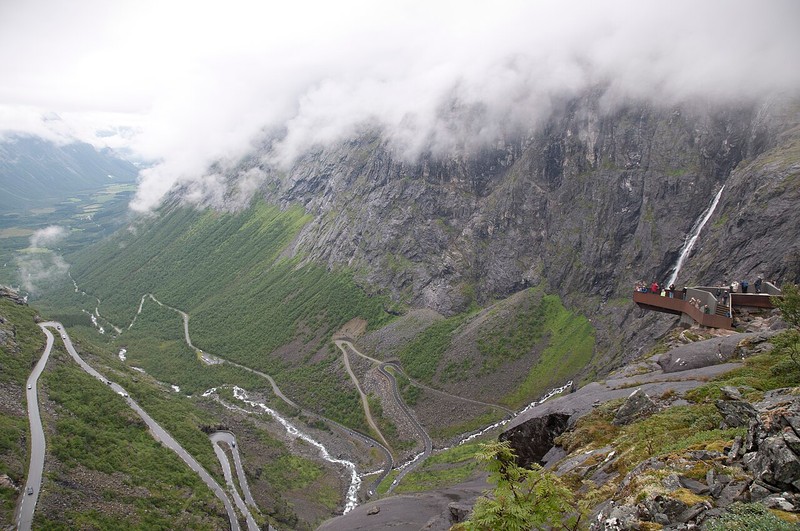
The bends are particularly impressive when viewed from the upper viewpoints. From there, visitors can see the road winding between the cliffs and descending into the valley. Cars appear tiny against the mountain slopes, revealing the scale of this engineering achievement.
Drivers should obey speed limits, keep their attention on the road, and account for changing weather. During the peak tourist season, coaches, cars, and motorcycles can make traffic slow.
Stigfossen Waterfall
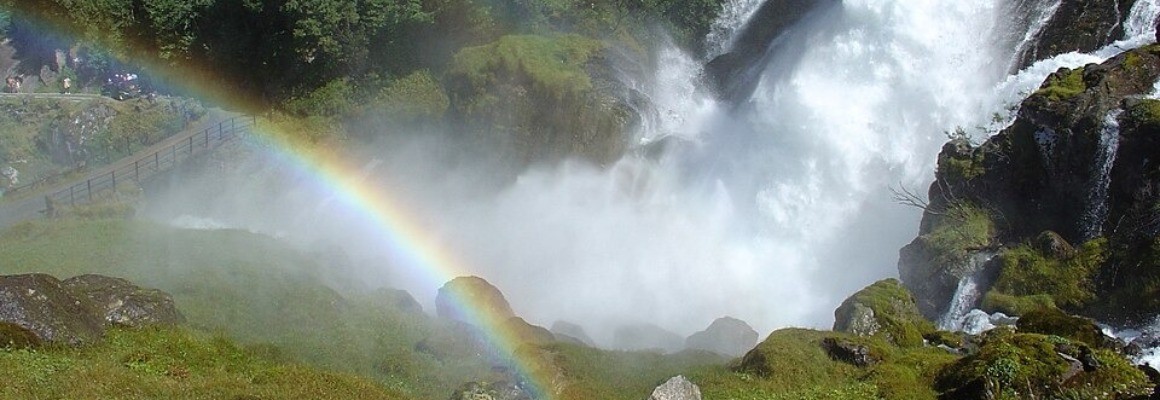
One of the most striking natural features along Trollstigen is Stigfossen Waterfall. It plunges down a high rock face beside the road, creating a powerful cascade that is especially impressive during snowmelt and after heavy rain. Water falls between the cliffs and breaks into spray as it descends.
The road crosses the waterfall on a bridge, offering memorable views of the water and surrounding mountains. The flow changes with the season and weather. It is usually particularly strong in spring and early summer, while later conditions depend on rainfall and the amount of water in the mountains.
Stigfossen can be seen from several parts of the road and from designated viewpoints. Stop only in permitted areas, as the narrow mountain road is not suitable for arbitrary stops to take photographs.
Viewpoints and Panoramic Scenery
A modern visitor area with viewing platforms and walking paths lies near the top of Trollstigen. From here, visitors can look down on the hairpin bends, the deep Isterdalen Valley, waterfalls, and surrounding peaks. The architecture of the viewing area is designed to fit into the rugged landscape, and some platforms extend out over the slope.
One of the main reasons to visit is the chance to see the famous road from above. Its winding ribbon of asphalt contrasts sharply with massive cliffs and green sections of the valley. Clear weather provides wide panoramas, while low cloud and mist can give the landscape a mysterious atmosphere.
The visitor area generally has parking and convenient walking routes to the main viewpoints. However, access and facility opening hours depend on the season and weather. Check current information from official regional tourism sources before travelling.
Mountains and the Isterdalen Valley
Trollstigen crosses a dramatic mountain region with sheer walls, pointed peaks, and deep valleys. Glaciers shaped the landscape over thousands of years, carving valleys and changing the contours of the mountains. As the ice retreated, steep slopes, rocky ledges, and waterfall channels were left behind.
Below the road lies the Isterdalen Valley, surrounded by high mountain ranges. Its scenery combines green meadows, forests, rivers, and rocky slopes. From above, the road looks like a narrow line linking the lower valley with the mountain plateau.
Weather can change quickly in this region. Sunshine may give way to fog, rain, and strong winds, while temperatures at higher elevations are usually lower than in the valley. Even in summer, visitors should bring warm clothing and suitable walking shoes.
Walking Trails and Short Hikes
There are maintained paths around Trollstigen that allow visitors to explore the area without undertaking a long hike. Short walks lead to viewpoints and provide different perspectives on the hairpin road and surrounding peaks. They are suitable for travellers who want to enjoy the scenery without attempting a demanding mountain trek.
Longer hikes require more preparation. Mountain trails may cross rocky ground, include steep climbs, and become slippery after rain. Before setting out, assess your abilities, check the weather forecast, and confirm trail conditions. Fog can reduce visibility quickly, so avoid continuing when conditions become unsafe.
Follow signs and remain behind barriers at viewpoints and along walking paths. Some platforms overlook steep slopes, and strong winds can make exposed areas uncomfortable. Use designated viewing areas for photographs rather than approaching cliff edges.
Best Time to Visit
Trollstigen is usually open to road traffic during the warmer months, generally from late spring or early summer until autumn. Exact opening and closing dates depend on snow levels, road conditions, and weather. The road is closed in winter and during periods of heavy snowfall for safety reasons.
Summer generally offers the most convenient conditions for driving and walking. Waterfalls may still be powerful, and the mountain plateau provides expansive views. July and August are the busiest months, however, so traffic and viewpoints can be crowded.
Spring scenery is dramatic because of melting snow and strong water flows, but the opening of the road may be delayed. Visitor numbers usually decline in early autumn as the mountain slopes begin to change colour. Always check whether the road is open before setting off: even in summer, it can be temporarily closed because of rockfalls, maintenance, or severe weather.
How to Get to Trollstigen
Trollstigen is in western Norway, approximately 20–25 kilometres by road from Åndalsnes, depending on the exact destination. Travelling by car is generally the most convenient option. The road is often included in wider itineraries through the fjords and mountains of Møre og Romsdal and Vestland.
From Åndalsnes, the road follows the Isterdalen Valley towards the hairpin bends and upper viewpoint area. Seasonal buses and guided tours may operate in the region, but schedules depend on the time of year. If travelling without a car, arrange transport in advance.
Drivers should be prepared for narrow sections, sharp bends, and heavy traffic during peak season. Those travelling in large motorhomes or vehicles with trailers should check current restrictions in advance. Road status and possible closures should also be confirmed before departure.
Nearby Attractions
Trollstigen fits easily into a longer journey through western Norway. Nearby Åndalsnes is known as a starting point for mountain walks and scenic drives. Visitors can admire the surrounding peaks and learn more about the history of the region.
The Rauma Railway, famous for views of mountains, rivers, and bridges, is also in the area. Depending on the itinerary, the journey can continue towards fjords, coastal settlements, and other natural attractions. Routes combining mountain roads, waterfalls, and Norwegian fjord scenery are particularly popular.
When planning a route, account for long distances, changing weather, and seasonal restrictions on mountain roads. Even relatively short journeys in Norway can take longer than expected because of the terrain and stops at viewpoints.
Practical Tips for Visitors
Before travelling, check the current road status, weather forecast, and opening hours of visitor facilities. Bring clothing suitable for rain and wind, even if the valley is warm and sunny. Comfortable shoes with a good grip are useful for walking around the viewpoints.
During the busiest months, arriving early in the morning or later in the evening can help avoid the heaviest crowds. Do not stop where stopping is prohibited, and never linger on the road to take photographs. Follow signs and stay behind safety barriers.
If using a rental car, check the insurance conditions and any restrictions for mountain roads. In poor visibility, strong winds, or heavy precipitation, reduce speed and postpone the drive if necessary. Safety is more important than reaching the attraction on a particular day.
Why Visit Trollstigen
Trollstigen is one of Norway's most impressive scenic roads, combining engineering skill with the power of mountain nature. Its sharp hairpin bends, Stigfossen Waterfall, towering cliffs, and viewpoints create a landscape that is difficult to forget. It offers a chance to experience the rugged beauty of the Norwegian mountains and the scale of scenery shaped by glaciers.
The journey is ideal for road-trip enthusiasts, photographers, and nature lovers. In favourable weather, the drive can become one of the highlights of a trip through western Norway. Check seasonal access in advance, take road conditions seriously, and allow time to enjoy the views along the way.
Gallery