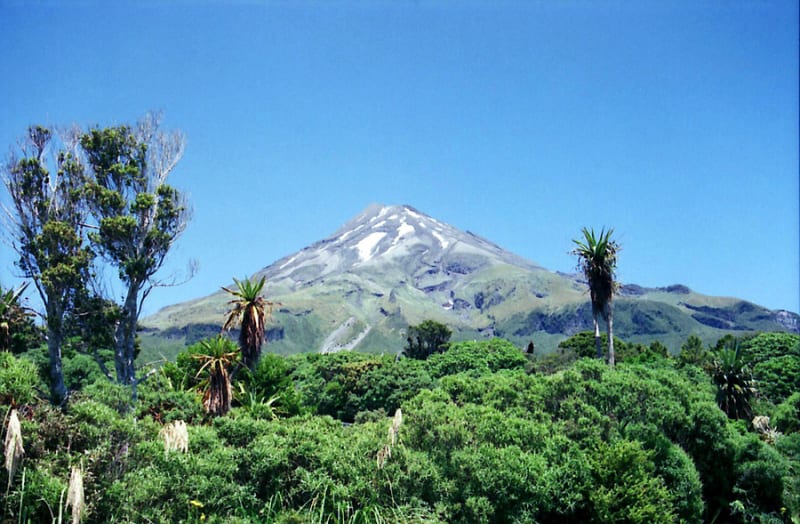
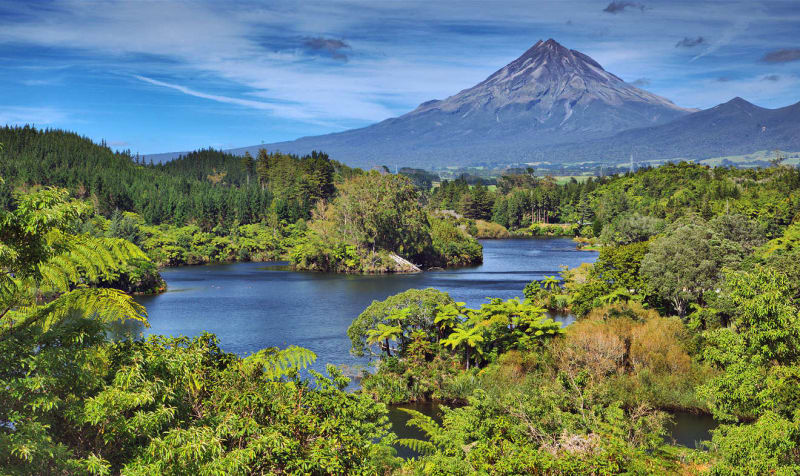
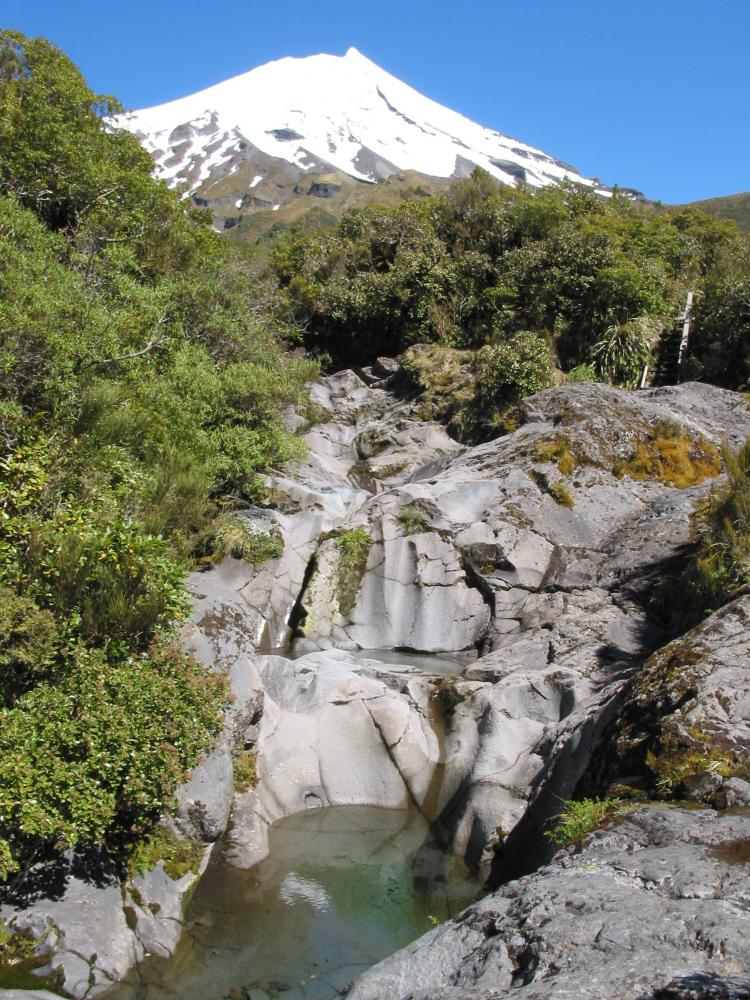
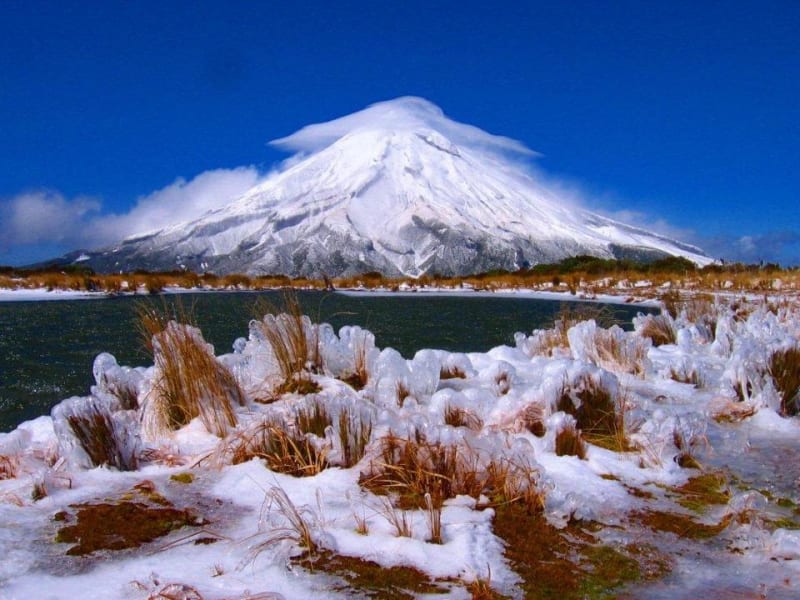
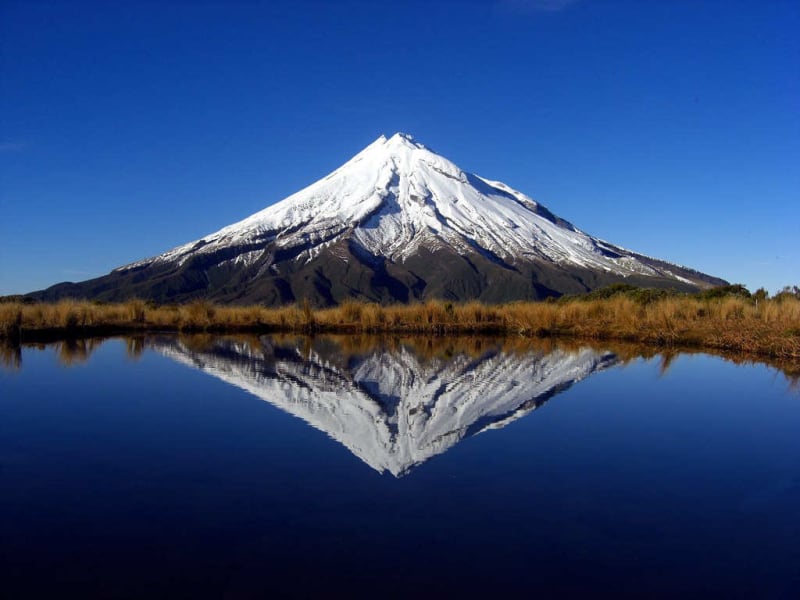
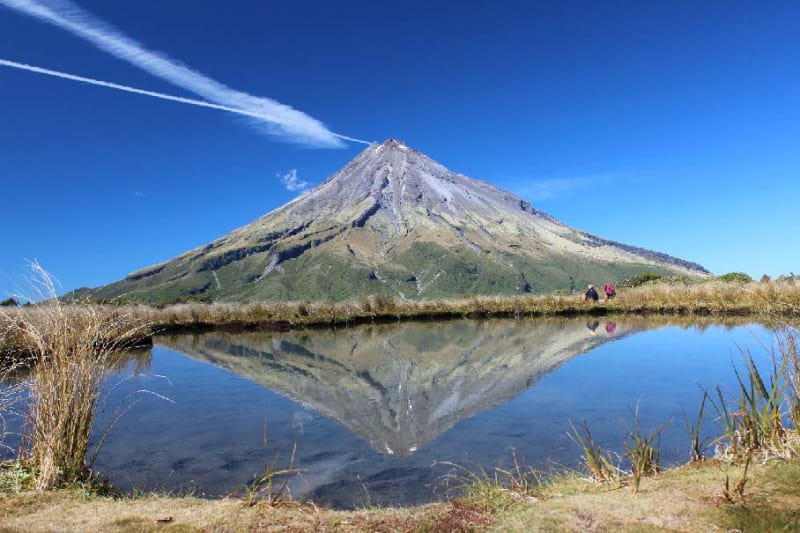
Egmont National Park is a scenic natural area on the western side of New Zealand’s North Island, best known for Mount Taranaki, a volcano rising above green forests and agricultural plains. The mountain has an almost perfect conical shape, and its summit is often hidden by clouds. The contrast between snow-covered slopes, dense vegetation, and the ocean coast makes this region one of the country’s most recognizable landscapes.
The national park was established in 1900, making it one of New Zealand’s oldest national parks. Today, its name is commonly associated with Mount Taranaki, historically also known as Mount Egmont. The park protects volcanic slopes, mountain streams, humid forests, and diverse habitats for native plants and animals.
Mount Taranaki Volcano
The park’s main landmark is Mount Taranaki, a volcano approximately 2,518 metres high. It was formed by repeated eruptions, and its relatively symmetrical outline can be seen from far away. Although the volcano is considered dormant, it remains active in geological terms, so visitors should check official alerts and track conditions before heading into the high country.
On clear days, different parts of the park offer impressive views of the summit and surrounding valleys. Weather on the mountain changes quickly: a sunny day can give way to strong winds, fog, or rain. Even in summer, upper sections can be cold, while snow often remains at higher elevations during winter and spring.
Forests and Plant Life
The lower volcanic slopes are covered with dense temperate rainforests. Tree ferns, mosses, lichens, and a variety of native trees thrive here. The humid climate supports thick undergrowth, while clouds and mist create the distinctive atmosphere of a mountain forest. As elevation increases, the vegetation changes: tall trees give way to shrubs, grassland communities, and alpine plants.
The park’s forests play an important role in conserving the region’s biodiversity. They provide habitats for native birds and invertebrates, retain moisture, and protect mountain catchments. During a walk, look for unusual fern shapes, moss-covered trunks, and changes in vegetation with altitude.
Waterfalls and Nature Trails
One of the park’s well-known attractions is Dawson Falls, on the southern side of Taranaki. The water drops approximately 18 metres through lush greenery. Walking trails lead to the waterfall through the forest, and a historic hydroelectric power station nearby reflects the early use of local streams to generate electricity.
The park has many routes of varying difficulty. Short walks introduce visitors to the forest and streams, while longer hikes lead to high mountain slopes and viewpoints. Popular areas include Dawson Falls and Egmont Village, while the summit route is intended for experienced, well-prepared hikers. Walking times and trail access depend on the weather, season, and current track conditions.
Climbing to the Summit
Climbing Mount Taranaki is a serious challenge, even for physically fit visitors. The route includes steep sections, loose volcanic material, rocks, and sometimes snow, depending on the season. Conditions can deteriorate rapidly, and fog can make navigation difficult. The ascent should not be treated as an ordinary walk: suitable equipment, mountain-hiking experience, and careful assessment of conditions are essential.
Before setting out, consult guidance from New Zealand’s Department of Conservation, check forecasts and alerts, and tell someone your route and expected return time. In poor conditions, choose a shorter forest walk instead. Do not continue toward the summit simply to reach the top if the weather becomes dangerous.
Best Time to Visit
The park can be visited throughout the year, but conditions vary considerably by season. Summer, from December to February, is generally more convenient for forest walks and hikes on the lower slopes. Spring and autumn can bring changeable weather, while snow and ice occur at higher elevations in winter, making specialist skills and equipment necessary for high-country routes.
Whatever the season, bring waterproof clothing, warm layers, enough water, and suitable footwear. Before travelling, check current information about track closures, avalanche risks, and other hazards. Even on shorter walks, consider the available daylight and avoid starting too late.
How to Reach Egmont National Park
The city of New Plymouth on the western coast of the North Island is a convenient starting point. From there, visitors can drive to several park entrances, including the Egmont Village and Dawson Falls areas. Roads lead to visitor facilities and trailheads, but some sections may close temporarily because of weather or maintenance.
Public transport to remote park entrances is limited, so a car is often the most practical option. Before departure, check road conditions, parking availability, and the opening hours of local facilities. Mobile reception can be unreliable in some areas, so it is useful to save a map and route information in advance.
Natural and Cultural Significance
Taranaki is deeply significant to Māori, the Indigenous people of New Zealand, and is connected with local traditions and stories. The mountain is regarded not only as a natural landmark but also as an important place of cultural heritage. Visitors should respect local customs and follow guidance from communities and conservation authorities.
Egmont National Park offers a remarkable combination of volcanic terrain, humid forests, and mountain scenery. It suits both short walks through lush vegetation and challenging hikes undertaken with proper preparation. Respect for nature, adherence to safety guidance, and careful planning help preserve this distinctive part of New Zealand for future generations.
Gallery