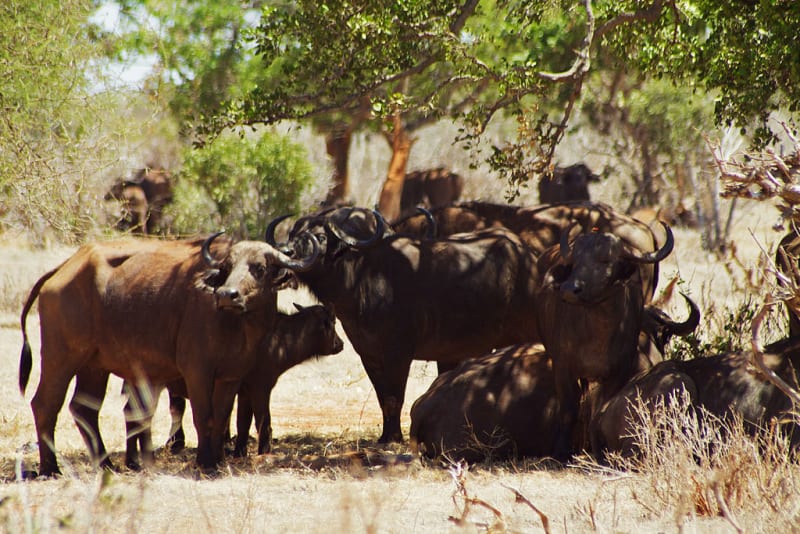
Tsavo East National Park is one of Kenya's largest protected natural areas, located in the southeast of the country. It is known for vast semi-arid plains, red soil, enormous elephant herds, and the scenic Galana River. Together with neighbouring Tsavo West National Park, it forms part of the Tsavo Conservation Area and is considered one of East Africa's most impressive safari destinations.
History and Landscape
Tsavo East was established in April 1948. According to the Kenya Wildlife Service, it covers approximately 13,747 square kilometres, although some conservation databases provide different estimates. Its extensive territory includes open savannah, dry scrubland, rocky outcrops, and river valleys. This variety of habitats supports many species of mammals and birds.
Together with Tsavo West, the park forms a vast conservation region that plays an important role in protecting Kenya's wildlife. Despite the harsh, dry conditions, local rivers and waterholes sustain numerous animals. Travelling through Tsavo East offers an opportunity to experience authentic African wilderness far from major cities.
The Red Elephants of Tsavo
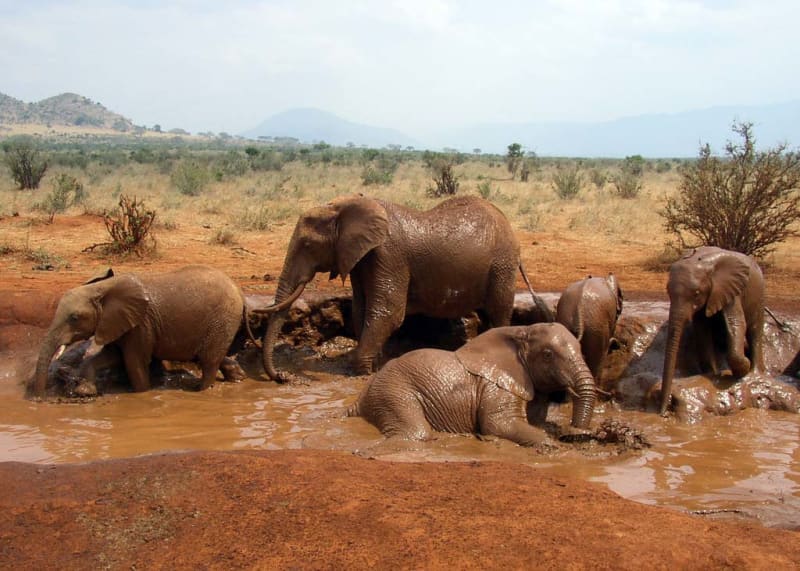
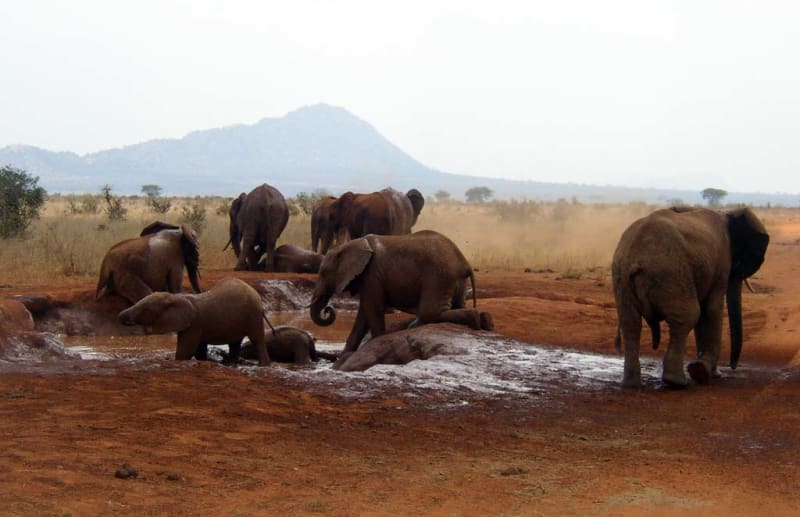
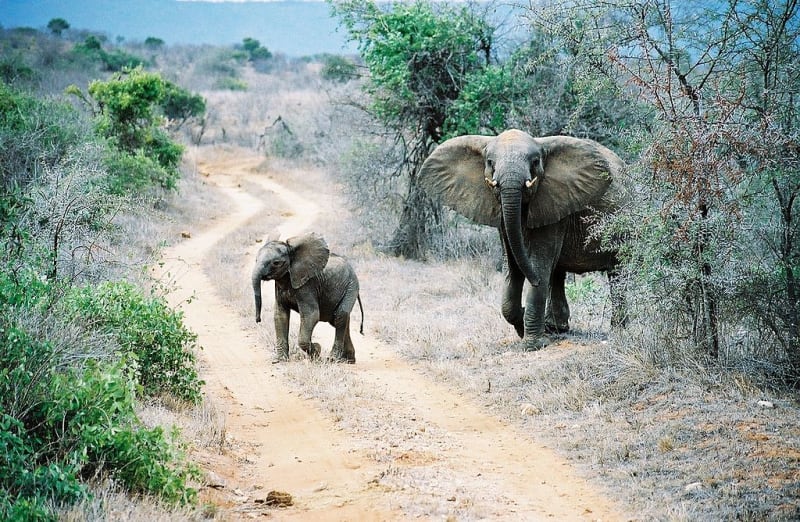
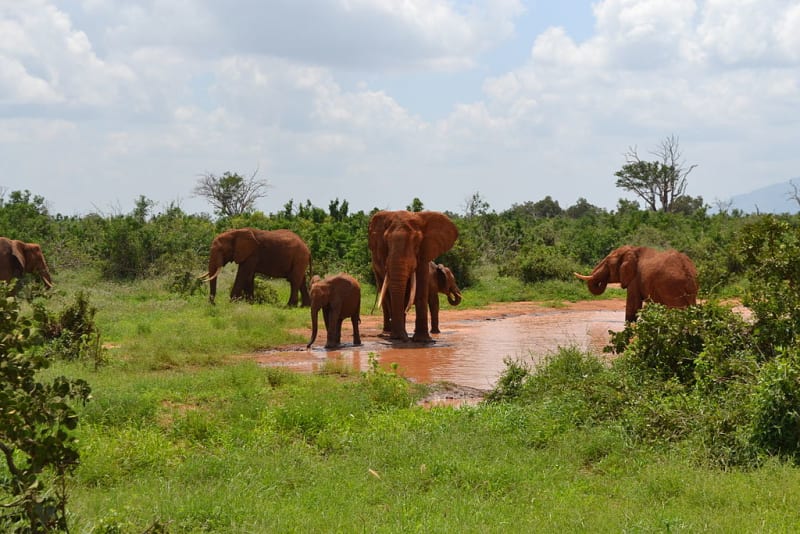
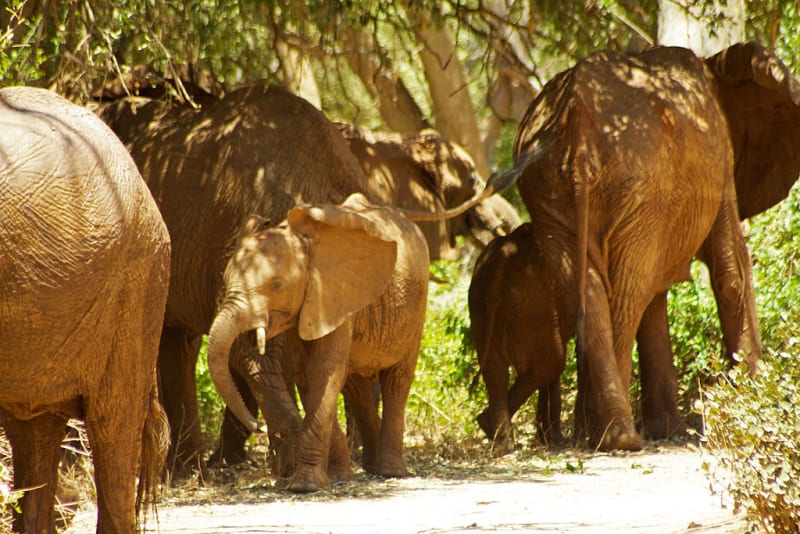
One of the park's best-known features is its famous red elephants. Their unusual colour is not caused by natural pigmentation but by the reddish dust and soil that coat their bodies as they move through the landscape and bathe in dust. Against the dry plains, herds of elephants create a striking sight and have become one of Tsavo's symbols.
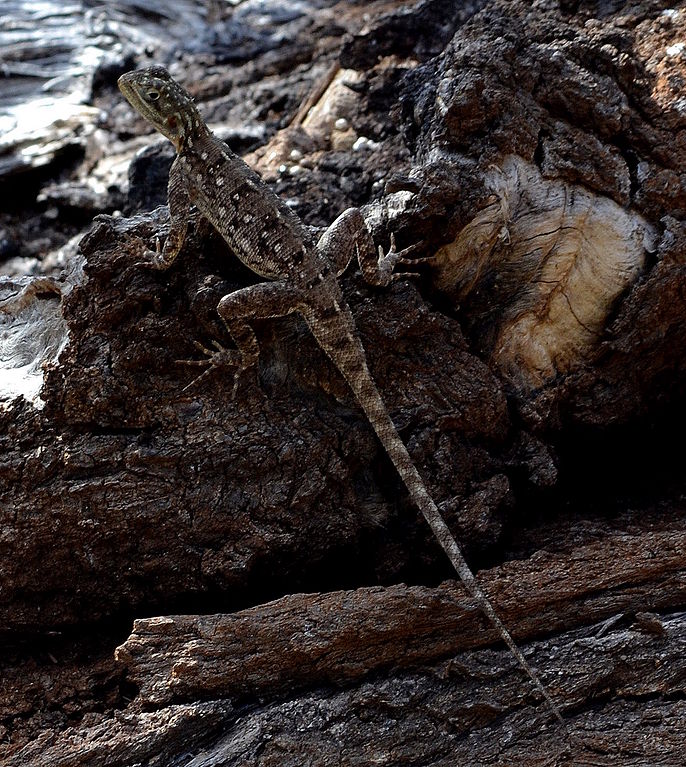
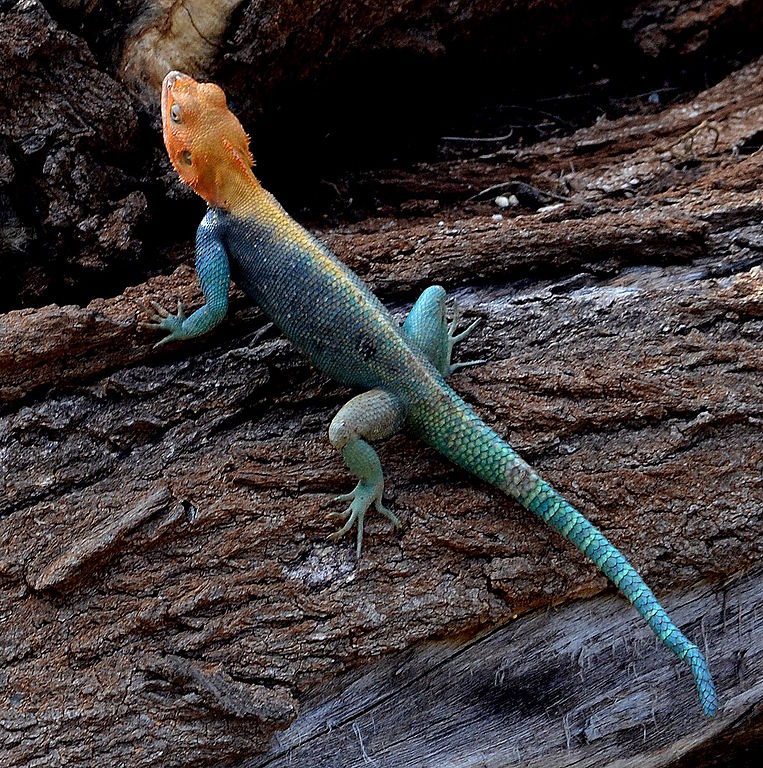
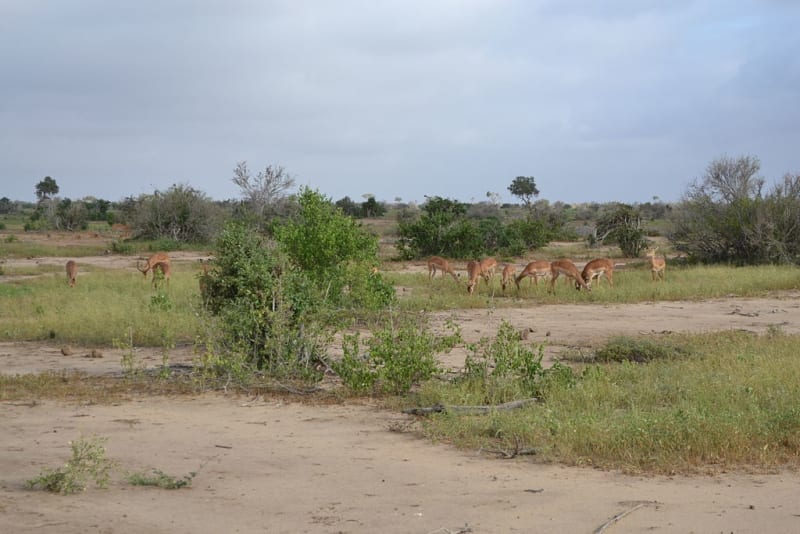
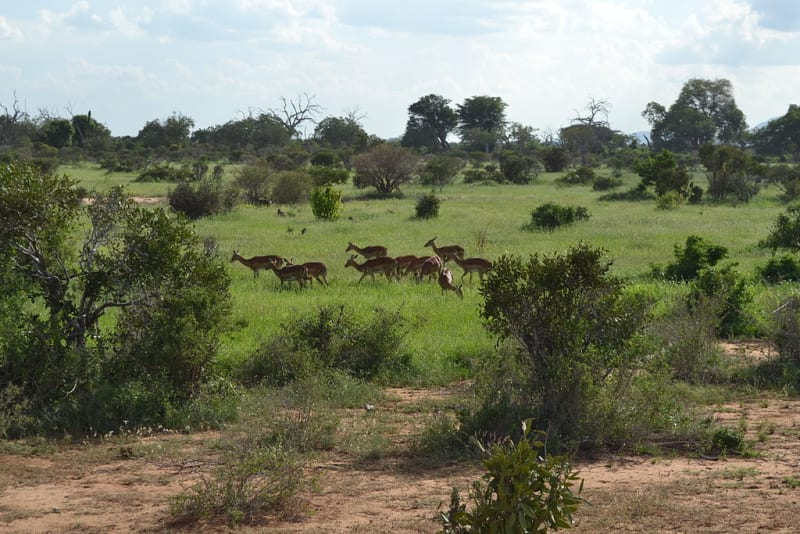
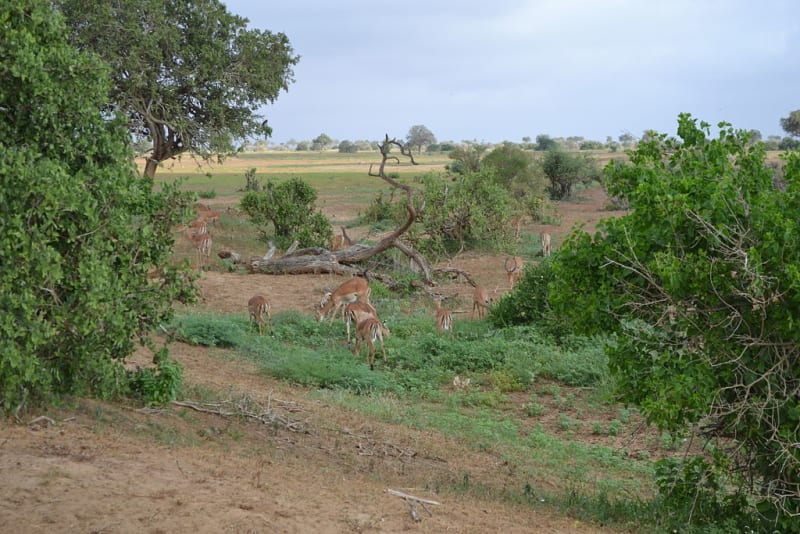
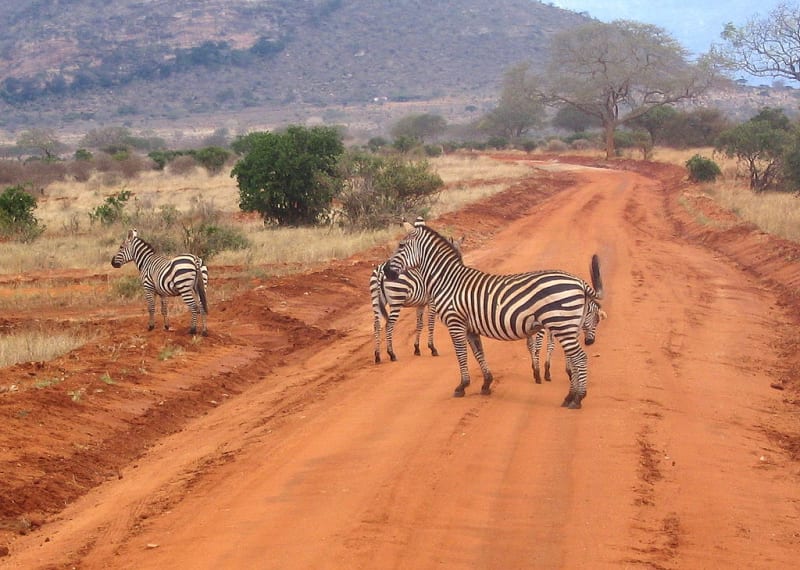
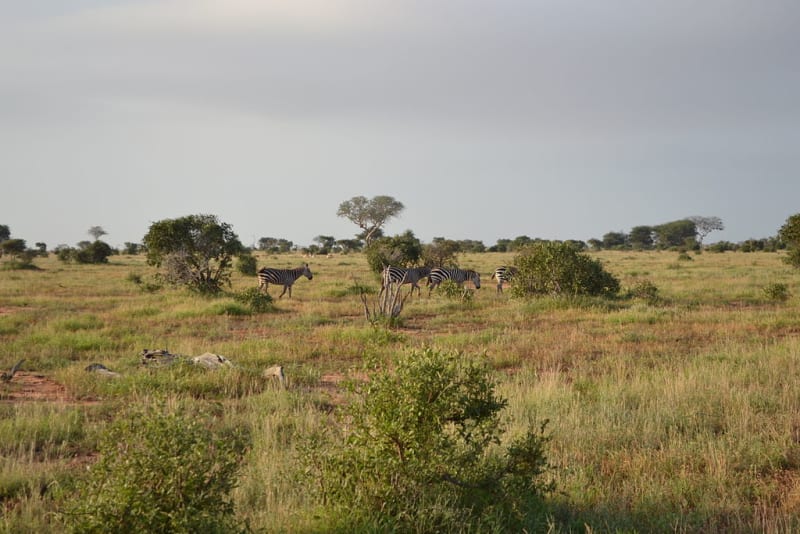
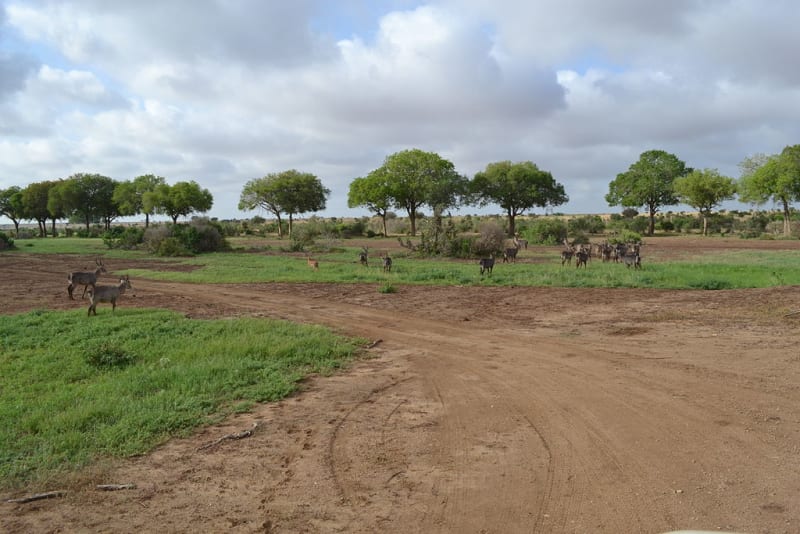
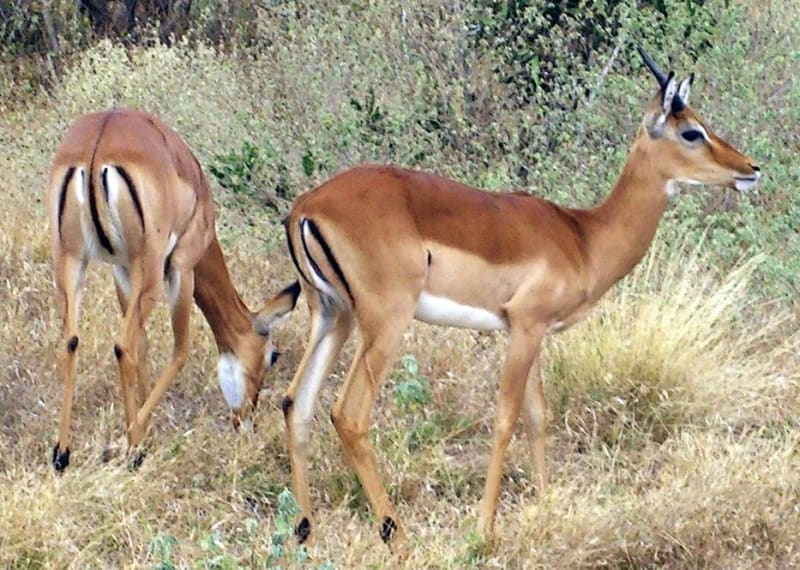
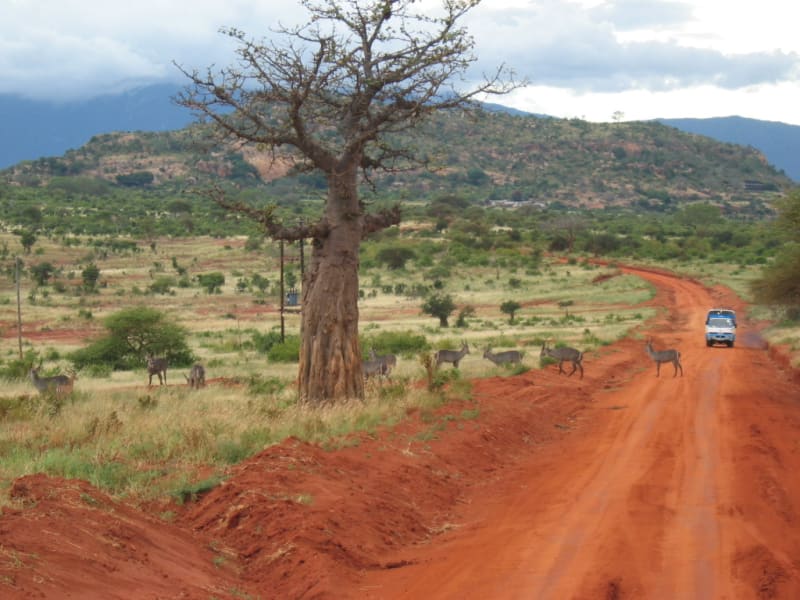
Besides elephants, the park is home to lions, leopards, African buffaloes, giraffes, zebras, antelopes, waterbucks, and other mammals. Hippos and Nile crocodiles can be found near permanent water sources and the Galana River. Wildlife sightings depend on the season, weather, and luck, so no species is guaranteed on every visit.
The Galana River
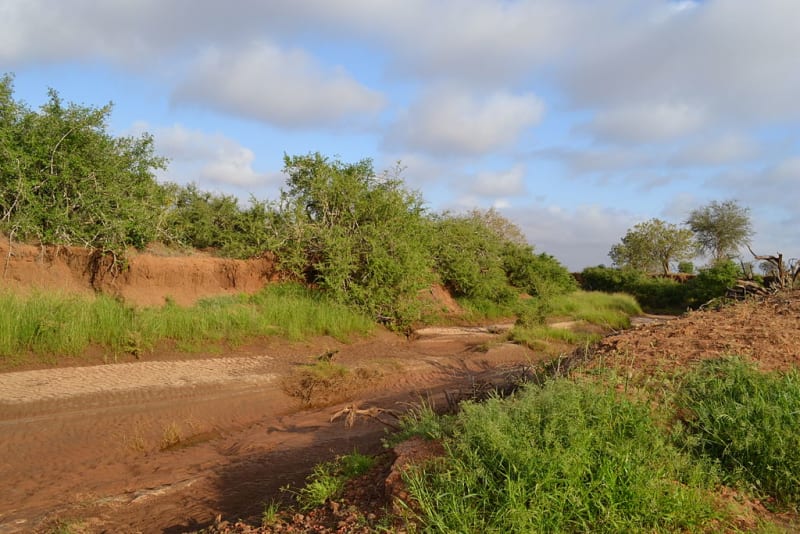
The Galana River is one of Tsavo East's most important natural features. It crosses the arid landscape, creating areas with denser vegetation and attracting animals to the water. Doum palms and other heat-adapted plants grow along its banks. The green river corridor contrasts dramatically with the surrounding red earth.
The riverbanks are good places to watch birds, hippos, and crocodiles, as well as elephants coming to drink. One of the best-known sites along the Galana is Lugard's Falls, where the water rushes through unusually eroded rock formations.
Lugard's Falls
Lugard's Falls is one of the park's most recognisable natural attractions. Rather than a conventional tall waterfall, it consists of a series of rapids along the Galana River. Over time, flowing water has carved narrow passages and unusual shapes into the rocks. Water levels and current conditions vary by season, so the scenery can change considerably.
The site attracts photographers and travellers interested in geology and river landscapes. Crocodiles may be present nearby, so visitors should not approach the water or climb onto rocks without permission and appropriate safety precautions.
The Yatta Plateau
The Yatta Plateau is one of Tsavo East's most remarkable geological features. It is a long, ancient lava flow extending along the park's western boundary and is often described as the world's longest lava flow. Its dark volcanic rock contrasts sharply with the surrounding plains and reflects the region's ancient volcanic history.
The plateau forms a distinctive elongated ridge that stands out against the surrounding landscape. It is of interest not only to tourists but also to people studying the geology of East Africa.
Mudanda Rock and Aruba Dam
Mudanda Rock is a long rocky formation rising above the surrounding plains. A natural catchment area at its base attracts wildlife, especially during the dry season. Elephants and other mammals come here in search of water, making the area a rewarding place to observe wildlife.
Another popular location is Aruba Dam on the seasonal Voi River. The reservoir attracts many animals when water becomes scarce in the surrounding area. The dam and its surroundings are considered good places for safaris and birdwatching.
Birdlife in Tsavo East
Tsavo East is notable not only for its large mammals but also for its rich birdlife. According to the Kenya Wildlife Service, more than 500 bird species have been recorded in the park. Visitors may encounter eagles, vultures, hornbills, ostriches, kingfishers, and many other species, including migratory birds.
This diversity is supported by the combination of open plains, scrubland, and vegetation along rivers. Binoculars are useful for birdwatching, and early morning excursions are often rewarding because many birds are particularly active then.
Safaris and Wildlife Viewing
The main way to explore Tsavo East is by taking a vehicle safari along authorised roads. The great distances and expansive open spaces convey the scale of the African wilderness. Visitors may see herds of elephants, antelopes, and zebras, while also looking for large predators. Animals roam freely throughout the park, so routes and sightings can change from day to day.
The park has lodges, safari camps, and campsites where visitors can stay for several days. To explore the area properly, it is worth allowing enough time and travelling with an experienced driver-guide who understands the landscape and animal behaviour.
How to Reach Tsavo East
The national park lies between Nairobi and the Indian Ocean coast. It can be reached via the Nairobi–Mombasa highway, using entrances such as Voi Gate, Bachuma Gate, and Mtito Andei Gate. The best entrance depends on the route, accommodation, and part of the park being explored. Visitors can also take the railway to Voi or Miasenyi station and continue by road.
Before travelling, check current entry rules, ticket prices, gate opening hours, and road conditions. Distances inside the park are substantial, and some routes require a vehicle suitable for safari travel.
Best Time to Visit
Tsavo East can be visited throughout the year. During dry periods, animals often gather around rivers and waterholes, making them easier to spot. In rainy months, vegetation becomes greener and denser, but unpaved roads may become more difficult to navigate. Early morning and late afternoon are generally comfortable times for wildlife viewing because temperatures are milder and animals are often active.
Visitor Guidelines
Tsavo East is a wilderness area, so visitors must follow safety rules. Remain inside the vehicle except in designated areas, do not feed or approach animals, and stay on established roads. Observe speed limits, take all rubbish away, and follow instructions from park staff. Responsible behaviour helps preserve Tsavo's unique natural environment and makes safaris safer for both people and wildlife.
Gallery