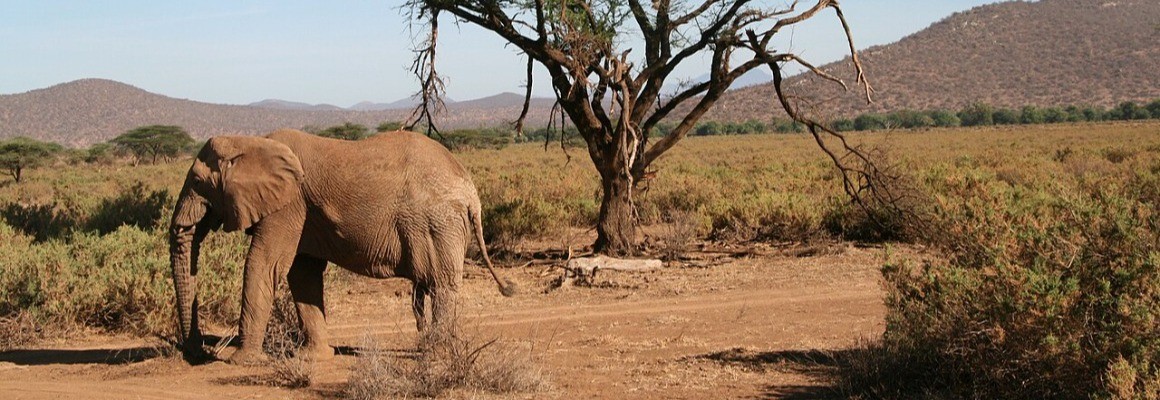
Meru National Park lies in eastern Kenya, northeast of Mount Kenya. Covering about 870 square kilometres, it contains open savannas, acacia woodlands, riverine forests, swamps and rocky hills. This variety of habitats supports a rich community of African wildlife and birds.
Meru is an appealing safari destination away from some of Kenya's busiest tourist routes. Elephants, lions, leopards, cheetahs, buffaloes, giraffes and rhinos inhabit the park. It is managed by the Kenya Wildlife Service and forms part of a wider conservation landscape in eastern Kenya.
Savannas, rivers and swamps
The landscape changes across the park. Drier eastern areas are dominated by open grassland and scrub, while greener woodland occurs in the west. Shaded riverine forests follow the waterways, and isolated rocky hills rise above the plains.
Rivers, seasonal streams, swamps and natural springs are essential to the ecosystem. Wet areas attract elephants, buffaloes, antelopes and waterbirds, especially during dry periods. Vegetation along the water also provides shelter and creates distinct habitats within the savanna.
Wildlife
Meru supports a wide range of large mammals, including African elephants, lions, leopards, cheetahs, buffaloes and several antelope species. Hippos can be found near rivers, while giraffes, zebras and other grazing animals roam the grasslands. Wildlife sightings vary with the season, weather and luck, so no single safari guarantees every species.
The park is also notable for animals associated with Kenya's drier northern regions, including the reticulated giraffe, Grevy's zebra, Somali ostrich and lesser kudu. These species add to the diversity of the safari experience.
Rhino sanctuary
One of Meru's most important conservation features is a dedicated sanctuary for rhinos. It protects black and white rhinos, whose populations were severely affected by poaching in the past. Stronger protection and habitat restoration have helped re-establish these animals in the park.
Rhinos remain vulnerable, so visitors must follow wildlife-viewing rules. They should never approach the animals independently or leave their vehicles where this is prohibited. Keeping a safe distance protects both visitors and wildlife.
The story of Elsa the lioness
Meru gained international recognition through the story of Elsa the lioness. In the late 1950s, conservationists Joy and George Adamson raised an orphaned lioness and gradually prepared her for life in the wild. Her story inspired the book Born Free and its film adaptation, introducing audiences around the world to the importance of wildlife conservation.
Places associated with Elsa can be visited in the park, including her grave and the area around Mughwango Hill, where the Adamsons had their camp. These sites commemorate an important chapter in conservation history and the idea that wild animals should be able to live in their natural environment.
Birds and other wildlife
Meru is also a rewarding destination for birdwatchers, with more than 400 recorded bird species. Rivers, wetlands, grasslands and woodland provide habitats for waterbirds, birds of prey, kingfishers, weavers and many other species.
Reptiles, amphibians and numerous invertebrates also inhabit the park. They play important roles in food webs and help maintain the balance of the ecosystem.
Safaris and visiting the park
Most visitors explore Meru on guided or self-drive safaris along permitted roads. Early morning and late afternoon are popular times because many animals are active then. Visitors should observe wildlife quietly, follow park rules and avoid disturbing animals.
The park can be reached by road from Nairobi via the Nyeri, Nanyuki and Meru area or through Embu. Small airstrips also serve the park and nearby lodges. Before travelling, check road conditions, entry requirements and accommodation availability.
Best time to visit
Meru has a generally warm climate, with drier and wetter periods. During dry weather, animals may be easier to spot near rivers, swamps and waterholes. In the rainy season, vegetation becomes denser and some roads may deteriorate, but the landscape turns green and bird activity can be rewarding.
Conditions vary by location and year. Bring binoculars, sun protection, insect repellent, drinking water and clothing suitable for cooler early mornings.
Conservation
Meru's history shows how poaching and habitat loss can damage wildlife populations. Improved protection and the establishment of secure rhino areas have been important steps in recovery. The park also helps maintain natural corridors through which wildlife moves between protected areas.
Meru National Park combines varied African landscapes, abundant wildlife and one of the best-known stories of an animal returning to the wild. It is a rewarding destination for travellers seeking a classic savanna safari and a deeper understanding of conservation in Kenya.
Gallery