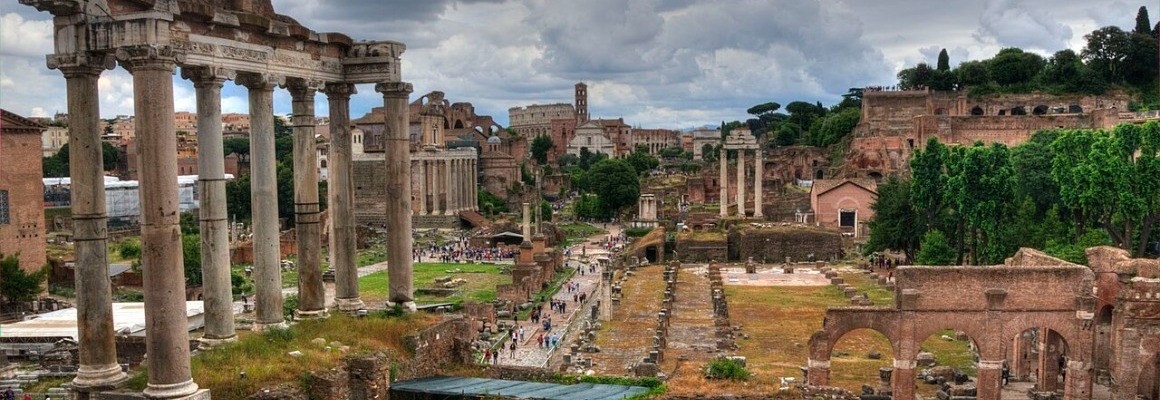
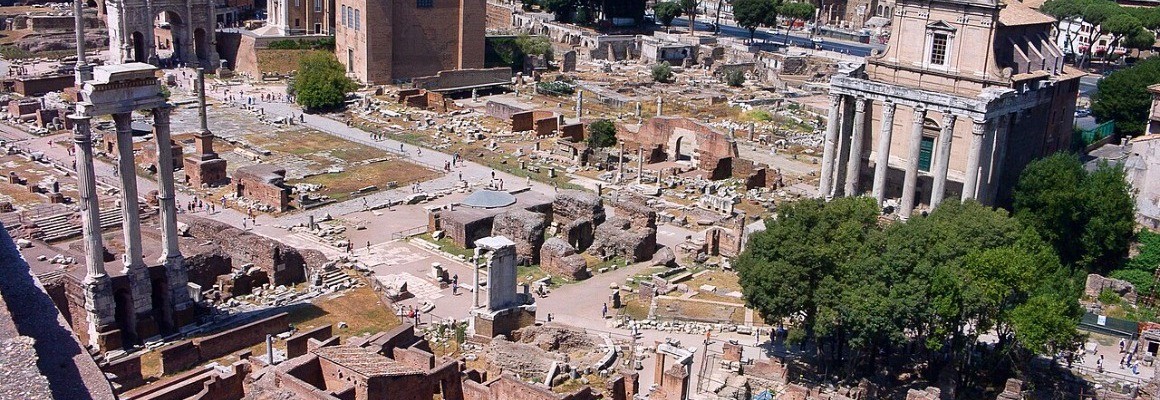
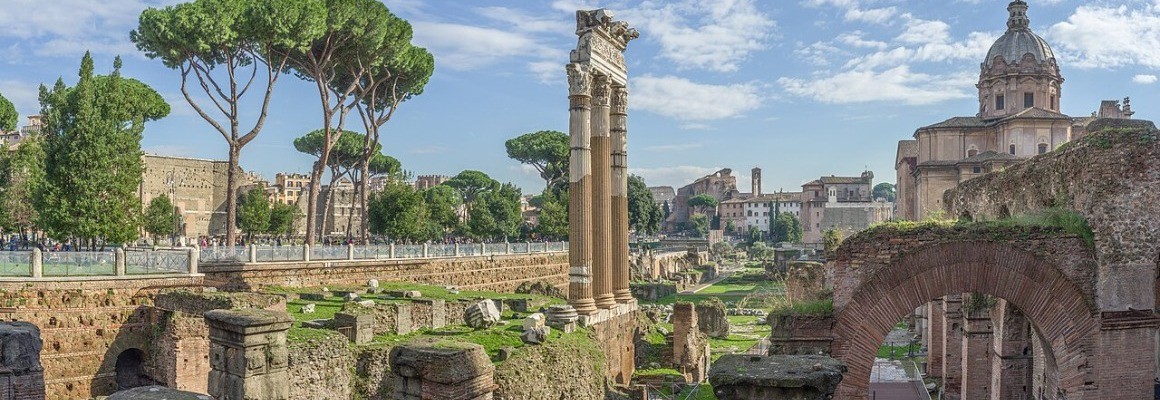
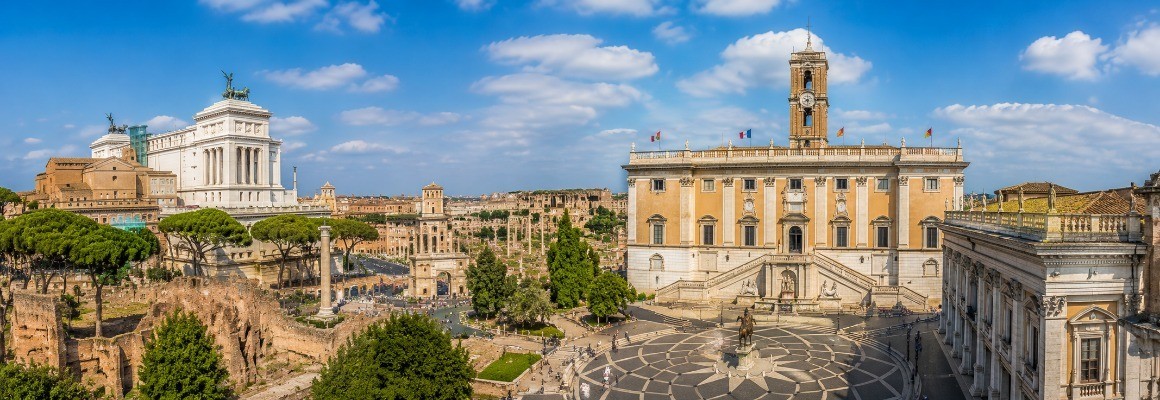
The Roman Forum is one of Italy’s most important archaeological complexes, located in the historic centre of Rome between the Capitoline, Palatine and Esquiline hills. For many centuries, it was the principal public space of ancient Rome, hosting political assemblies, court hearings, religious ceremonies, trade and ceremonial processions. Today, the ruins of temples, basilicas, arches and ancient streets reveal different periods of Roman history, from the early Republic to late antiquity.
History of the Roman Forum
In ancient times, the valley between Rome’s hills was marshland. As early Rome developed, the area was drained, and by the late seventh century BC a public square had begun to take shape. Sanctuaries, meeting places, commercial spaces and buildings connected with civic administration gradually appeared around it.
During the Roman Republic, the Forum became a place where major state affairs were debated. Politicians and orators addressed citizens, courts heard cases and laws were discussed. Military victories were celebrated with triumphal processions along the Via Sacra, or Sacred Way, toward the Capitoline Hill. The Forum brought together politics, religion, law and everyday urban life.
As Rome expanded, the original square could no longer meet all the needs of the growing state. During the late Republic and the imperial period, rulers built new structures, renovated existing buildings and added monumental decorations. The nearby Imperial Fora, initiated by Julius Caesar and continued by later emperors, expanded the city centre, while the older Forum retained its religious and symbolic importance.
Construction and restoration continued into late antiquity. One of the last major monuments was the Column of Phocas, erected in 608 AD in honour of the Byzantine emperor. As Rome’s political and economic life changed, the Forum gradually lost its central role. Some buildings collapsed, others were dismantled for building materials, and the low-lying area eventually became covered with soil and vegetation.
In later centuries, parts of the area were used as pasture. Renewed interest in antiquity led to archaeological investigations and extensive excavations. Foundations, colonnades, ancient roads and public buildings gradually emerged from beneath the ground. Today, the Roman Forum is among the most important sites of classical heritage and forms part of Rome’s historic centre, a UNESCO World Heritage property.
Architecture and layout
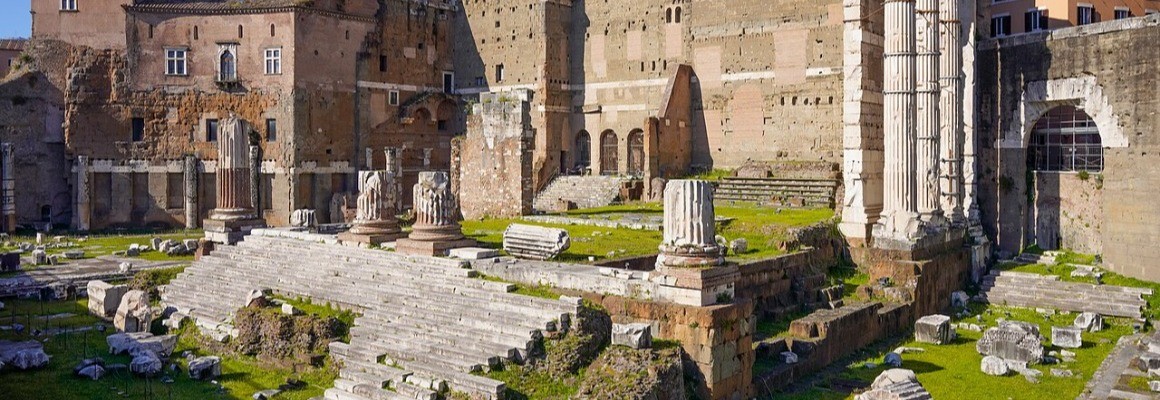
The Forum developed over many centuries, so its architecture does not follow a single original plan. Temples, basilicas, administrative buildings, triumphal arches and monuments once surrounded the public square. Some survive as tall columns and walls, while others remain only as foundations and fragments of masonry.
The Via Sacra was one of the principal routes through the area. Religious processions and victorious armies travelled along it. Basilicas served as venues for legal proceedings and business, temples were religious centres and symbols of the state, and triumphal arches commemorated imperial military victories.
Main monuments
Arch of Septimius Severus
This monumental arch was built in 203 AD at the western end of the Forum to honour Emperor Septimius Severus and his sons Caracalla and Geta. Its reliefs depict campaigns against the Parthian Empire. The arch celebrated the victories of the imperial dynasty and the power of Rome.
Temple of Saturn
The Temple of Saturn is recognisable by its tall surviving columns near the foot of the Capitoline Hill. Saturn was an ancient deity associated with agriculture and prosperity. The temple housed the state treasury of the Roman Republic, giving it both religious and administrative importance.
Temple of Vesta
The Temple of Vesta was dedicated to the goddess of the hearth and the sacred fire. Its circular shape differed from the rectangular form of many ancient temples. The Vestal Virgins maintained the fire, which symbolised the well-being and continuity of the Roman state. Parts of the foundation and several restored columns survive.
House of the Vestal Virgins
Near the Temple of Vesta stood the residence of the priestesses responsible for maintaining the sacred fire. Statues decorated its courtyard, while living and service rooms were arranged around an open space. The remains help visitors imagine the lives of women who held a special position in Roman religious society.
Curia Julia
The Curia Julia was the meeting place of the Roman Senate. Julius Caesar began its construction, and Emperor Augustus completed it. Much of the building’s volume survived because it was later used as a Christian church. It offers insight into Roman political life and the place where senators debated state affairs.
Basilica of Maxentius and Constantine
The impressive remains of the Basilica of Maxentius and Constantine demonstrate the engineering achievements of late Roman architecture. Construction began under Maxentius in the early fourth century and was completed under Constantine. Although much of the building has disappeared, the surviving walls convey the scale of the original structure.
Temple of Antoninus and Faustina
Emperor Antoninus Pius built this temple in memory of his wife Faustina; after his death, it was dedicated to him as well. Its tall façade columns are among the Forum’s most striking architectural features. The building was adapted into a church in the Middle Ages, helping preserve part of its ancient structure.
The Rostra and the central square
The Rostra was a platform from which orators addressed the citizens. Its name refers to the beaks of captured enemy ships that once decorated it. The tradition of public speaking highlights the Forum’s role as a centre of political communication.
Religion and public life
Religion was closely linked to state authority in ancient Rome. The Forum’s temples honoured gods and deified rulers, while priests conducted ceremonies and festivals believed to influence the city’s well-being. At the same time, the Forum was a place for everyday encounters. Citizens discussed news and business, politicians delivered speeches, and traders made agreements. This combination of religious, political and commercial functions made it the heart of urban life.
The Roman Forum and the Imperial Fora
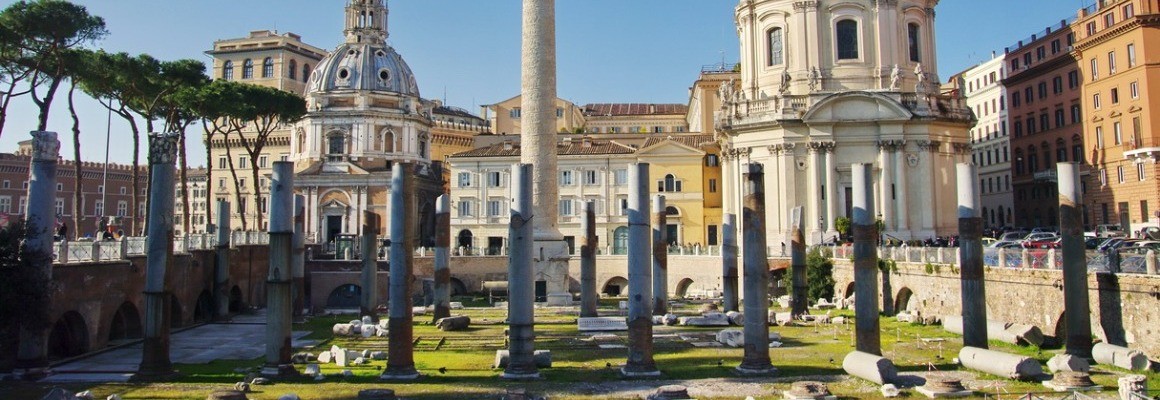
The Roman Forum should not be confused with the nearby Imperial Fora, which form a separate archaeological complex. The older Forum developed over centuries and was closely associated with Republican traditions. The Imperial Fora were later squares created by rulers to expand the city centre and display their authority. The best-known examples include the fora of Julius Caesar, Augustus and Trajan.
Visiting the Roman Forum
The Forum is in central Rome, near the Colosseum and Palatine Hill. The archaeological area forms part of the Colosseum Archaeological Park. It is advisable to choose an entrance and ticket in advance because access arrangements and visitor routes can change.
Allow several hours to explore the site. The paths are uneven, with ancient paving, steps and changes in elevation, so comfortable shoes are essential. In summer, bring water, a hat and sun protection because shade is limited in open areas. An audio guide or guided tour can help explain the purpose of the different monuments.
Nearby attractions
The Colosseum, Palatine Hill and Imperial Fora are close by. The Colosseum is the enormous amphitheatre where public spectacles took place in antiquity. Palatine Hill is associated with Rome’s foundation legends and imperial palaces. The Imperial Fora show how the city centre expanded as Roman rulers extended their power. The nearby Capitoline Hill offers views across the archaeological area.
The significance of the Roman Forum
The Roman Forum is more than a collection of ancient ruins: it preserves evidence of Rome’s political, religious, economic and architectural history. Its monuments show how ideas about authority, public space and construction changed over the centuries. Walking among the columns, temples and ancient roads offers a glimpse of the place that served as the heart of Roman public life for more than a thousand years.
Gallery