Blickling Hall is a historic country estate in Norfolk, eastern England, known for its imposing red-brick mansion, gardens and extensive parkland. It lies near the small town of Aylsham and is one of the region's notable historic residences. The estate is now cared for by the National Trust, which preserves its architecture, collections and surrounding landscape.
History of the estate
Blickling's history stretches back many centuries. In the Middle Ages, a manor here was associated with Harold Godwinson, the last Anglo-Saxon king of England. The property later passed to the Boleyn family. Geoffrey Boleyn acquired the estate in 1452, and it subsequently passed to his descendants. Blickling is associated with the early life of Anne Boleyn, the future second wife of Henry VIII, although her exact birthplace has not been conclusively established.
In 1616, Sir Henry Hobart purchased the estate and commissioned architect Robert Lyminge to build a new house on the site of an earlier residence. Construction continued until 1626. The resulting mansion is an important example of Jacobean architecture, associated with the reign of James I. The house and its grounds were remodelled several times during the following centuries.
Architecture of Blickling Hall
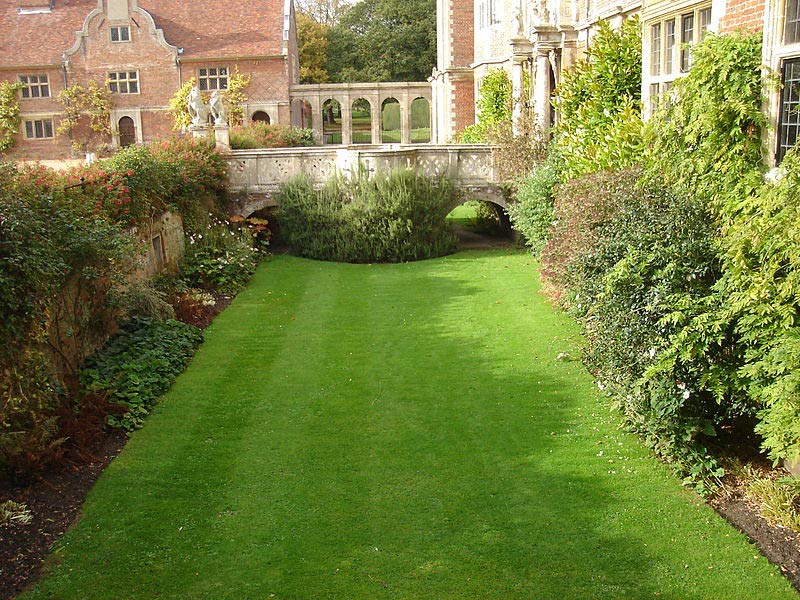
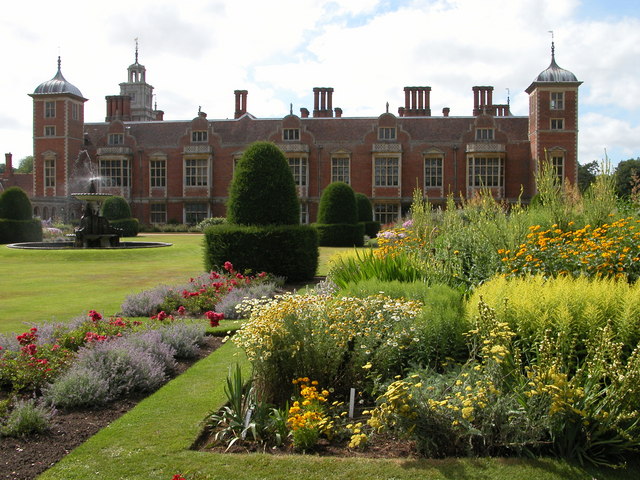
The mansion is distinguished by its red-brick façades, symmetrical composition and corner turrets. Its appearance reflects the ideals of a prestigious country residence in 17th-century England. Inside, historic rooms preserve decorative plaster ceilings and other features from the house's early period.
The Long Gallery is one of the best-known rooms. Its elaborate decoration demonstrates the skill of Jacobean craftsmen and forms an important part of the building's historic interiors. Period furniture, works of art and objects associated with former owners add to the atmosphere of the house.
The historic library
Blickling Hall is renowned for its library, one of Britain's significant historic book collections. The collection reflects the interests and cultural connections of several generations of owners. Its books and documents offer insight into the intellectual life of the English aristocracy and the development of major private libraries.
Gardens and parkland
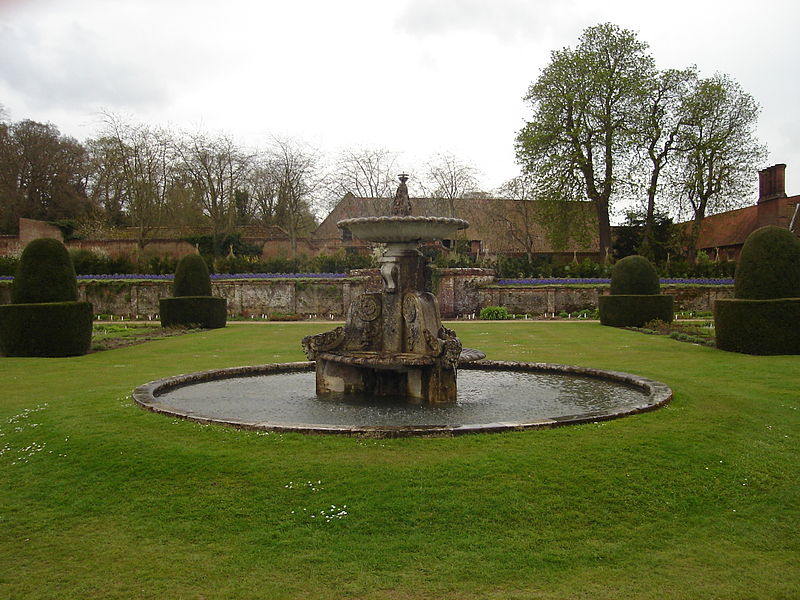
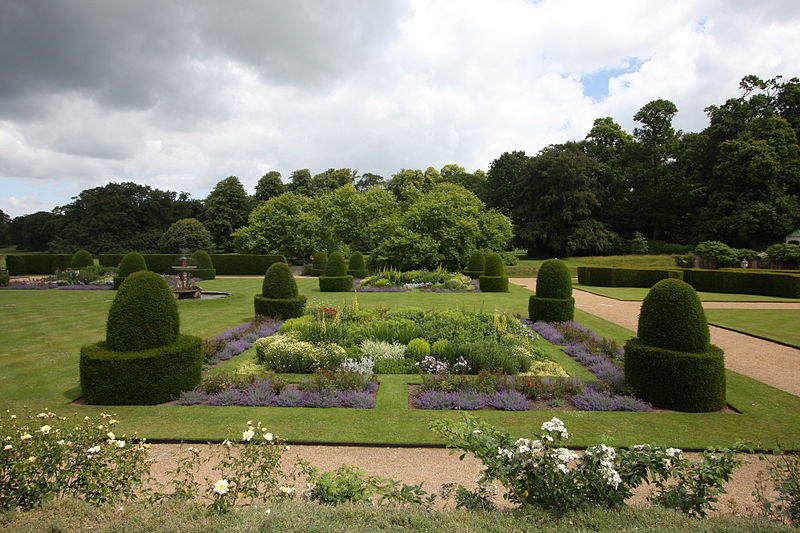
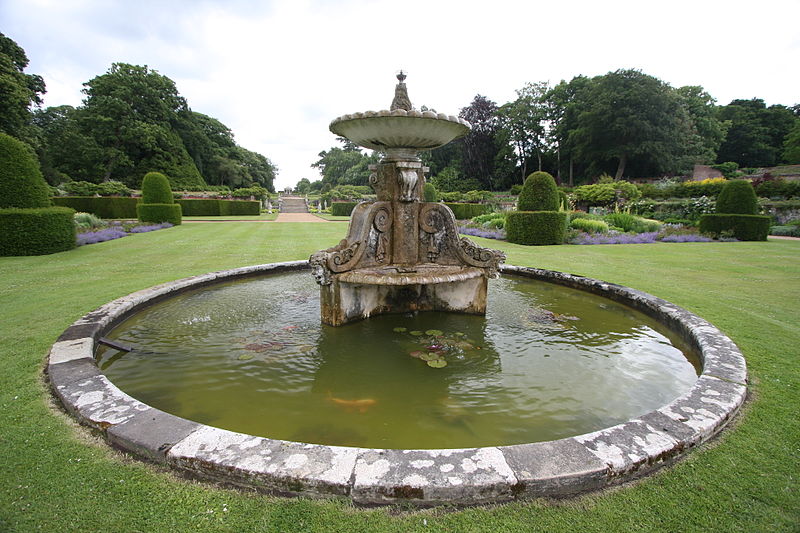
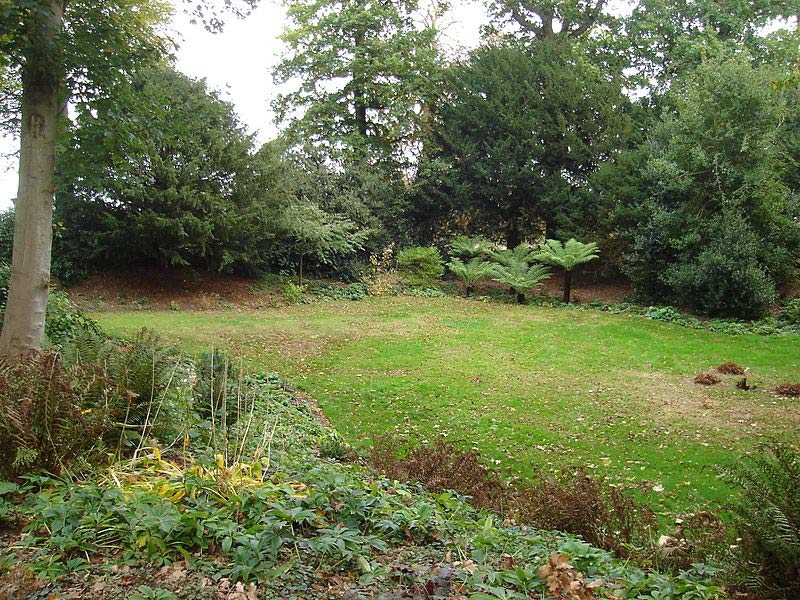
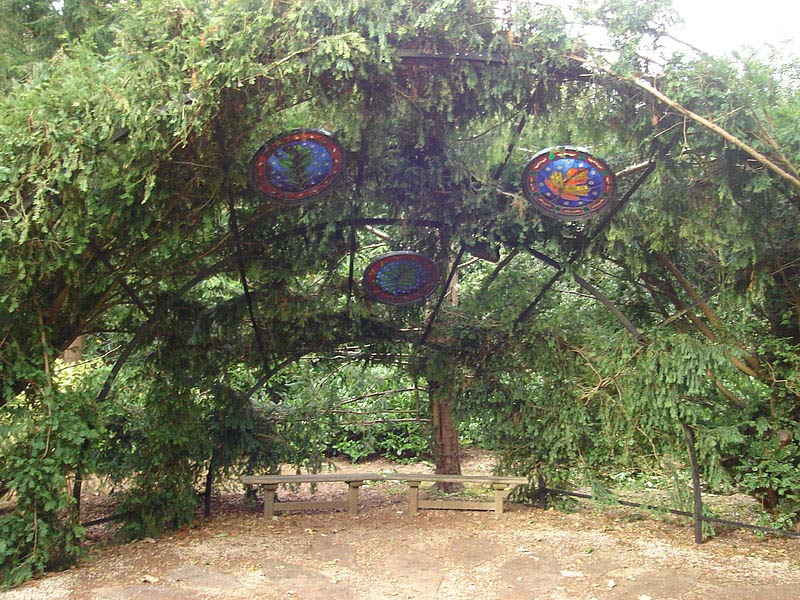
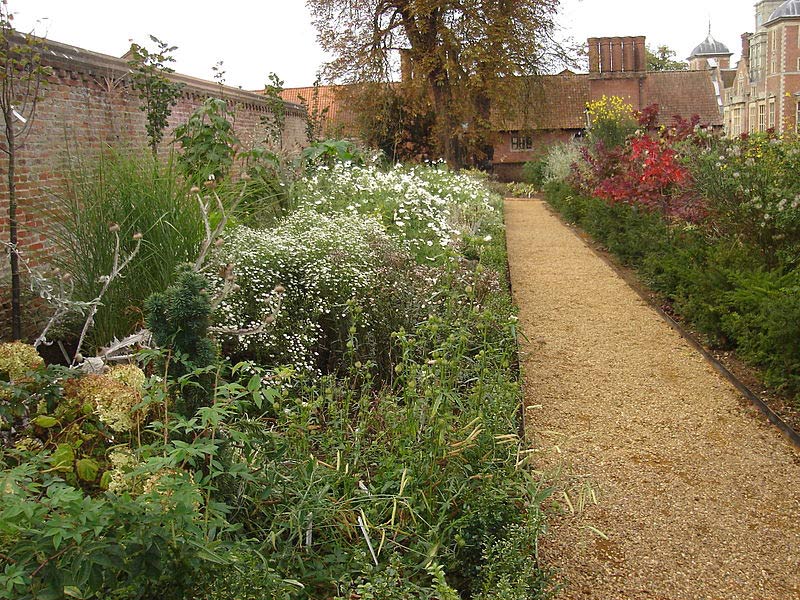
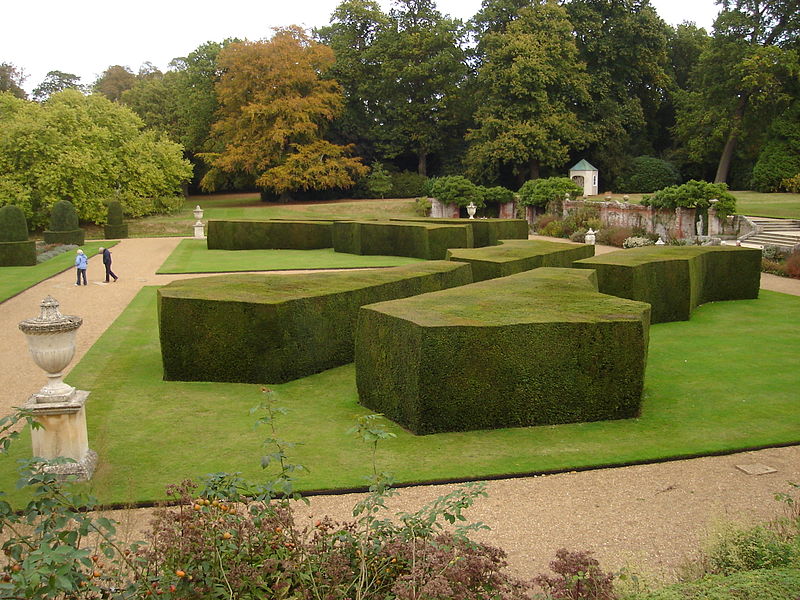
The historic gardens surrounding the mansion cover about 55 acres, or 22 hectares. They include formal flowerbeds, a geometrically designed parterre, ancient yew hedges, walking paths and a walled garden where fruit, vegetables and herbs are grown.
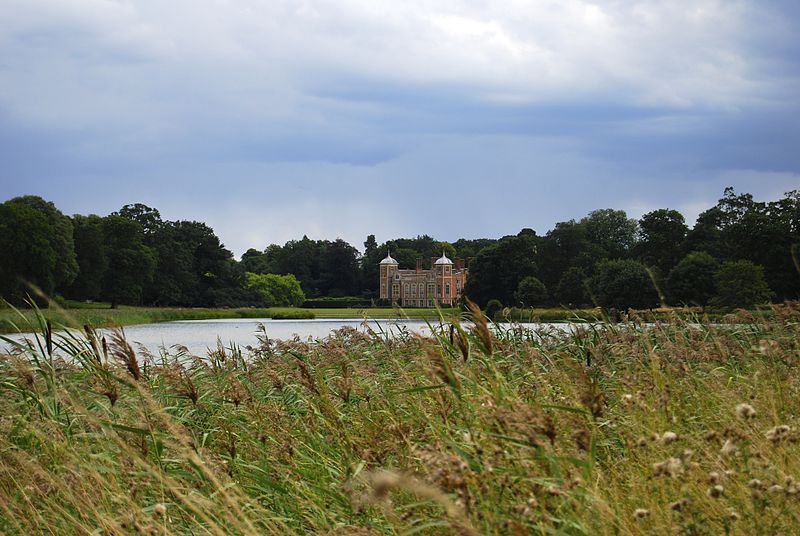
Garden designer Norah Lindsay made an important contribution to the parterre's redesign in the 1930s. Other features include a Doric temple, an orangery and a lake. Beyond the formal gardens, the estate extends across woodland, meadows and farmland. The entire estate covers more than 4,600 acres, approximately 18.6 km², with walking and cycling routes through the historic landscape.
Blickling during the Second World War
During the Second World War, parts of the estate were used in connection with Royal Air Force operations. Personnel from RAF Oulton were billeted on the grounds. Today, the RAF Oulton Museum tells the story of the station, its aircrews and the people connected with its wartime history.
Visiting the estate
Blickling Hall offers an opportunity to explore English history, architecture and garden design. Visitors can tour the areas of the mansion open to the public, stroll through the gardens, relax beside the lake and follow walking routes across the parkland. Access to individual areas depends on the season and opening schedule.
The estate is in rural Norfolk, about 2 km from Aylsham. Travelling by car is generally the most convenient option. Before visiting, check current opening times and admission arrangements on the National Trust's official website. Blickling Hall combines architectural heritage, stories of prominent English families and a peaceful natural setting.
Gallery