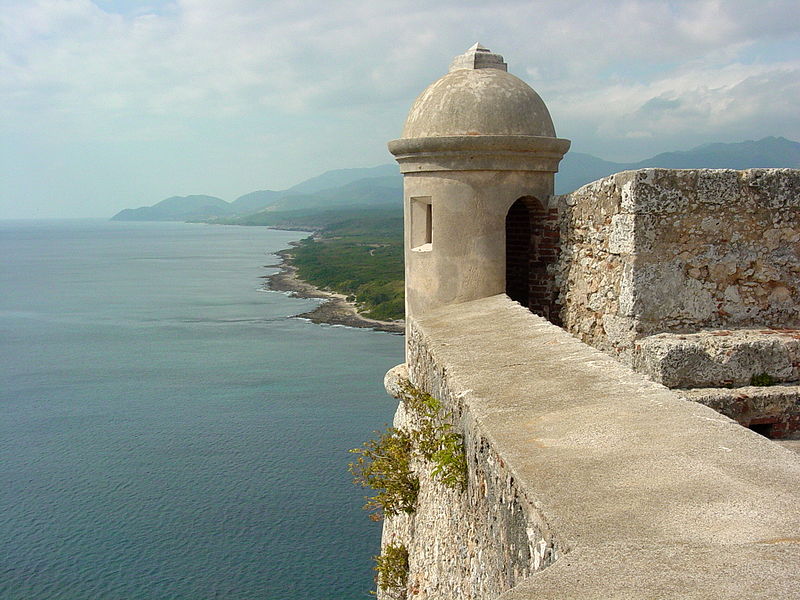
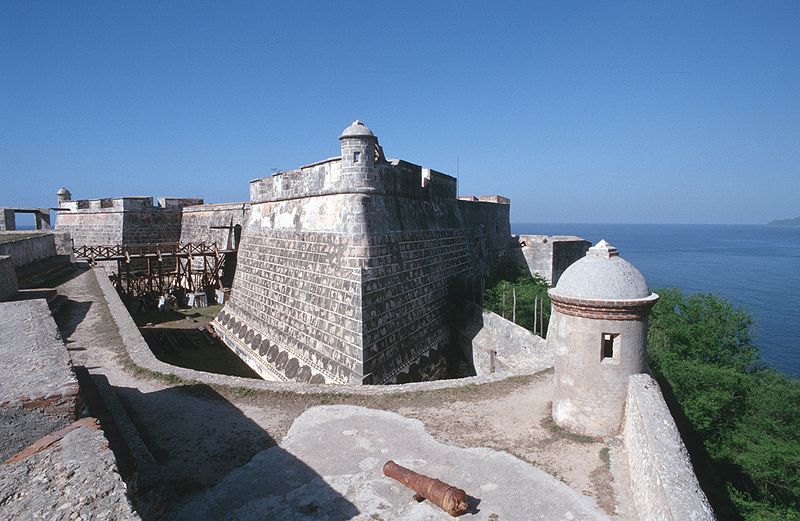
San Pedro de la Roca is a historic coastal fortress in southeastern Cuba, guarding the entrance to Santiago de Cuba Bay. Built on the rocky promontory of El Morro, it was designed to protect an important Spanish colonial port in the Caribbean. Its bastions, artillery batteries and terraced levels follow the steep contours of the shoreline.
History of the Fortress
During the 17th century, the Caribbean was a region of intense rivalry between European powers and competition over maritime trade routes. Construction of the stone fortress began in 1638, following plans associated with military engineer Juan Bautista Antonelli. The complex was strengthened and rebuilt over the following centuries as warfare, earthquakes and coastal conditions damaged its structures.
Architecture on a Rocky Headland
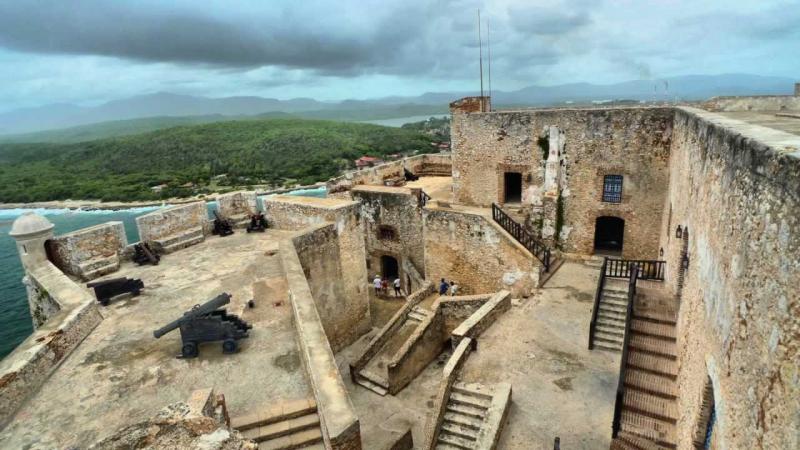
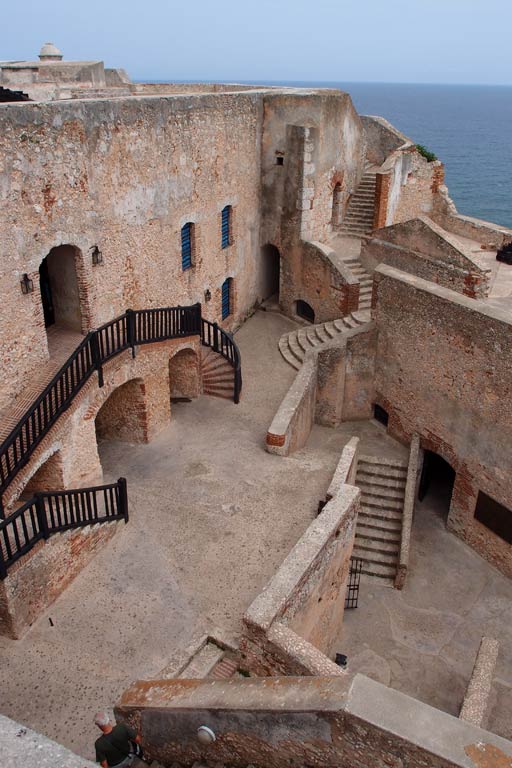
The fortress is a layered defensive complex rather than a single building. Stone walls, platforms, stairways, powder magazines and gun emplacements occupy different levels of the rocky promontory. Its layout reflects Renaissance military engineering, adapted to the terrain and the need to control the entrance to the bay.
Bastions and Defensive Works
San Pedro de la Roca formed part of a broader system protecting Santiago de Cuba Bay. Associated works include additional forts and batteries such as La Estrella, Santa Catalina and Aguadores. Different levels of the main fortress accommodated artillery, ammunition storage, guard posts and garrison facilities, allowing defenders to cover approaches from the sea.
Its Role in Cuban History
The fortress reflects a period when controlling Caribbean ports and shipping routes was central to colonial power. It illustrates how European fortification principles were adapted to the geography of the Caribbean coast. By the late 19th century, the site had ceased to serve as an active military stronghold, and restoration work was undertaken in the 20th century.
Visiting the Fortress
Today, San Pedro de la Roca is a historic monument and museum site. Visitors can explore stone walls, stairways, artillery positions and interior spaces, while enjoying views of the Caribbean Sea and the entrance to the bay. The route includes steps and uneven surfaces, so visitors should plan accordingly and check current opening information locally.
UNESCO World Heritage Site
San Pedro de la Roca was inscribed on the UNESCO World Heritage List in 1997. It is recognised as one of the most complete and best-preserved examples of Spanish-American military architecture based on Italian and Renaissance design principles. The fortress demonstrates how defensive engineering was adapted to protect colonial ports in the Caribbean.
Gallery