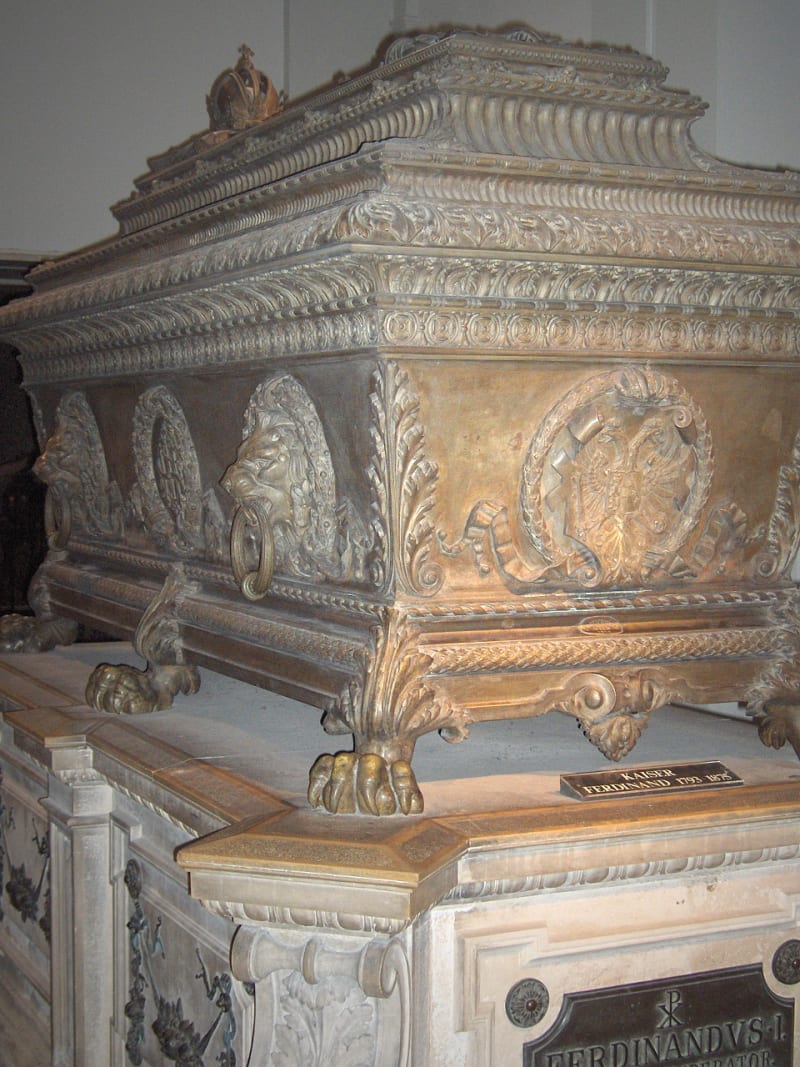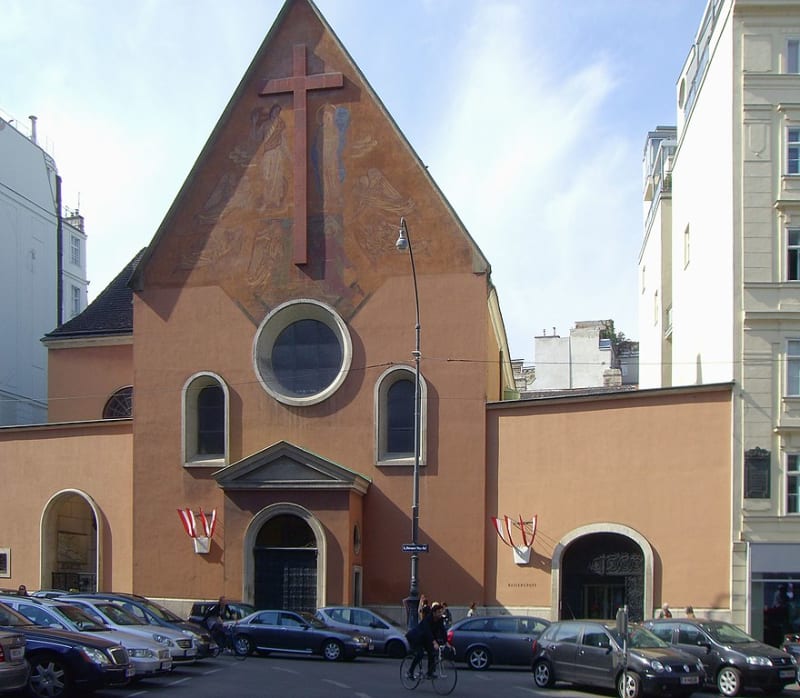

In the cellars under the small and modest-looking Capuchin Church in Vienna is the family crypt of one of the most powerful royal dynasties in Europe – the Habsburg dynasty. The Habsburgs had ruled on the Austrian throne since 1282. Representatives of the dynasty led the Roman Empire, the Austro-Hungarian and the Austrian. The years of their rule were measured in centuries.
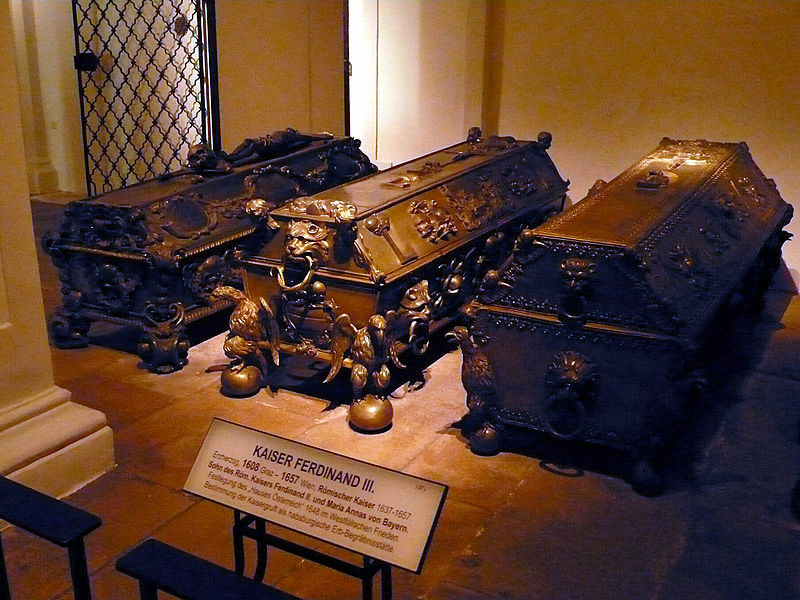
The tomb is also called the "Crypt of the Founders" or the "Crypt of the Capuchins." The last resting place of the bodies of crowned heads is surrounded by a halo of mysticism and eternal mystery. The space of the crypt, consisting of 9 smaller crypts and a chapel, is filled with mournful solemnity. For the first time, the Imperial crypt received its inhabitants in 1633. At that time, the bodies of Empress Anna and her husband Matvey were delivered to the cellars of the church. Anna, the founder of this church, died in 1618, and Emperor Matthew died in 1619. The sarcophagi with the bodies of the crowned heads were placed in the crypt after the construction of the church was completed, and the sacrament of the consecration ceremony was performed.
The burial ritual adopted in the house of the Habsburgs is unique and at the same time creepy. The heart of the deceased august person was separated and placed in an urn made of pure silver. Then he was taken to the "Crypt of Hearts" in the Augustinian Church for eternal preservation. Other internal organs were sealed in copper urns and sent to the Ducal Crypt at St. Stephen's Cathedral. The bodies were buried in the Imperial Crypt in the basements of the Capuchin church.
In front of the doors of the Capuchin temple, the mournful procession accompanying the coffin with the body of the crowned person stopped. The herald was supposed to knock on the gate. The monk shouted in Latin, "Who asks to enter?" In response, he was told that it was the emperor. The monk said loudly and solemnly that such a thing was not known here. It went on like this twice. For the third and last time, when the answer finally sounded like it was just an unfortunate sinful servant of God, the church gatekeeper unlocked and opened the gates.
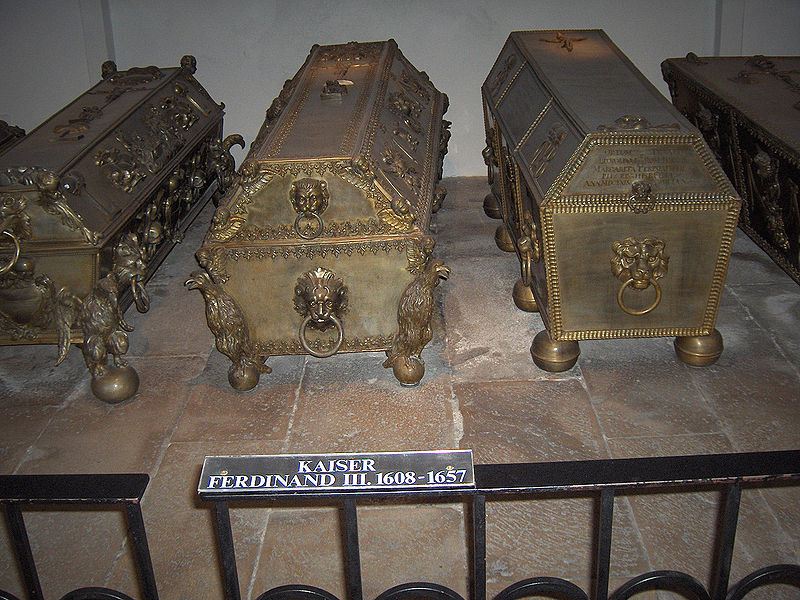
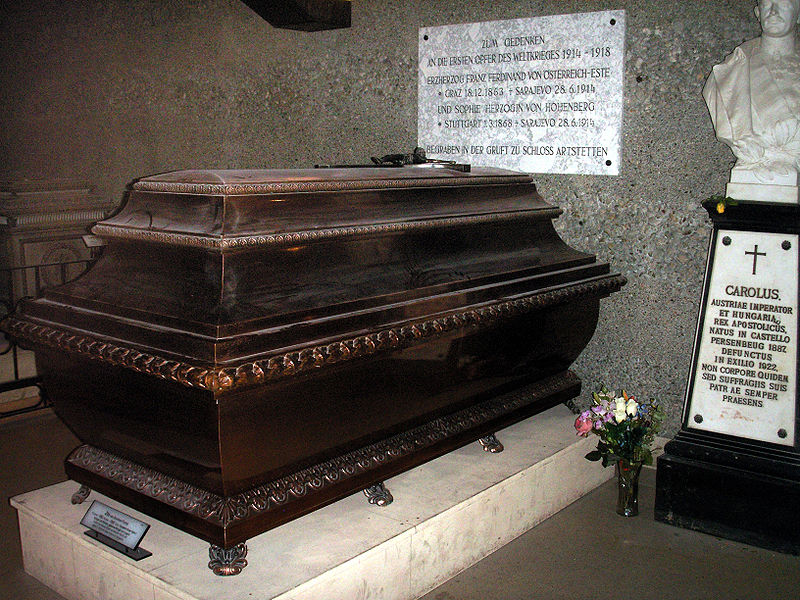
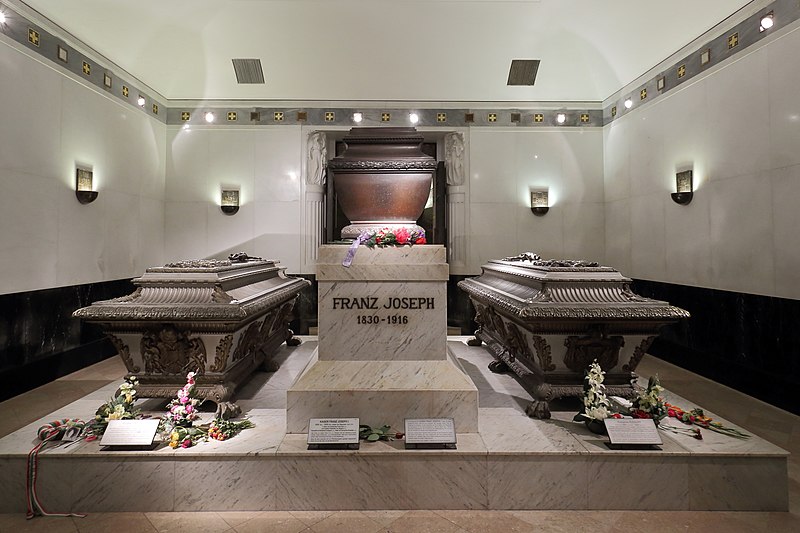
149 representatives of the dynasty are buried in the Imperial Crypt. Among them are 12 emperors and 19 empresses. The space of the Imperial Crypt resembles streets leading to different rooms. The coffins of the spouses of F. are installed in the most honorable place. Joseph I and Elizabeth. The emperor lived to be 86 years old, and the Empress was brutally murdered with a screwdriver in the hands of an anarchist in 1898. Next to the coffins of her parents lies their son Rudolph, who killed himself in 1889. Maria Luisa, the 2nd wife of Napoleon, found peace here, and the body of the Mexican Emperor Maximilian rests – this is Brother F. Joseph I. There is one person among the deceased who has no family ties to the Habsburg family. This is Countess K. Fuchs-Mollard. She was the tutor of Maria Theresa, whom the young Maria loved very much. During her lifetime, the Countess expressed a desire to be with her pupil after her death.
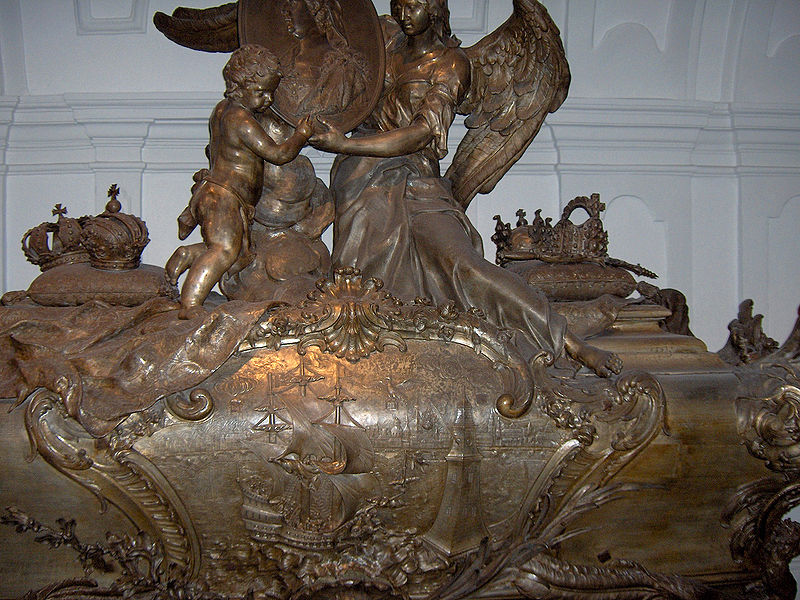
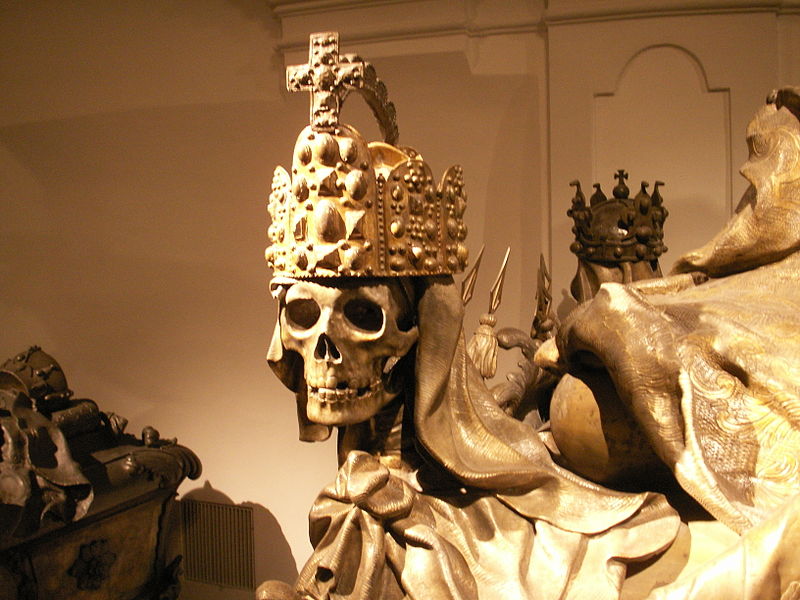
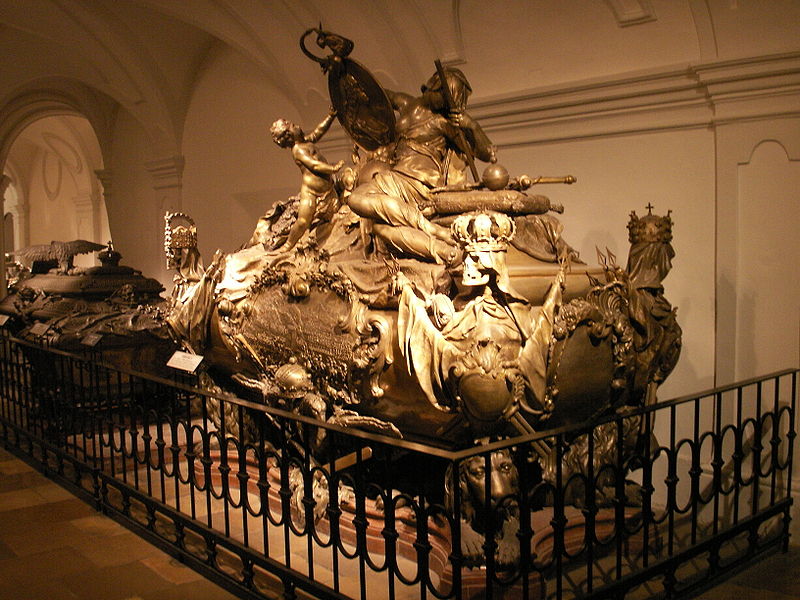
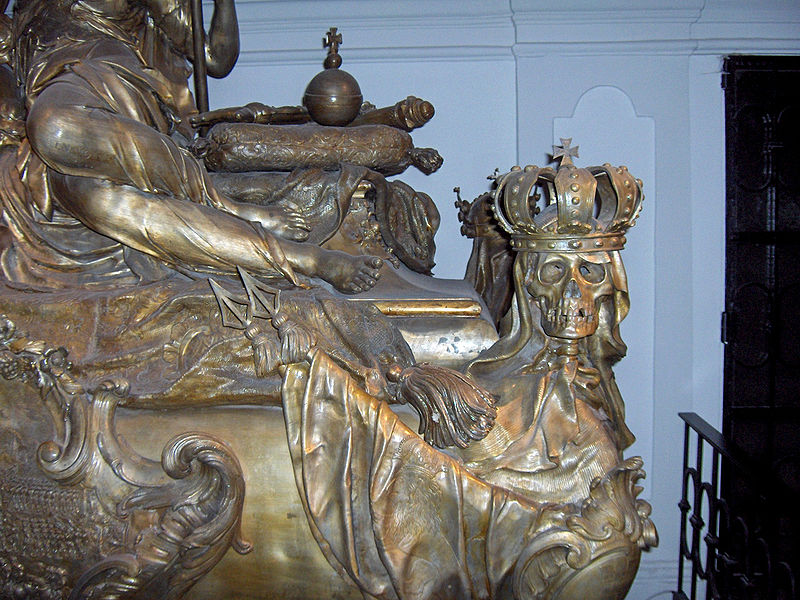
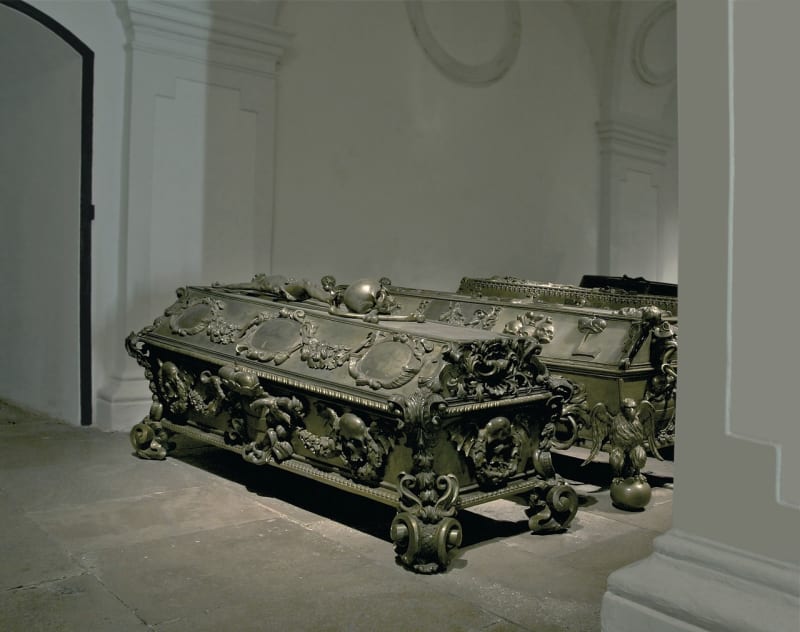
The magnificent double tomb of Maria Theresa and Franz of Lorraine, her husband, was made by sculptor B. F. Moll in the pompous Rococo style. The sarcophagus measures 3 m wide and 2 m long. On the sarcophagus, the sculptor depicted a scene from the couple's family life. Mary's son Joseph II is buried nearby in a simple, no-frills coffin. The original and no less magnificent sarcophagus of Charles VI, who died in 1740, is of genuine interest. It is also made in Rococo style. The sarcophagus is decorated with an artificial skull with the crown of the empire.
The tomb of Maria Josephine of Bavaria, wife of Emperor Joseph II, is impressive. The massive tombstone is decorated with sculptures of angels. Infants and children who died at an early age are buried in one of the crypts. Almost all sarcophagi are decorated by Moll. His unique works attract the interest of tourists from all over the world and certainly evoke a sense of awe.
Currently, burials continue to be carried out in the Imperial Crypt. So, in 1989, the last Austrian Empress Zita (Cita) of Bourbon-Parma, the wife of Charles 1, was buried here in the chapel. In 2011, her son Otto von Habsburg, the last Crown Prince and famous politician of Europe, was buried here.
Gallery