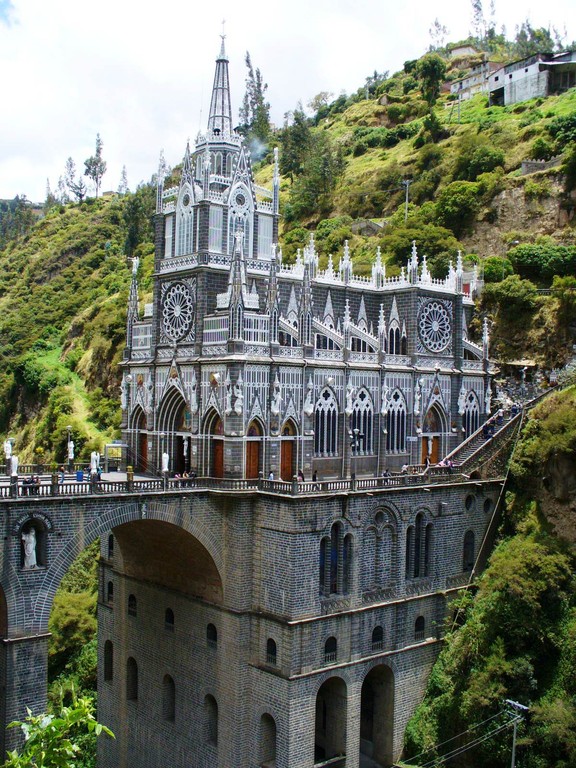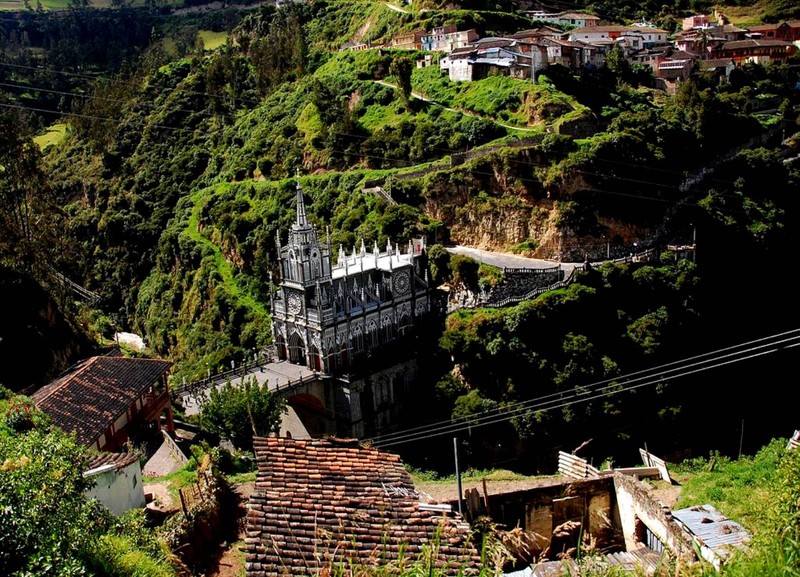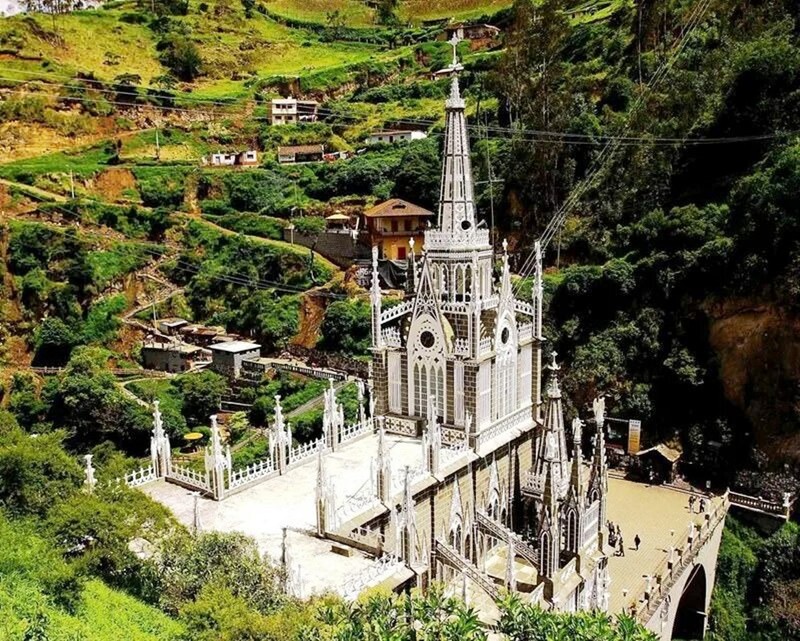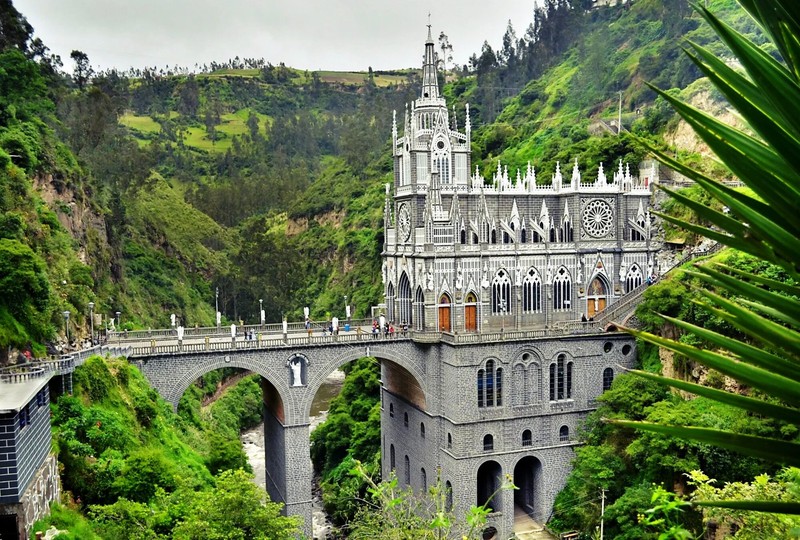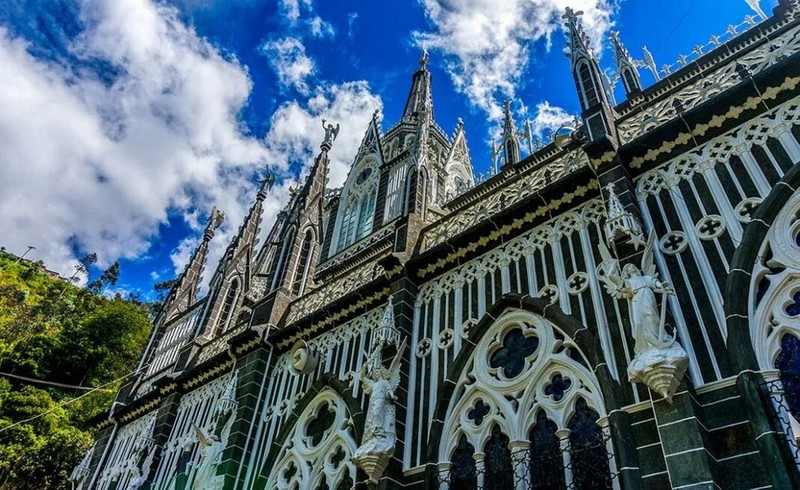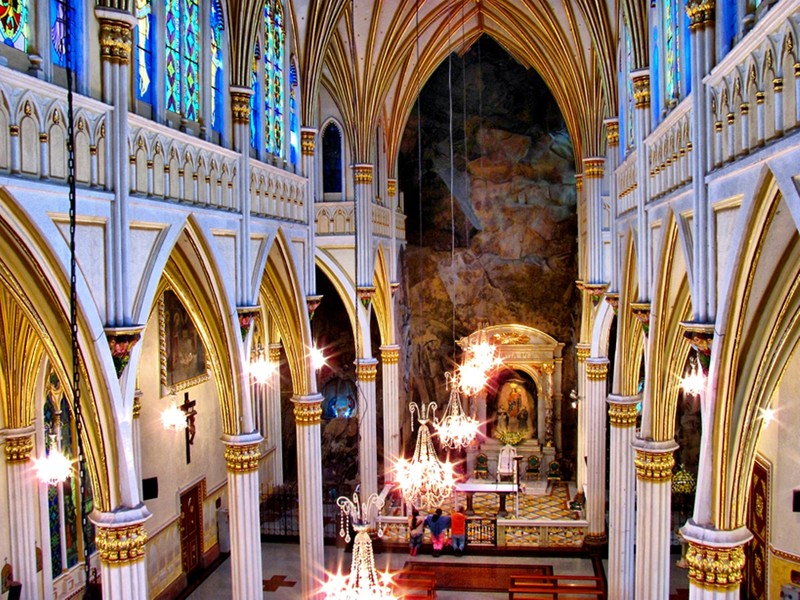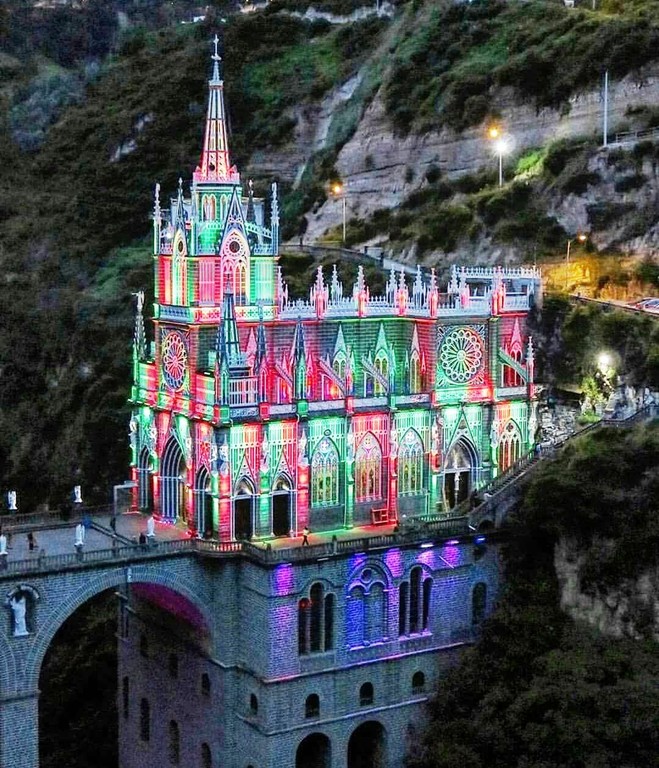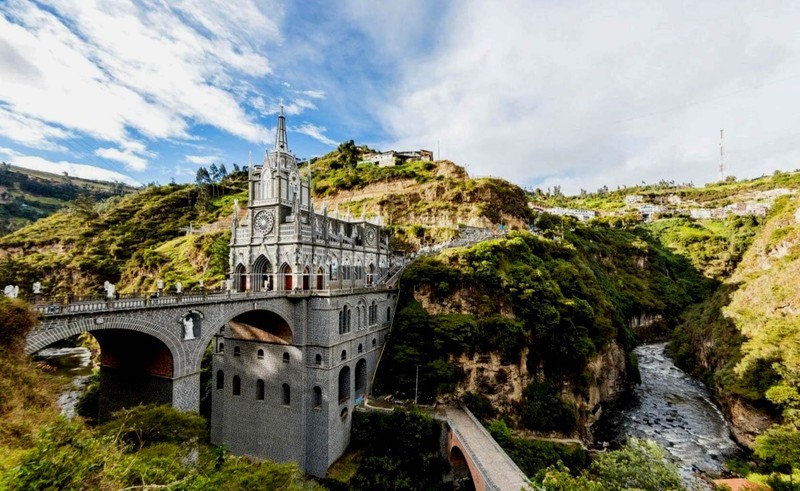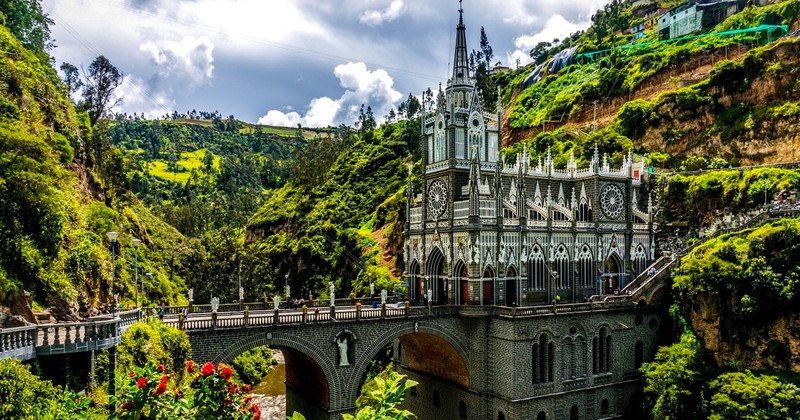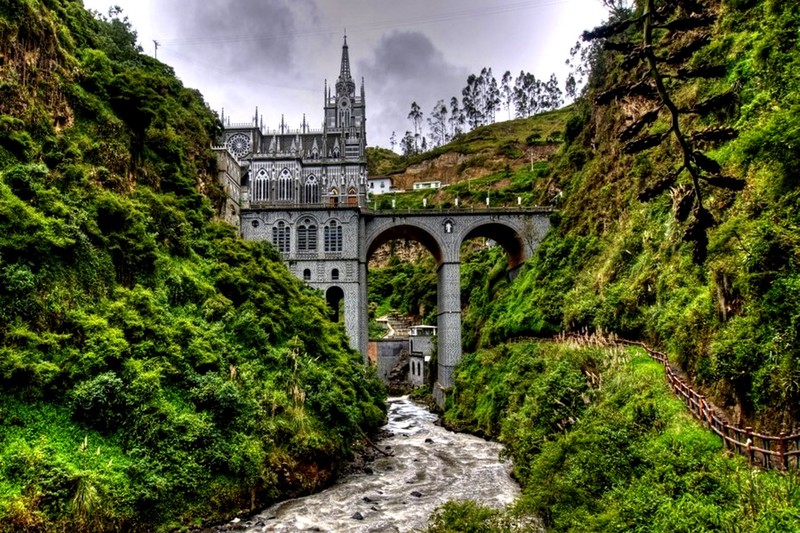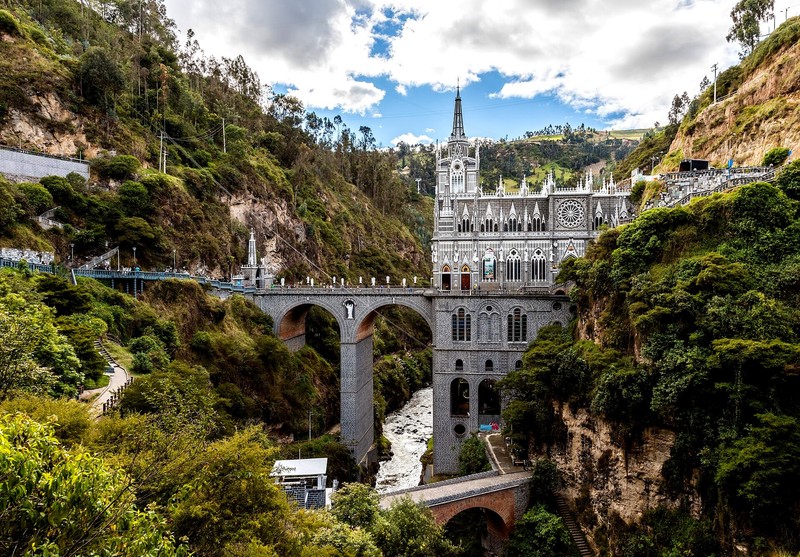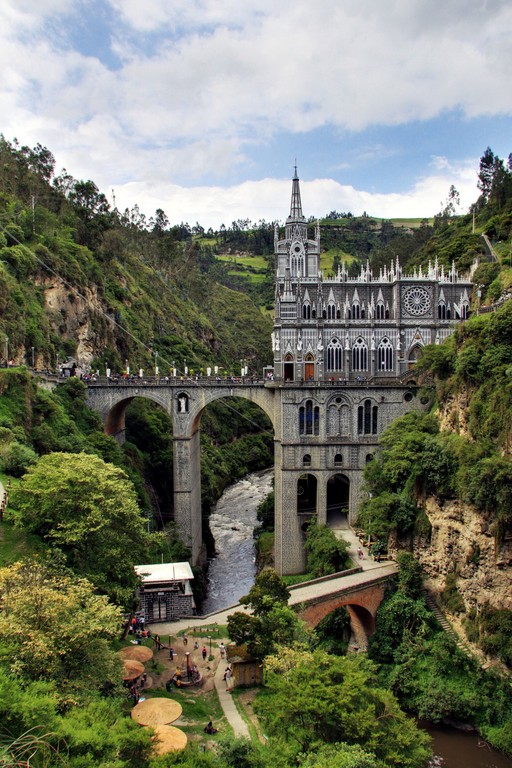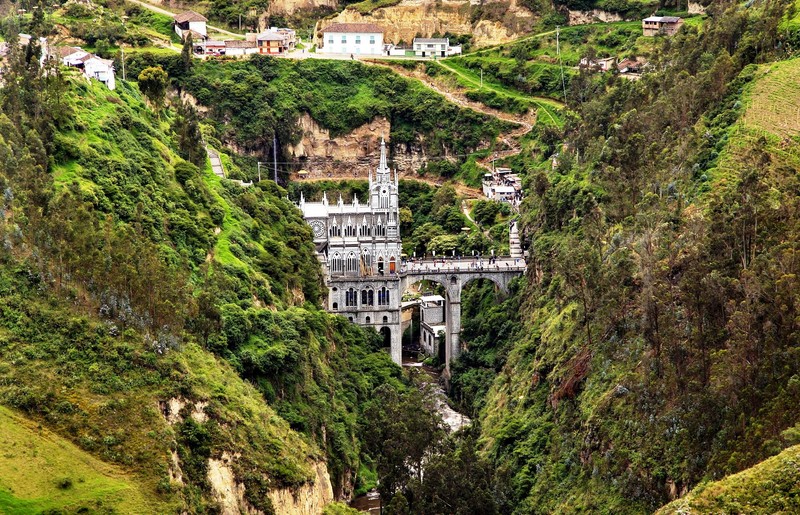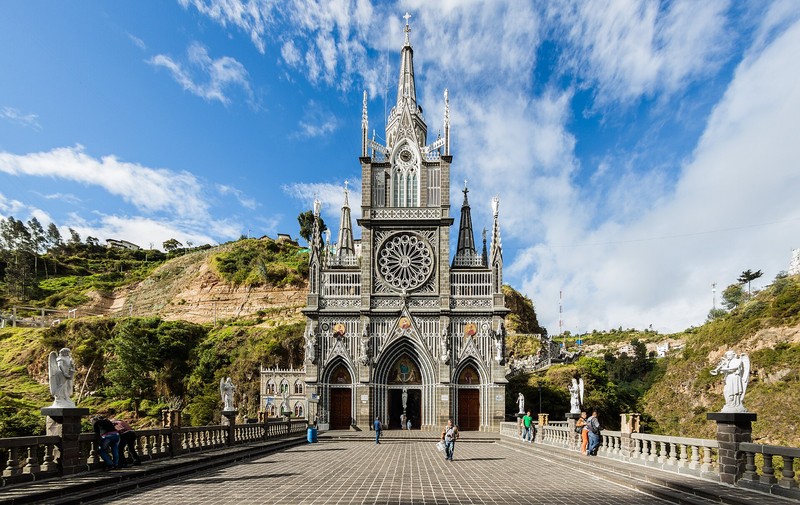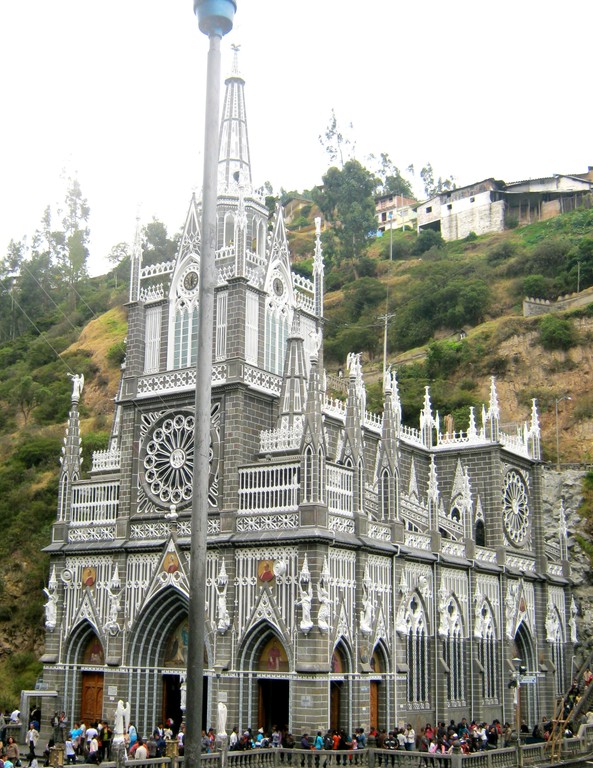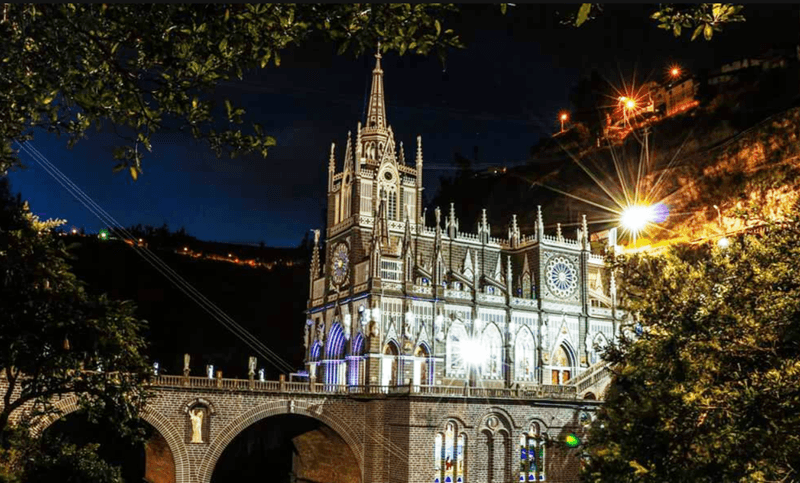

Las Lajas Sanctuary, formally known as the Sanctuary of Our Lady of the Rosary of Las Lajas, is located in southern Colombia, in the department of Nariño, near the city of Ipiales and the border with Ecuador. The Catholic basilica stands in the dramatic canyon of the Guáitara River and is considered one of Colombia's most striking architectural landmarks. The church rises above the river, with its walls and bridge integrated into the steep rocky slopes.
Las Lajas attracts pilgrims, architecture enthusiasts and travellers interested in Andean history and landscapes. Its unusual setting, tall towers, pointed arches and large stained-glass windows make it resemble a medieval cathedral rising directly from a mountain gorge.
History of the sanctuary
The sanctuary's history is linked to a religious tradition dating to 1754. According to local accounts, a woman named María Mueses de Quiñones was travelling with her daughter Rosa when they took shelter from a severe storm in a rocky recess beside the Guáitara River. The girl, who was said to be unable to speak or hear, reportedly began speaking after seeing an image of a woman holding a child on the rock.
The image later became revered as Our Lady of the Rosary of Las Lajas. The story attracted worshippers, and the site gradually developed into a pilgrimage destination. Several religious buildings were erected here over the following centuries, beginning with a simple chapel and eventually leading to the monumental basilica.
Construction of the present church began in 1916 and was completed in 1949. The project was funded in part through donations from worshippers. The church was declared a national monument of Colombia in 1984 and received national cultural heritage status in 2006. The apparition story is part of local religious tradition rather than an independently verified historical event.
Architecture of the basilica
Las Lajas is distinguished by its Neo-Gothic architecture, which follows the natural contours of the canyon. Built from grey and pale stone, the church features tall towers, pointed arches, decorative details, large stained-glass windows and several naves. Its façade faces the gorge, while the structure is closely connected to the rocky cliff.
The basilica stands above the Guáitara River and is linked to the opposite side of the canyon by a stone bridge. From its base to the upper part of the tower, the structure reaches approximately 100 metres. The combination of Gothic forms, the bridge and steep green slopes makes the sanctuary recognisable from a distance.
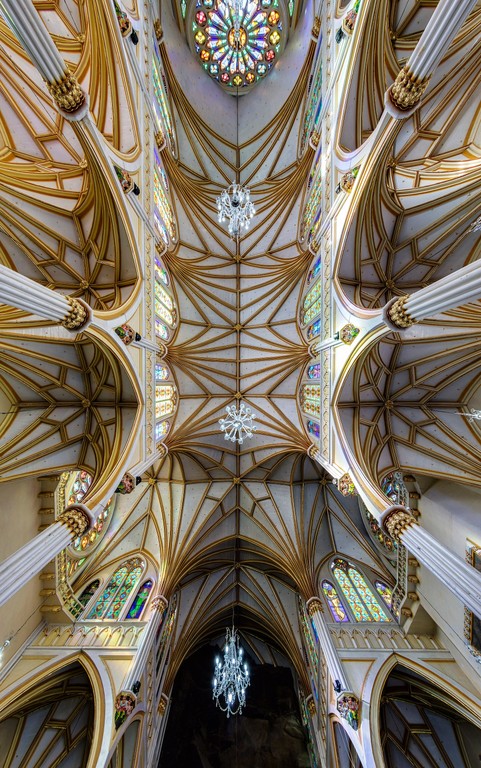
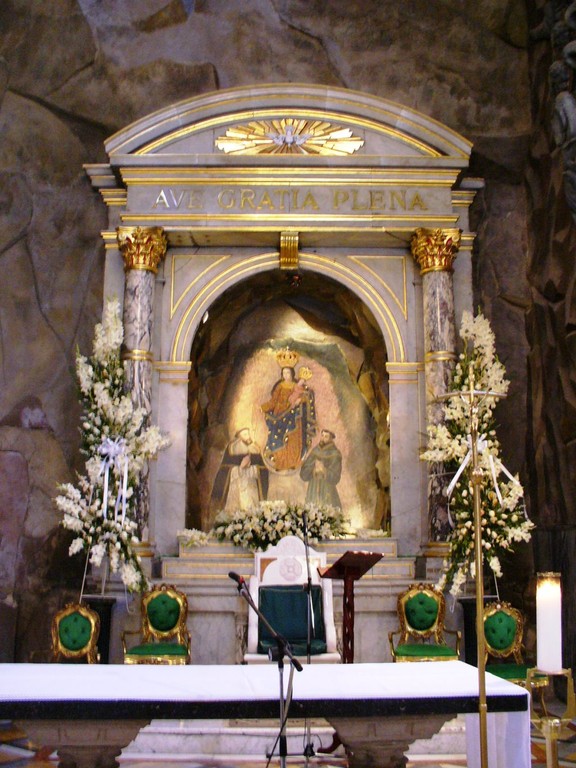
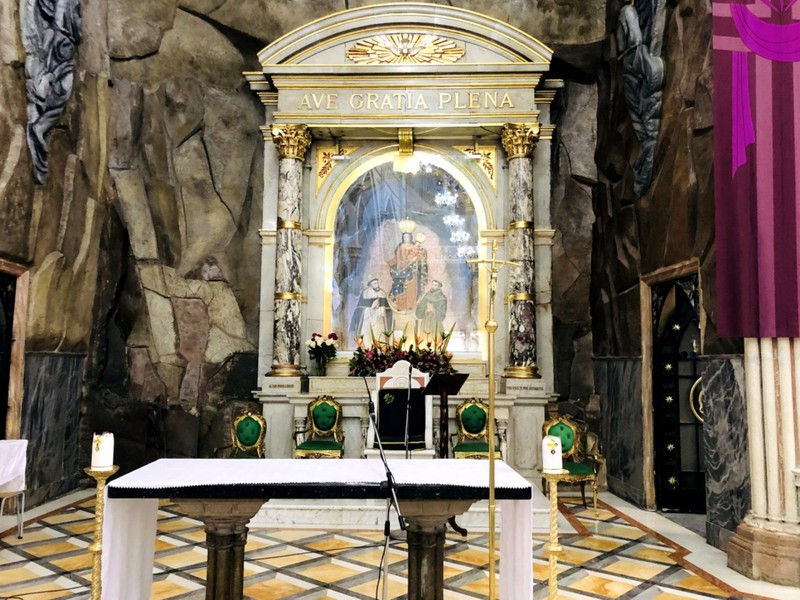
Inside, visitors can see religious artwork, stained glass, decorative details and the main altar featuring the image of Our Lady of Las Lajas. The interior combines grand architecture with the atmosphere of an active Catholic church. Visitors should remember that this is a place of worship as well as a tourist attraction.
The Guáitara River canyon
The sanctuary is set in a narrow, deep canyon carved by the Guáitara River among the mountain slopes of the southern Andes. The river flows below, while rocky walls covered in vegetation rise on either side. The contrast between the pale stone of the basilica and the natural colours of the gorge is particularly striking from viewpoints and near the bridge.
The landscape is an essential part of the visit. Travellers can view the church from different levels, follow paths and stairways, and photograph the architecture against the canyon. Take care while walking: some sections have steep drops, and paths may become slippery after rain.
Pilgrimage and religious traditions
Las Lajas is one of Colombia's best-known Catholic pilgrimage sites. Worshippers arrive from different parts of the country and neighbouring Ecuador to pray, attend services and honour the image of the Virgin Mary. Memorial plaques and inscriptions of gratitude can be seen inside and around the church.
The feast of Our Lady of Las Lajas is especially important and is celebrated in September, particularly on 16 September. More pilgrims visit during this period, so the grounds may be crowded. If you plan to attend a service, check the schedule and visitor guidelines in advance.
What to see at the sanctuary
The basilica itself is the main attraction, but the visit includes more than viewing the façade. Visitors can cross the bridge, admire the stone arches and towers, enter the church and explore exhibition spaces that are open to the public. Depending on opening arrangements, museum displays may explain the sanctuary's history and the region's religious art.
Stairs, walking paths and viewpoints offer different perspectives of the canyon. They are useful for appreciating the scale of the building and its position above the river. Souvenir shops and small eateries nearby provide places to rest after exploring the site.
How to get to Las Lajas
The sanctuary is about 7 kilometres from the city of Ipiales in Nariño. From Ipiales, visitors can travel by taxi, local transport or organised tour. The road passes through the outskirts of the city and leads to the settlement of Las Lajas, from where visitors walk down to the church.
Ipiales has road connections with other towns in southern Colombia. Travellers coming from farther away can plan a journey through Pasto or use available flights to the region followed by a road transfer. Because the sanctuary is close to Ecuador, it is also visited by travellers passing through the Rumichaca border area.
Be prepared for changes in elevation and a number of stairs. If walking long distances is difficult for you, check access options and the current condition of the facilities in advance. Transport schedules, tours and any available lift services should be verified before departure.
Best time to visit
Las Lajas can be visited throughout the year, but weather in the southern Andes is changeable. Cool temperatures, mist and rain are possible even during relatively dry periods. Bring a light jacket or raincoat and shoes with good grip.
Weekdays are generally quieter than weekends and major religious celebrations. Visiting in the morning often allows more time to appreciate the architecture and take photographs. Check opening hours and service times before travelling.
Visitor tips
Allow time not only to see the interior but also to walk across the bridge and visit the viewpoints. Keep quiet during prayer and services, dress respectfully for a religious site and follow staff instructions. Do not cross safety barriers along steep slopes or leave rubbish in the canyon.
Las Lajas Sanctuary brings together religious history, remarkable Neo-Gothic architecture and a dramatic mountain landscape. Its position above the Guáitara River has made it one of the most recognisable symbols of Nariño and an important stop for travellers exploring southern Colombia.
Gallery