Reed Flute Cave lies on the northwestern outskirts of Guilin in the Guangxi Zhuang Autonomous Region of southern China. It is one of the region's best-known karst caves, famous for its intricate limestone formations and colorful lighting. Often called the Palace of Natural Arts, it contains stalactites, stalagmites, and stone columns whose shapes resemble fantastic sculptures.
Name and history
The cave takes its name from reeds growing nearby that were traditionally used to make flutes. Inscriptions on the walls show that people visited the cave during the Tang dynasty. Some date to the eighth century, demonstrating that its underground chambers attracted travelers more than a thousand years ago. The cave became widely known again in the mid-twentieth century and opened for organized public visits in 1962.
How the cave formed
Reed Flute Cave developed in limestone through the long-term action of water. Rainwater containing dissolved carbon dioxide gradually dissolved the carbonate rock, widened cracks, and created underground chambers. Water seeping through the ceiling deposited minerals that slowly formed stalactites hanging from above and stalagmites growing from the floor. In some places, the formations meet to create stone columns. The cave is often described as around 180 million years old, although individual landforms and mineral deposits may have developed during different geological periods.
Underground chambers and stone formations
The visitor route passes through spacious chambers and narrow passages decorated with limestone formations of many shapes. One of the best-known areas is the Crystal Palace, where numerous stalactites and columns create the impression of an underground palace. Some formations have descriptive names inspired by animals, plants, and familiar objects. These names help visitors imagine recognizable shapes in the natural contours of the rock. Artificial lighting emphasizes the texture and colors of the formations, creating a dramatic visual experience.
Inscriptions on the walls
Ancient inscriptions left by visitors on the cave walls are an important historical feature. Some include texts and poems from the Tang dynasty. They show that the cave was known long before modern tourism developed. The inscriptions form a record of visits over time and help researchers understand Guilin's cultural history. Today, the cave appeals not only to nature lovers but also to visitors interested in Chinese calligraphy and the history of travel.
Lighting and the visitor experience
Colored lights illuminate the underground chambers, highlighting stalactites, stalagmites, stone curtains, and reflections in the water. The lighting creates striking visual effects, although it differs from the cave's natural appearance. The visitor route is designed for ordinary tourists and does not require caving experience. A typical visit takes about an hour, depending on walking speed and stops. The cave is cooler and more humid than the surface, so a light extra layer and shoes with good grip can make the visit more comfortable.
The cave and Guilin's karst landscape
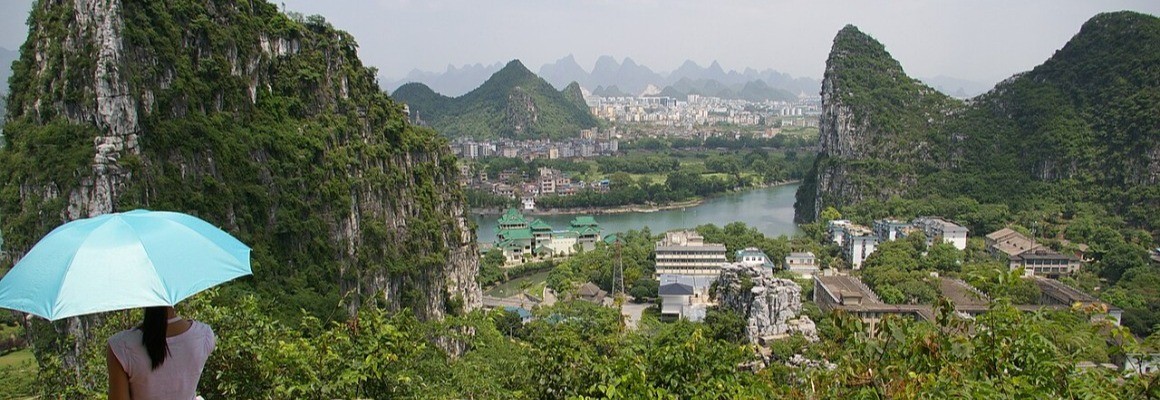
Guilin is famous for its unusual limestone hills, which rise like isolated towers above plains and valleys. The landscape was shaped by karst processes, in which water dissolves rock and gradually transforms the terrain. Reed Flute Cave offers an underground counterpart to the region's celebrated surface scenery. The karst landscapes of southern China have international conservation importance, and several components of the South China Karst are included on the UNESCO World Heritage List. The cave itself, however, should not automatically be described as a separate World Heritage site.
Getting there and practical advice
The cave is about five kilometers from central Guilin and can be reached by taxi, local public transport, or an organized excursion. Before visiting, check current opening hours, ticket prices, and access conditions through official tourism resources. Some paths may be damp, so comfortable shoes are recommended. Avoid touching delicate mineral formations or removing pieces of rock. Reed Flute Cave offers an opportunity to explore the underground karst landscape of Guilin and see how water has shaped intricate structures in limestone over long periods.
Gallery