Mount Emei, also known as Emeishan, is located in southwestern China, in Sichuan Province. It is one of the country's most celebrated mountain landscapes and an important centre of Buddhism. High peaks, forested slopes, ancient monasteries, and stone paths form a distinctive natural and cultural landscape. In 1996, Mount Emei was inscribed on the UNESCO World Heritage List together with the nearby Leshan Giant Buddha.
Mountain peaks and scenery
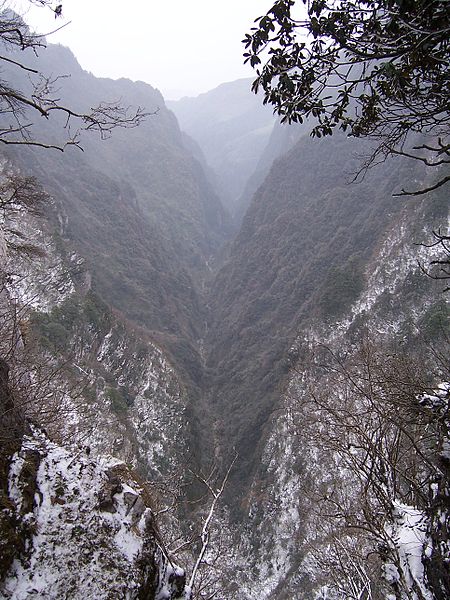
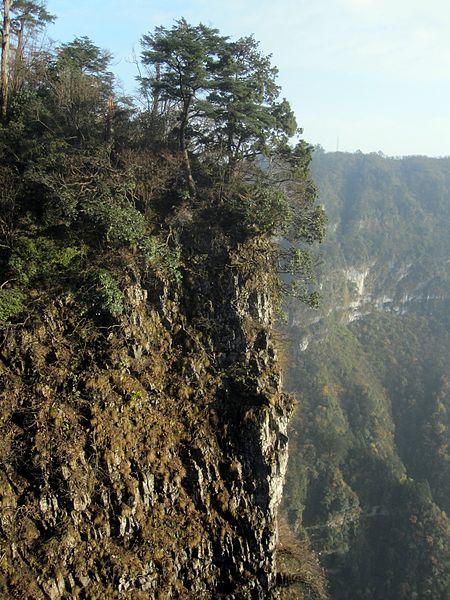
Mount Emei rises above the surrounding plains on the southwestern edge of the Sichuan Basin. Its terrain has substantial changes in elevation: lower slopes are covered in dense forests, higher areas contain steep rocky sections, and clouds and mist often gather around the summits. The scenery changes continually with the weather and time of day.
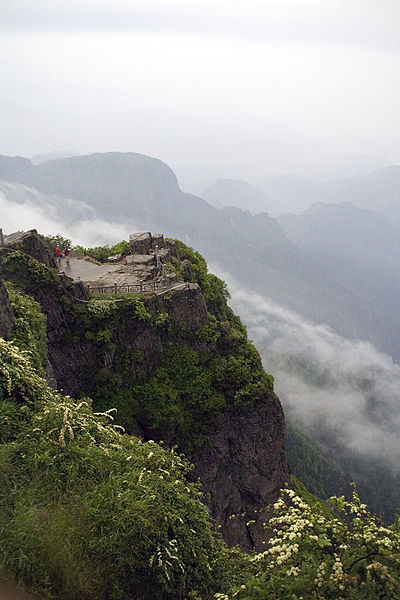
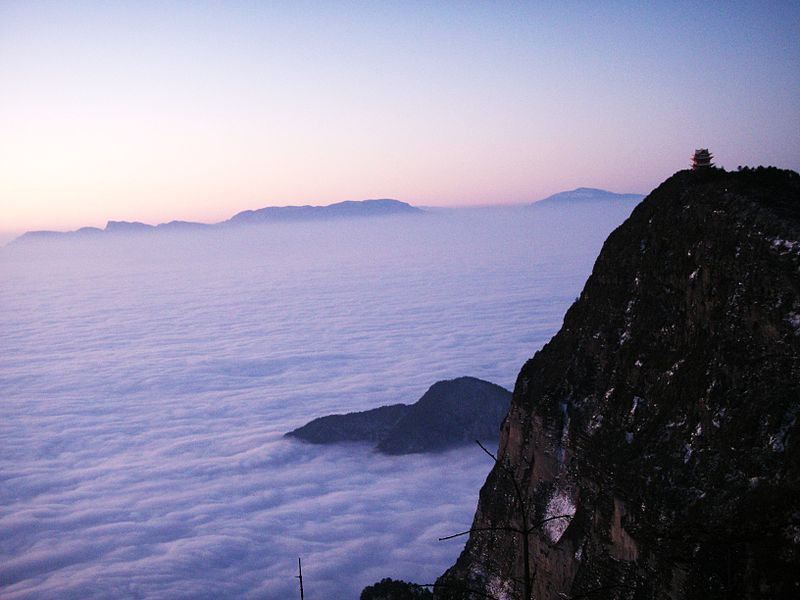
One of the best-known summits is Wanfoding, which reaches approximately 3,099 m. The upper mountain offers broad views of surrounding ridges and cloud-filled valleys. On clear days, distant mountains can be seen, while in humid conditions the peaks appear to rise from a white sea of clouds.
The Golden Summit
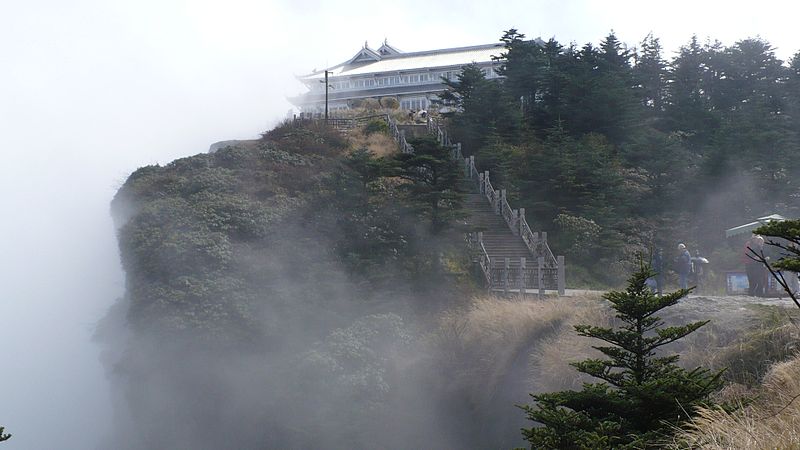
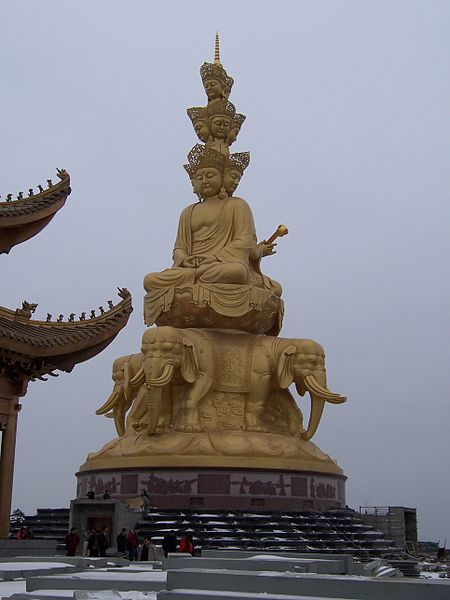
One of Emeishan's most visited areas is the Golden Summit, known in Chinese as Jinding. It is famous for its religious buildings, viewing platforms, and mountain panoramas. Here stands a renowned bronze statue of the bodhisattva Samantabhadra, associated with elephants and symbols of wisdom, compassion, and spiritual practice.
The Golden Summit attracts pilgrims as well as travellers hoping to watch the sunrise above the clouds. In favourable weather, sunlight gives the peaks a golden glow. However, mist, strong winds, and precipitation can change conditions quickly, so visitors should check the forecast and route information before setting out.
A sacred mountain of Buddhism
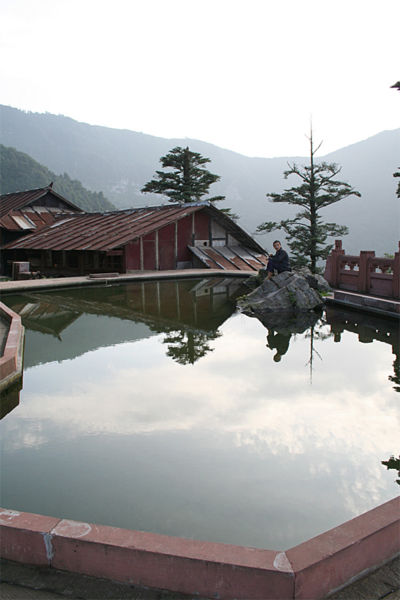
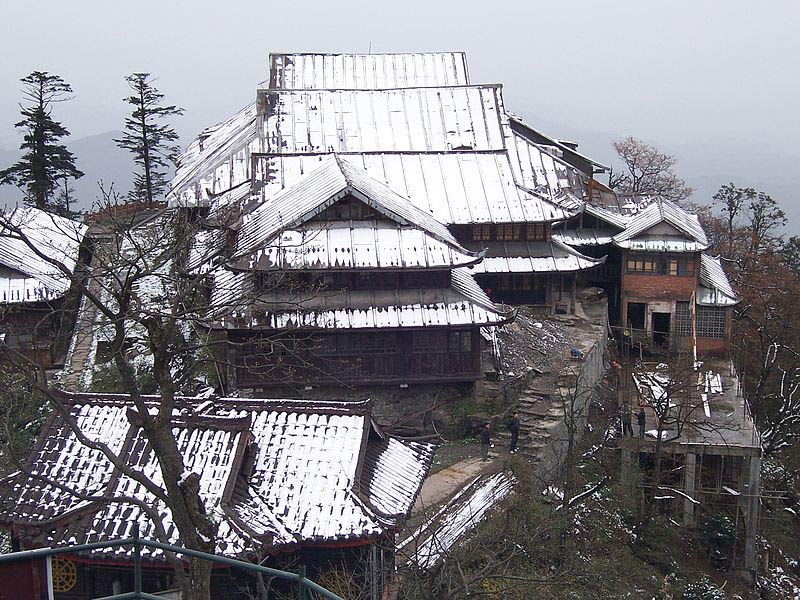
Mount Emei is regarded as one of the four sacred Buddhist mountains of China. Historical accounts indicate that the first Buddhist temples appeared here as early as the first century CE. Over time, monasteries, pavilions, and places of religious practice were built across the slopes. Their architecture blends with the natural setting: some buildings stand among forests, while others occupy rocky ledges or lie beside mountain springs.
One of the most important religious sites is Wannian Temple, known for its bronze statue of Samantabhadra, created in the tenth century. Other significant sites include Baoguo Temple at the foot of the mountain, Fuhu Temple, and the Qingyin Pavilion complex. These buildings reflect the long history of Buddhism in China and the traditions of Chinese temple architecture.
Forests and biodiversity
Mount Emei is renowned for its exceptional plant diversity. Its broad elevation range creates several natural zones, from subtropical evergreen forests at lower elevations to mixed broadleaf and conifer forests at middle elevations and subalpine vegetation near the summits. UNESCO records approximately 3,200 plant species in the region, including many endemic species.
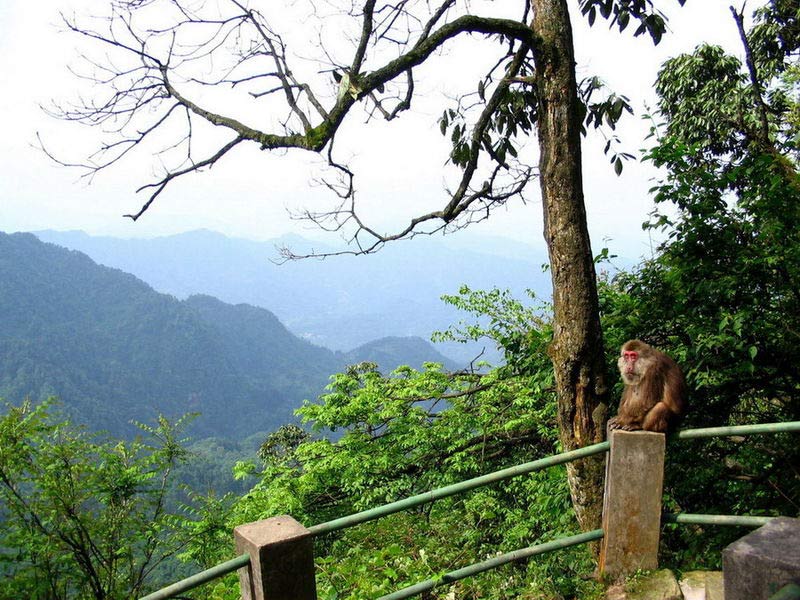
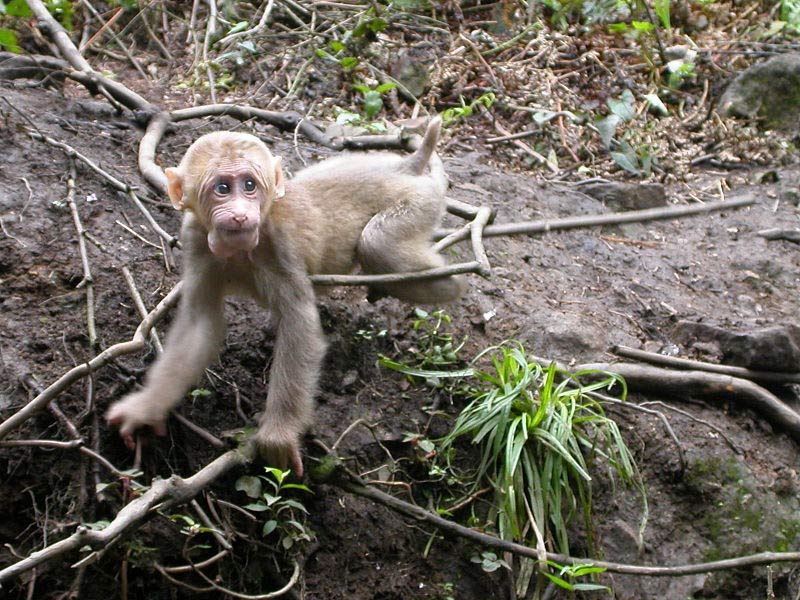
The forests support a wide variety of animals and birds. Macaques are frequently seen near tourist paths and viewpoints. Visitors should not feed them or leave food unattended, as the monkeys can become persistent around people. The area's rich flora and fauna make the mountain important for nature conservation and scientific research.
Waterfalls, streams, and forest trails
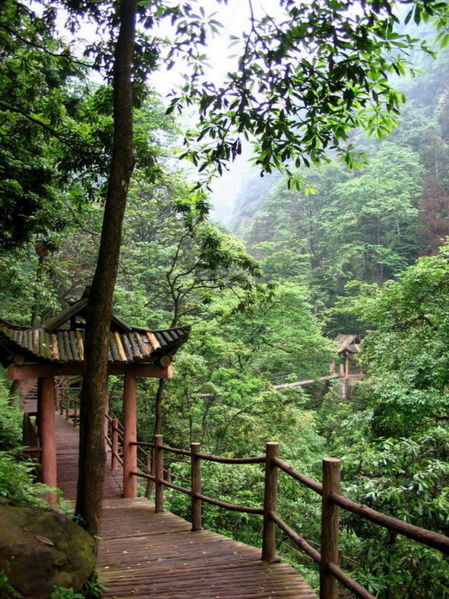
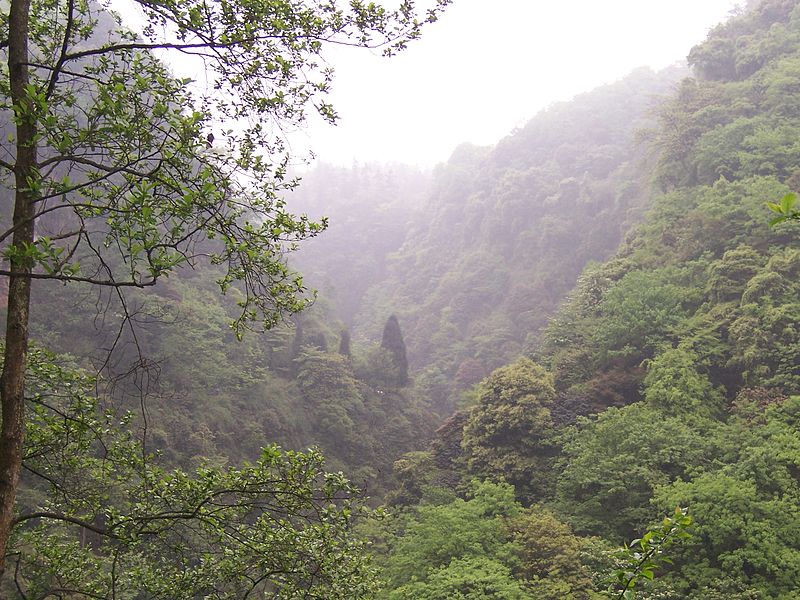
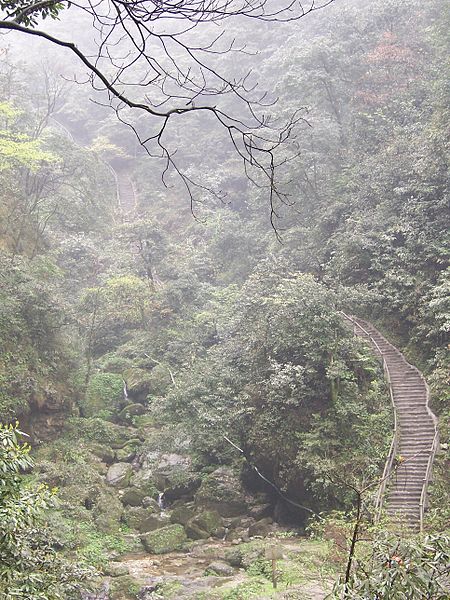
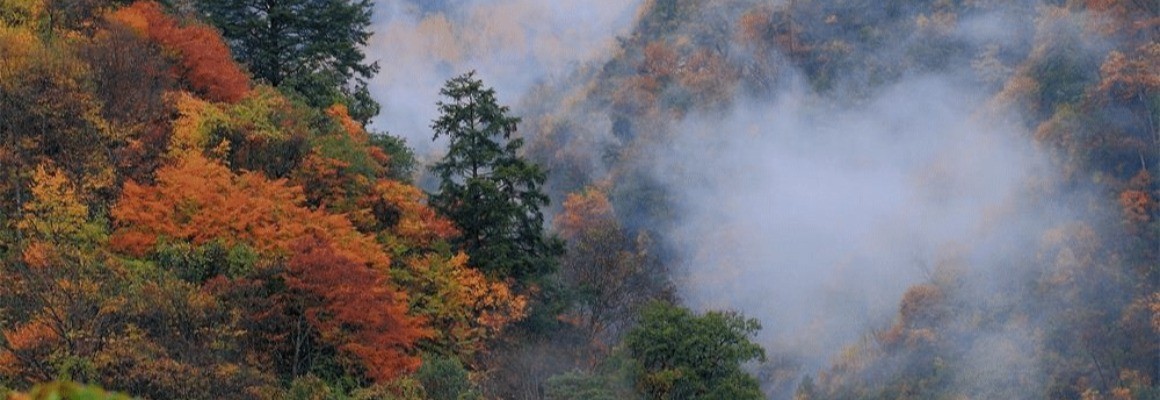
Mountain streams run down the slopes, creating small waterfalls and cool ravines. Stone steps and paths wind through dense vegetation, cross bridges, and lead to temples far from the main tourist centres. In damp weather, mist fills the forest while mosses and ferns cover rocks and tree trunks.
Walking routes vary in difficulty. Some sections are suitable for leisurely strolls, while the ascent to the upper mountain requires good physical fitness. Cable cars operate on selected sections and can shorten the journey, although many viewpoints still require walking.
The Leshan Giant Buddha
Mount Emei and the Leshan Giant Buddha form part of the same World Heritage property, although they are in separate locations. The 71 m Buddha was carved into a cliff overlooking the confluence of the Minjiang, Dadu, and Qingyi rivers. Created in the eighth century, it is one of the world's most remarkable Buddhist sculptures.
Visiting both sites offers a deeper understanding of the relationship between religious traditions, architecture, and Sichuan's natural landscape. Many travellers combine Mount Emei and Leshan in one trip, but exploring the mountain trails properly usually requires at least a separate day.
How to visit Mount Emei
The Emeishan area can be reached from Chengdu by train or road. Towns, hotels, and visitor facilities are located near the foot of the mountain. Walking trails, local transport, and cable cars are available, although access to particular roads and paths depends on the season and weather.
Anyone planning to climb to the Golden Summit should consider the elevation, route length, and possibility of cold weather. Even in warm months, the summit can be much colder than the foothills. Wear shoes with good grip, carry water and rain protection, and follow the rules at monasteries and protected natural sites.
Best time to visit
Spring and autumn are often suitable for walking, with moderate temperatures and attractive seasonal colours. In summer, the slopes become especially green, but frequent rain and mist may reduce visibility. Snow, frost, and icy paths are possible at higher elevations in winter, making some routes more difficult or temporarily inaccessible.
Mount Emei brings together spiritual heritage, ancient architecture, and remarkable natural diversity. Visitors can explore Buddhist monasteries in the forest, rise above the clouds, and discover one of China's most important cultural landscapes.
Gallery