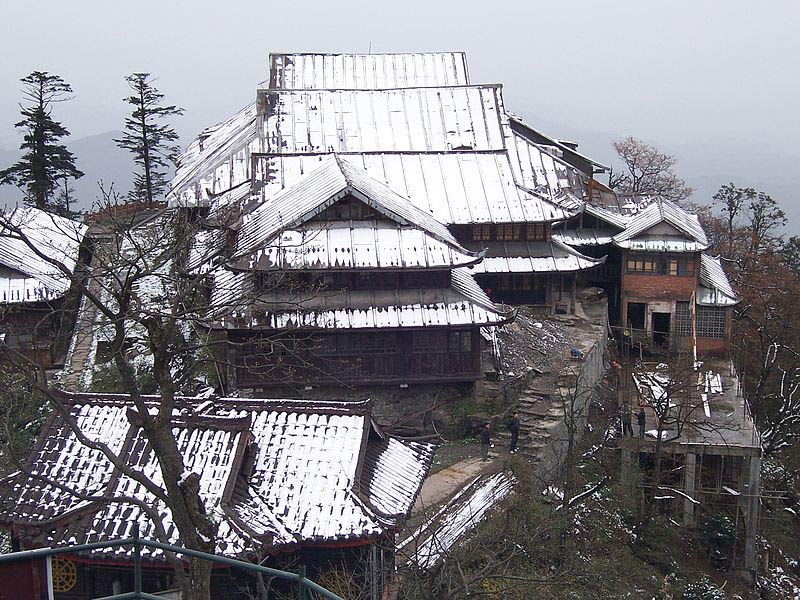

Mount Emei is a national park in China's Sichuan Province. Emei, as well as Putoshan, Wutaishan and Jiuhuashan are sacred mountains of the Buddhist religion. Because of this, there were over 100 temples and monasteries in this region before the Chinese Cultural Revolution. Right now, there are about 20 left, some of which are in poor condition, but thanks to tourism, there is money for the reconstruction of temples.
According to legend, the artist stayed overnight in one of the temples. For this, he left 4 paintings depicting beautiful girls as a gift to the monk. Before leaving, the artist warned the monk to hide the paintings in a tree trunk for 49 days. But the monk was struck by the beauty of the girls and, ignoring the warnings, he immediately hung them up in the hall. Soon, the monk left on business and returned to find that the girls were laughing in the hall, and there were no more images in the paintings. Realizing that they were the girls from the paintings, he chased after them, but only managed to grab one of them by the skirt as she immediately turned into a mountain, like the other girls. This explains why 3 mountains are nearby and one is far away.
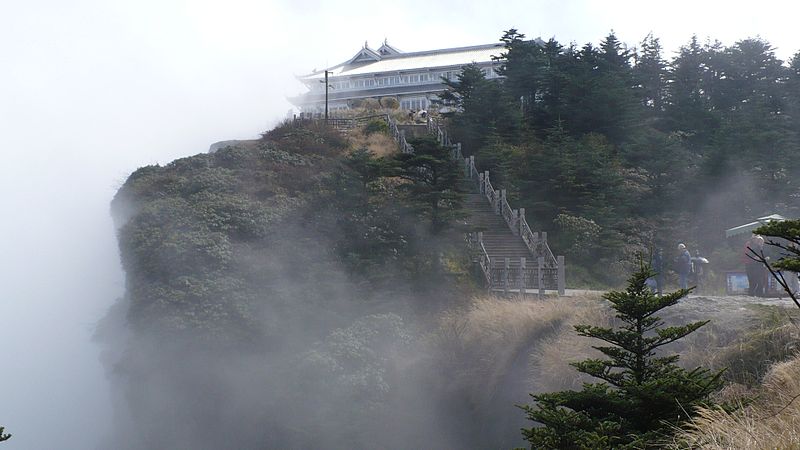
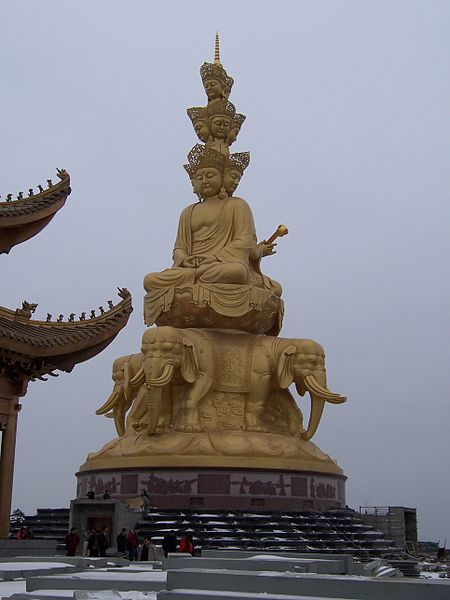
The first temple built on the mountain is Wannyansa (Temple of ten thousand years), it houses a statue of Samantabhadra. According to legend, Samantabhadra managed to clear his mind and flew off the mountaintop on his white three-headed elephant. Since that time, the mountain has been considered sacred. Also next to Emei stands the largest Buddha statue on the planet, the Great Buddha of Leshan, which is also a World Heritage Site. The pilgrimage to Mount Emei began around the 6th century and the number of people wishing to walk along the mountain range is steadily growing. The Jindingsi Temple, located at an altitude of 3077 meters at the very top of Mount Emei, is open to all visitors. For this, it was called the "Temple of the Golden Peak." The temple has been completely reconstructed, so it is the safest for visitors. There are only a couple of trails in the park for tourists, but everything is still ahead. Now travelers can use 2 trails designed for 2-3 days of hiking, or use a fanicooler. Some temples offer overnight accommodation for tourists, raising money for reconstruction.
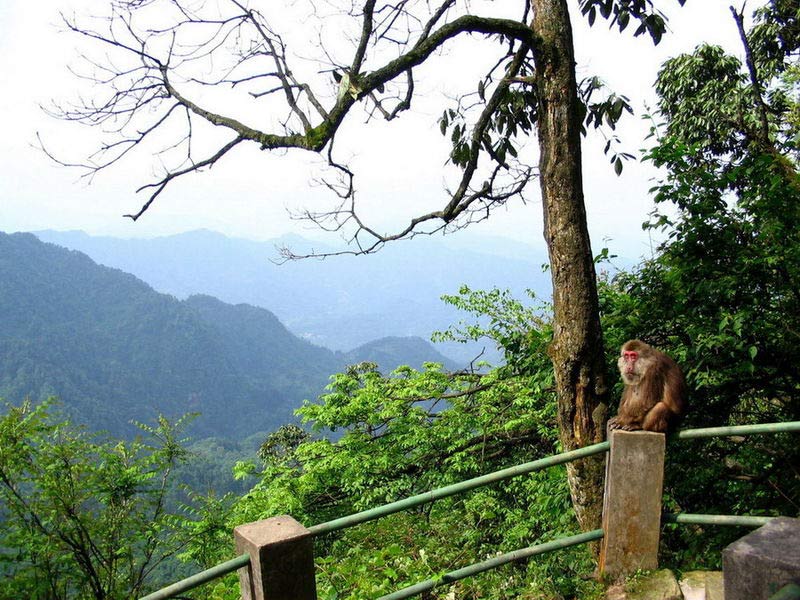
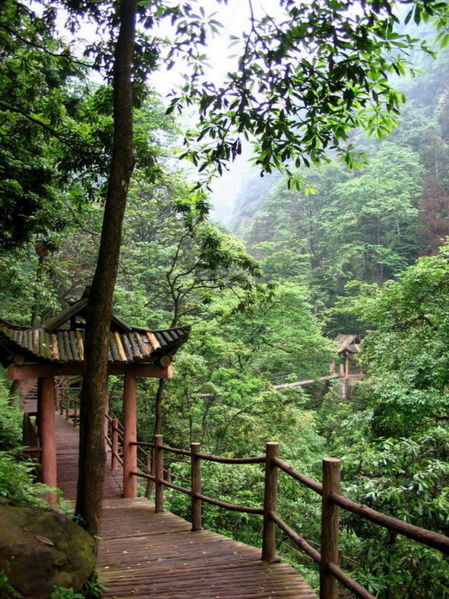
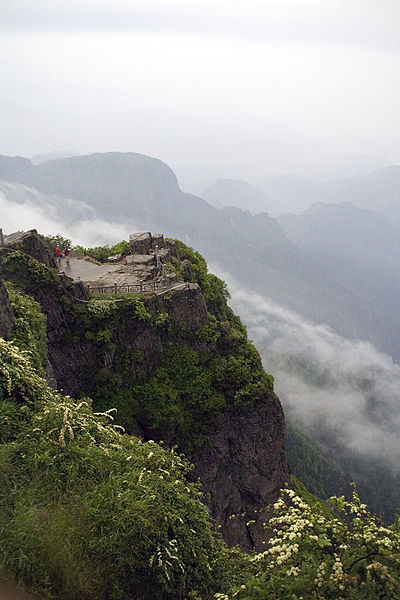
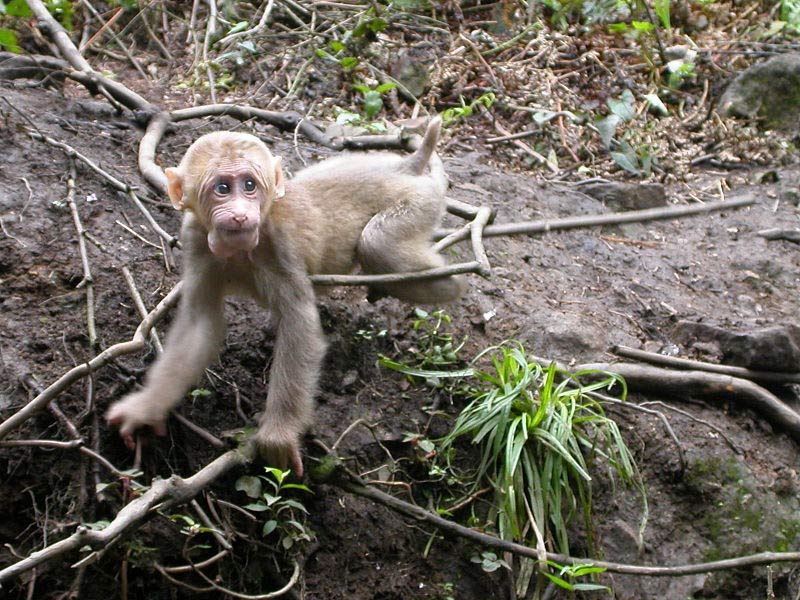
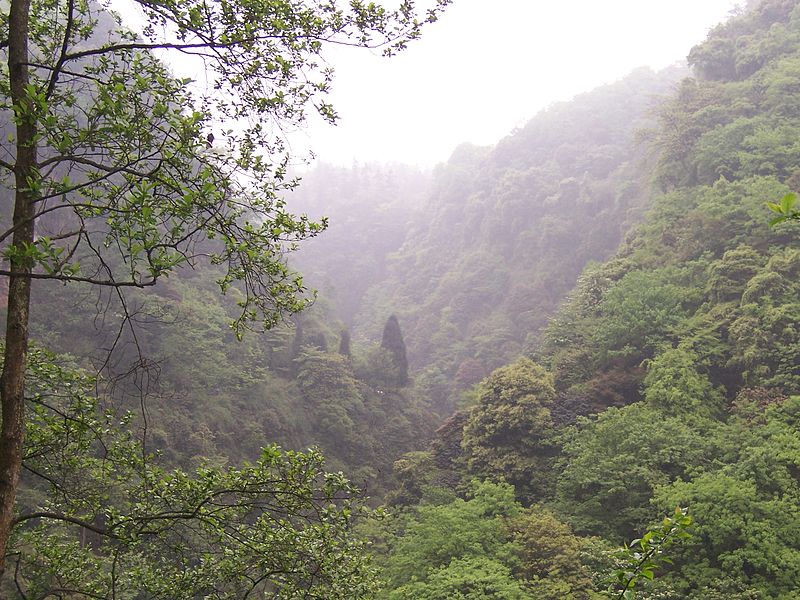
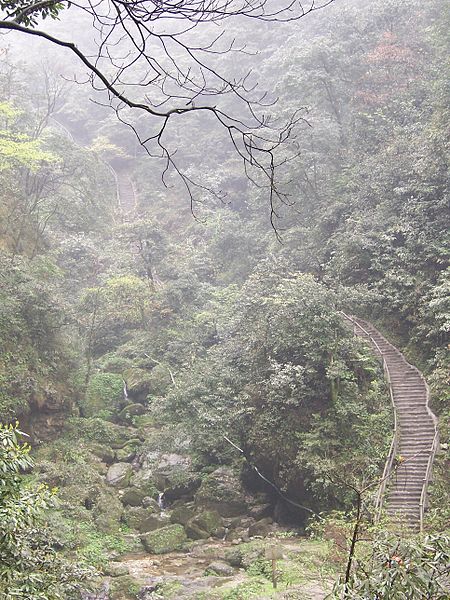
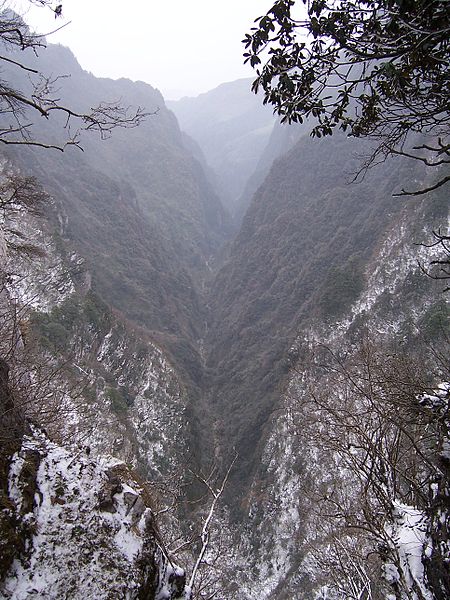
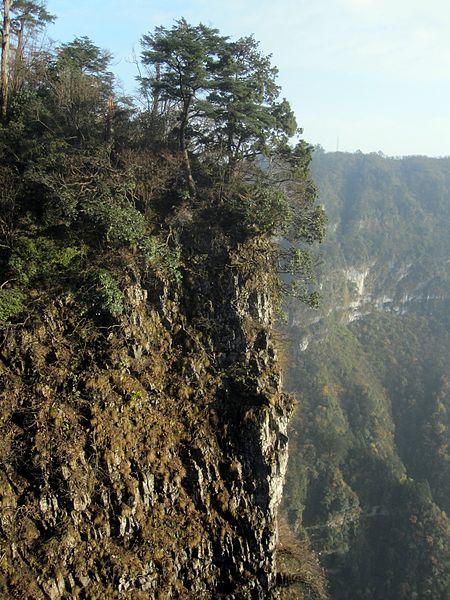
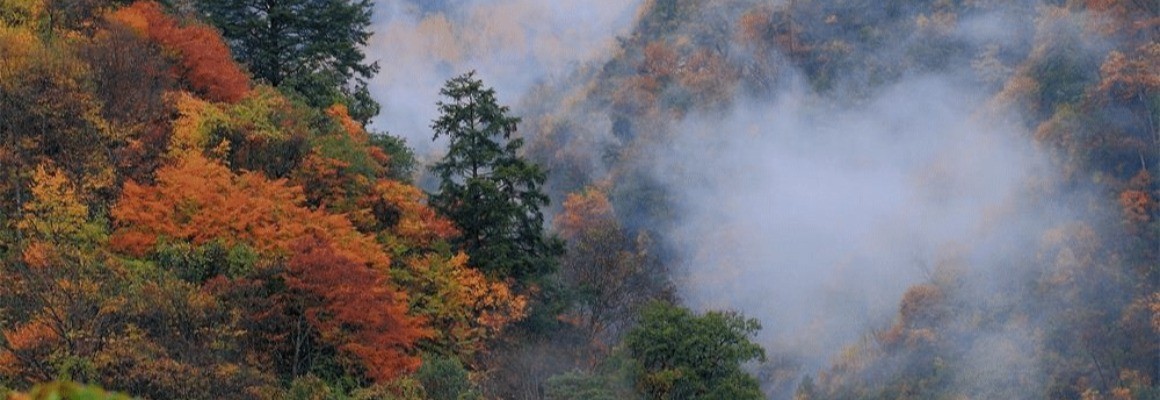
The landscape of the national park was formed for millions of years under the influence of volcanic eruptions, forming a unique nature unlike anything else. There are over 500 plants in the park, including a rare pigeon tree, which has almost completely disappeared. The flowers of the tree take the shape of a pigeon, and during sunrise it feels like a flock of pigeons are hovering near the tree. There is a large amount of vegetation in about half of the park, and there are a large number of waterfalls in the same places. In other places, there are very steep cliffs, which are covered with fog almost all the time. More than 2,000 animals, nondescript birds, and birds are recorded in Emei Park, of which pandas, antelopes, monkeys, eagles, and butterflies are common. There is also a monkey reserve in Emei, they are not at all afraid of travelers and often go out on the road to beg for treats.
One of the main directions of wushu, the Kung Fu Emei School, originated here. According to legend, during the War of the kingdoms in 403-221 BC, monks lived here. One of them, Sytuxuankun, watched the monkeys move and imitated their movements. So he invented his style of wushu "Emei tongbeiquan", which, in addition to offensive techniques, also has defensive ones.
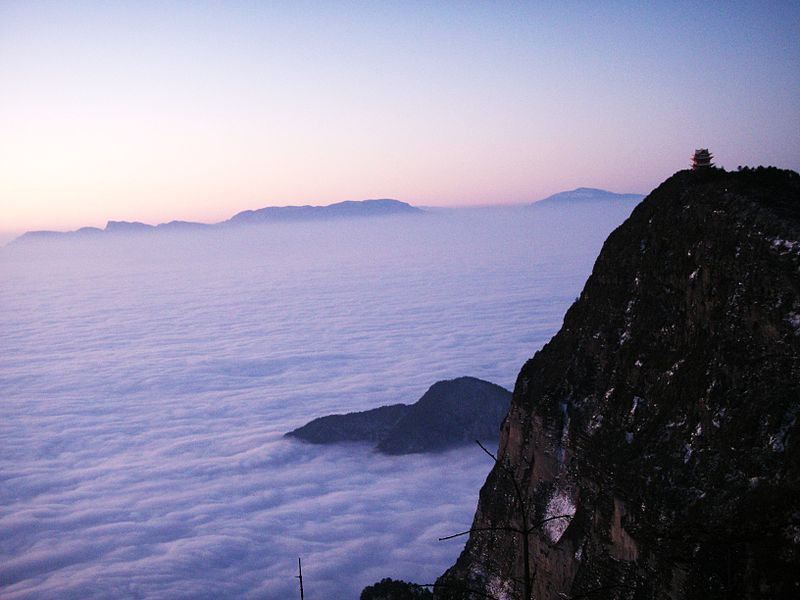
In the park you can see the unique natural phenomena of the "Buddha's Halo". The Buddha's halo can be seen up to seventy times a year. The Buddha's halo is a natural phenomenon that appears when light is refracted by fog. To see the silhouette of a person, you need to stand on a high place, or on top of a mountain.
Gallery