Huangshan is a famous mountain range in southern Anhui Province, China, renowned for its granite peaks, ancient pine trees, and clouds that seem to form a white sea around the mountains. It is one of China's most recognisable natural landmarks and has inspired artists, poets, and travellers for centuries. In 1990, Huangshan was inscribed on the UNESCO World Heritage List for its exceptional natural beauty and cultural significance.
Granite peaks and unusual rocks
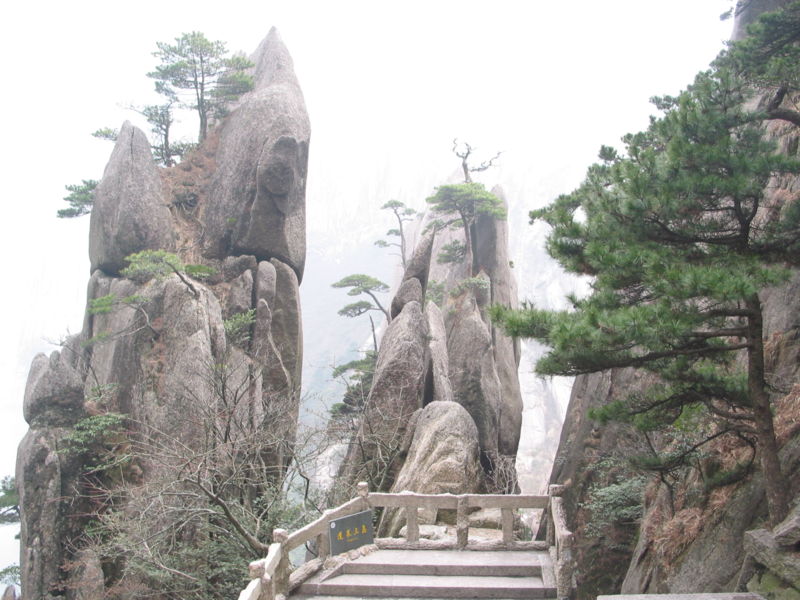
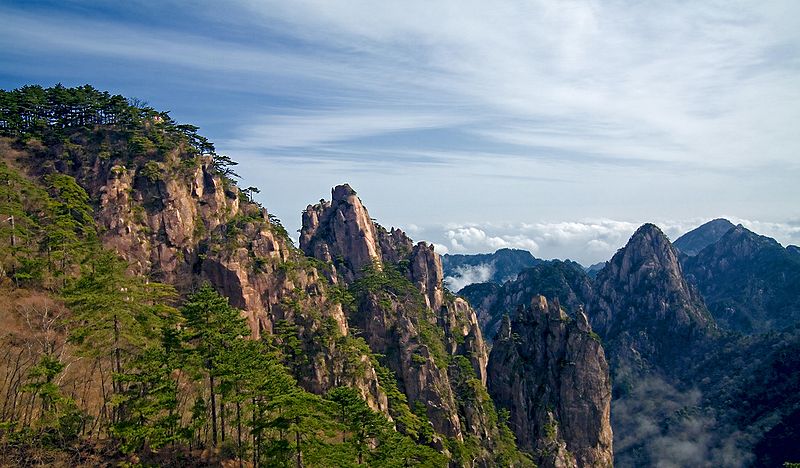
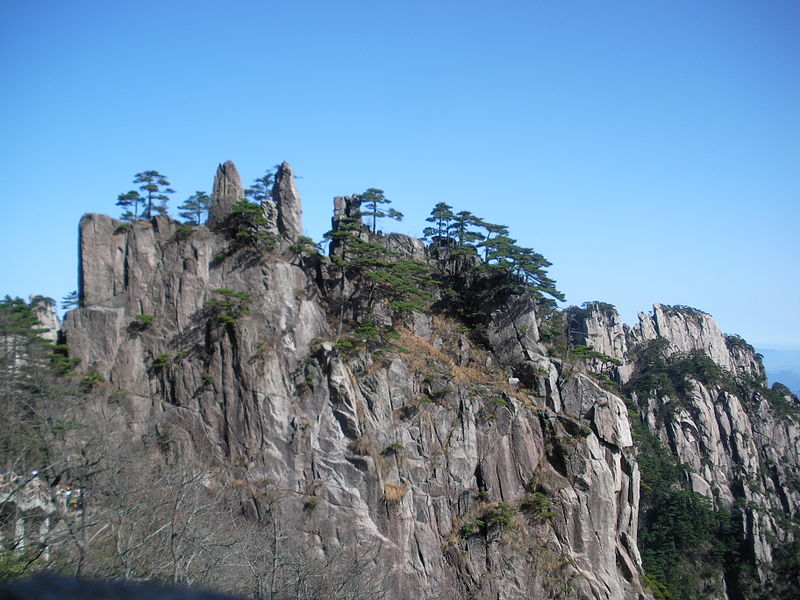
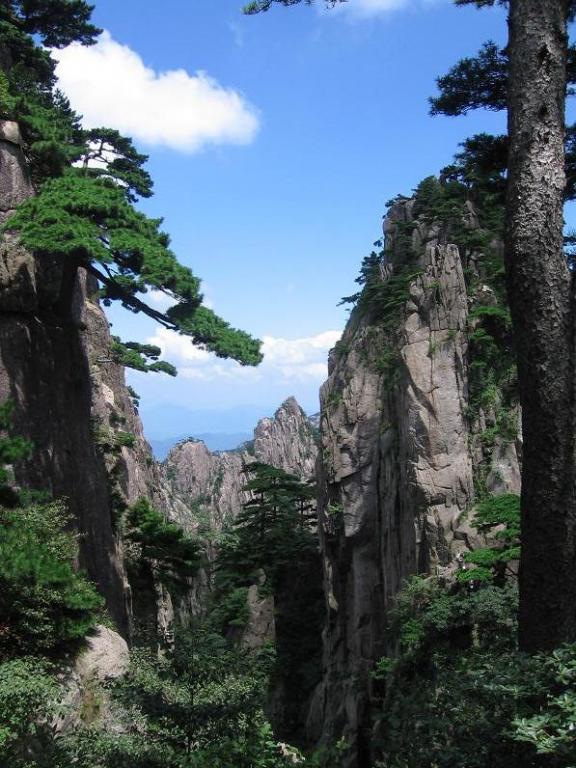
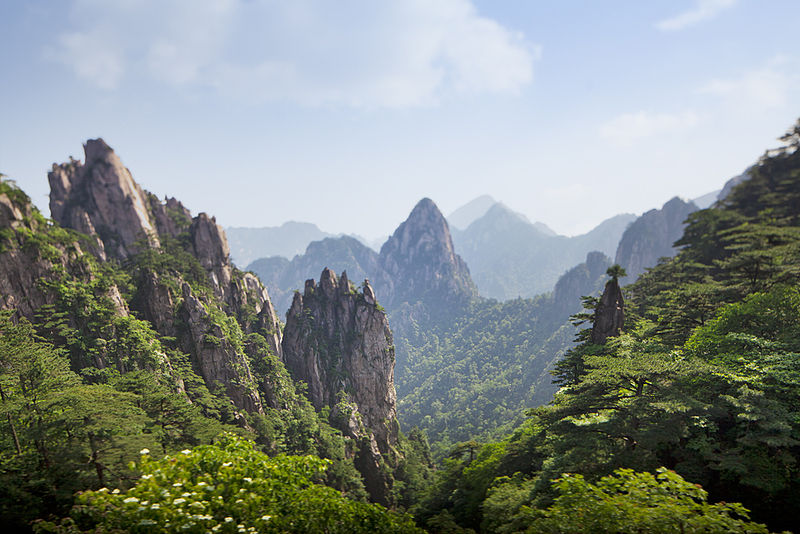
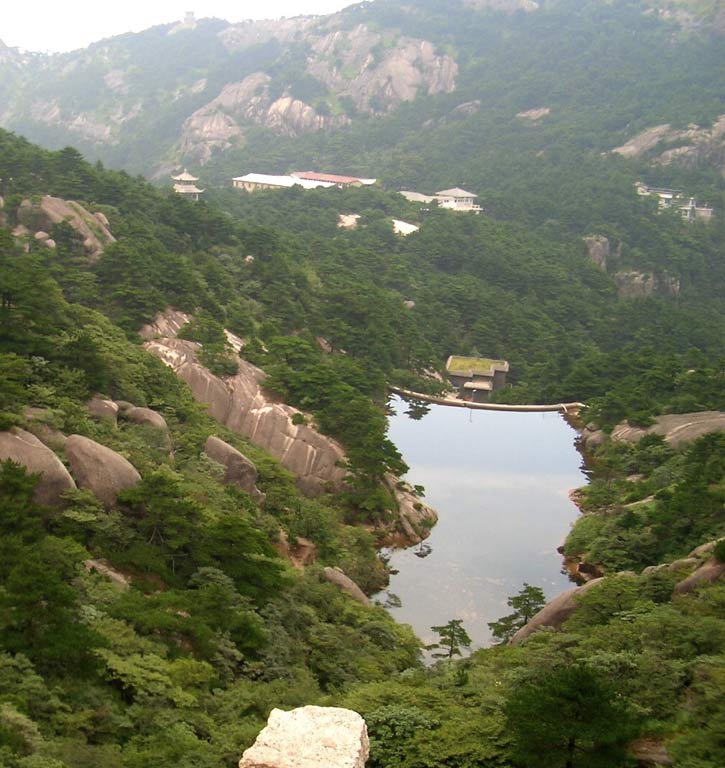
Huangshan is distinguished by its striking granite formations, shaped by geological processes and long periods of weathering. Sharp summits, sheer walls, stone pillars, and rounded boulders create a dramatic mountain landscape. Many formations have names inspired by their appearance or local legends.
The range contains numerous peaks, dozens of which rise above 1,000 metres. The highest is Lianhua Peak, also known as Lotus Peak, at 1,864 metres. Other notable summits include Guangmingding, or Bright Summit, and Tiandufeng, known for its steep slopes and expansive views. Lookouts reveal neighbouring ridges, deep valleys, and extensive forests.
Pines growing on the cliffs
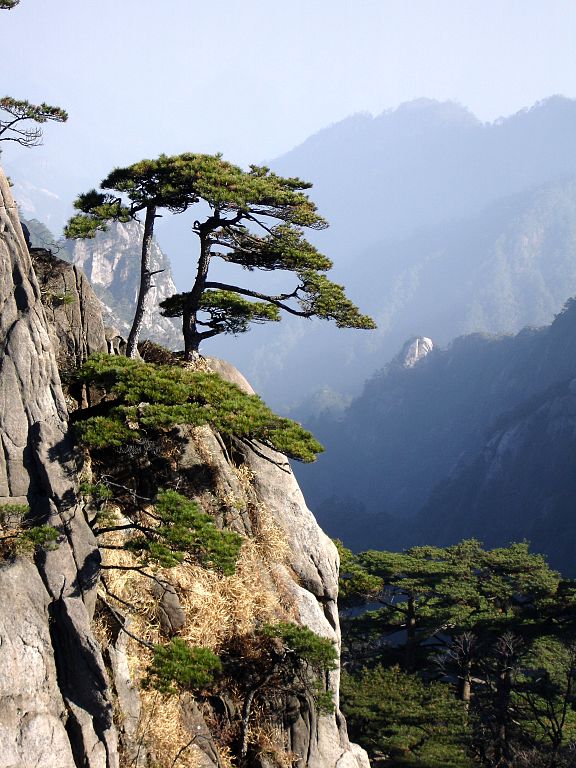
Huangshan's famous pine trees are among its defining features. Some cling to narrow cracks in granite, growing on steep cliffs where very little soil is available. Their twisted trunks and spreading branches have developed distinctive shapes that became an important motif in traditional Chinese landscape art.
One celebrated example is the Greeting-Guests Pine near the Yupinglou area. Its branches appear to extend towards visitors in a welcoming gesture. These trees are not only beautiful but also demonstrate how plants adapt to the harsh conditions of a mountainous environment.
Sea of clouds and changing seasons
One of Huangshan's most spectacular sights is its sea of clouds. When mist fills the deep valleys, isolated peaks rise above the white blanket like islands. The effect is particularly beautiful in the early morning and after rainfall, although it depends on humidity, temperature, and wind.
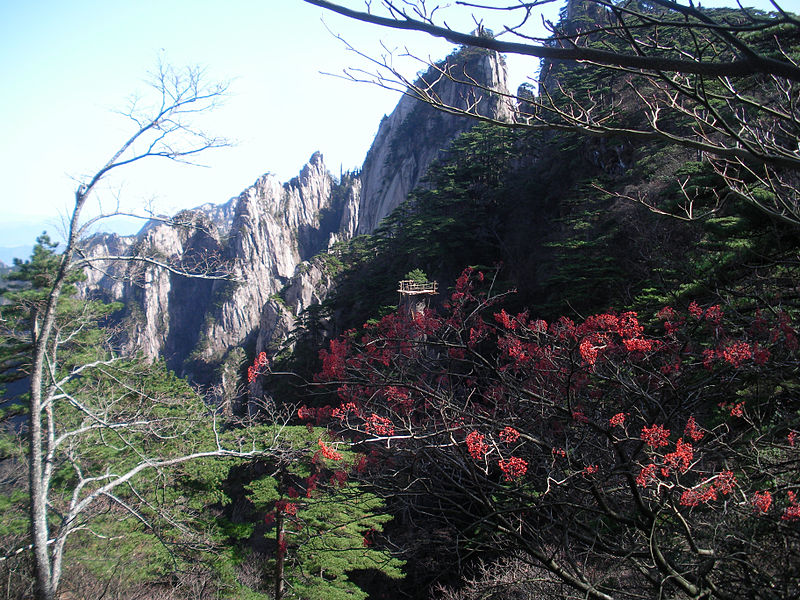
Each season gives the mountains a different character. Spring brings fresh greenery and flowering plants. Summer offers cooler conditions than the lowlands, though mist and heavy rain may reduce visibility. In autumn, the forests turn golden and reddish. In winter, granite cliffs are covered with snow and frost, while the pines stand out against the cold sky.
Geology and natural diversity
Huangshan is an important area for understanding granite landscapes. The formation of its rocks began around 140 million years ago, when magma cooled deep beneath the Earth's surface. Later uplift, erosion, and weathering gradually exposed the granite and shaped the peaks, ridges, and steep rock faces seen today.
Natural conditions change with elevation. Subtropical plants grow in the lower areas, temperate forest communities dominate higher slopes, and vegetation on exposed summits must withstand wind, cold, and thin rocky soils. The scientific importance of the landscape adds to its visual appeal.
Huangshan in Chinese art
Huangshan holds a special place in the history of Chinese painting and literature. Its scenery helped shape the shanshui tradition, a genre whose name means “mountains and water.” Artists sought to capture not only the outlines of the rocks but also the atmosphere of mist, the depth of valleys, and the grandeur of nature.
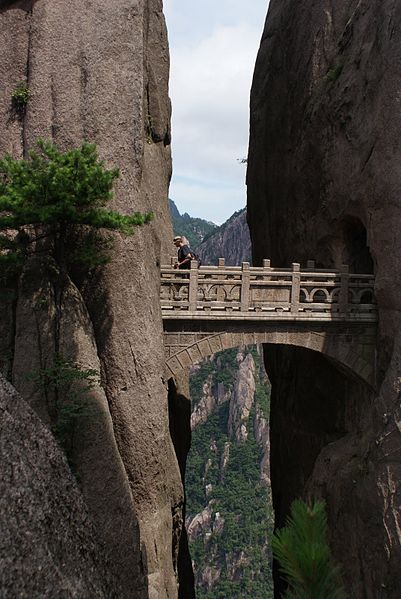
Ancient paths, pavilions, bridges, rock inscriptions, and other traces of human presence remain in the mountain area. Nature and cultural heritage are closely connected here, and many sites became famous through poetry, paintings, and local legends.
Hot springs
Hot springs at the foot of the mountains have been known since ancient times. Naturally heated water emerges at the surface and is used by local bathing and wellness facilities. The springs are a traditional part of a Huangshan visit, complementing hikes and sightseeing.
A soak can be especially appealing after a long climb. Visitors should check opening hours and access conditions before choosing a bathing facility and follow staff instructions.
Hiking routes and visiting
Numerous stone stairways and walking paths connect viewpoints, summits, and mountain valleys. Popular areas include Beihai, Yupinglou, the West Sea area, and the Yungu Valley. Cable cars operate on selected routes and can shorten the ascent, but many viewpoints can only be reached on foot.
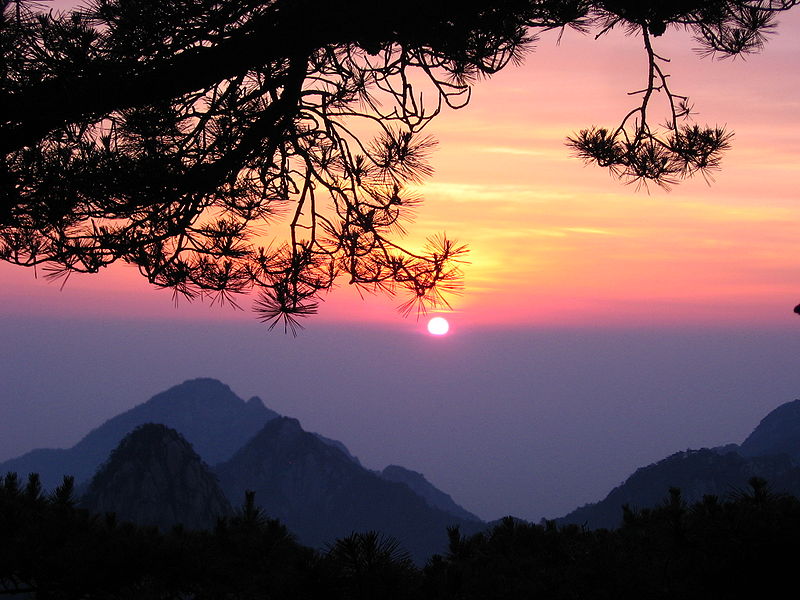
Visitors often set aside one or two days to explore the mountains. Those hoping to see sunrise or a sea of clouds may choose to stay overnight at a mountain hotel, subject to availability. Popular periods can be crowded, so tickets and accommodation are best arranged in advance.
Some routes include steep steps, narrow passages, and substantial changes in elevation. Wear sturdy footwear, bring water and rain protection, check the forecast, and stay behind safety barriers. Fog can sharply reduce visibility, and stone steps may become slippery.
Best time to visit
Huangshan can be visited throughout the year, but conditions vary considerably by season. Spring and autumn are well suited to hiking, with changing colours and relatively comfortable temperatures. Summer brings lush scenery but can be humid and rainy. Winter creates striking views of snow and frost, although some sections may close because of ice or severe weather.
Huangshan combines monumental natural formations, distinctive pine trees, cloud-filled panoramas, and a rich artistic heritage. It offers a remarkable example of how mountain scenery, philosophy, and art are intertwined in Chinese culture.
Gallery