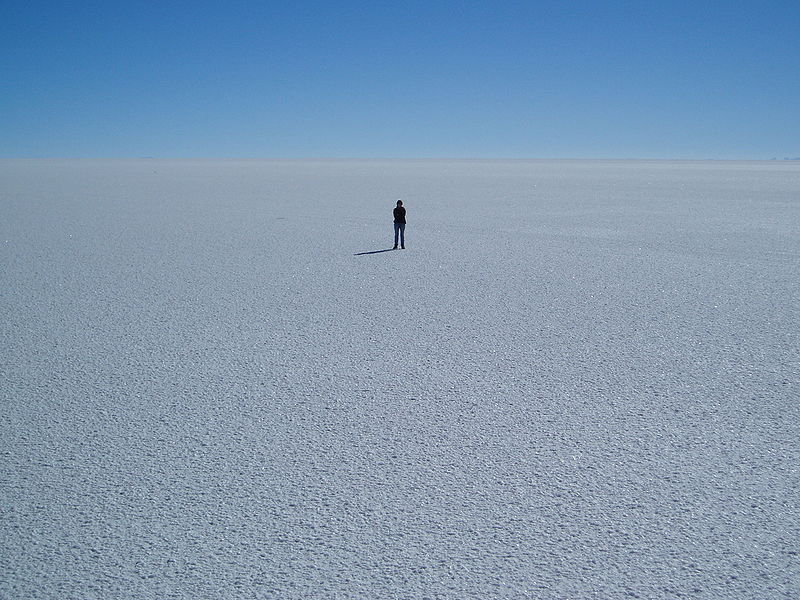
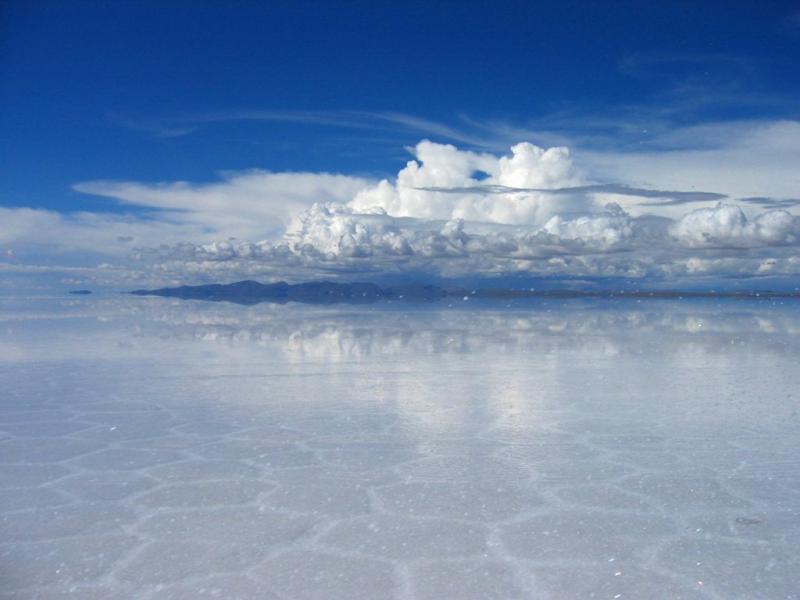
Salar de Uyuni is an immense salt flat in southwestern Bolivia, located in the high-altitude Altiplano region of the Andes. Covering approximately 10,582 square kilometres, it is the largest salt flat in the world. At an elevation of about 3,660 metres above sea level, its almost perfectly level white surface stretches toward the horizon, creating the impression of an endless landscape.
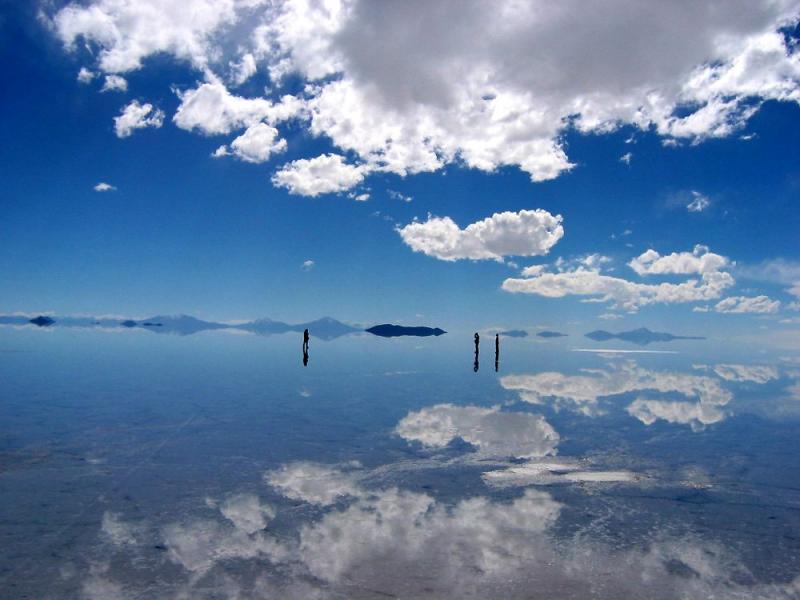
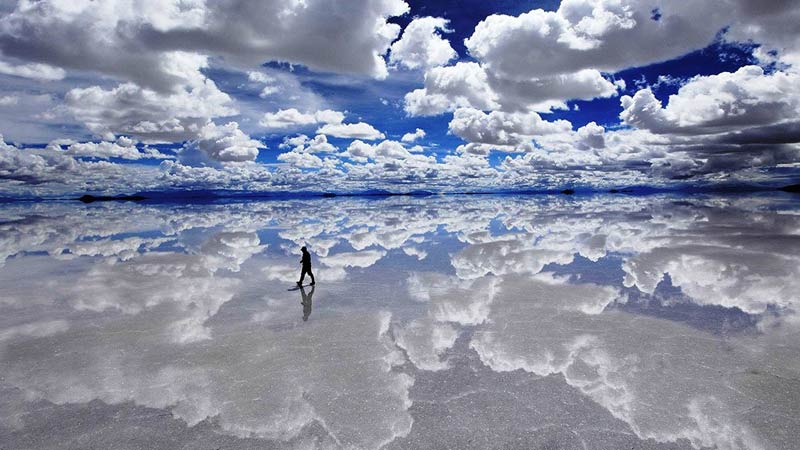
This is one of South America's most extraordinary natural destinations. During the dry season, the salar resembles a white desert patterned with geometric shapes formed by salt crystals. During the rainy season, a thin layer of water can transform it into a gigantic mirror reflecting the sky, clouds, and mountains. This remarkable effect has made Uyuni a favourite destination for photographers and travellers.
How the Salt Flat Formed
Millions of years ago, this part of the Andes experienced major geological and climatic changes. Large prehistoric lakes once occupied the region before gradually drying out. One important stage in the formation of the present landscape was the disappearance of ancient Lake Tauca around 10,000 to 11,000 years ago. As the water evaporated, mineral deposits remained and gradually formed an extensive salt crust.
Today, the surface consists mainly of salt, particularly halite. The crust varies in thickness and can reach several metres in some areas. Beneath it lie brines containing various minerals, including lithium. The remarkably small differences in elevation make Uyuni one of the flattest natural landscapes on Earth.
The Mirror of the Sky
The salar's most famous phenomenon occurs during the rainy season. When a thin layer of water spreads across the surface and the wind is calm, the plain reflects the surrounding world almost like a mirror. The sky appears to continue beneath your feet, clouds are duplicated on the ground, and the horizon becomes difficult to distinguish.
The mirror effect is most often seen between December and April, although its strength depends on rainfall and local weather conditions. When water levels are high, some areas become inaccessible to vehicles, and routes to individual attractions may be restricted.
Patterns of the Dry Salt Flat
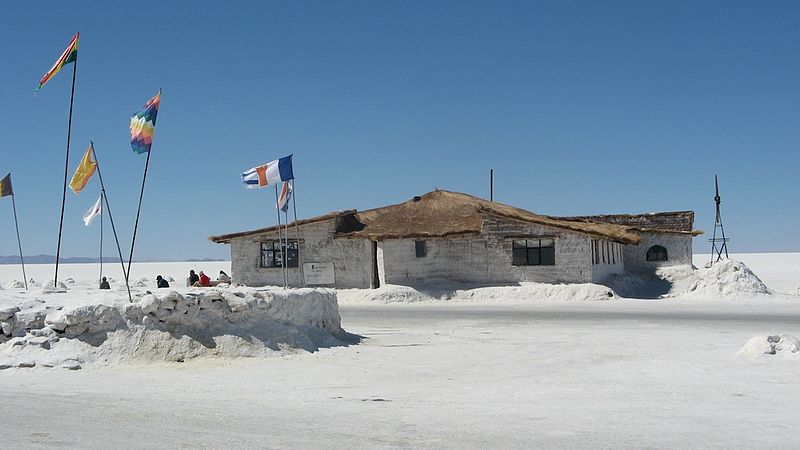
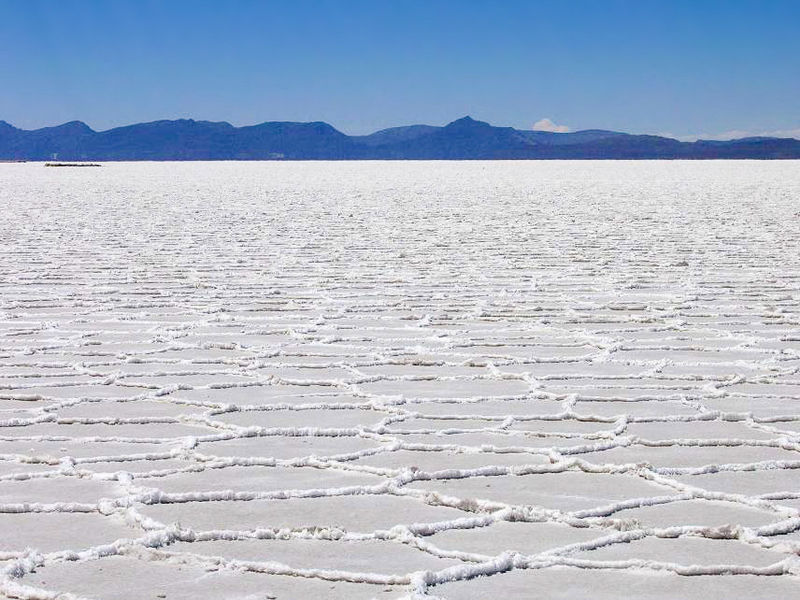
During the dry season, the water evaporates and reveals a dazzling white salt surface. Distinctive polygonal shapes resembling honeycombs appear across the crust. They result from salt crystallisation, moisture evaporation, and changes within the salt layer. Distant mountains, volcanic peaks, and deep blue skies provide striking contrasts against the white plain.
The dry season generally lasts from May to November. Travellers can often cross larger sections of the salar and visit more attractions during this period. The lack of familiar reference points also makes unusual perspective photography possible, allowing people and objects to appear impossibly large or small in pictures.
Incahuasi Island
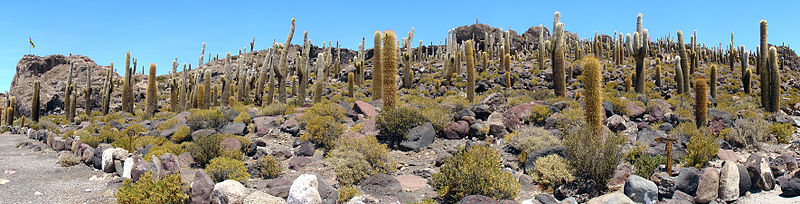
One of Uyuni's best-known attractions is Incahuasi Island, which rises above the white plain. Rather than an ordinary island in a sea, it is an elevated landform left from an ancient landscape. Its rocky slopes are covered with numerous giant cacti that grow very slowly and can reach an impressive age.
The island offers panoramic views across the seemingly endless salt flat. The contrast between dark rocks, green cacti, and the white surface creates a distinctive landscape. Access depends on water levels, and roads to the island may be closed or restricted during periods of heavy rain.
Tunupa Volcano and the Surrounding Region
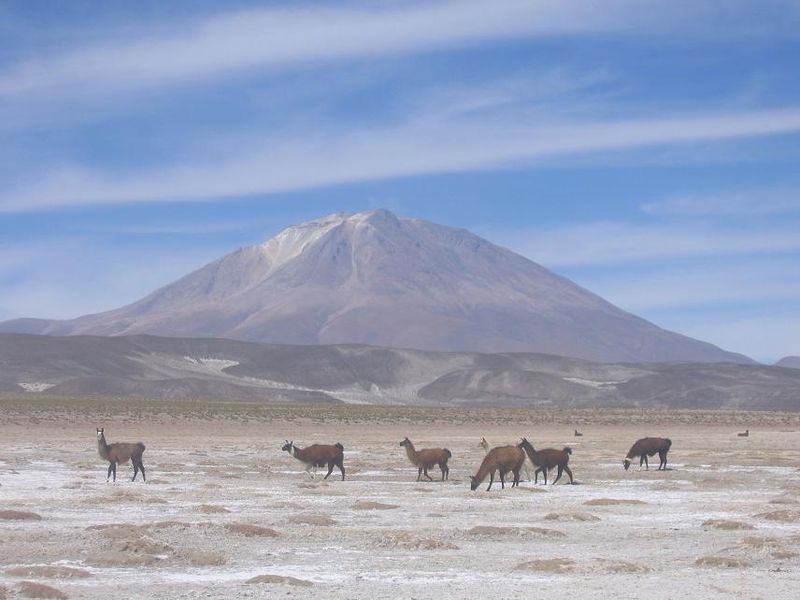
Tunupa Volcano rises on the northern side of the salar and stands out against the white plain. Its slopes display shades of brown, red, and grey, while small settlements nearby preserve aspects of traditional local life. Viewpoints near the volcano offer impressive views across the salt landscape.
Trips around the region often include high-altitude lagoons with vividly coloured water, volcanic terrain, desert valleys, and places where flamingos can be observed. Multi-day journeys reveal the diversity of the Bolivian Andes beyond the salt flat itself.
Salt, Lithium, and Local Communities
The salar is important not only for tourism but also for the local economy. Generations of residents have harvested salt for household use and trade. Traditional salt-gathering practices continue in some areas and form part of the region's cultural heritage.
Brines rich in lithium, an important material for batteries, lie beneath the salt crust. Developing these resources is strategically important to Bolivia, but it also requires attention to water resources, fragile ecosystems, and the interests of local communities. The wider region is also a habitat and breeding area for several species of Andean flamingos.
Visiting Salar de Uyuni
The town of Uyuni is the main starting point for excursions across the salt flat and into the surrounding highlands. Tours generally use four-wheel-drive vehicles with experienced drivers. Visitors can choose a short trip or a multi-day itinerary that includes lagoons, volcanoes, and desert landscapes.
Before travelling, it is important to consider the high altitude, strong sunlight, wind, and sudden temperature changes. Even sunny evenings and nights can be very cold. Warm clothing, sunglasses, sunscreen, and plenty of drinking water are useful. During the rainy season, visitors should follow local guides' instructions and avoid driving onto flooded areas independently.
A Natural Wonder of Bolivia
Salar de Uyuni combines extraordinary geological formations, unusual natural phenomena, and the rich history of the Andean highlands. Its white surface, mirror-like reflections, cactus-covered islands, and surrounding volcanoes create a landscape unlike almost anywhere else on Earth. It is far more than a salt desert: it is a unique natural region that reveals the beauty and diversity of the Andes.
Gallery