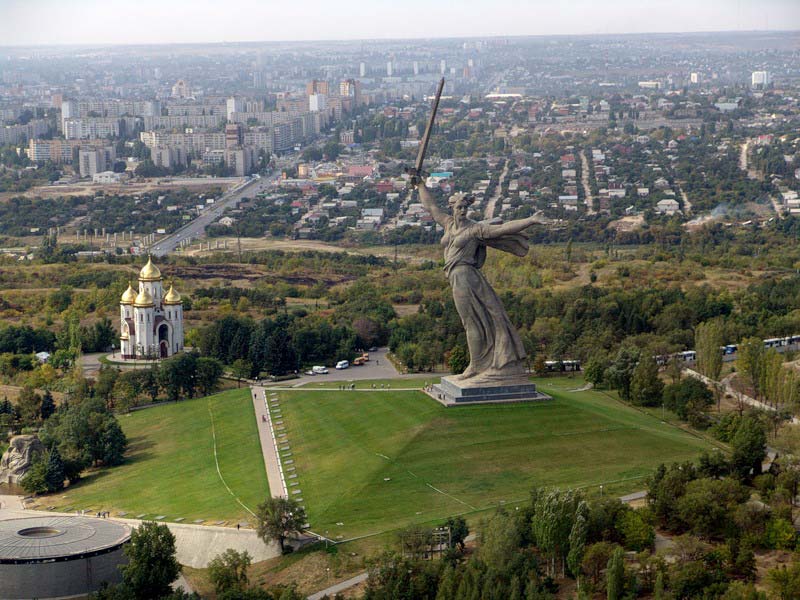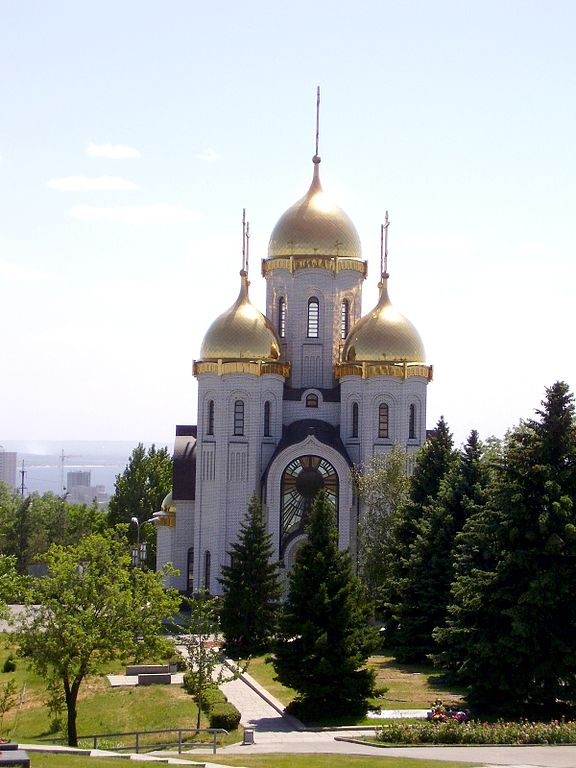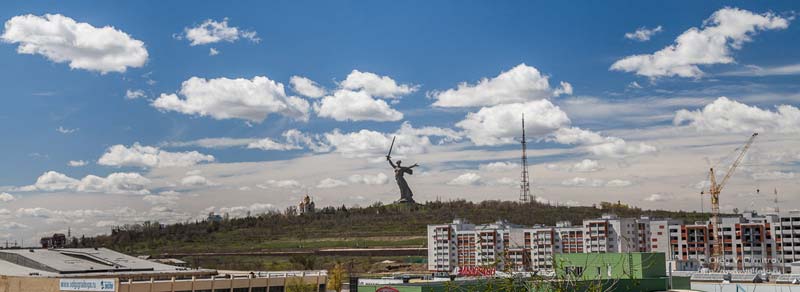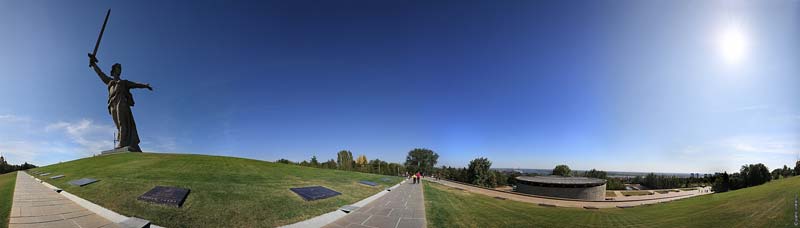

Mamayev Kurgan rises in the center of Volgograd at an altitude of 102 meters. The name of the mound has two versions: the first one is associated with the name of Khan Mamai, as it is said that his tribe used to survey the area of the mound. The second version is a translation of the word "mamai" from the language of the Volga Tatars, meaning "kurgan". At this hour, there is a memorial to the Heroes of the Battle of Stalingrad, dedicated to the victory of soldiers over the Nazis during the Second World War.
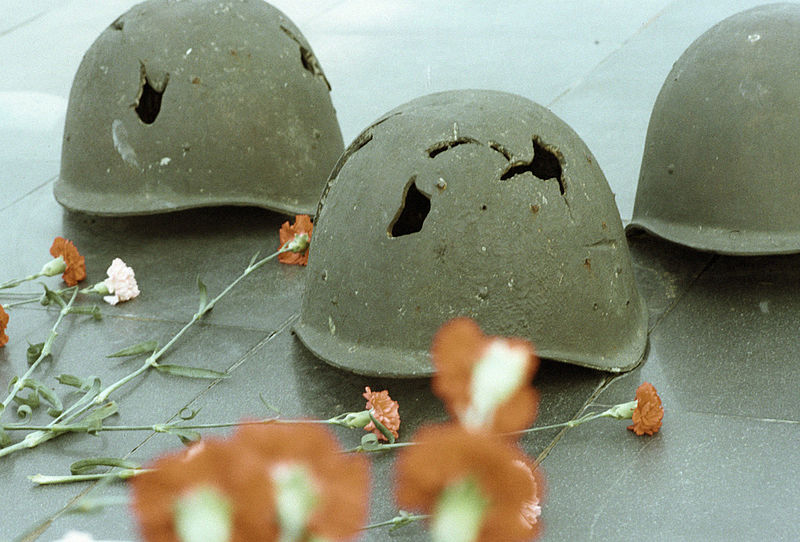
In the period from September 1942 to January 1943, for 135 days, the most brutal wartime battles were fought on Mamayev Kurgan with explosions from shells and machine-gun fire. During this time, power over the hill changed hands several times from Russians to Germans and vice versa. At the end of the battle, the dead from all over the city, totaling 34.5 thousand people, were buried in the vicinity, this area became a real burial mound. After the end of the war, Mamayev Kurgan was covered with fragments from bombs and shells, the territory was in such a blackened form until 1959.
Soon it was decided to erect a memorial complex in honor of the memory of the fallen soldiers defending Stalingrad. The construction of this monument lasted 8 years. In 1967, under the leadership of chief architect Belopolsky and chief sculptor Vuchetich, a monument to the "Heroes of the Battle of Stalingrad" was built, combining one historical event – the Battle of Stalingrad.
This memorial is the largest in the world with a total area of 26 hectares and a length of 1.5 km from the foot to the top.
The beginning of the composition is the high relief "Memory of Generations", which depicts people carrying wreaths to the burial place of soldiers. Granite pedestals with inscriptions of city heroes have been erected here, and their center is filled with the earth of these cities.
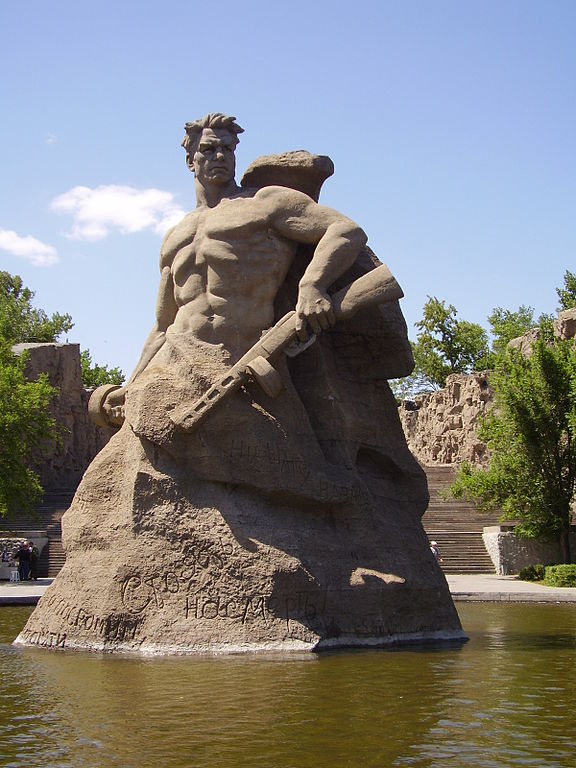
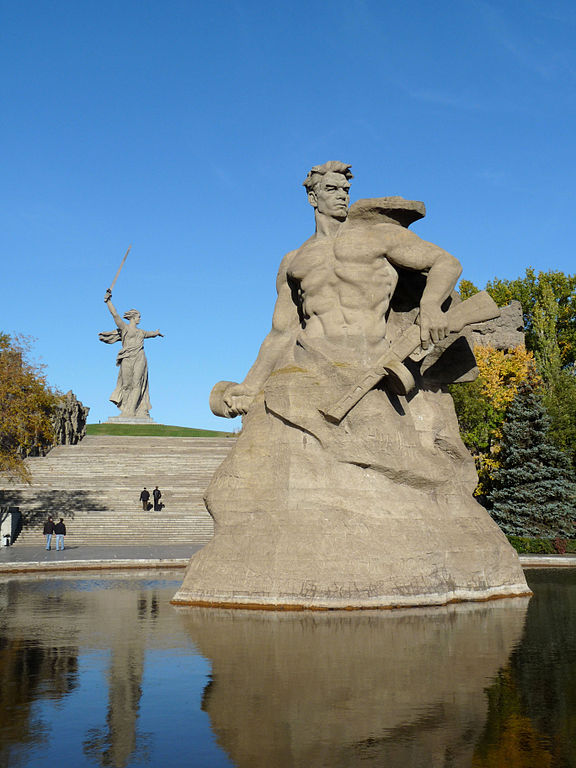
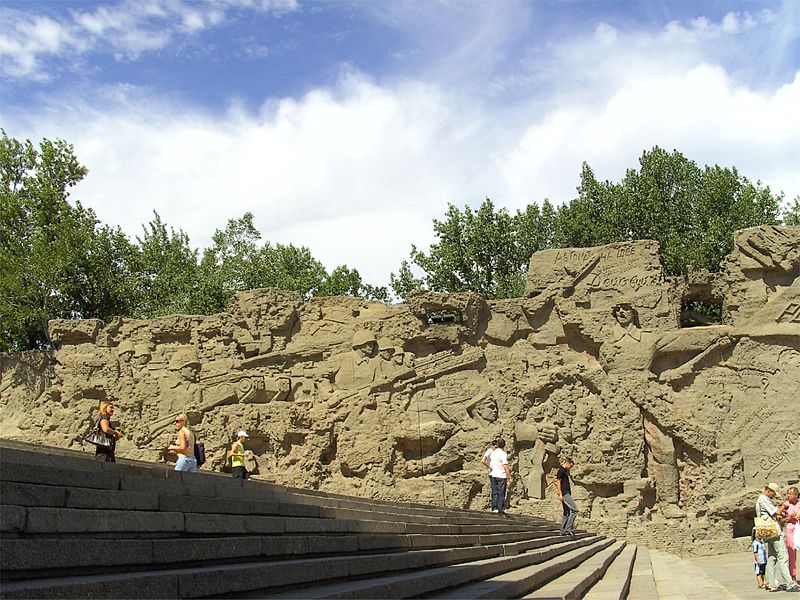
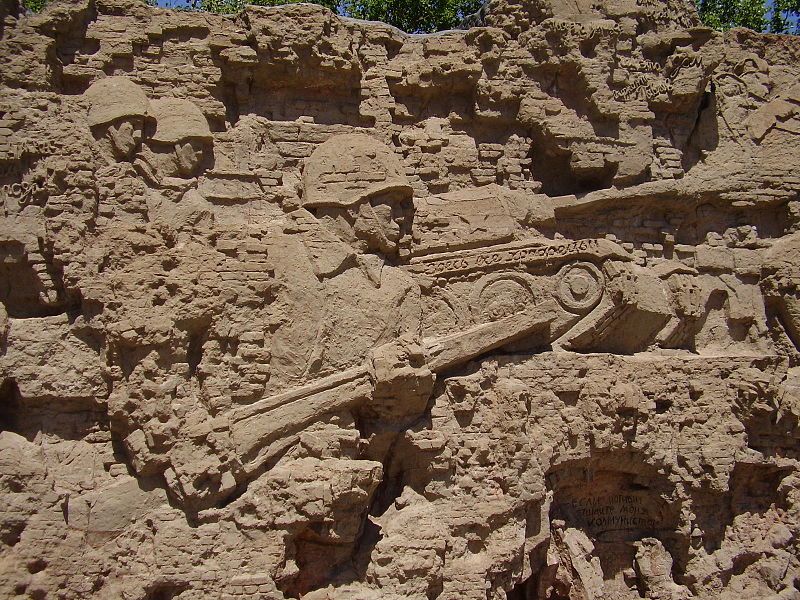
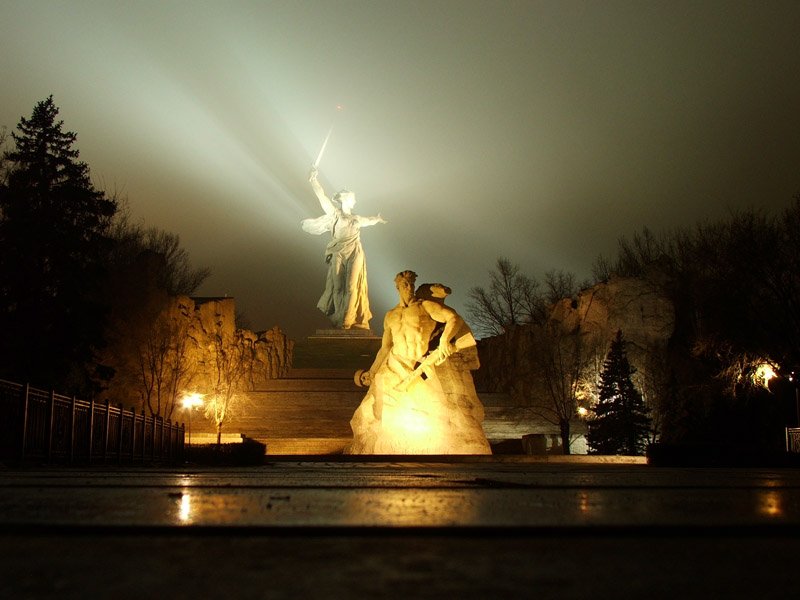
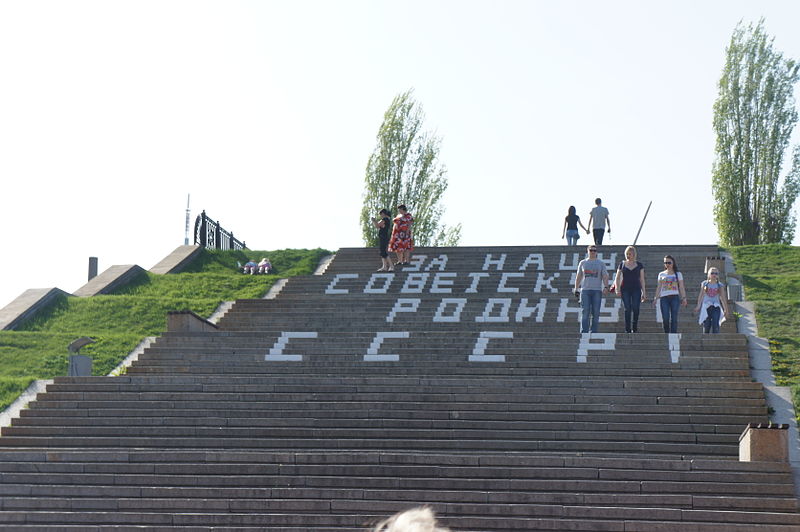
Further up is a central staircase with access to an alley of poplars located on two sides. It covers a length of more than 200 meters. Behind it, the square of Those Who Stood to the Death opens to the eye with its central sculpture of the same name, depicting the prototype of a soldier. Further behind the wide staircase cascade, ruins with bas-reliefs and inscriptions depicting fierce battles have been erected, in addition there is a sound design.
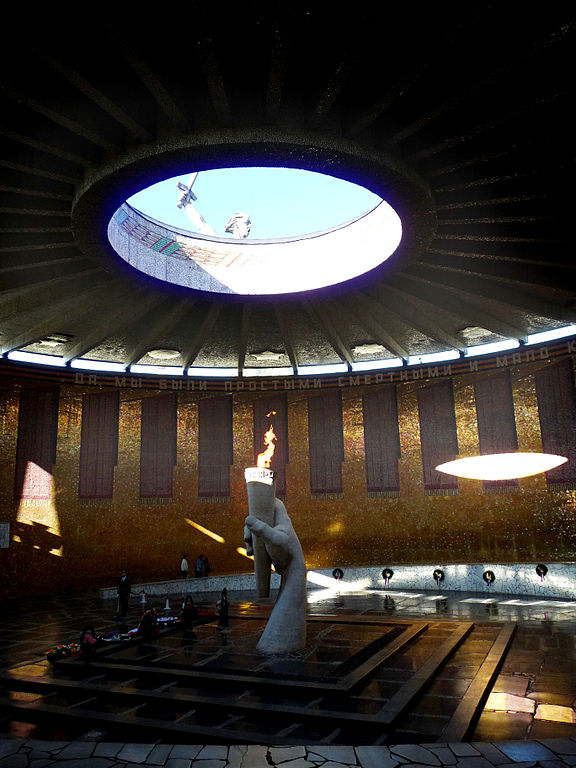
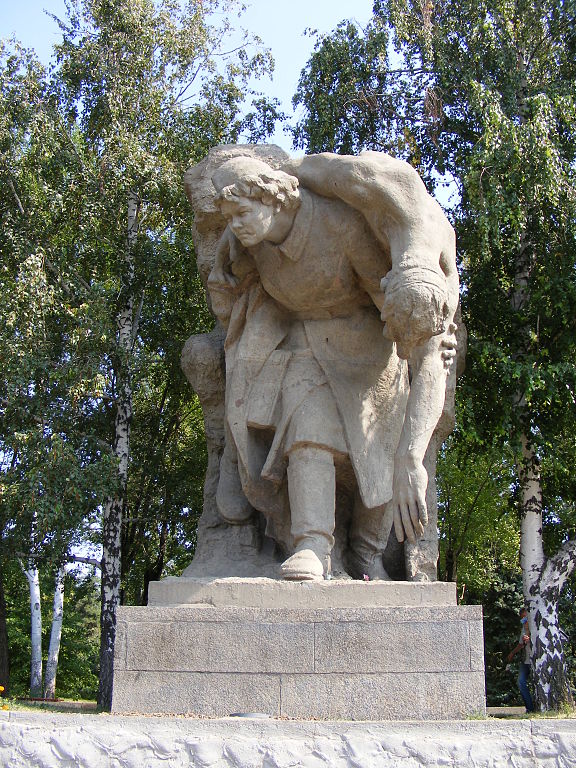
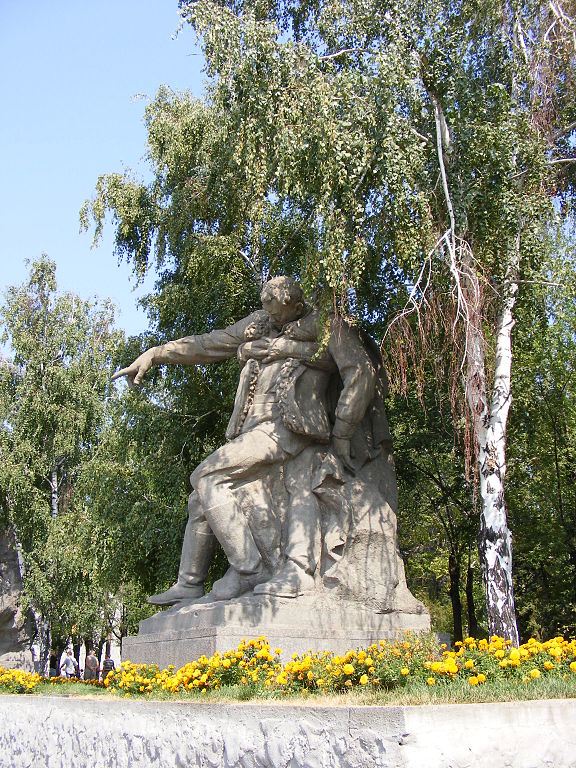
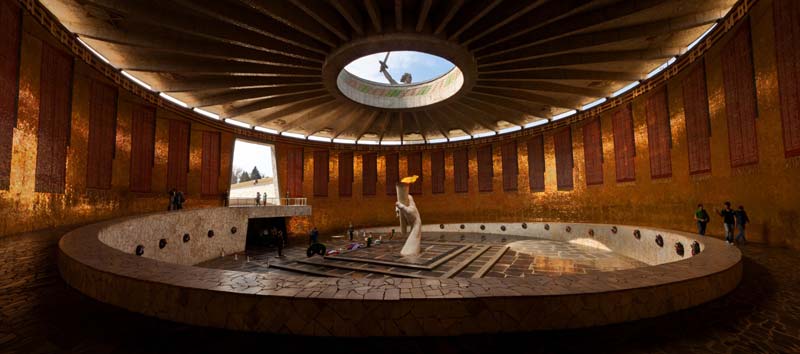
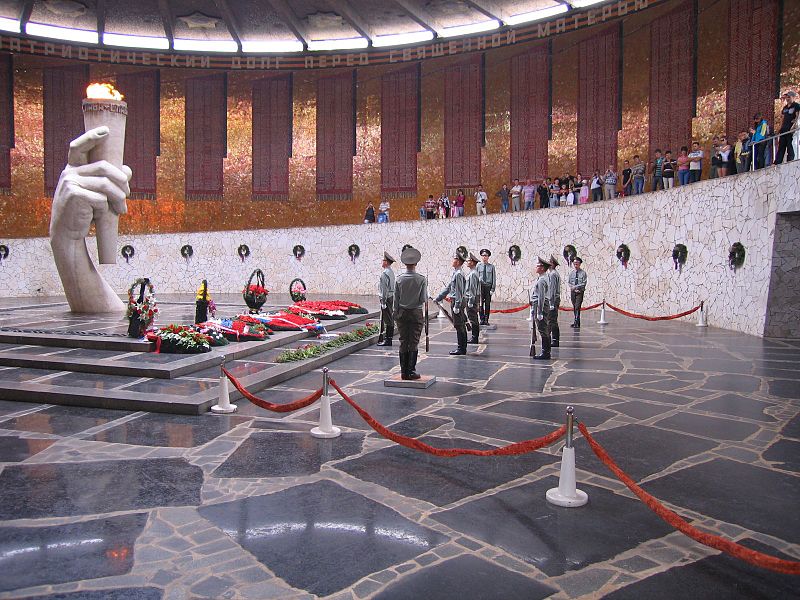
The ruins are followed by Heroes' Square with a water pool. At the end, a retaining wall has been erected, which leads to the Hall of Military Glory. In its center is a sculpture of a hand clutching an Eternal Flame. There is an honor guard here, which changes every hour. The Square of Sorrow is located next to the Hall of Military Glory. Everything here reminds us of the great losses from the war, of the grief that affected almost every family. The most central figure is that of a mother holding her dead son in her arms. Hero of the Soviet Union Chuikov is buried in this place.
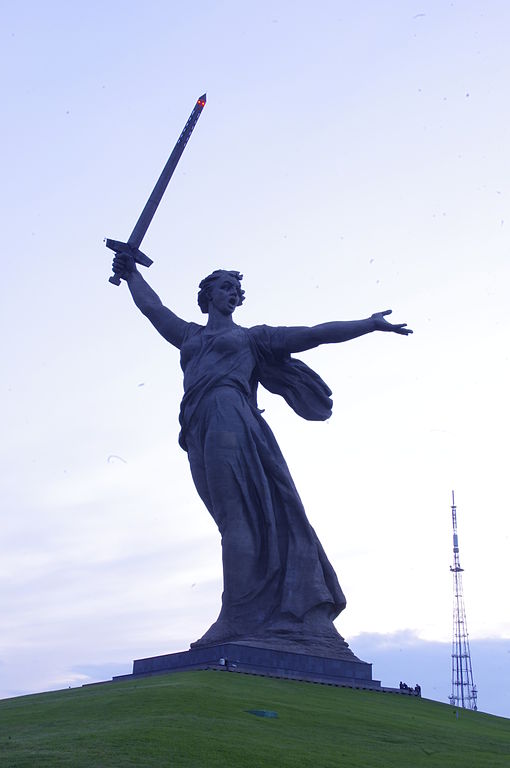
The end of the entire memorable ensemble is the main sculpture "Motherland calls!", striking in its size and shape. This sculpture is associated with the image of the Motherland, which calls on its sons to defend their native lands from the enemy.
Since 2008, the complex, built on Mamayev Kurgan, has been included in the seven wonders of Russia.
Gallery